Artwork
Liberality
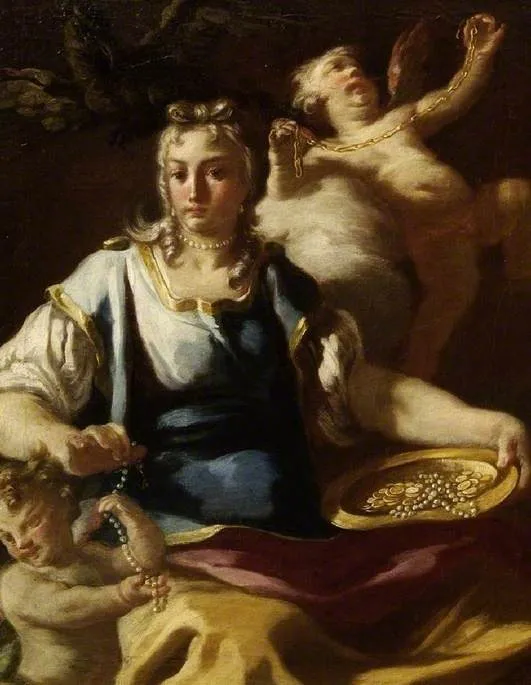
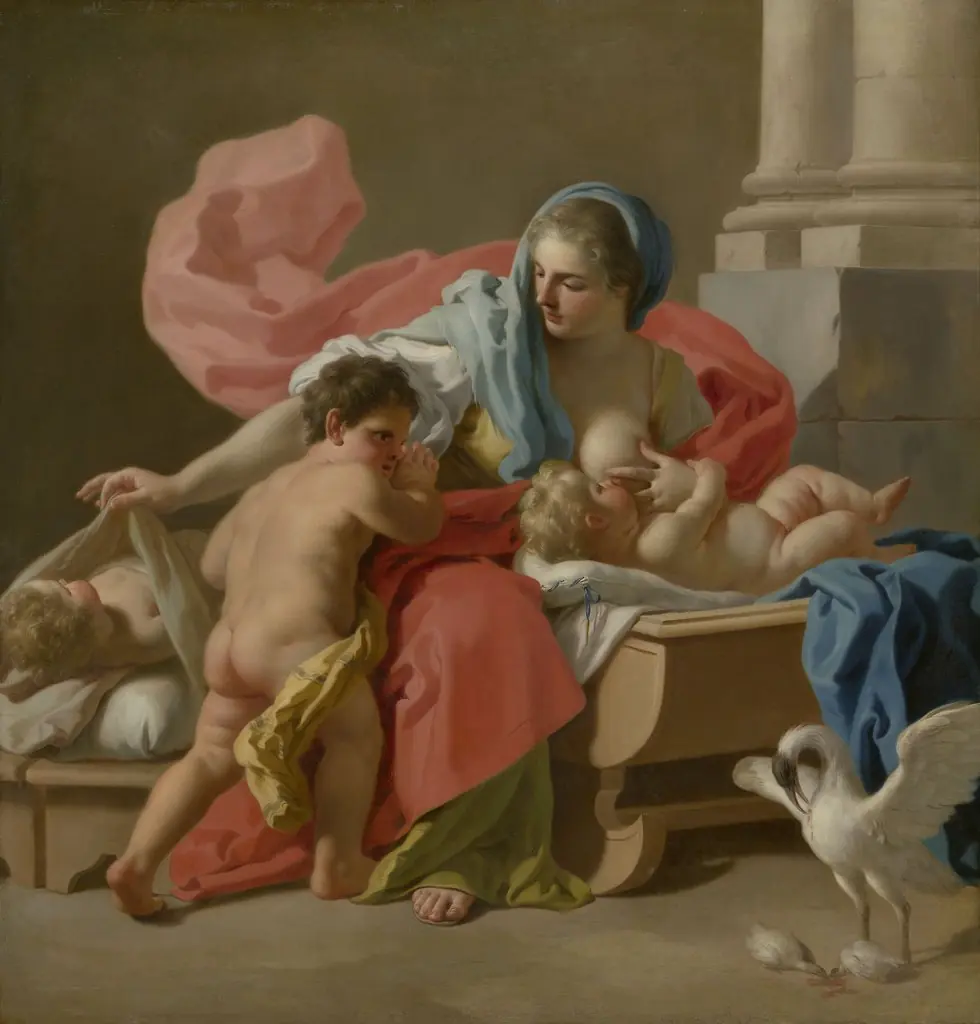
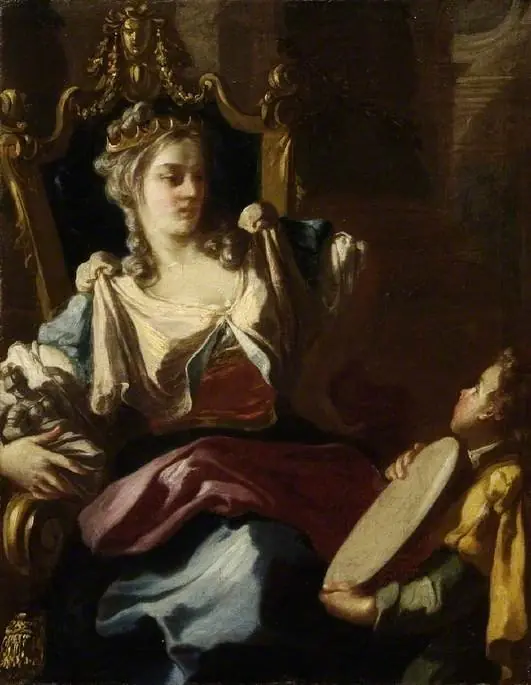
Liberality is an oil painting by Francesco de Mura. It dates from 1746 and is held in the collection of the Fitzwilliam Museum.
About this work
Overview
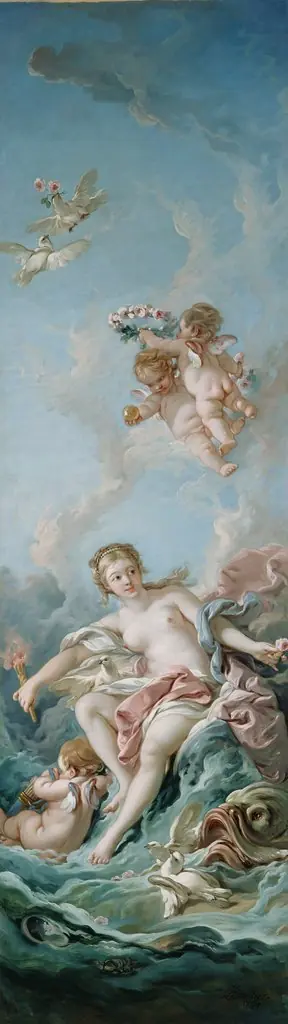
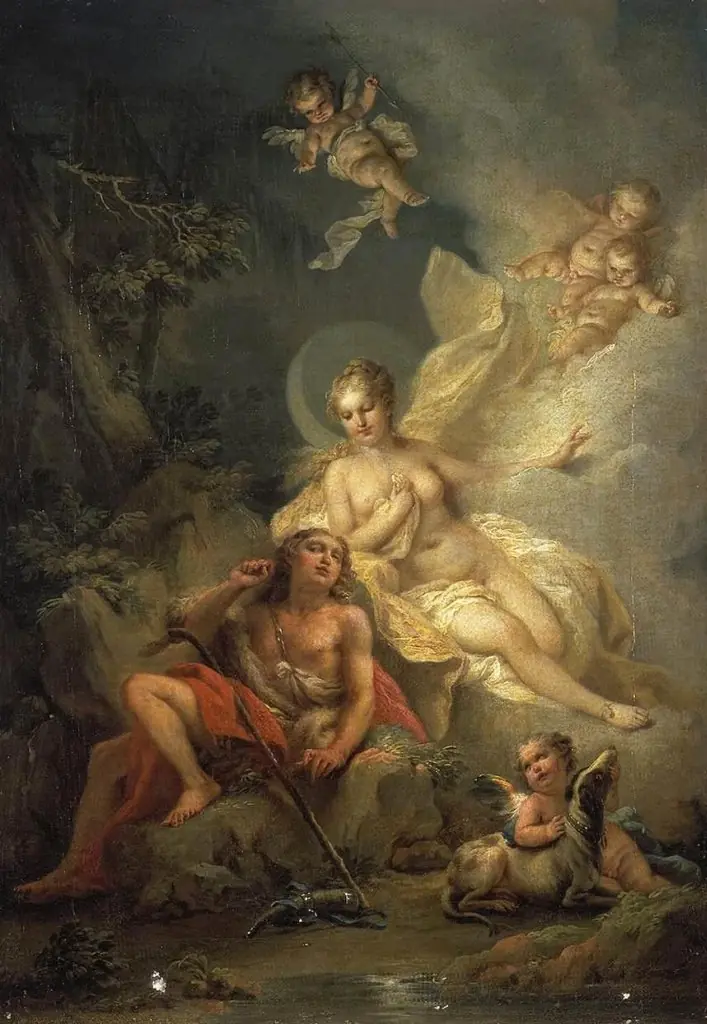
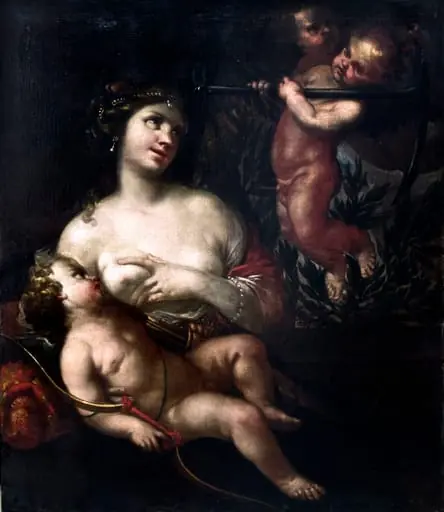
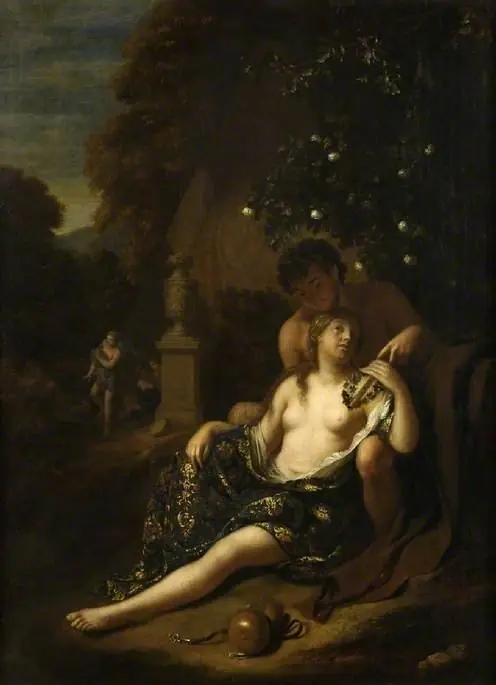
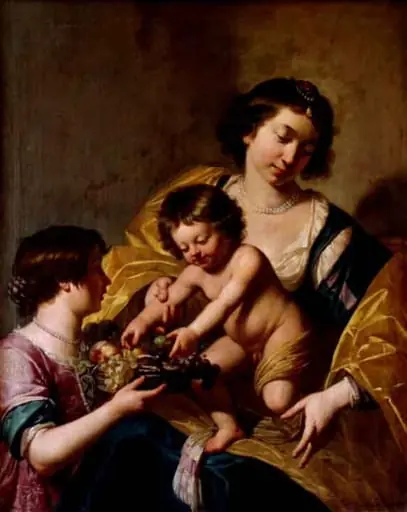
Liberality is an oil painting created by Francesco de Mura around 1746, characterized by a serene and calm atmosphere. The work showcases a woman surrounded by cherubs, conveying a sense of depth through chiaroscuro.
Subject & Meaning
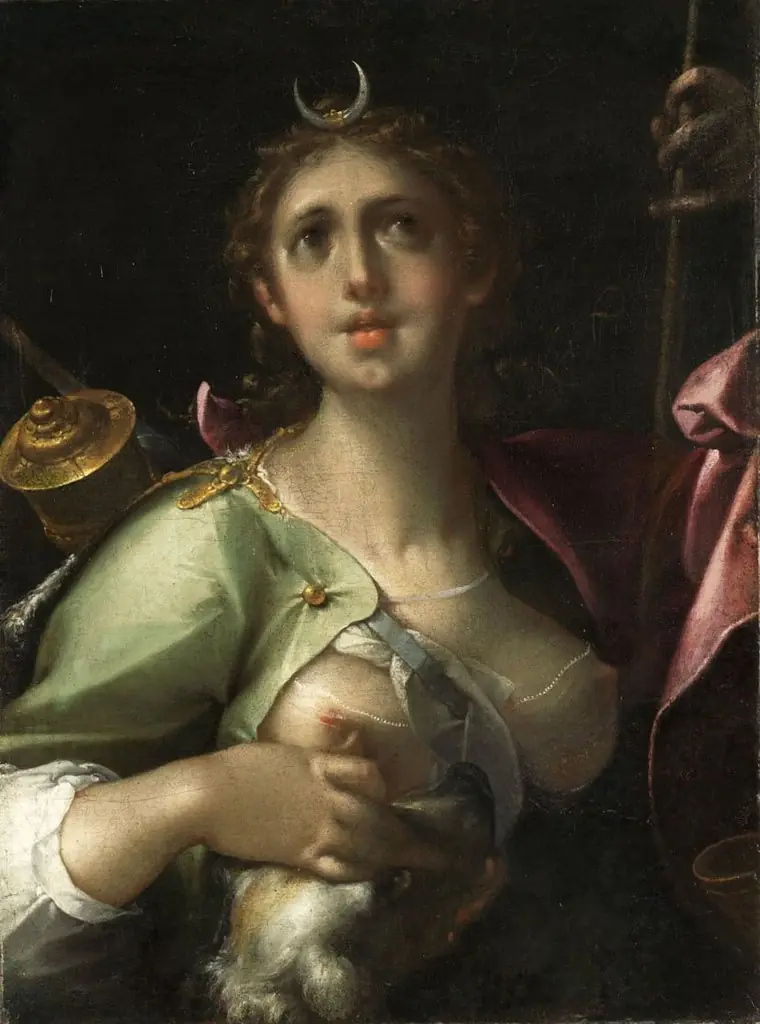
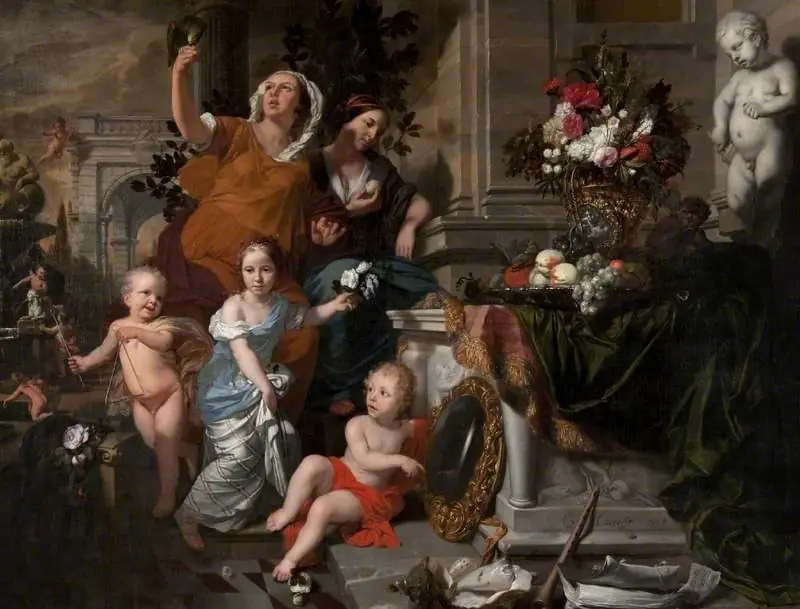
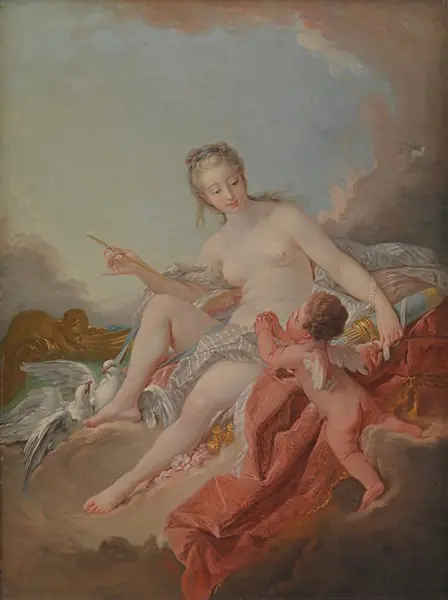
The painting depicts a woman in a blue dress with gold trim and a pearl necklace, accompanied by cherubs. One cherub holds a pearl necklace, while another bears a tray of coins, symbolizing generosity. The woman's serious expression engages the viewer directly.
Technique & Style
Executed in muted blues and golds, the painting features soft, warm lighting emanating from the left. De Mura's use of chiaroscuro creates a sense of dimensionality, reflecting his stylistic transition towards neoclassicism in his later work.
History & Provenance
Liberality is part of the collection at the Fitzwilliam Museum. Created in 1746, it marks a point in de Mura's career when he was active in Naples and Turin, transitioning stylistically.
Context
As a late-Baroque painter, de Mura's shift towards neoclassicism in *Liberality* aligns with broader artistic trends of the mid-18th century, which sought a return to classical ideals.
Legacy
While specific impacts of *Liberality* on subsequent art movements are not prominently documented, it contributes to the understanding of de Mura's evolution and the neoclassical leanings in late-Baroque Italian art.
Artist & collection
Artist
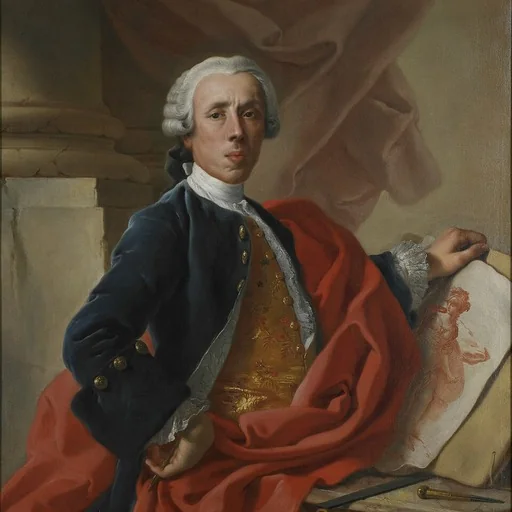
Francesco de Mura (21 April 1696 – 19 August 1782) was an Italian painter of the late-Baroque period, active mainly in Naples and Turin. His late work reflects the style of neoclassicism.