Artwork
Winter landscape
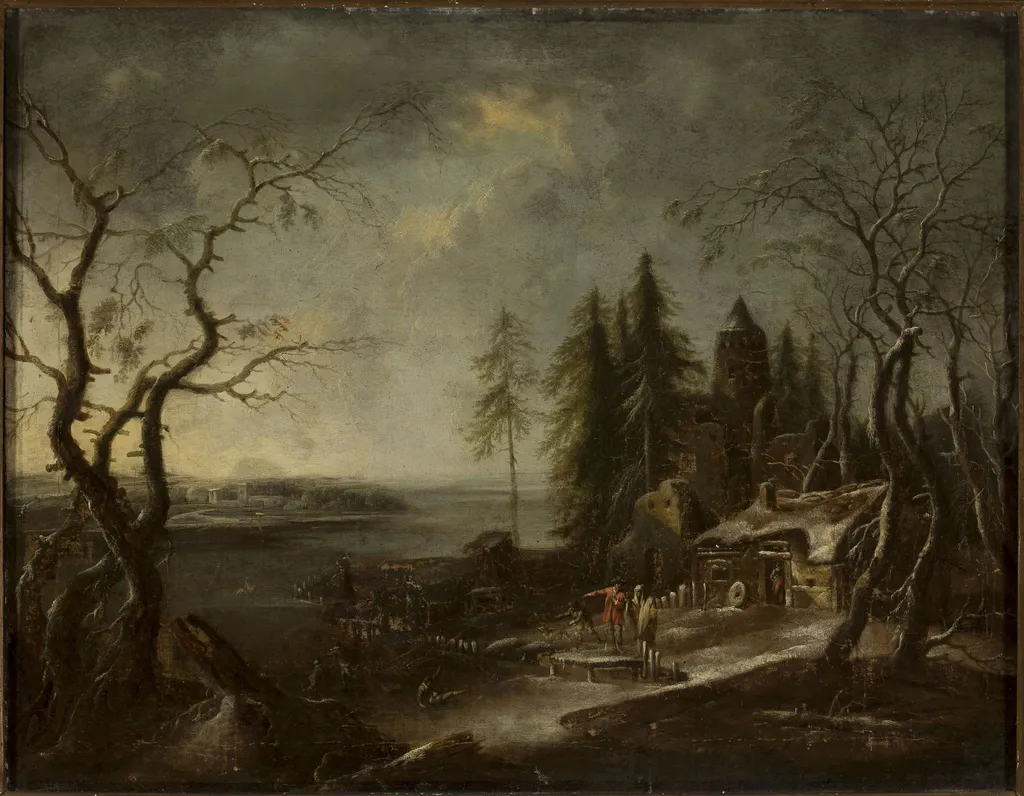
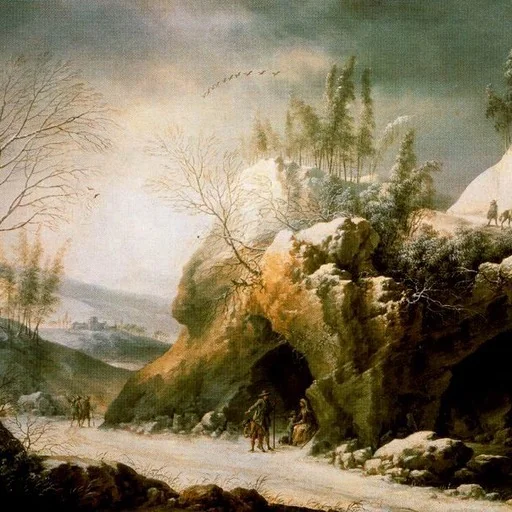
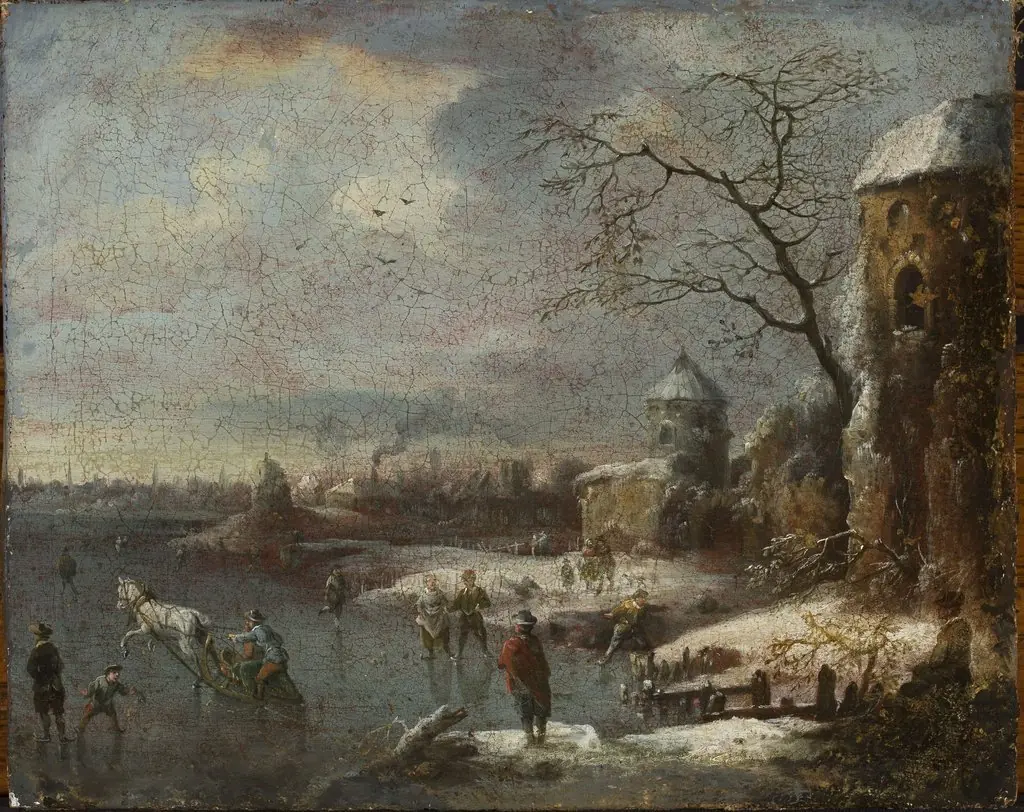
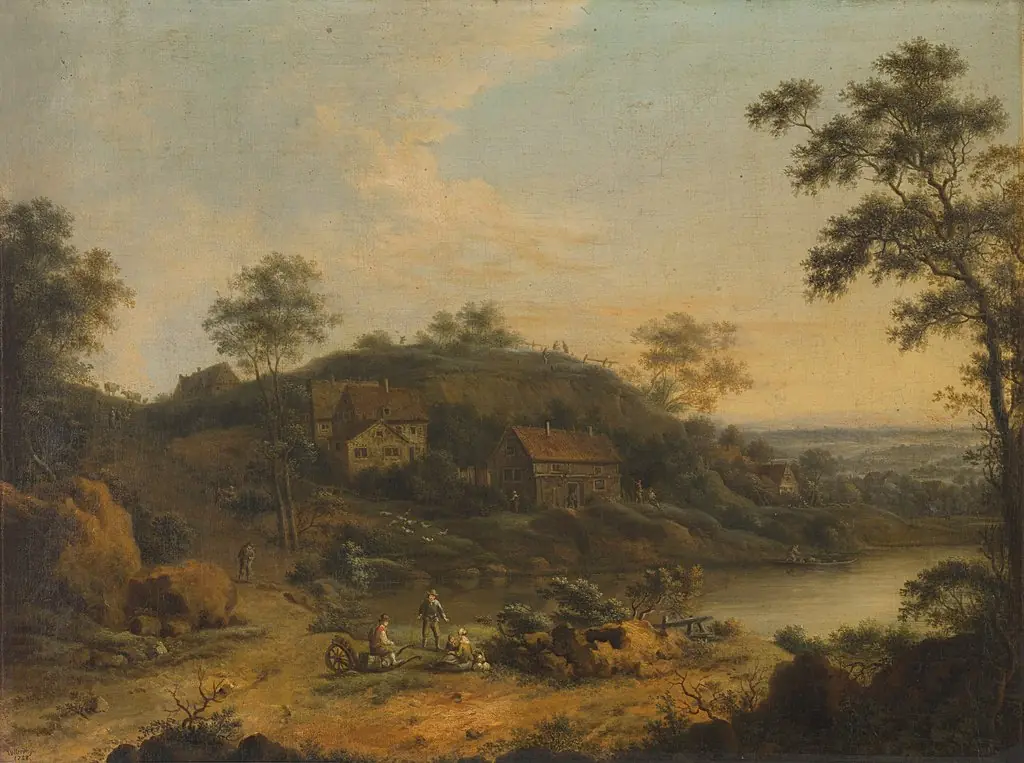
Winter landscape is an oil painting by Francesco Foschi. It dates from 1755 and is held in the collection of the National Museum in Warsaw.
About this work
Overview
Painted around 1755, this oil-on-canvas landscape by Francesco Foschi depicts a quiet winter scene in a rural European village.
Painted around 1755, this oil-on-canvas landscape by Francesco Foschi depicts a quiet winter scene in a rural European village. The work is part of the collection at the National Museum in Warsaw. It captures a moment of stillness amid frozen terrain, with subtle human activity grounding the natural setting. The composition balances architectural elements with open space, emphasizing seasonal quietude.
Subject & Meaning
The scene centers on a frozen waterway bordered by modest wooden structures and bare trees. A figure in a red coat stands in the foreground, gesturing toward an unseen point, suggesting narrative tension without explicit drama. Other figures move quietly along the ice or near dwellings, hinting at daily life persisting through harsh weather. The painting conveys endurance rather than hardship, focusing on the rhythm of rural winter existence.
Technique & Style
Foschi employs oil paint to build layered atmospheres, using cool blues and muted greens for the sky and distant trees, contrasted with warmer browns in the buildings. Chiaroscuro subtly defines forms, guiding attention toward the central figure without dramatic lighting. Brushwork is restrained, favoring soft transitions over sharp detail, reinforcing the hushed, wintry mood through tonal harmony rather than vivid contrast.
History & Provenance
The painting entered the National Museum in Warsaw’s collection in the 19th century, likely acquired during a period of expanded interest in Central European landscape traditions. Its attribution to Foschi, an Italian painter active in Poland, reflects cross-regional artistic exchange in the mid-18th century. No significant alterations or documented restorations are recorded, preserving its original surface and composition.
Context
Foschi worked in Poland during a time when Italian-trained artists influenced local tastes in landscape painting. Winter scenes were uncommon in Italian art but gaining traction in Northern Europe, where seasonal changes shaped cultural expression. This work aligns with emerging regional interests in depicting everyday rural life under winter conditions, distinct from idealized pastoral traditions.
Legacy
Though not widely exhibited beyond Poland, the painting contributes to understanding how Italian-trained artists adapted Northern European themes. It remains a quiet example of 18th-century landscape painting that values atmosphere over spectacle. Its presence in a national collection underscores its role in documenting regional artistic practices during a period of stylistic transition.
Artist & collection