Artwork
The Crucifixion of a Female Saint
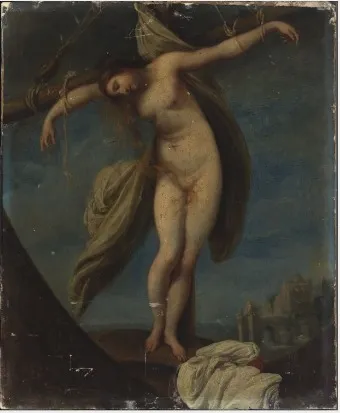
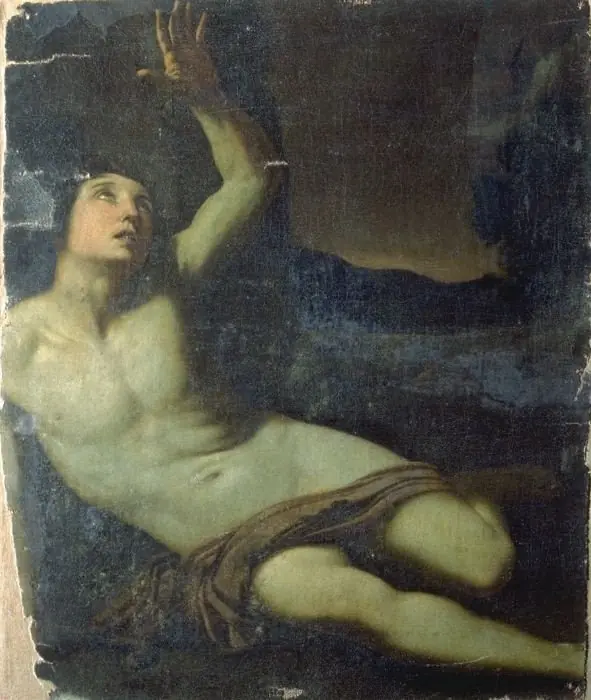
The Crucifixion of a Female Saint is an unspecified painting by Francesco Furini. It dates from 1634 and is held in the collection of the National Gallery of Ireland.
About this work
Overview
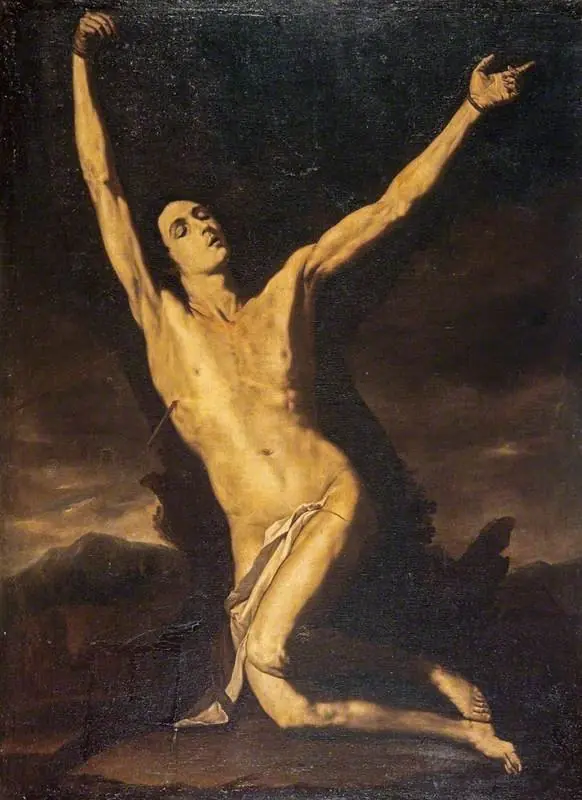
Painted around 1634 by Francesco Furini, an Italian artist active in Florence and Rome, this work depicts the crucifixion of a female saint.
Painted around 1634 by Francesco Furini, an Italian artist active in Florence and Rome, this work depicts the crucifixion of a female saint. Furini, also known for his poetry and clerical role, merged spiritual themes with a distinctly intimate visual language. The painting resides in the National Gallery of Ireland and exemplifies his tendency to infuse religious subjects with emotional and physical vulnerability, rendered through soft transitions of light and shadow.
Subject & Meaning
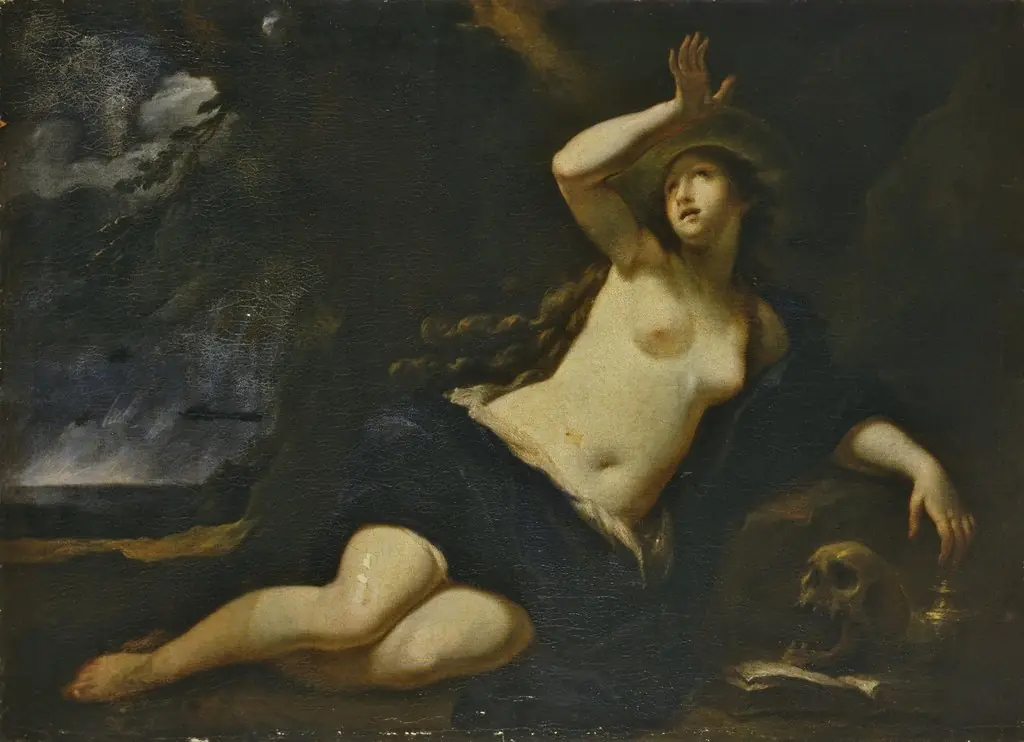
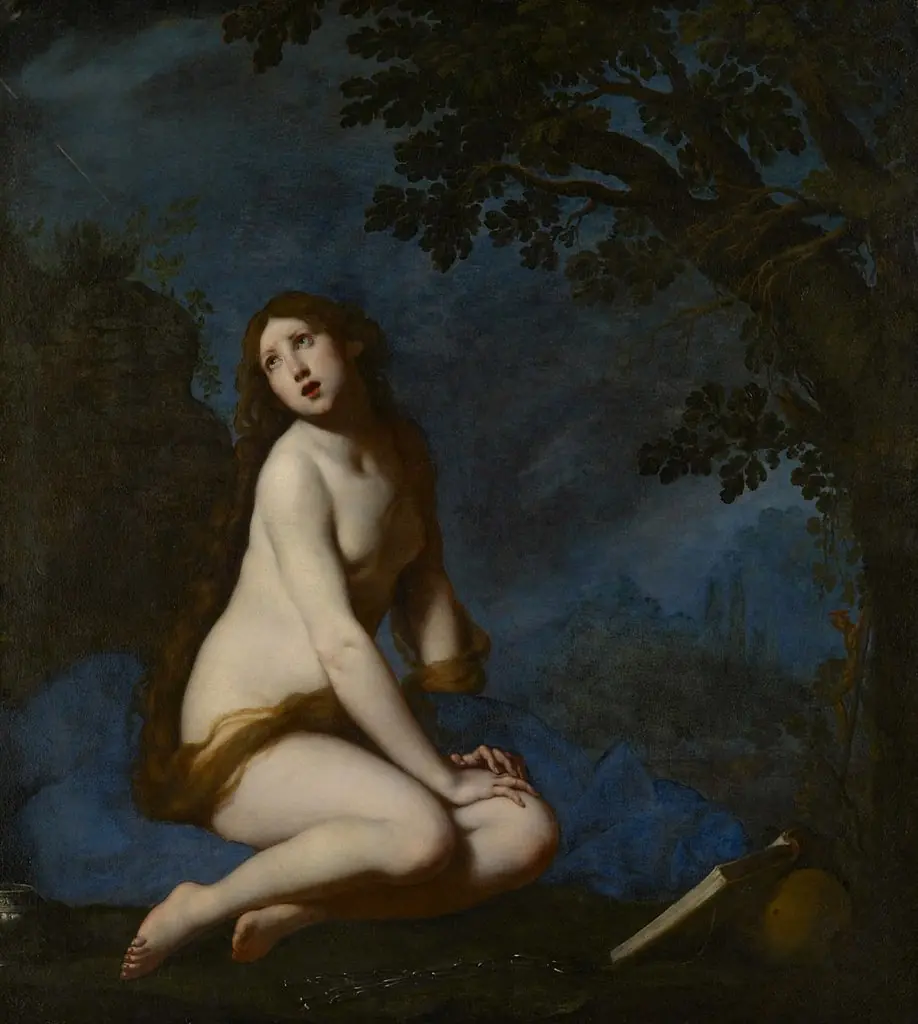
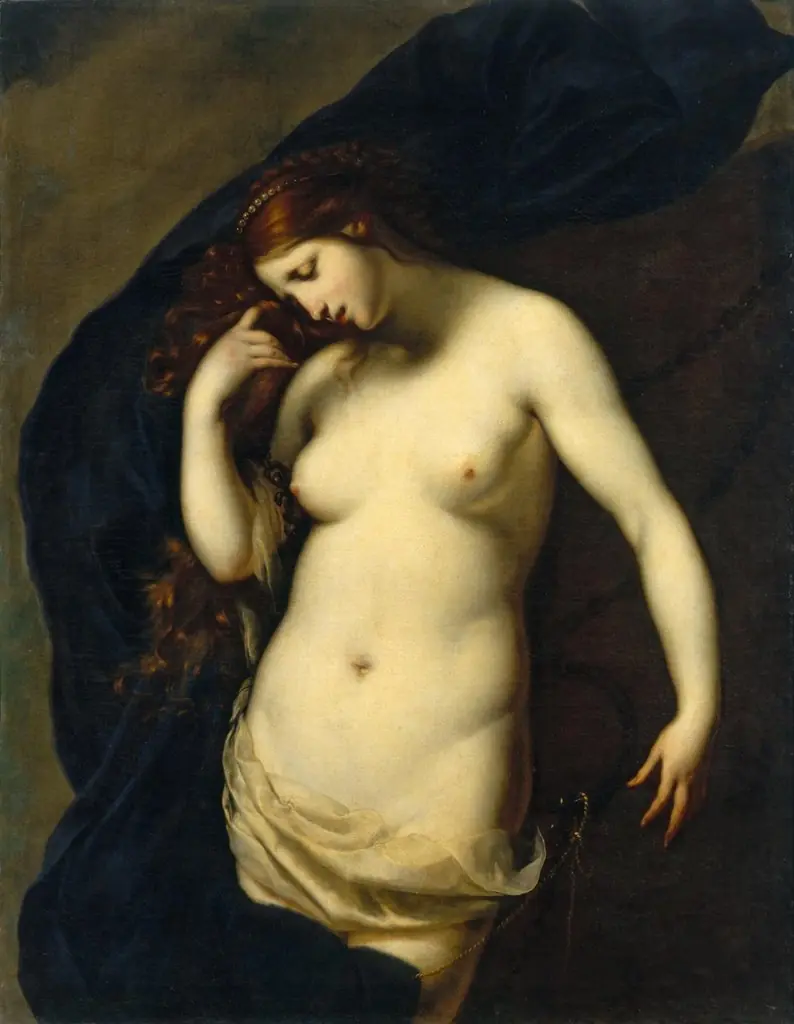
The subject is a female saint undergoing crucifixion, a rare iconographic choice that emphasizes personal sacrifice and spiritual endurance. Her nakedness, partially veiled by a draped cloth, conveys both vulnerability and purity. The tilted head and outstretched arms suggest surrender, while the dark, starless sky amplifies the solitude of her martyrdom. The image invites contemplation of devotion beyond conventional narratives of male saints.
Technique & Style
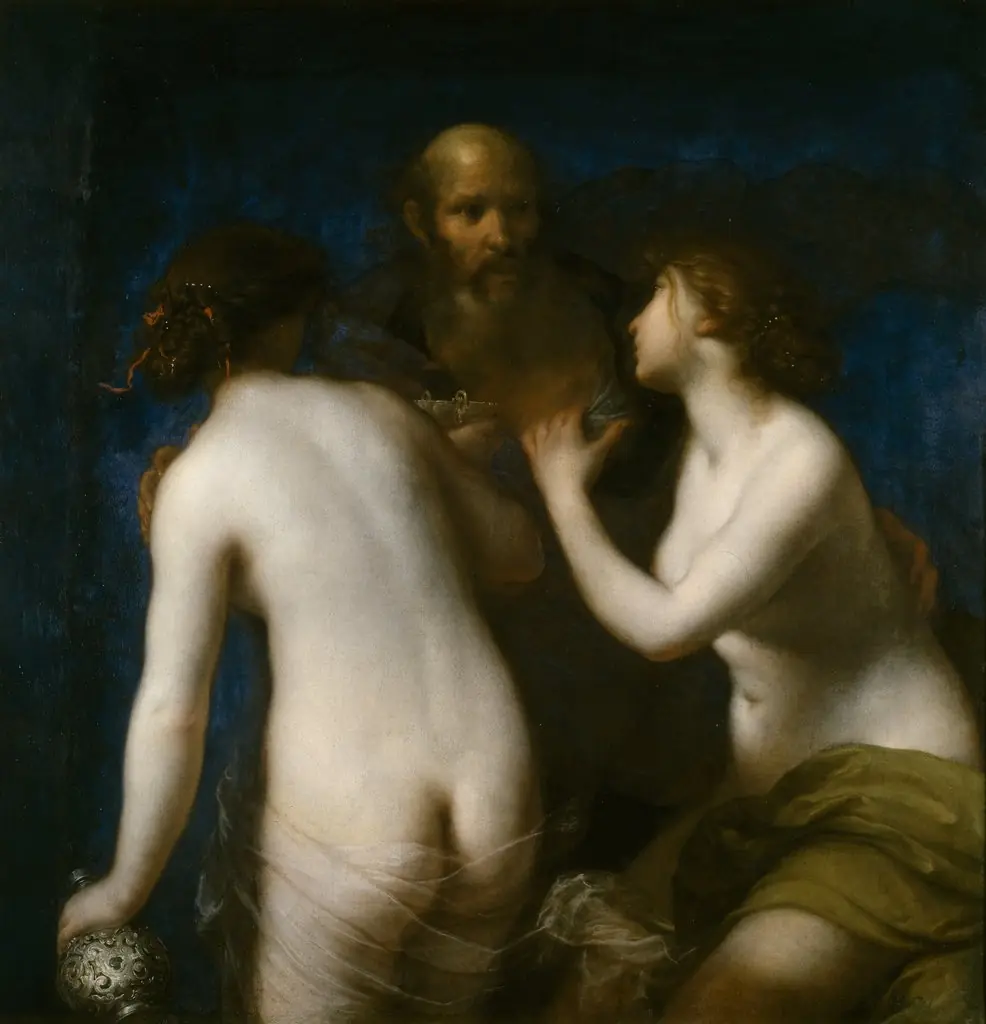
Furini employed chiaroscuro to model the saint’s form with subtle gradations of light, enhancing volume without harsh edges. His sfumato technique blurs contours, lending the figure a tender, almost ethereal presence against the deep blue background. The lighting appears to emanate from above, isolating the body in a halo of radiance that contrasts with the surrounding gloom, reinforcing the spiritual intensity of the scene.
History & Provenance
The painting entered the National Gallery of Ireland’s collection in the 19th century, though its earlier ownership remains undocumented. It was likely commissioned for private devotion, consistent with Furini’s clientele among Florentine religious patrons. No contemporary records describe its original context, but its survival suggests it was valued for its emotional resonance rather than doctrinal orthodoxy.
Context
In mid-17th-century Italy, religious art often emphasized dramatic martyrdom, yet Furini’s approach diverged by focusing on quiet introspection rather than spectacle. His female figures, frequently rendered with sensuous realism, challenged conventional modesty norms while aligning with Counter-Reformation ideals of personal piety. This work reflects a tension between spiritual elevation and human fragility unique to his oeuvre.
Legacy
Though not widely replicated, the painting stands as a distinctive example of Furini’s fusion of sacred narrative and intimate realism. It influenced later artists interested in psychological depth over theatricality. Its preservation in a public collection ensures continued scholarly attention, particularly regarding gender, martyrdom, and the role of sensuality in Baroque religious imagery.
Artist & collection
Artist
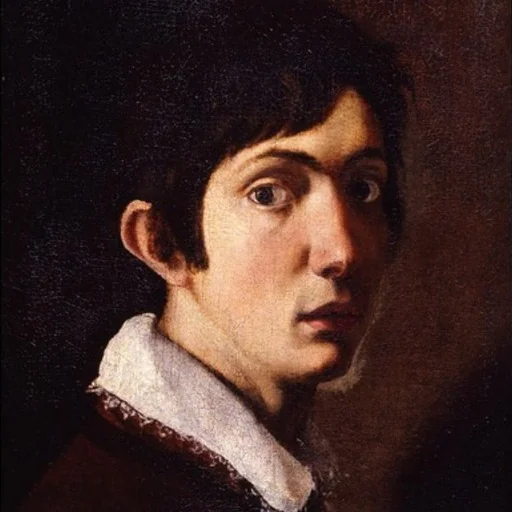
Francesco Furini ( 10 apr. 1603 – 19 August 1646) was an Italian Baroque painter, poet and priest. He was a leading painter in Florence in the second quarter of the 17th century and also worked in Rome. He was noted for…