Artwork
Band of horses
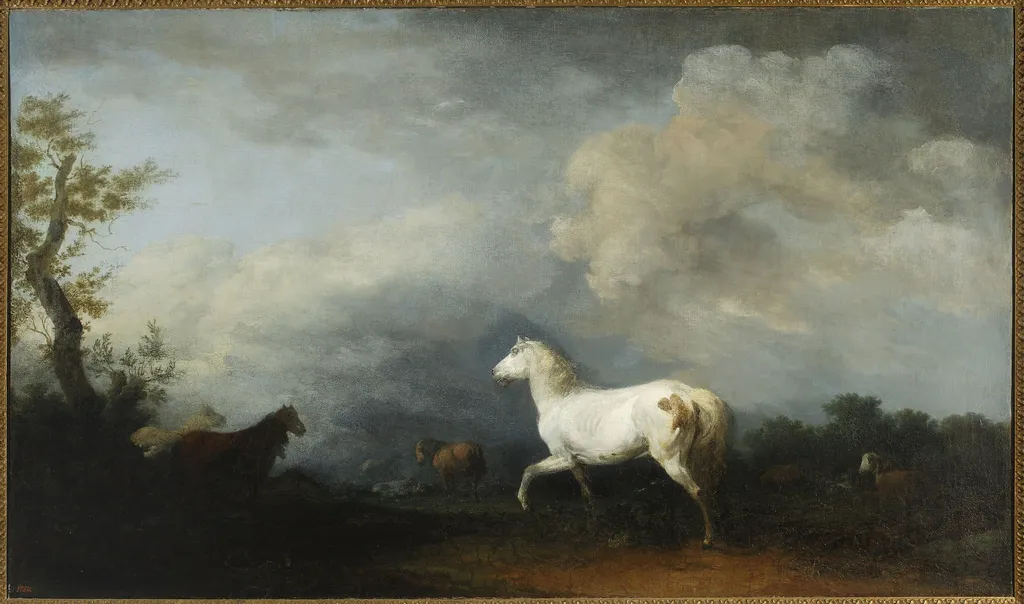
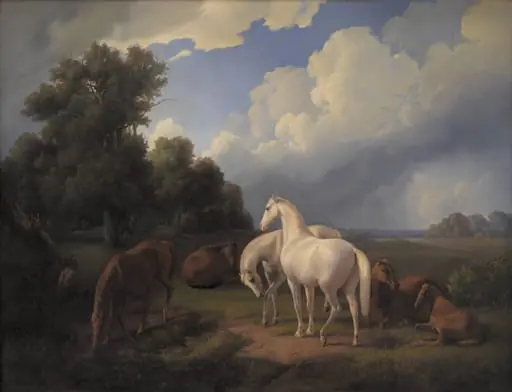
Band of horses is an oil painting by the Rococo painting artist Francesco Giuseppe Casanova. It dates from 1775 and is held in the collection of the National Museum in Warsaw.
About this work
Overview
Painted around 1775 by Francesco Giuseppe Casanova, *Band of Horses* is an oil-on-canvas work that captures a group of horses in a naturalistic landscape.
Painted around 1775 by Francesco Giuseppe Casanova, *Band of Horses* is an oil-on-canvas work that captures a group of horses in a naturalistic landscape. Though Casanova is better known for military subjects, this piece reflects a quieter, observational approach to animal life. It resides today in the National Museum in Warsaw, where it stands as an example of late Rococo sensibility applied to equestrian themes rather than courtly or mythological ones.
Subject & Meaning
The painting presents a loose gathering of horses in a pastoral setting—some standing still, others mid-motion, a few grazing. There is no narrative or human presence; the focus rests entirely on the animals’ natural behavior. The composition suggests a moment of suspended energy, as if the herd might move at any instant. This quiet dynamism reflects an interest in the autonomy of nature, a subtle shift from idealized animal portrayals common in earlier traditions.
Technique & Style
Casanova employed oil glazing to build subtle tonal variations in the horses’ coats, enhancing the texture of muscle and fur through layered translucent washes. Earthy browns, grays, and off-whites dominate, with delicate highlights suggesting sunlight filtering through clouds. The brushwork is precise yet fluid, capturing movement without theatricality. The background’s soft foliage and hazy sky recede gently, reinforcing depth without distracting from the central figures.
History & Provenance
The painting entered the collection of the National Museum in Warsaw in the 19th century, likely as part of a broader acquisition of European works. Its origins trace to Casanova’s time in Central Europe, where he worked for aristocratic patrons after leaving Italy. While little documentation survives about its early ownership, its presence in Warsaw suggests it was valued for its technical refinement and quiet realism, distinguishing it from more flamboyant Rococo fare.
Context
In the 1770s, European art saw a growing interest in natural observation, even within Rococo’s ornamental framework. Casanova’s *Band of Horses* aligns with this trend, echoing the animal studies of contemporaries like George Stubbs, though without the scientific precision. The absence of human figures and the emphasis on spontaneous movement reflect a broader cultural shift toward valuing nature as a subject worthy of quiet contemplation, not just decoration.
Legacy
Though not widely exhibited beyond Poland, the painting remains a notable example of Casanova’s versatility beyond battle scenes. It contributes to the understanding of how Rococo aesthetics adapted to secular, non-narrative subjects. Its preservation in Warsaw offers insight into the tastes of Central European collectors who appreciated restrained realism, helping to bridge the gap between ornamental tradition and emerging 19th-century naturalism.
Artist & collection
Artist
Francesco Giuseppe Casanova (1 June 1727, London – 8 July 1803, near Mödling) was an Italian painter who specialised in battle scenes.

 Kicking Horse
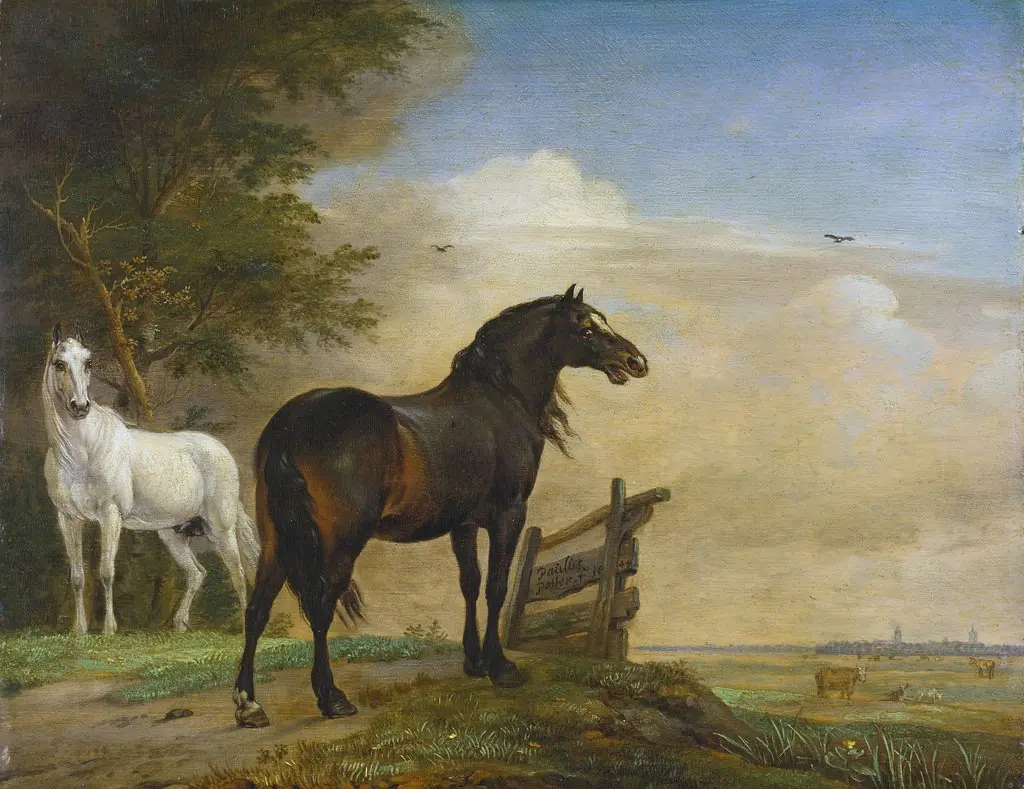 Two Horses in a Meadow near a Gate
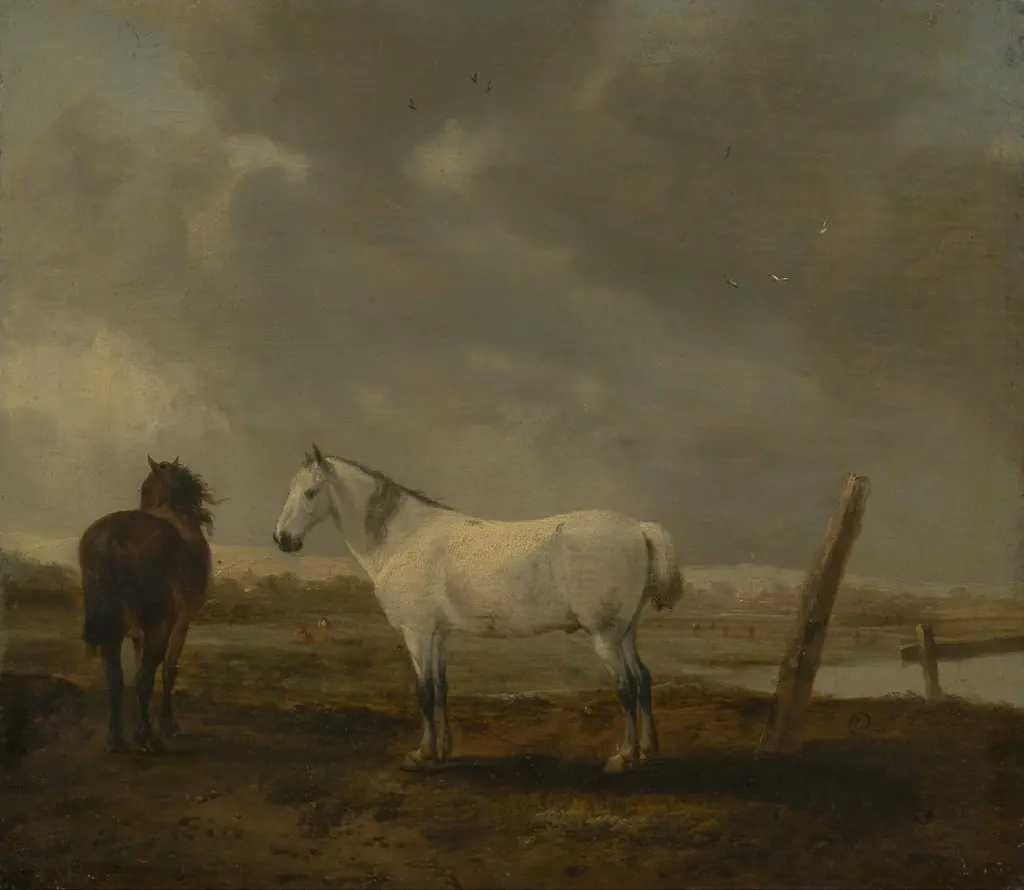 Horses in the Pasture
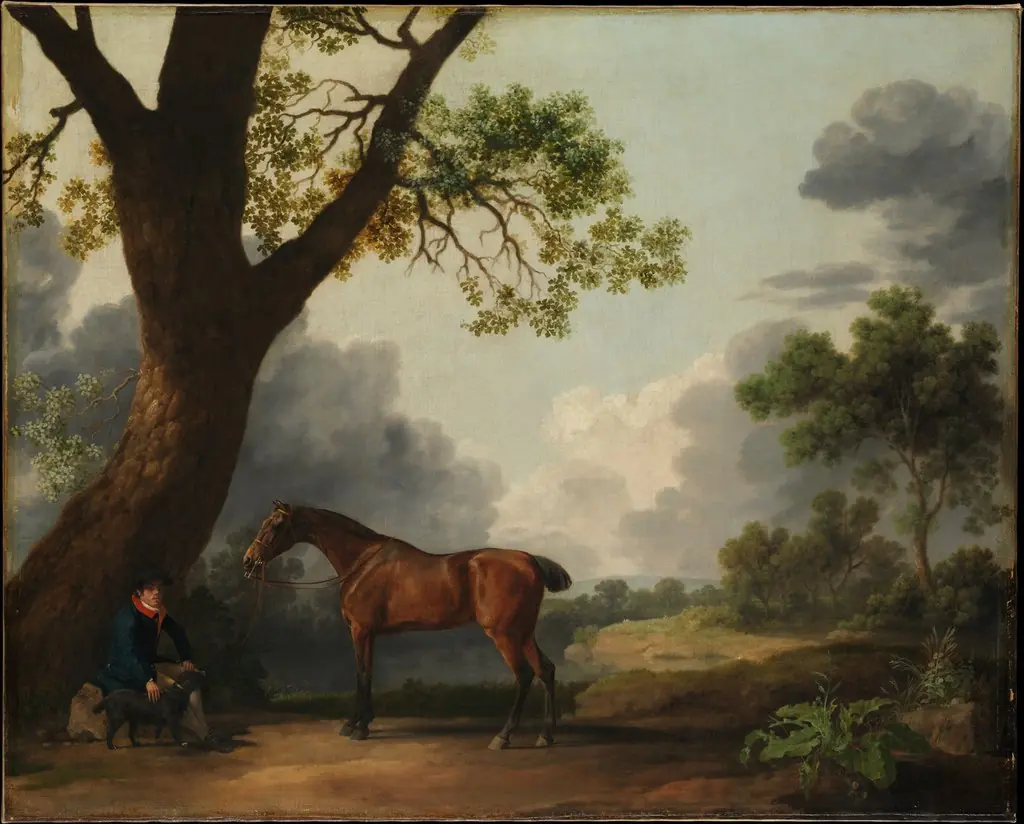 The Third Duke of Dorset's Hunter with a Groom and a Dog
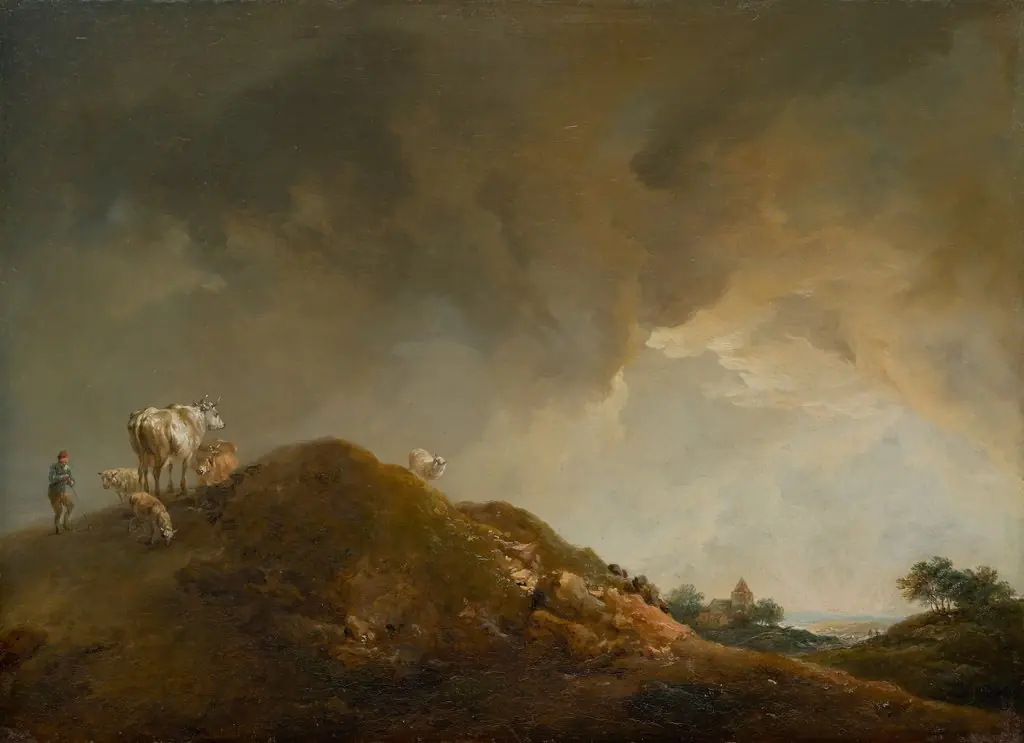 Rolling landscape with cows and sheep
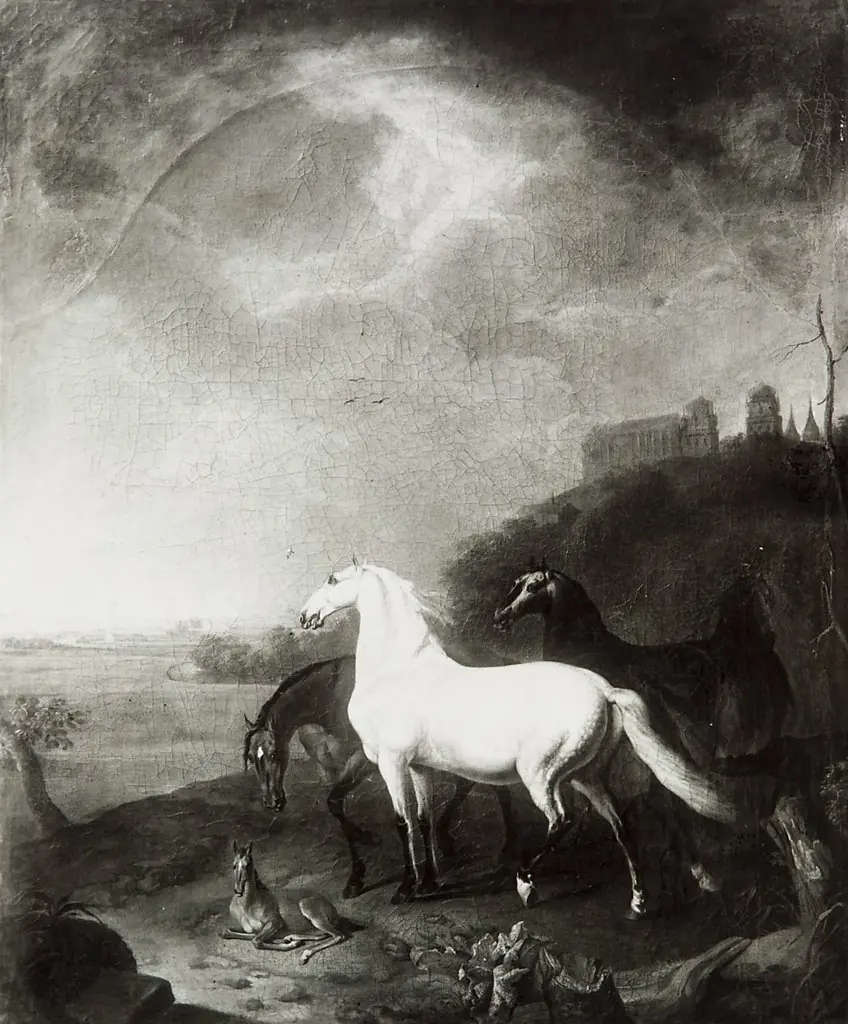 Pferde auf der Weide
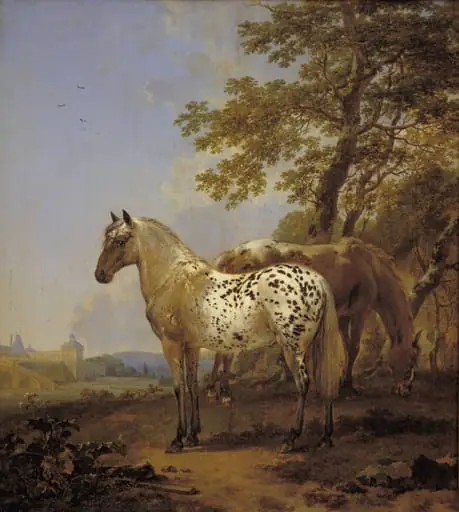 Two Horses in a Landscape
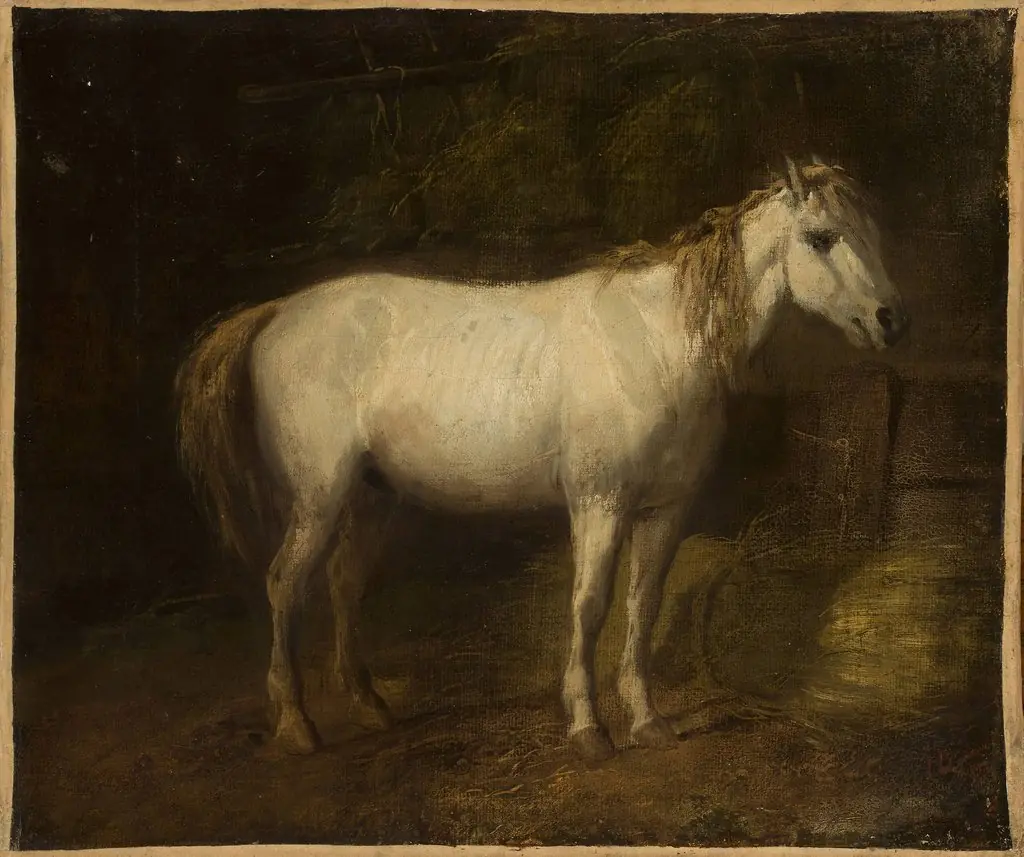 Horse in the stables
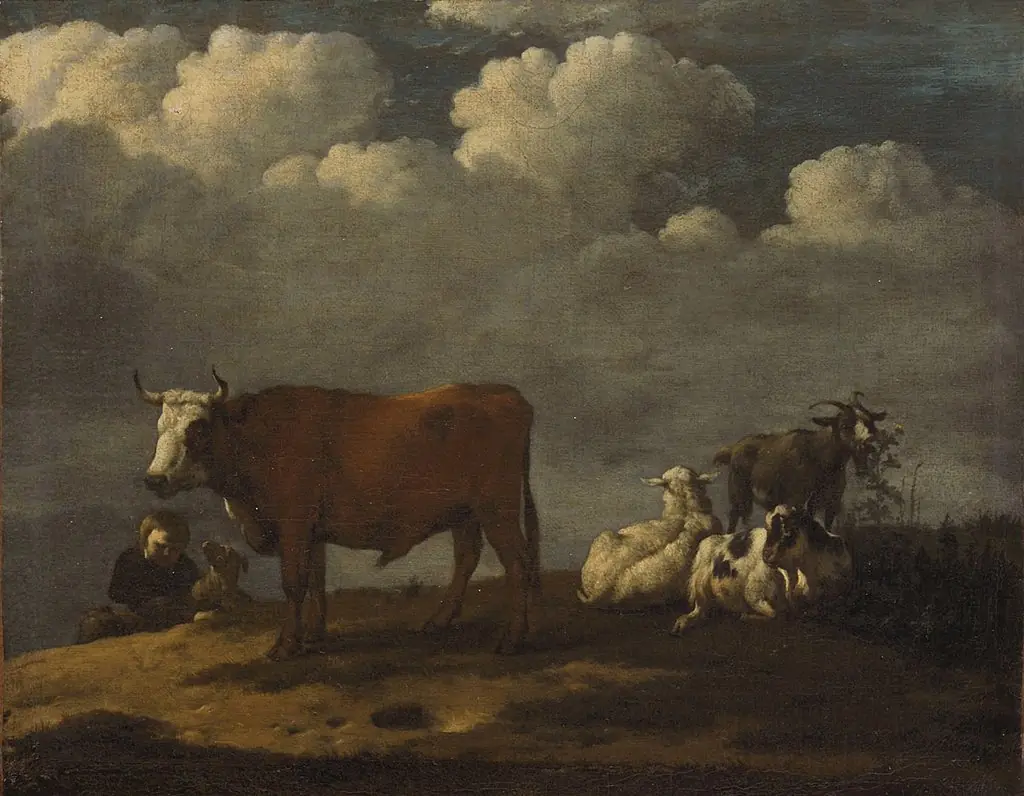 Hirtenknabe mit Vieh auf der Weide
 Lucia, Whimsey, Bellona, Hertha, Olga
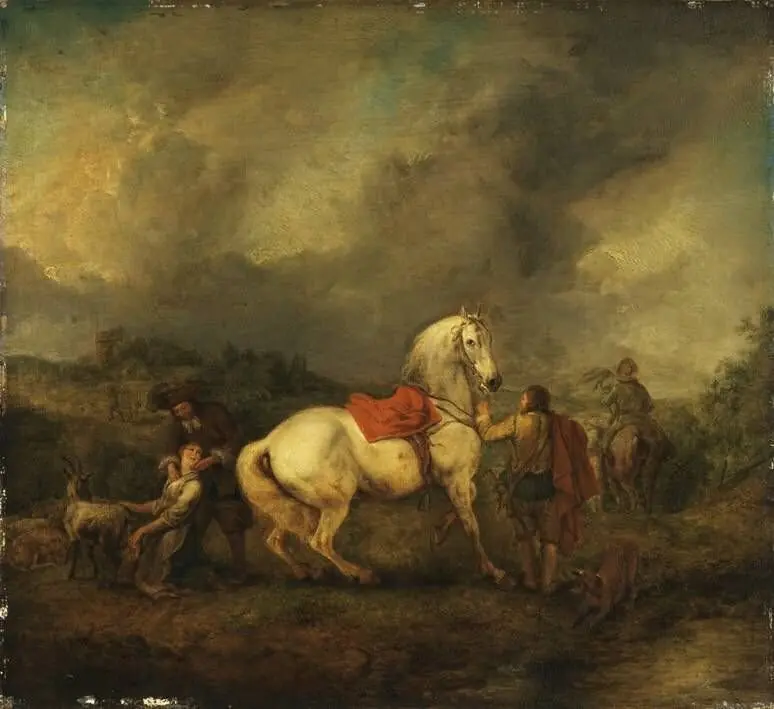 Falconer before Riding Out
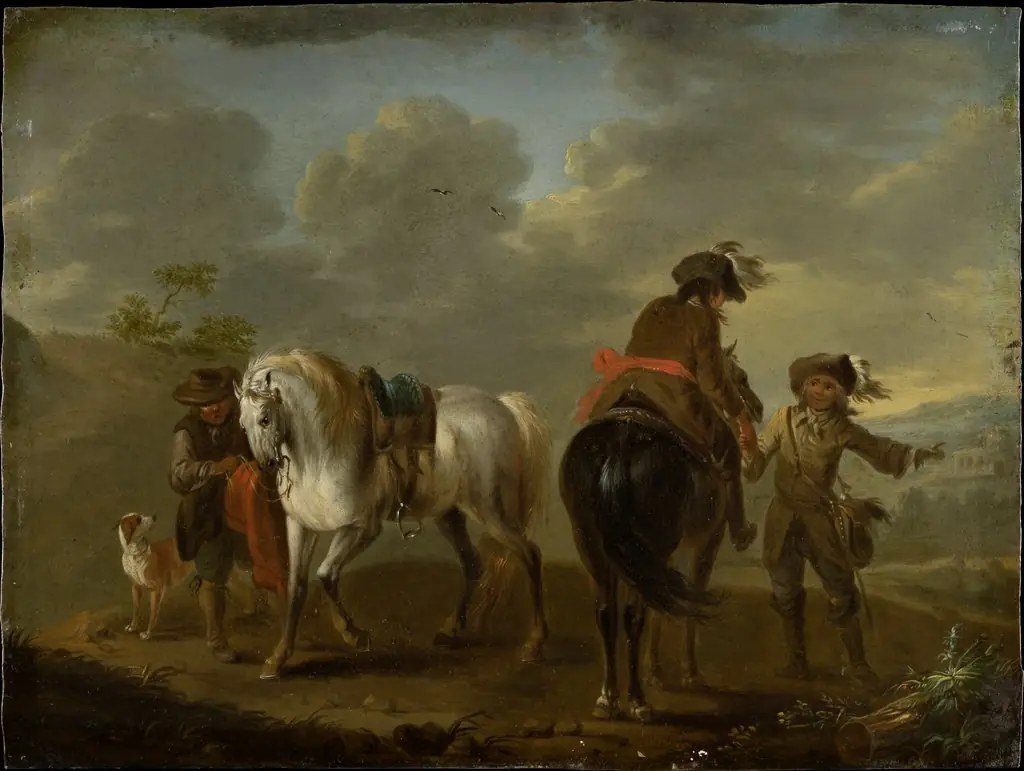 Landscape with Riders