Artwork
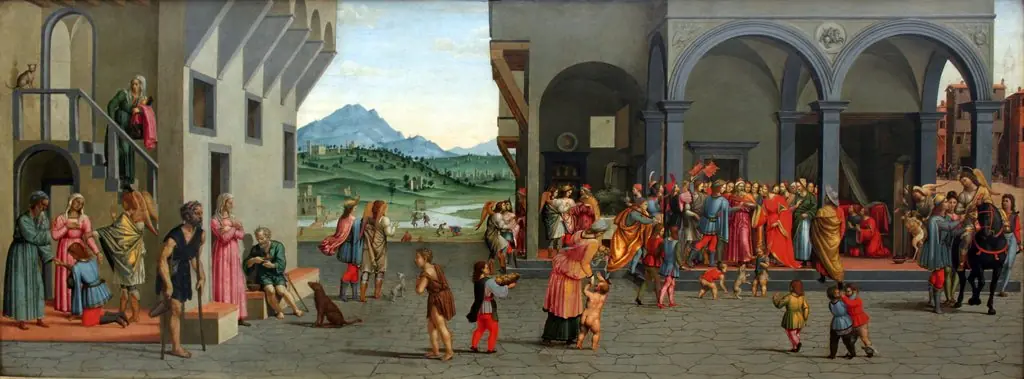
John the Baptist being carried to Zacharias
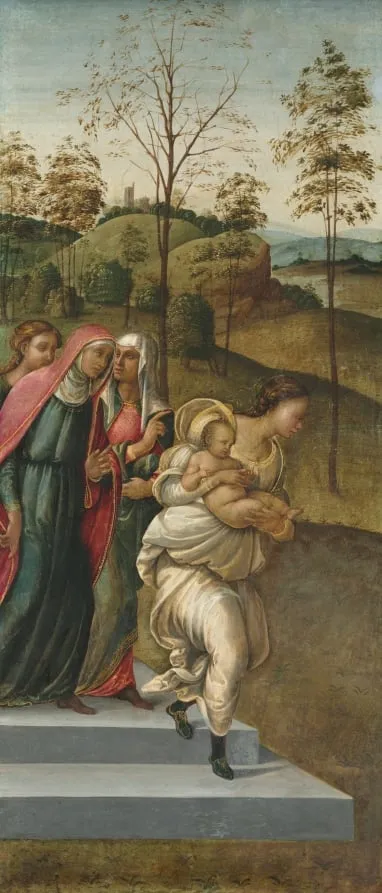
John the Baptist being carried to Zacharias is an unspecified painting by the High Renaissance artist Francesco Granacci. It dates from 1510 and is held in the collection of the Cleveland Museum of Art. The panel portrays the infant John the Baptist being presented to the elderly priest Zacharias within a temple setting.
About this work
You see a baby—John the Baptist—being handed to an old man in a temple.
This painting was part of a bigger story about John’s life, spread across three cities. Scholars still argue over who painted what. Some think Michelangelo, Granacci’s friend, may have helped with the folds in that white robe.
To see the other panels, look up *Italy, 16th century*.
Overview
The panel portrays the infant John the Baptist being presented to the elderly priest Zacharias within a temple setting. It forms one segment of a larger narrative series illustrating episodes from John’s life, a series whose surviving pieces are now housed in institutions in New York and Liverpool.
Subject & Meaning
The scene captures the biblical moment when Zacharias, unaware of his impending fatherhood, receives the newborn John. The composition emphasizes the transfer of the child, highlighting themes of prophecy and divine appointment that underpin the saint’s later role.
Technique & Style
The work displays careful modeling of figures and a nuanced handling of drapery, particularly the white robe that folds around the infant. The treatment of light and texture suggests the involvement of multiple hands, with some scholars attributing the delicate fabric work to a collaborator familiar with Michelangelo’s approach.
History & Provenance
Originally part of a multi‑panel cycle commissioned in the 16th century, the panel eventually entered separate collections, ending up in the United States and the United Kingdom. Its fragmented state reflects the dispersal of many Renaissance narrative series over the centuries.
Context
Art historians have not reached consensus on the panel’s authorship. While the primary artist is unidentified, some propose that Michelangelo Buonarroti, a close associate of Francesco Granacci, may have contributed, especially to the rendering of the white drapery, indicating a collaborative workshop practice.
Artist & collection

Artist
Francesco Granacci (1469 – 30 November 1543) was an Italian Renaissance painter active primarily in his native Florence.

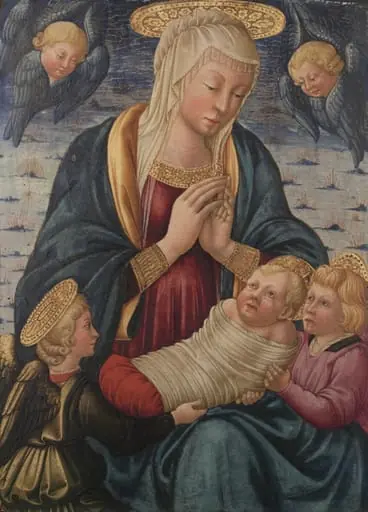 Virgin and Child with Angels
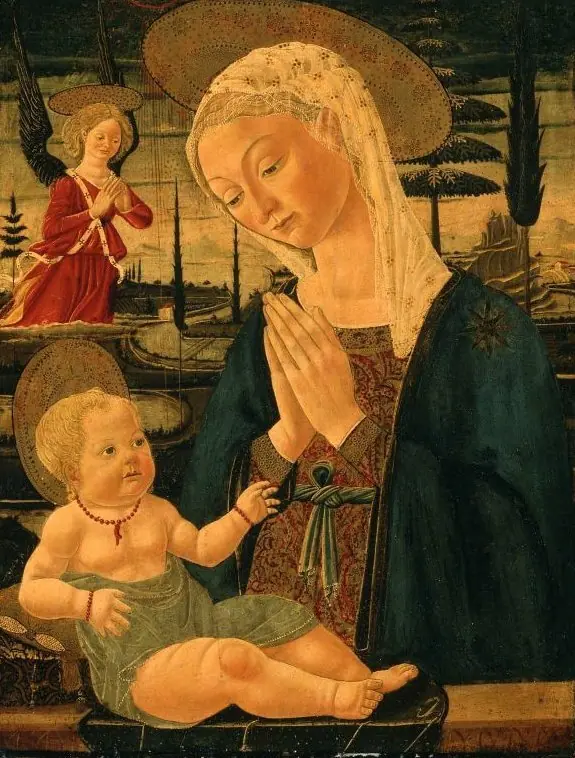 Virgin and Child with an Angel
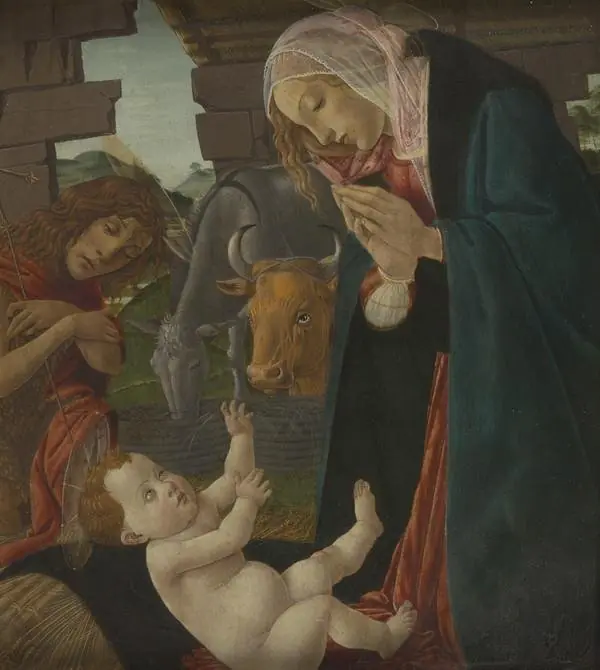 The Virgin and Saint John the Baptist Adoring the Infant Christ
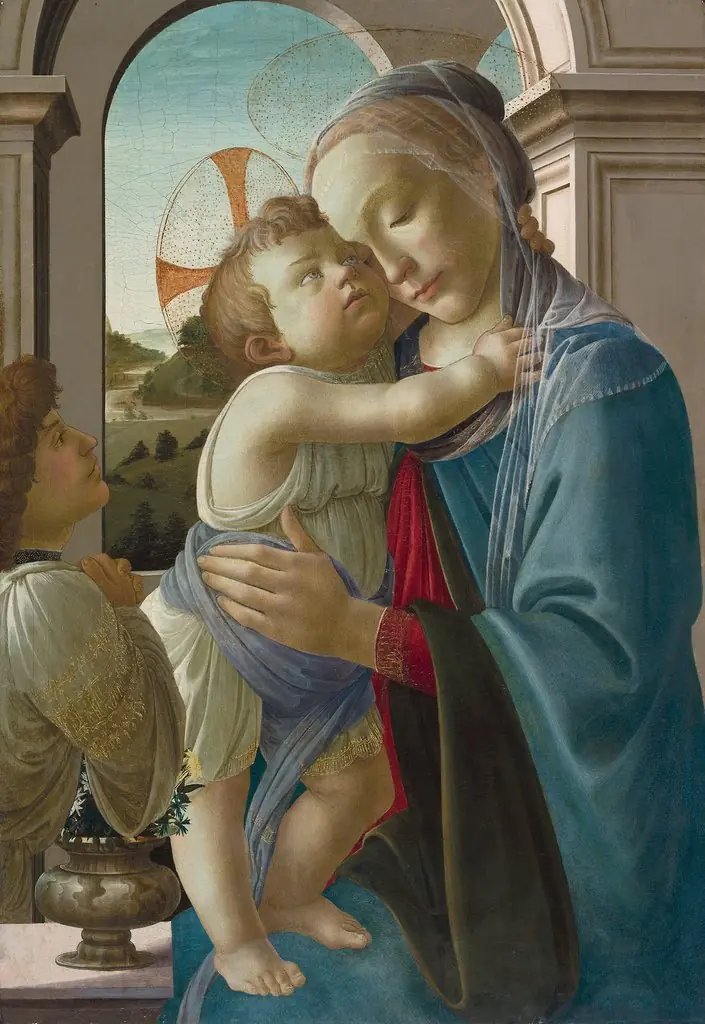 Virgin and Child with an Angel
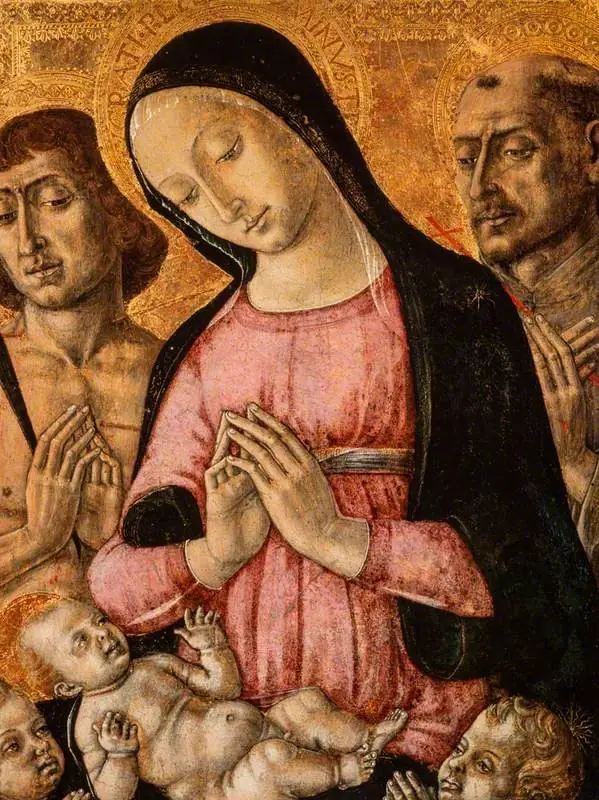 The Virgin and Child with Saint Sebastian, Saint Francis and Angels
 Virgin and Child with an Angel
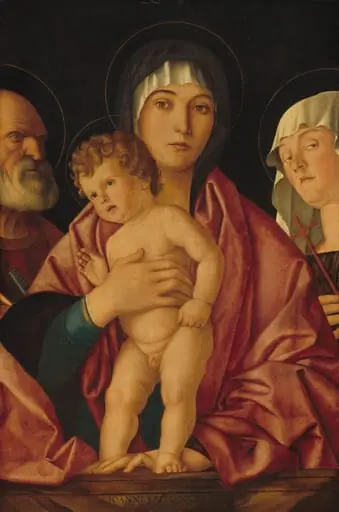 Madonna and Child with Saints
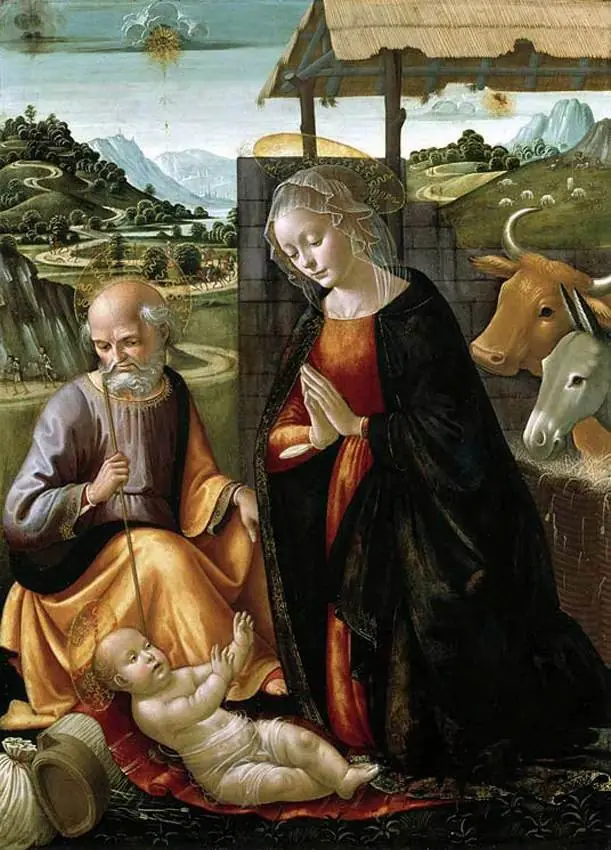 The Nativity
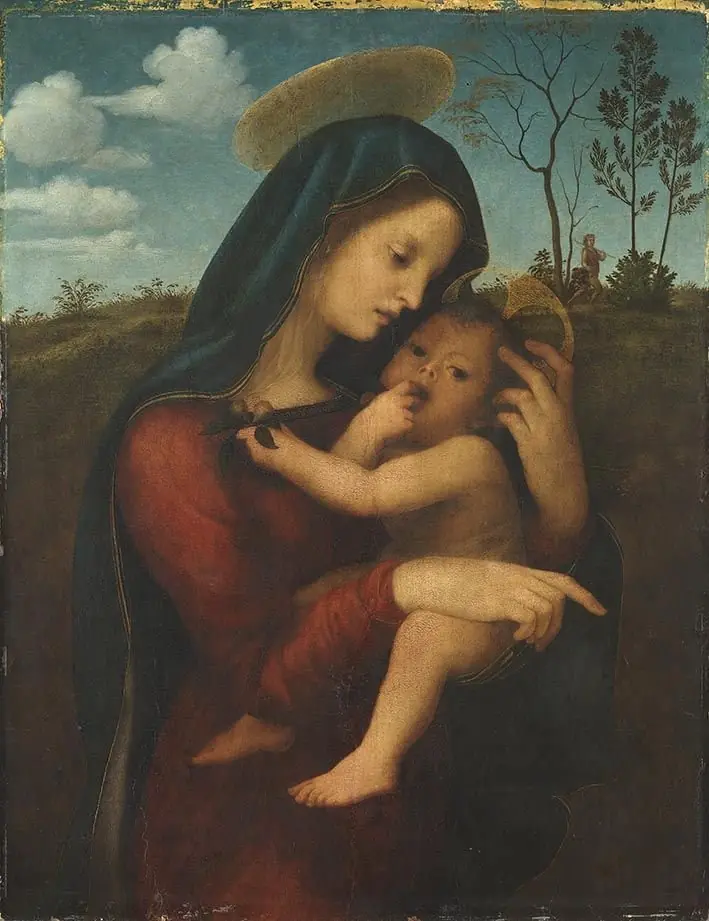 Madonna with Christ-child
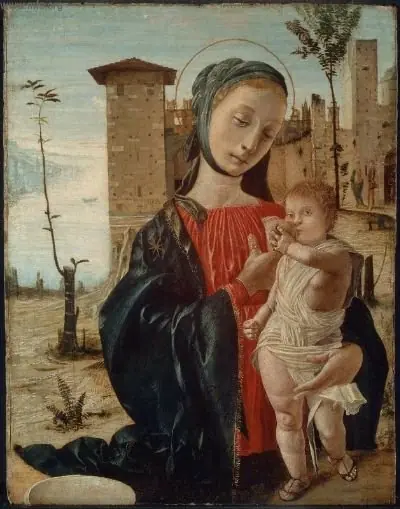 Madonna lactans
 Holy Family with Saints John the Baptist and Catherine of Alexandria
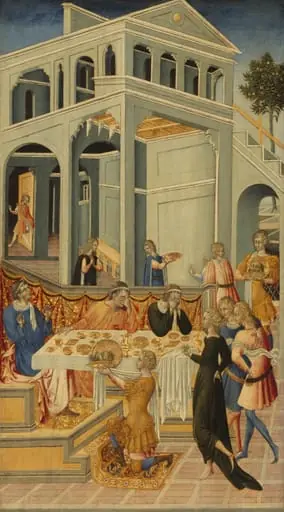 The Head of Saint John the Baptist Brought before Herod