Artwork
The Golden Age
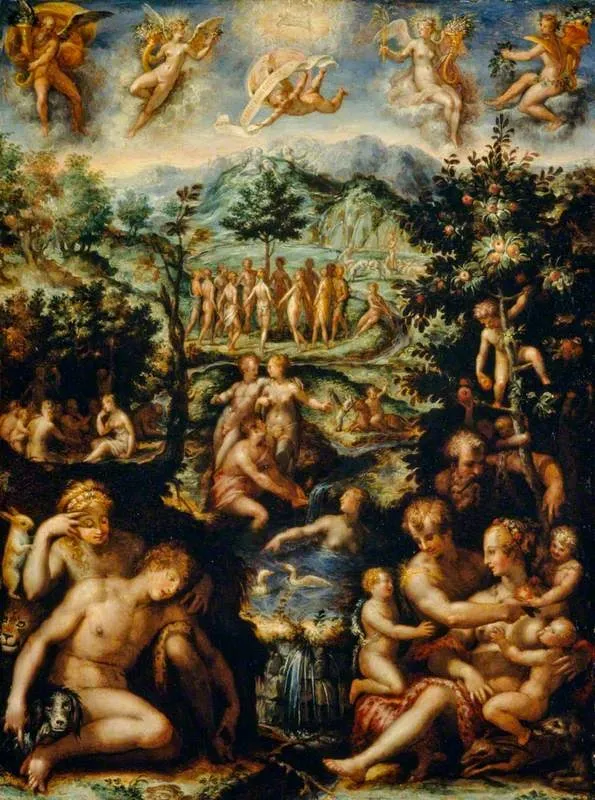
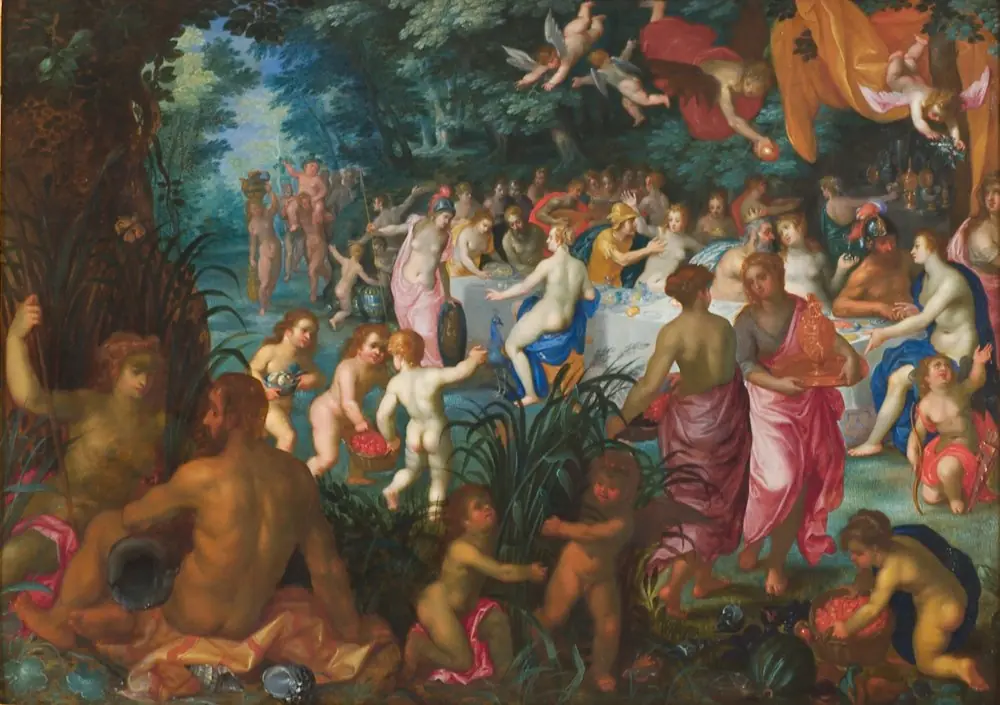
The Golden Age is an oil painting by the Early Baroque Italian artist Francesco Morandini. It dates from 1566 and is held in the collection of the National Galleries Scotland.
About this work
Overview
Francesco Morandini, known as il Poppi, completed this oil painting in 1566 during his time in Florence. A pupil of Vincenzo Borghini and assistant to Giorgio Vasari, Morandini worked within the intellectual and artistic circles of the Medici court. The work reflects the period’s interest in classical themes, rendered with careful attention to naturalistic detail and subdued tonality.
Subject & Meaning
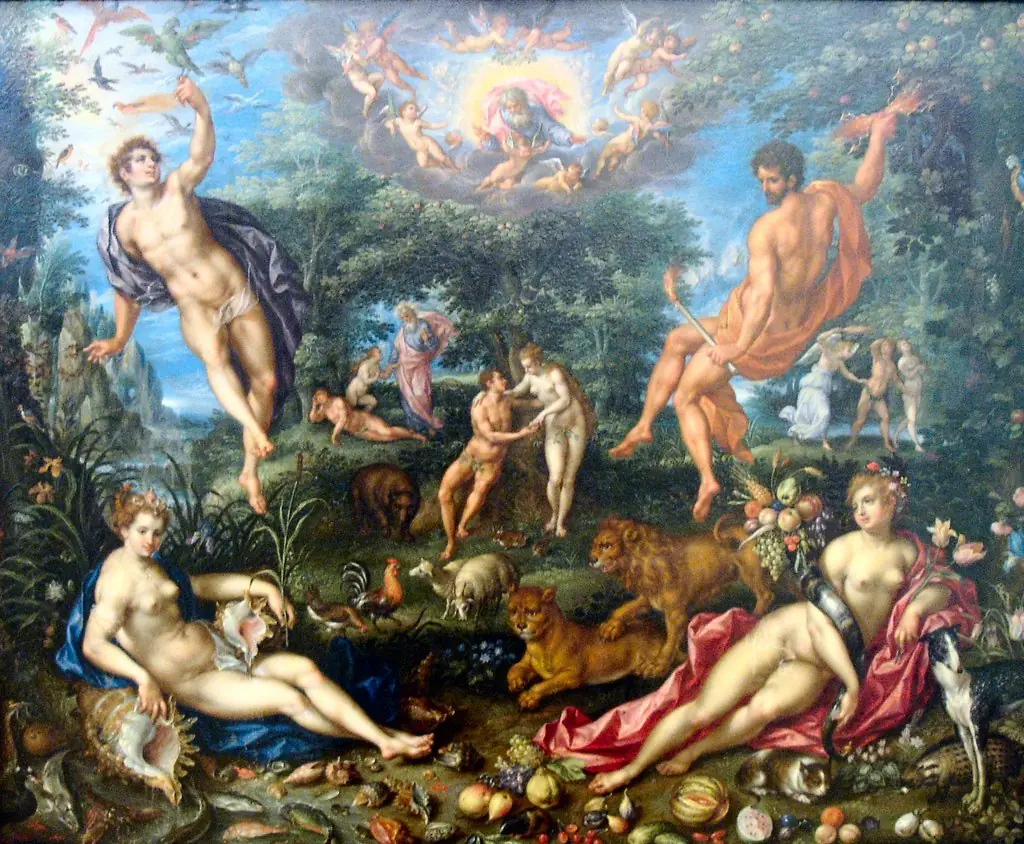
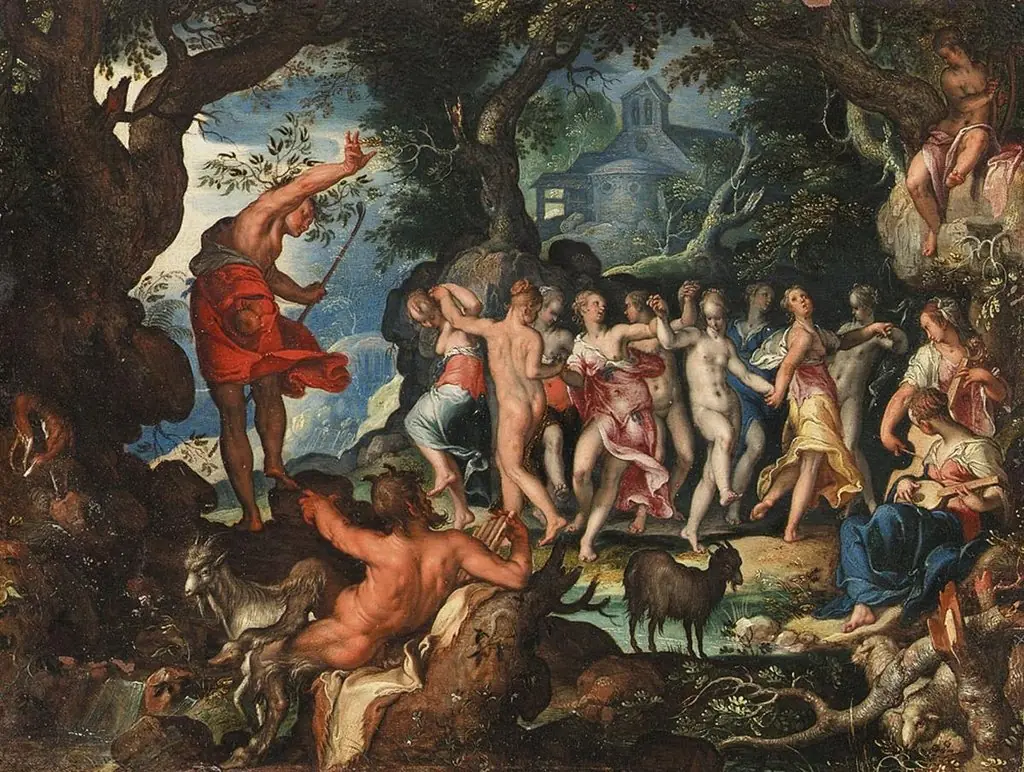
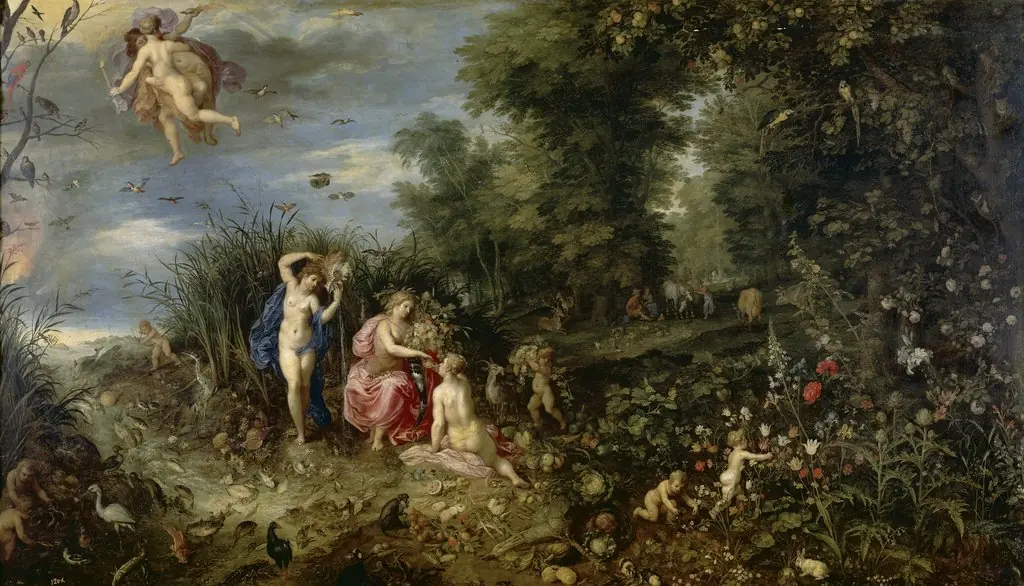
The scene evokes the mythological concept of a primordial era when humans lived in harmony with nature, free from labor and conflict.
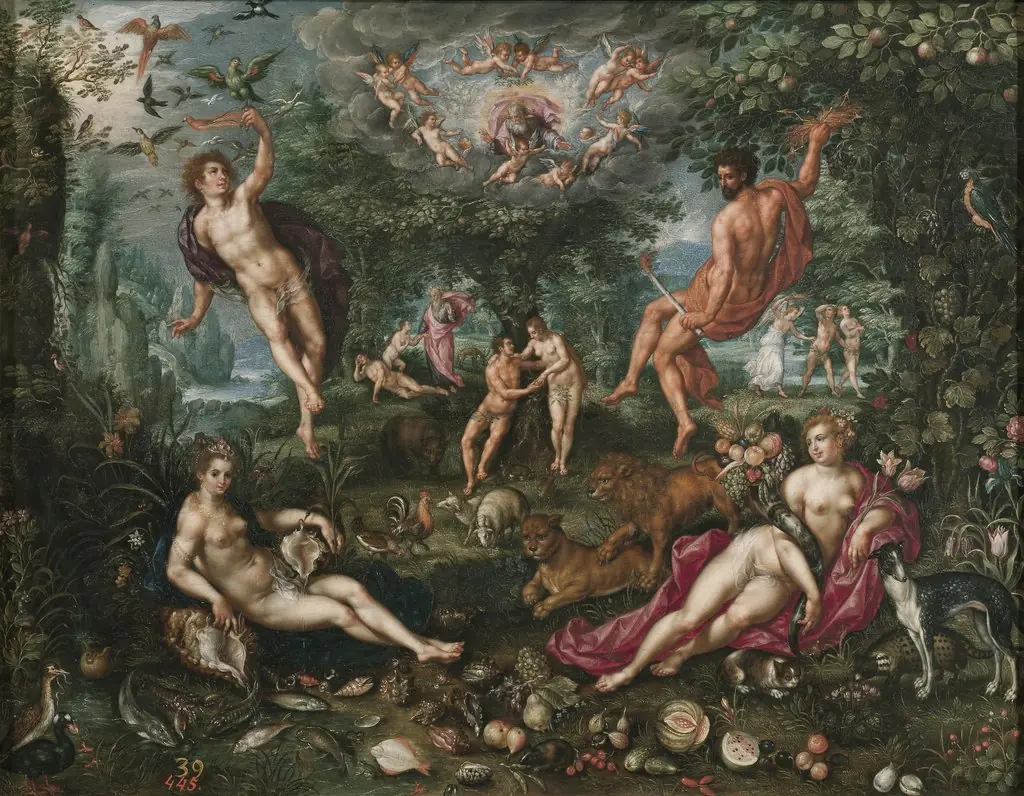
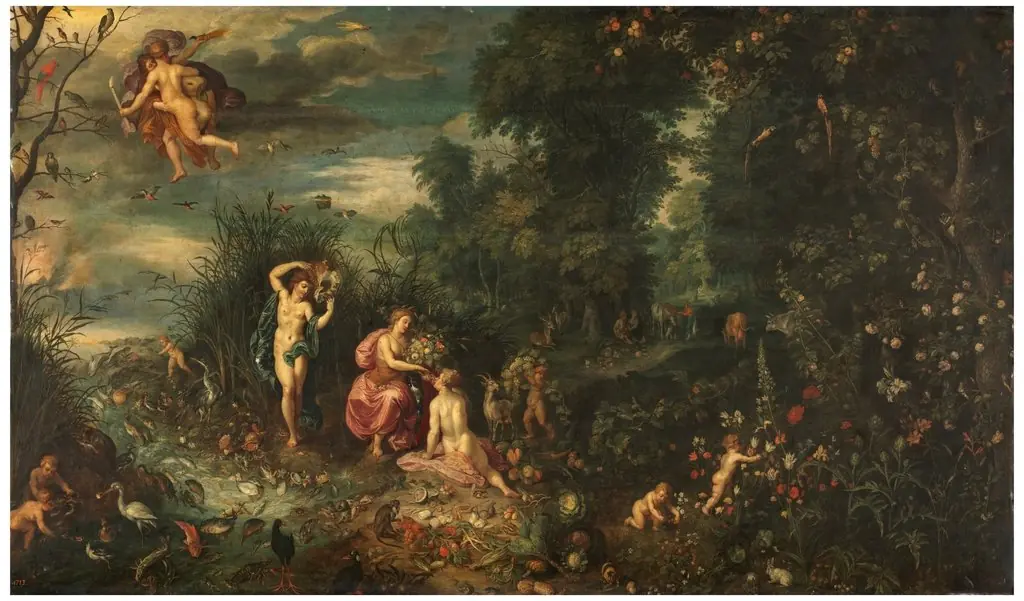
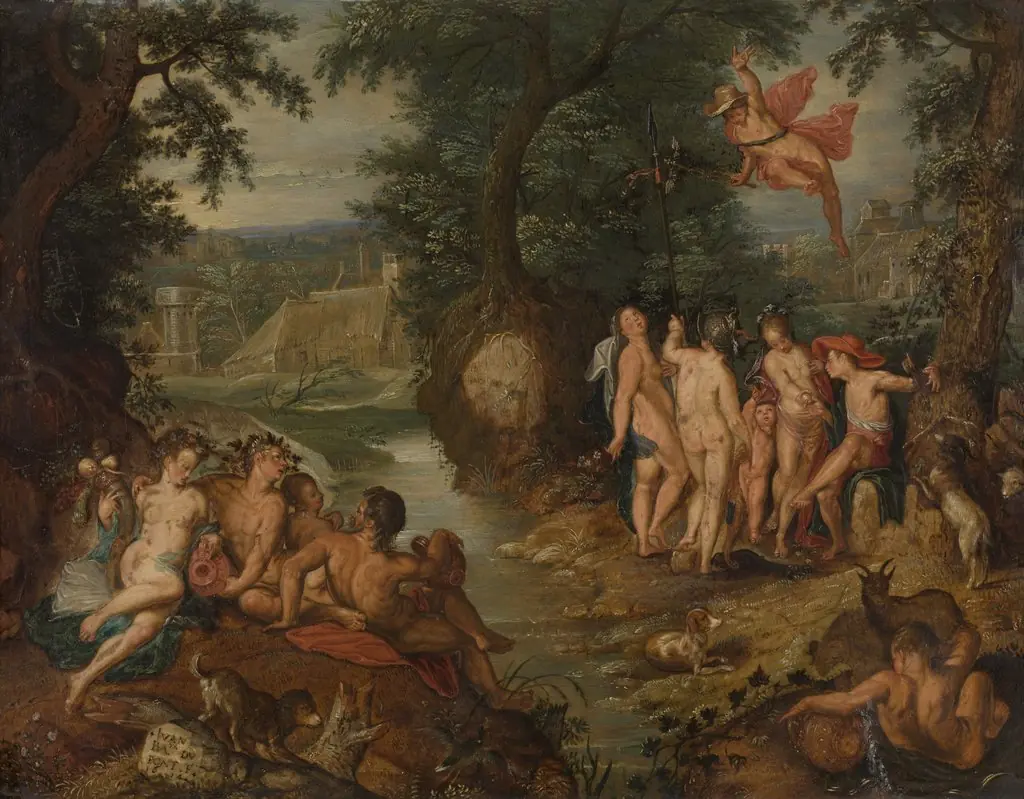
The scene evokes the mythological concept of a primordial era when humans lived in harmony with nature, free from labor and conflict. Figures—some nude, others draped—gather peacefully in a wooded landscape. A woman cradles an infant while another observes, suggesting themes of innocence and continuity. Musical instruments in the background imply a time before art became formalized, echoing ancient ideals of natural abundance.
Technique & Style
Morandini employed oil paint to achieve subtle gradations of light and texture, particularly in the rendering of foliage and skin. The palette is restrained, dominated by earthy greens and browns, enhancing the painting’s quiet, contemplative mood. Figures are arranged in a shallow space, with careful attention to anatomical detail and naturalistic posture, reflecting the influence of Mannerist conventions still prevalent in mid-16th-century Florence.
History & Provenance
Painted in 1566, the work remained in Italian collections before entering the Scottish National Gallery’s holdings. Its journey to Scotland is undocumented in public records, but its presence there suggests acquisition during the 19th-century expansion of European art collections. The painting’s attribution to Morandini is supported by stylistic parallels to his documented workshop contributions, particularly in decorative cycles for the Medici.
Context
Created during the late Renaissance, the painting responds to a broader revival of classical mythology among Florentine humanists. Though the Baroque style was emerging elsewhere, Morandini’s approach retains Mannerist tendencies—refined composition, idealized forms, and symbolic restraint. The subject aligns with courtly interests in allegory and the idealized past, common in Medici-sponsored projects like the Studiolo of Francesco I, where Morandini assisted Vasari.
Legacy
Morandini’s work is not widely known outside scholarly circles, and this painting remains one of his few surviving easel works. It offers insight into the transition between Renaissance humanism and early Baroque sensibility in Florence. While not influential in shaping major movements, it exemplifies the quiet, intellectual engagement with antiquity practiced by lesser-known court artists of the period.
Artist & collection
Artist
Francesco Morandini (c. 1544–1597) was an Italian painter active in Florence, working in a Mannerist style. He was also called il Poppi after his native town. He was a pupil of Vincenzo Borghini, and later he was…