Artwork
The Sibyls: The Phrygian Sibyl
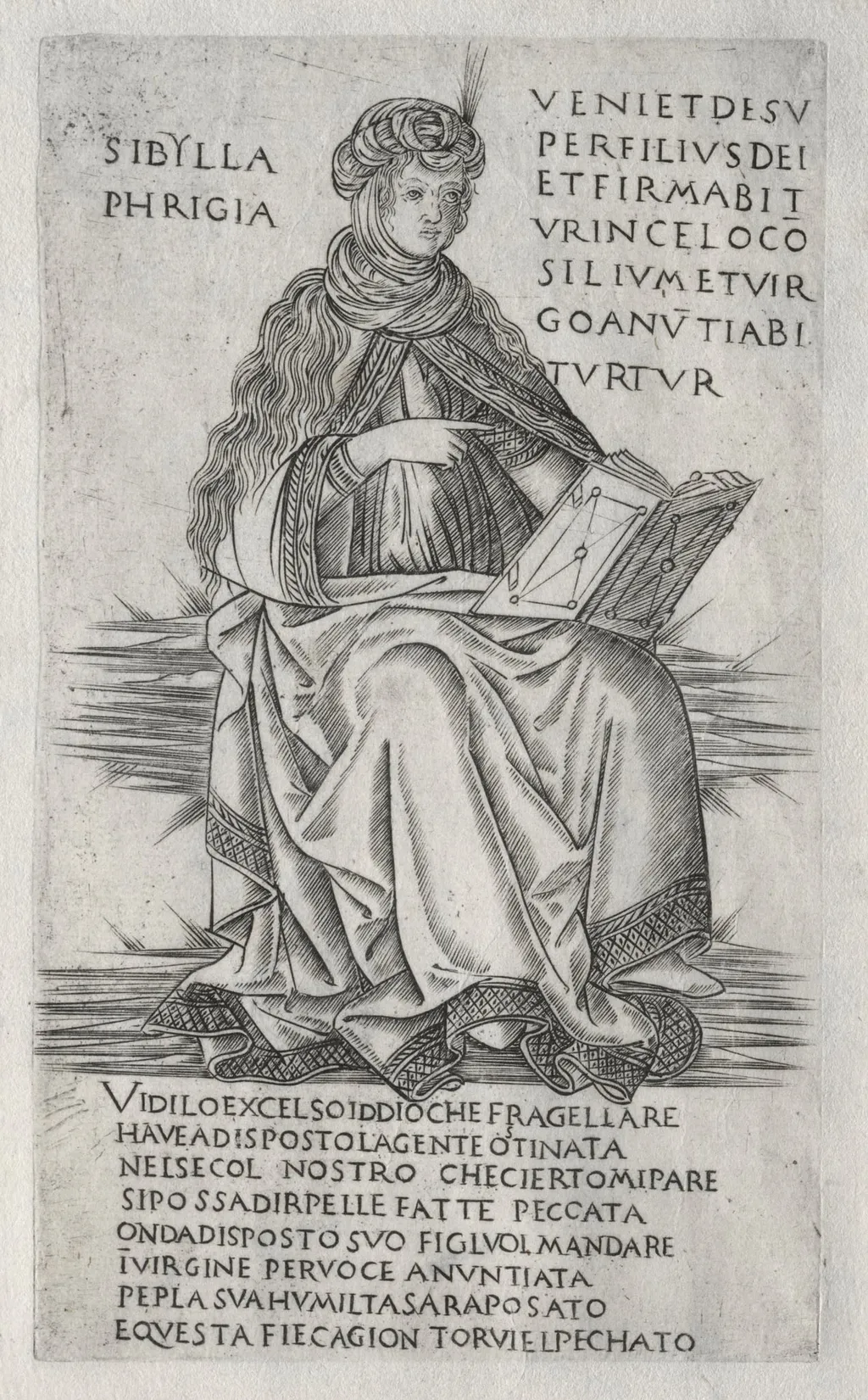
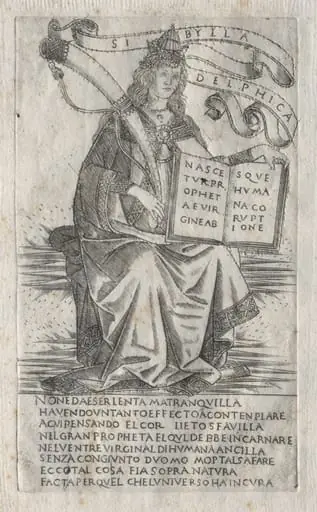
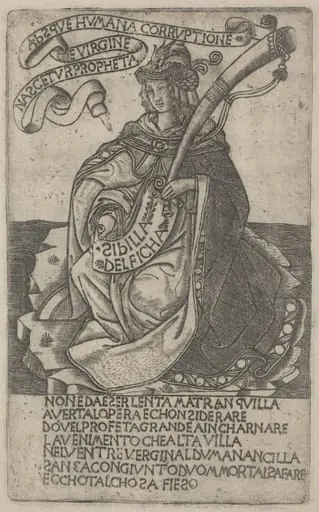
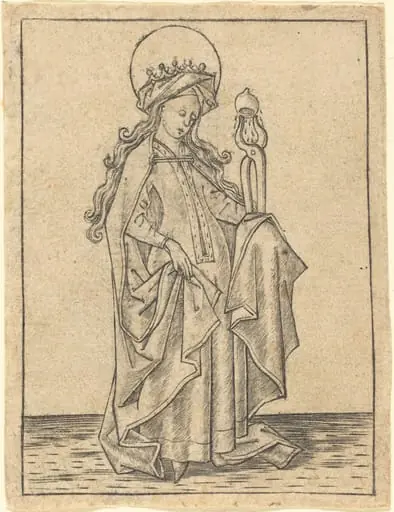
The Sibyls: The Phrygian Sibyl is a print by the Renaissance artist Francesco Rosselli. It dates from 1475 and is held in the collection of the Cleveland Museum of Art.
About this work
Overview
Executed in a delicate, linear style, it reflects early Renaissance interest in classical mythology and religious symbolism.
Created around 1475 by Francesco Rosselli, this print portrays the Phrygian Sibyl, one of the prophetic women of antiquity. Executed in a delicate, linear style, it reflects early Renaissance interest in classical mythology and religious symbolism. The work is part of a series depicting sibyls, intended to bridge pagan prophecy with Christian eschatology. It resides in the collection of The Cleveland Museum of Art.
Subject & Meaning
The Phrygian Sibyl was believed to have foretold the coming of Christ, making her a figure of theological significance in medieval and Renaissance thought. Here, she is depicted not as a wild seer but as a composed, learned woman, seated with quiet authority. Her downward gaze and clasped hands suggest inner revelation rather than dramatic prophecy, aligning her with humanist ideals of contemplative wisdom.
Technique & Style
Rosselli employed fine, controlled lines typical of early engraving and woodcut traditions. The flowing drapery and subtle modeling of the figure convey volume without heavy shading, relying on contour and texture. The warm, flat background enhances the figure’s presence while avoiding spatial complexity, reflecting a transitional style between late Gothic formality and emerging Renaissance naturalism.
History & Provenance
The print was likely produced in Florence during the 1470s, a period of renewed interest in classical texts and prophetic imagery. It entered the Cleveland Museum of Art’s collection in the 20th century, having passed through private European collections. Its survival in good condition offers insight into the circulation of small-scale religious prints among educated patrons of the time.
Context
In late 15th-century Italy, sibyls were frequently paired with Old Testament prophets in church decorations, symbolizing the universality of divine revelation. Rosselli’s print aligns with this tradition, drawing from manuscript illuminations and printed books that circulated among humanist circles. The figure’s serene demeanor reflects a broader cultural shift toward introspective, dignified representations of spiritual authority.
Legacy
Though not widely known today, Rosselli’s Phrygian Sibyl exemplifies how early Renaissance artists adapted classical motifs for Christian narratives. Its restrained elegance influenced later depictions of sibyls in altarpieces and printed series. As a small, portable image, it helped disseminate these symbolic figures beyond major artistic centers, contributing to their enduring presence in Western visual culture.
Artist & collection

Artist
Francesco Rosselli was an Italian miniature painter, and engraver of maps and old master prints.