Artwork
Delphian Sibyl
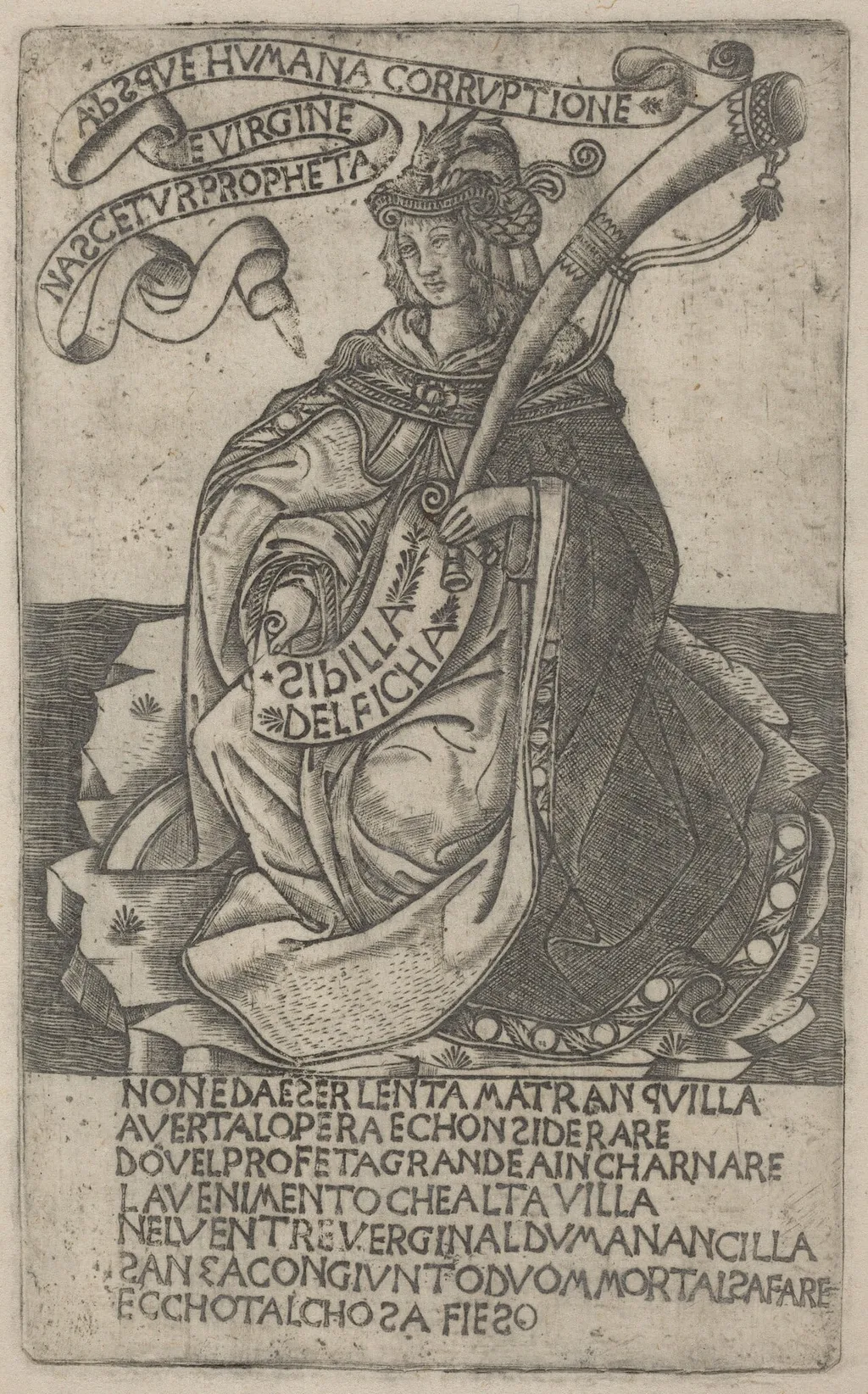
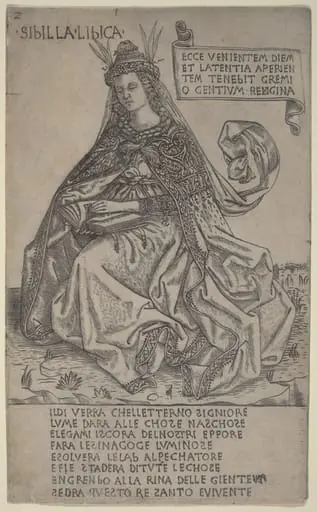
Delphian Sibyl is an ink print by the Renaissance artist Italian 15th Century. It dates from 1401 and is held in the collection of the National Gallery of Art.
About this work
Overview
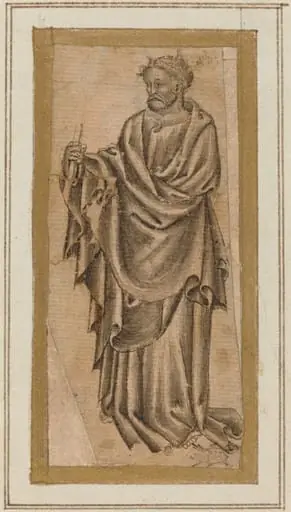
The work is an engraving titled *Delphian Sibyl*. It depicts a solitary, robed woman seated upon a rugged rock formation, clutching a scroll in one hand and a staff in the other. A leafy crown rests on her head, while a snake coils above her. Latin inscriptions encircle the image, including the name Sibilla Delfica on her garment.
Subject & Meaning
The figure represents the Delphian Sibyl, a prophetic priestess from ancient Greek tradition. The scroll and staff suggest her role as a messenger of divine knowledge, while the surrounding Latin text likely conveys a prophecy or admonition associated with her mythic authority.
Technique & Style
Executed as an engraving, the image relies on incised lines to render fine detail, such as the texture of the rocks, the foliage of the crown, and the sinuous form of the snake. The contrast between deep shadows and delicate line work creates a sense of depth and solemnity typical of early printmaking.
History & Provenance
The engraving’s origin, date, and creator are not specified in the provided information, and no record of its ownership or exhibition history is available.
Context
Sibyls were popular subjects in Renaissance and Baroque art, often employed to link classical prophecy with Christian themes. The inclusion of Latin text and symbolic objects aligns the work with this broader tradition of integrating ancient mythological figures into moral or theological discourse.
Artist & collection

Artist
This anonymous Italian engraver from the 1490s carved images that could be peeled apart like paper dolls—each knot in the "First Knot" print was cut from a single sheet so you could lift the loops right off the page.


![The Destruction of the Egyptian Idols [verso], by Italian 15th Century](https://artifactworldgallery.com/img/italian-15th-century--the-destruction-of-the-egyptian-idols-verso--646d3c2b8098cfee-w320.webp)
![The Flight into Egypt [recto], by Italian 15th Century](https://artifactworldgallery.com/img/italian-15th-century--the-flight-into-egypt-recto--8f4d5275d7f90f98-w320.webp)