Artwork
Saint Agatha
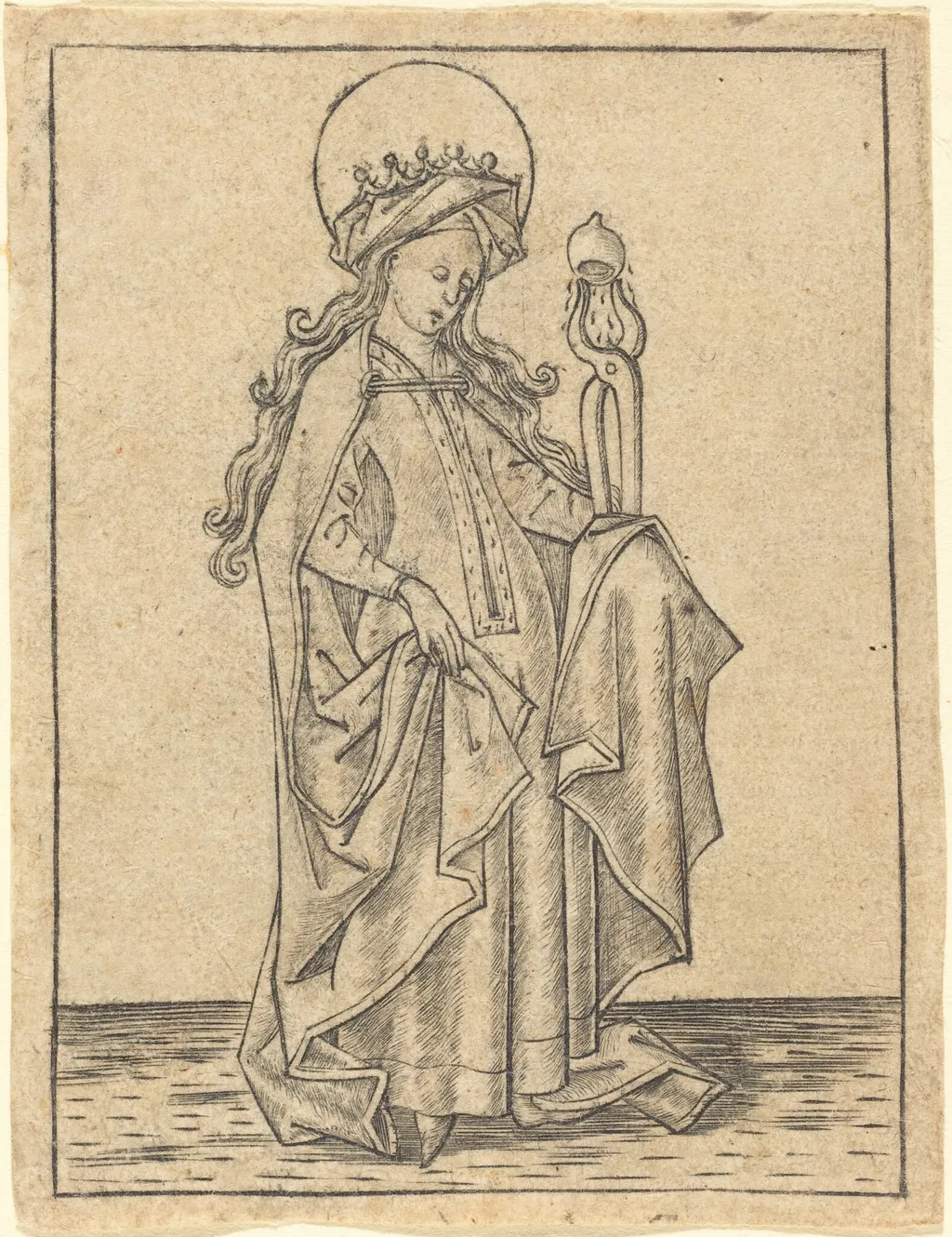
Saint Agatha is an ink print by the Renaissance artist Israhel van Meckenem. It dates from 1465 and is held in the collection of the National Gallery of Art.
About this work
Overview
Saint Agatha is a 1465 engraving by Israhel van Meckenem, a prominent German printmaker and goldsmith. The work depicts the Christian martyr Saint Agatha in a devotional context, characteristic of the religious genre in early Northern European art.
Subject & Meaning
The engraving shows Saint Agatha holding a plate with her severed breasts, a traditional attribute of her martyrdom. Additional symbols include a crown, necklace, and a tall candle, emphasizing her saintly status and suffering.
Technique & Style
Executed in black-and-white, the engraving features fine lines to achieve detailed textures and shadows, particularly in the subject's heavy, detailed robe. This showcases van Meckenem's skill in the engraving technique.
History & Provenance
Created around 1465, Saint Agatha is part of van Meckenem's prolific output as the most productive engraver of the 15th century. His activity spanned from 1465 until his death in 1503.
Context
The piece reflects the devotional imagery prevalent in the period, aligning with the religious themes common in early Northern European printmaking during the 15th century.
Artist & collection
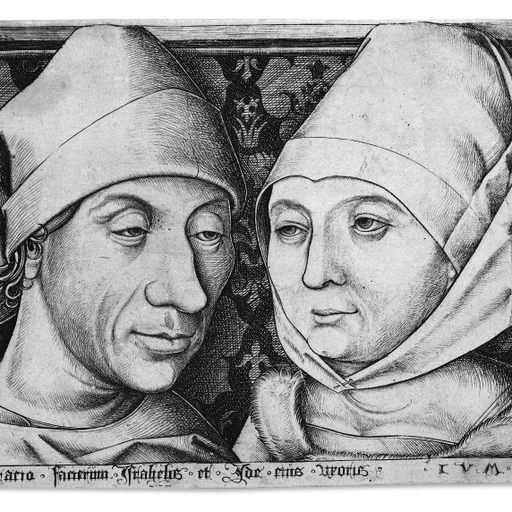
Artist
Israhel van Meckenem (c. 1445 – 10 November 1503), also known as Israhel van Meckenem the Younger, was a German printmaker and goldsmith, perhaps of a Dutch family origin. He was the most prolific engraver of the…

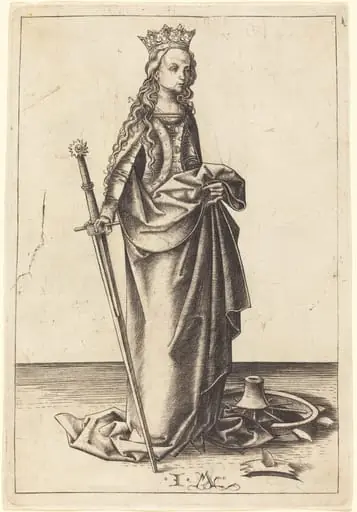 Saint Catherine
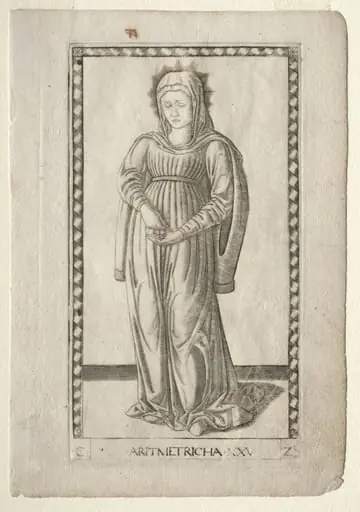 Arithmetic (from the Tarocchi, series C: Liberal Arts, #25)
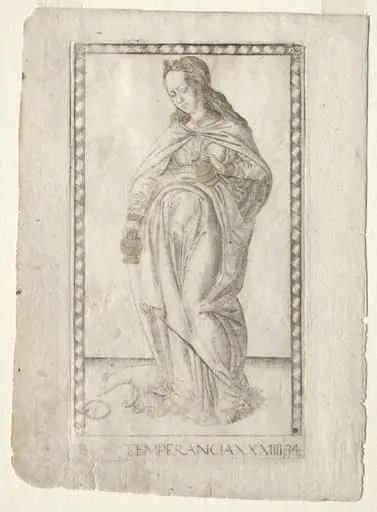 Temperance (from the Tarocchi, Series B: Cosmic Principles & Virtues, #34)
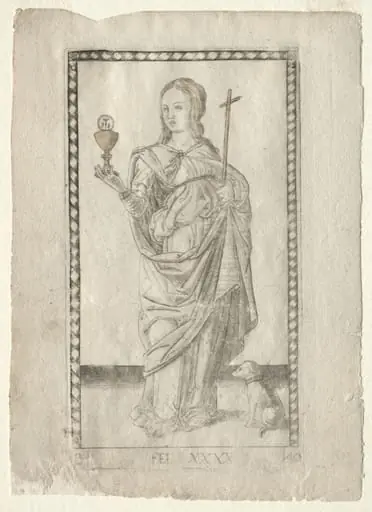 Faith (from the Tarocchi, series B: Cosmic Principles & Virtues, #40)
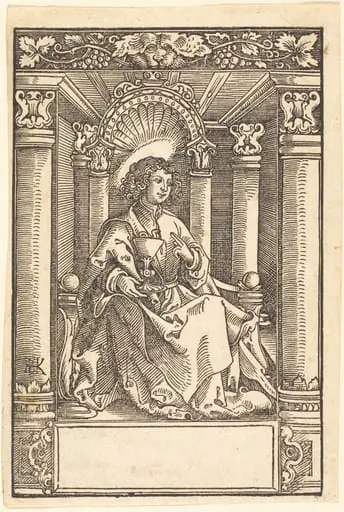 Saint John
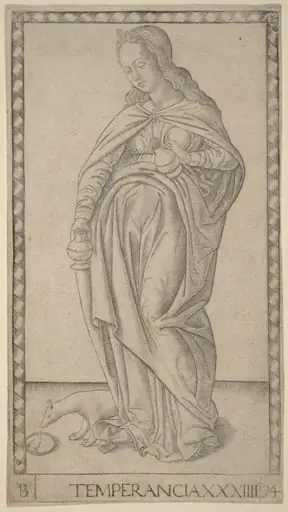 Temperancia (Temperance)
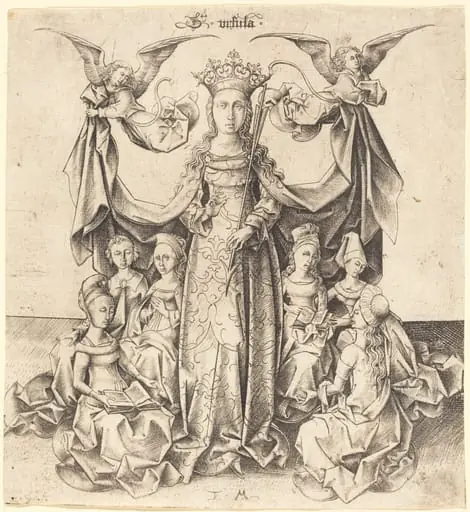 Saint Ursula and Her Maidens
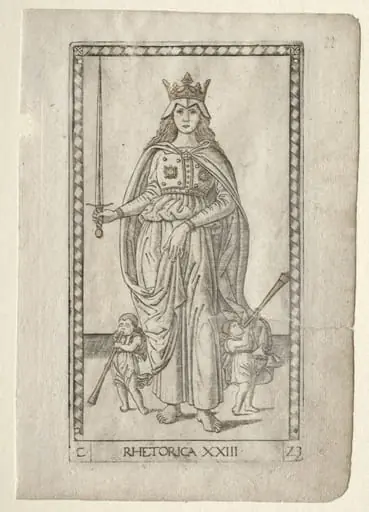 Rhetoric (from the Tarocchi, series C: Liberal Arts, #23)
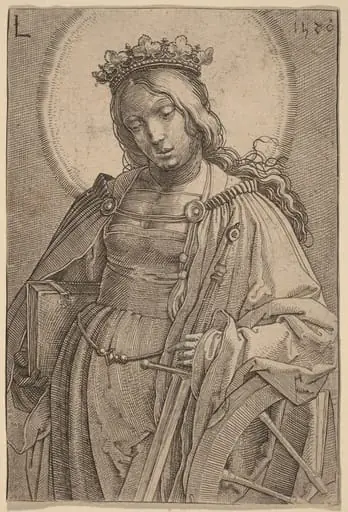 Saint Catherine
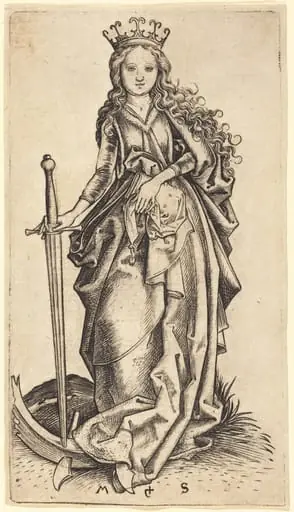 Saint Catherine of Alexandria
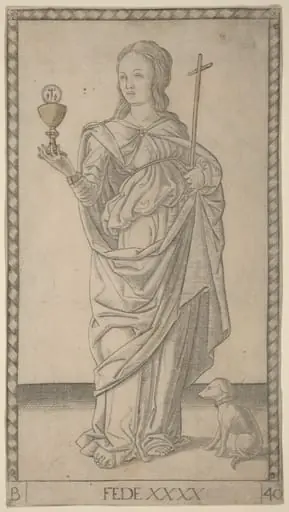 Fede (Faith)
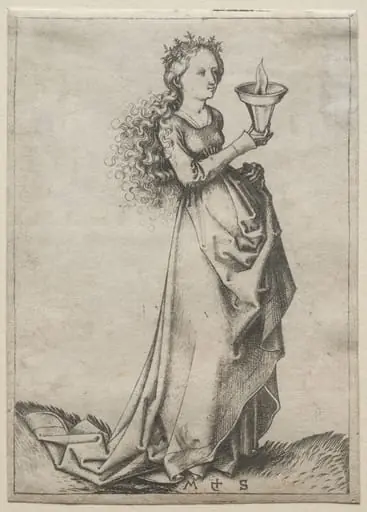 The First Wise Virgin