Artwork
David standing with the head of Goliath
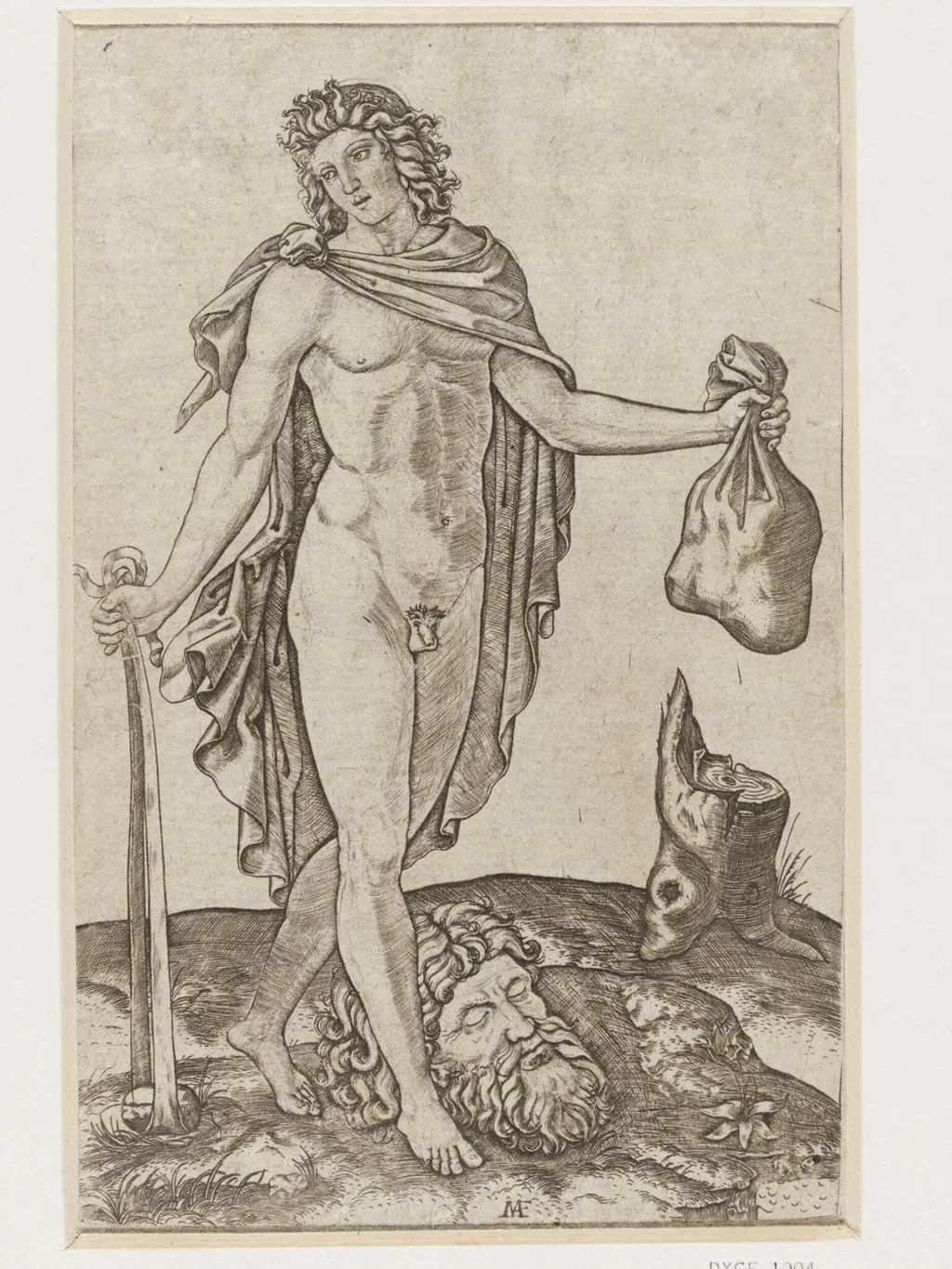
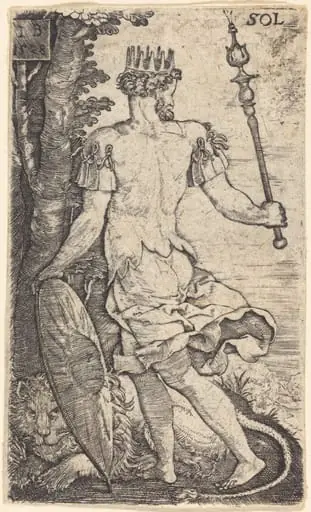
David standing with the head of Goliath is a print by the Renaissance artist Francesco Francia. It dates from 1490 and is held in the collection of the Victoria and Albert Museum.
About this work
Overview
The composition is sparse yet deliberate, set against a plain ground marked by a tree stump and a small vessel, suggesting a quiet, post-battle landscape.
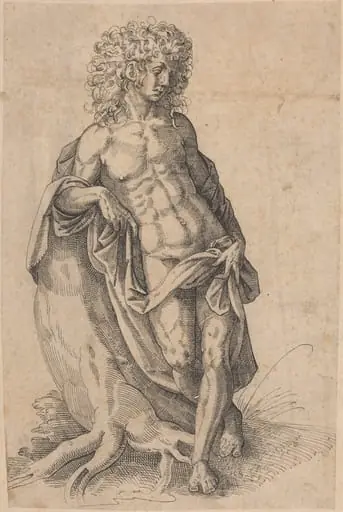
This print by Francesco Francia portrays David after his victory over Goliath, rendered in ink on paper. The figure stands upright, bare-chested, with a cloak loosely draped over one shoulder. At his feet lies the severed head of the fallen giant, while a staff and a pouch rest nearby. The composition is sparse yet deliberate, set against a plain ground marked by a tree stump and a small vessel, suggesting a quiet, post-battle landscape.
Subject & Meaning
The scene illustrates the biblical moment of David’s triumph, emphasizing quiet resolve over violent spectacle. By depicting David not in motion but in stillness, the image focuses on the aftermath of divine justice. The presence of the sling’s pouch and the staff alludes to his humble weapons, reinforcing the theme of the weak overcoming the strong through faith and skill rather than brute force.
Technique & Style
Francia employs fine linear shading to model the figure’s musculature and the folds of the cloak, creating a sense of three-dimensionality within the flat plane of the print. The contrast between the smooth, untextured skin and the detailed rendering of fabric and hair adds visual depth. The background elements—tree stump, pot—are rendered with minimal detail, directing focus to the central figures and their symbolic relationship.
History & Provenance
Created during the early 16th century, this print reflects Francia’s work as a Bolognese artist active in the transition from Late Gothic to High Renaissance styles. Though primarily known as a painter, Francia produced a limited number of prints, often adapting religious themes for private devotion or scholarly audiences. The print’s survival in museum collections suggests its early circulation among collectors of printed images.
Context
In Renaissance Italy, biblical heroes like David were frequently depicted as symbols of civic virtue and divine favor, especially in city-states like Bologna that valued moral strength and resilience. Francia’s interpretation aligns with humanist ideals, portraying David not as a warrior but as a contemplative figure whose victory stems from inner conviction rather than physical dominance.
Legacy
Francia’s print contributes to a broader tradition of Renaissance graphic art that reimagined biblical narratives with psychological nuance. While less widely known than his paintings, this work exemplifies how printmaking allowed for the dissemination of refined, contemplative imagery beyond elite circles, influencing later artists who sought to convey moral themes through subtle, restrained compositions.
Own this work as a print
Artist & collection
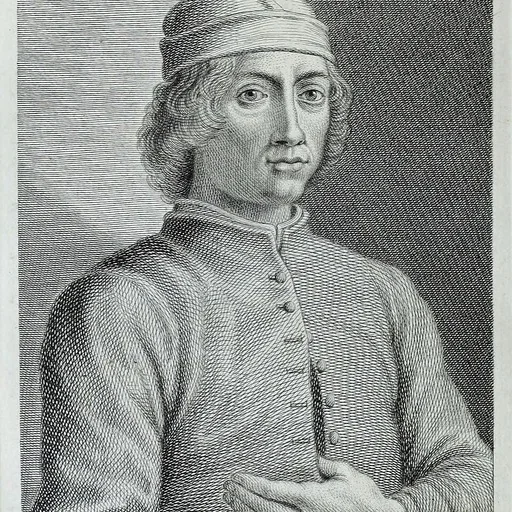
Artist
Francesco Francia, whose real name was Francesco Raibolini (1447 – 5 January 1517), was an Italian painter, goldsmith, and medallist from Bologna, who was also director of the city mint.