Artwork
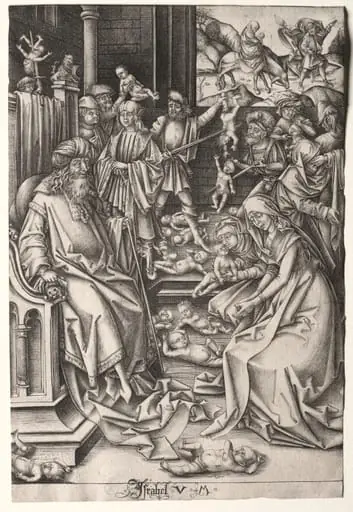
Massacre of the Innocents
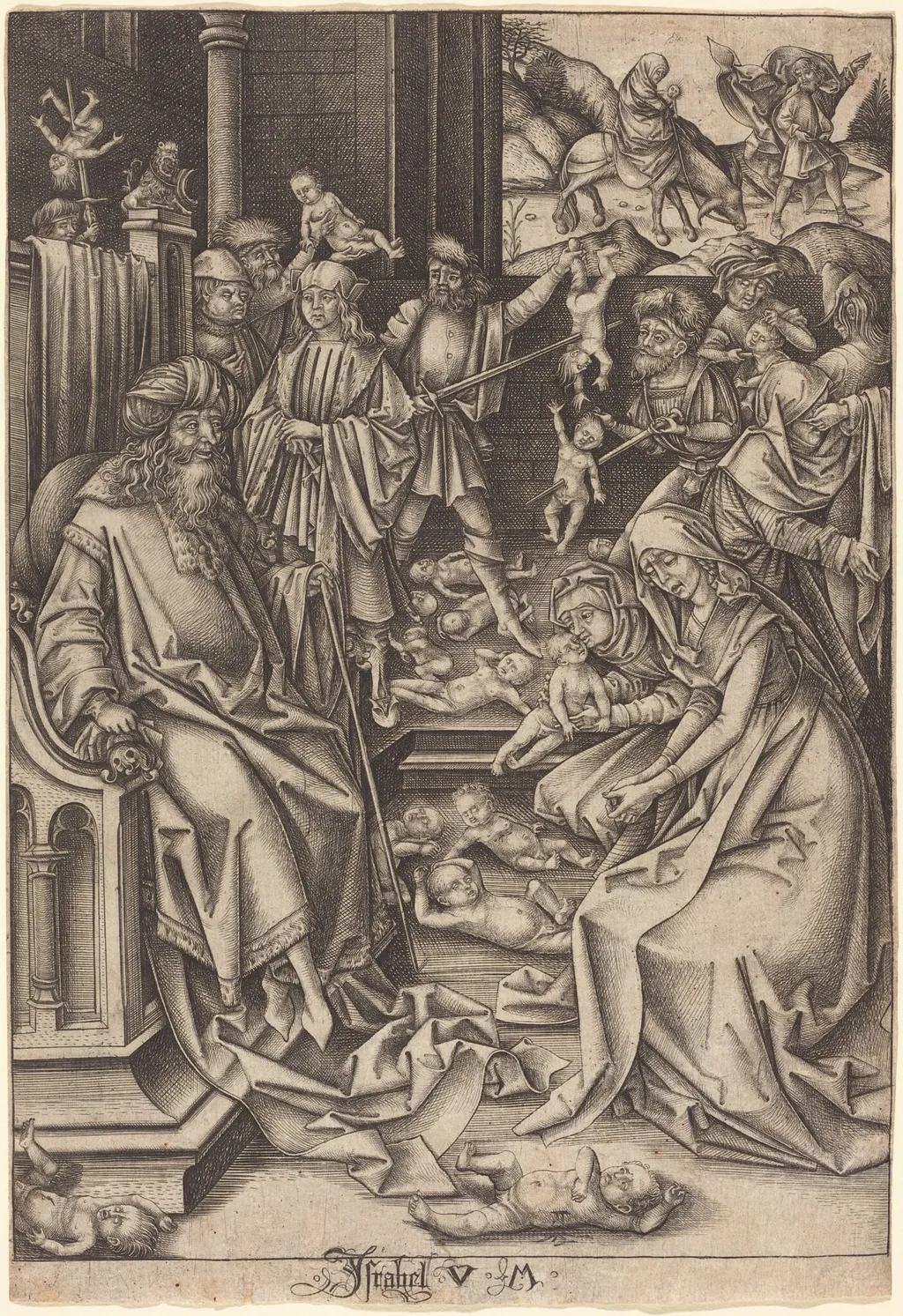
Massacre of the Innocents is an ink print by the Renaissance artist Israhel van Meckenem. It dates from 1495 and is held in the collection of the National Gallery of Art.
About this work
Overview
Created circa 1495, the engraving titled *Massacre of the Innocents* portrays the biblical narrative in which Herod orders the slaughter of newborn boys in Bethlehem. The composition is densely populated, showing armored soldiers confronting terrified families, while a bearded onlooker watches from the left and ethereal cherubs hover above the turmoil.
Subject & Meaning
The work visualizes the cruelty of Herodian decree, emphasizing the vulnerability of infants and the desperation of their parents. By juxtaposing human suffering with celestial figures, the image suggests a moral contrast between earthly violence and divine witness, inviting contemplation of innocence destroyed by tyrannical power.
Technique & Style
Executed as an engraving, the artist incised fine, intersecting lines into a metal plate, producing stark contrasts of light and shadow. The sharp hatching intensifies the sense of immediacy, while the rendering of armor and twisted bodies demonstrates a meticulous attention to texture and movement characteristic of late‑15th‑century German printmaking.
History & Provenance
The piece is attributed to Israhel van Meckenem, a German goldsmith and printmaker active between 1465 and 1503. Van Meckenem was the most prolific engraver of his century, producing over six hundred prints, many of which were copies of works by contemporaries such as Albrecht Dürer. This engraving reflects his engagement with popular religious themes.
Artist & collection
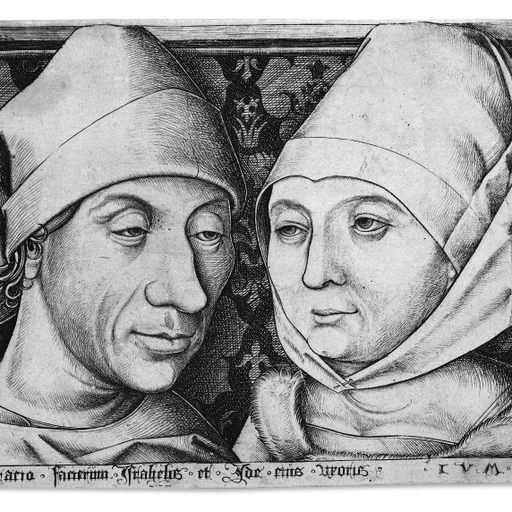
Artist
Israhel van Meckenem (c. 1445 – 10 November 1503), also known as Israhel van Meckenem the Younger, was a German printmaker and goldsmith, perhaps of a Dutch family origin. He was the most prolific engraver of the…