Artwork
The Mystic Marriage of Saint Catherine
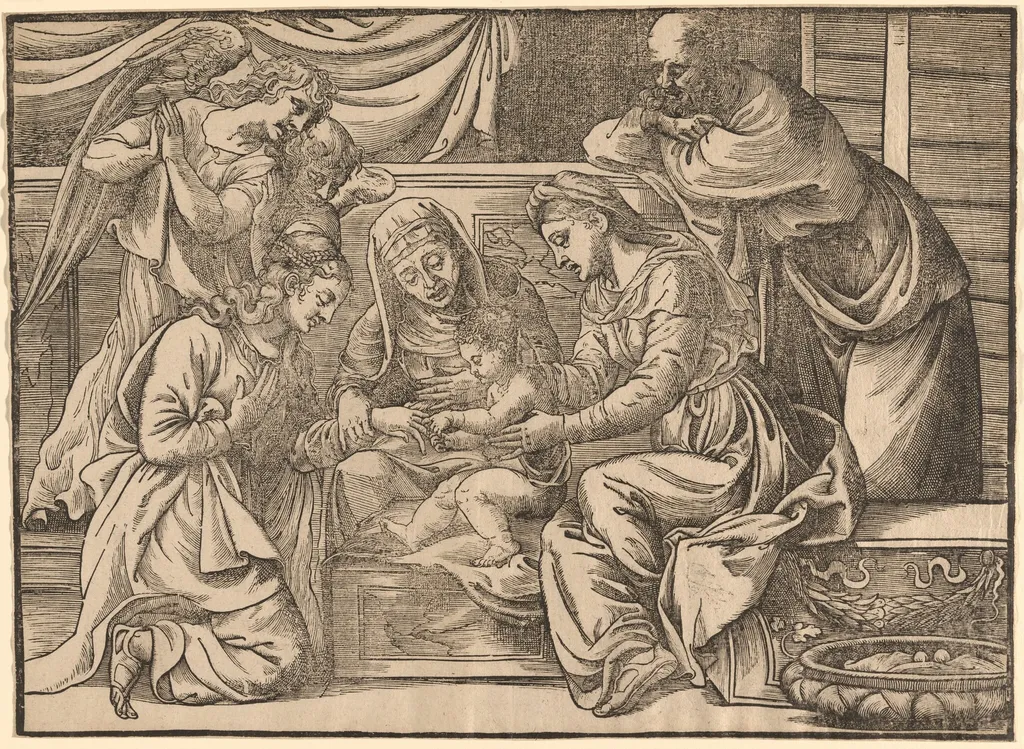
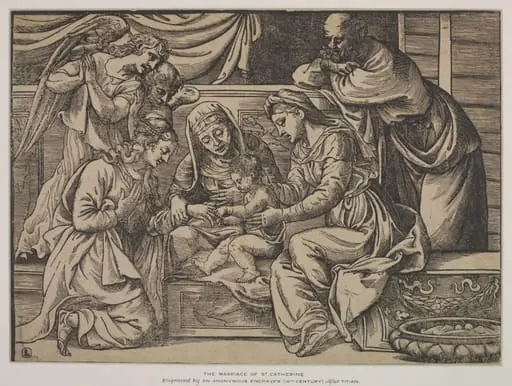
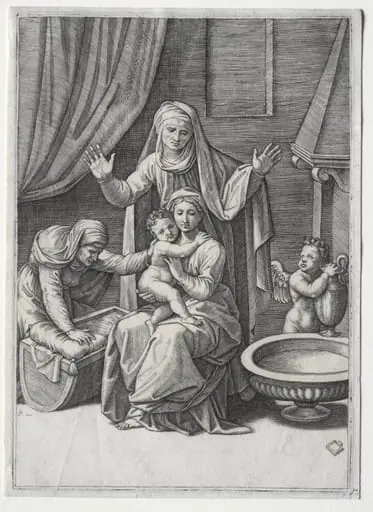
The Mystic Marriage of Saint Catherine is an ink print by the Renaissance artist Nicolò Boldrini. It dates from 1540 and is held in the collection of the National Gallery of Art.
About this work
Overview
Nicolò Boldrini’s woodcut, dated to around 1540, presents a devotional scene titled The Mystic Marriage of Saint Catherine. Executed on laid paper, the print is part of the collection of the National Gallery of Art in Washington, D.C., and exemplifies mid‑sixteenth‑century religious printmaking.
Subject & Meaning
The composition centers on an infant, likely the Christ Child, surrounded by a gathering of figures whose gazes converge on the baby. The arrangement suggests the mystical union of Saint Catherine with the infant Jesus, a theme common in Counter‑Reformation imagery that emphasizes personal devotion and spiritual betrothal.
Technique & Style
Boldrini employed the woodcut method, carving the design into a wooden block and transferring the image onto laid paper through inked impressions. The linear clarity and contrast of black and white lines reveal the artist’s skill in rendering delicate drapery, architectural elements, and a modest still‑life featuring a fruit bowl.
History & Provenance
Created in the early 1540s, the print entered the National Gallery of Art’s holdings through acquisition in the twentieth century, though earlier ownership records are sparse. Its survival in good condition attests to the durability of the woodcut medium and the care of successive collectors.
Context
The work reflects the broader Italian print culture of the Renaissance, where religious subjects were disseminated to a growing audience. Boldrini, active in Venice, often collaborated with leading painters, translating painted compositions into reproducible prints for devotional use.
Legacy
As an example of mid‑Renaissance religious printmaking, the piece illustrates how woodcuts served both artistic and didactic purposes, spreading theological narratives beyond the walls of churches and influencing later devotional imagery.
Artist & collection


 Marriage of St. Catherine
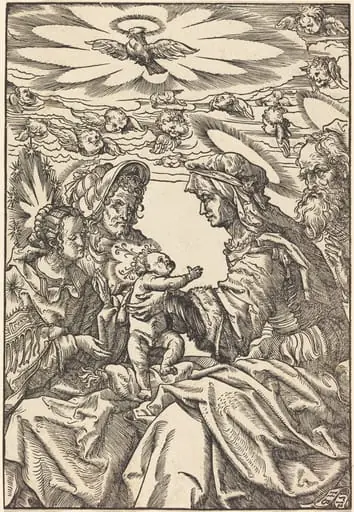 The Holy Family with Saint Anne and Saint Joachim
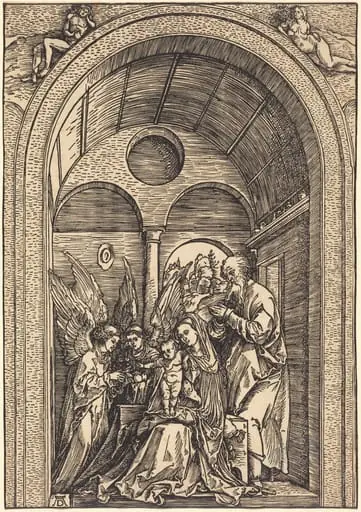 The Holy Family with Two Angels in a Vaulted Hall
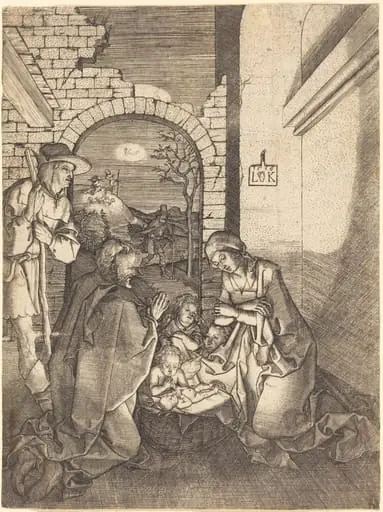 The Nativity
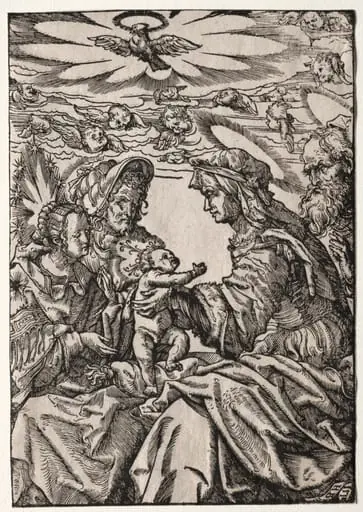 The Holy Family with St. Anne and Joachim
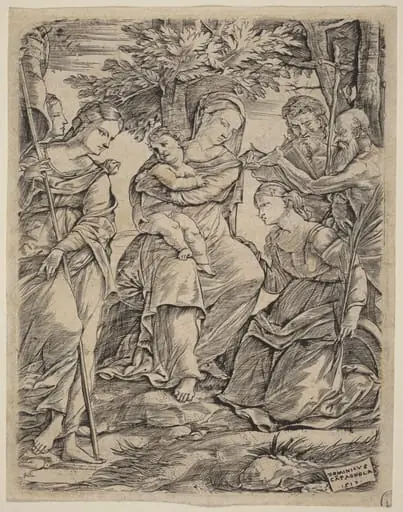 The Virgin and Child with Saints
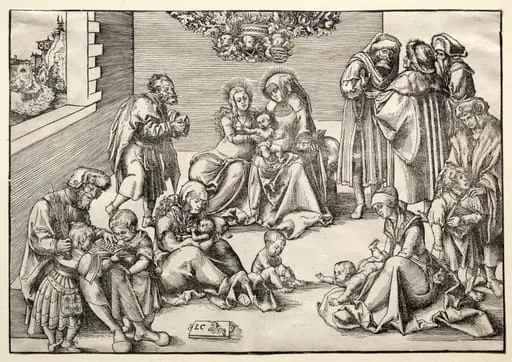 The Holy Family and Kindred
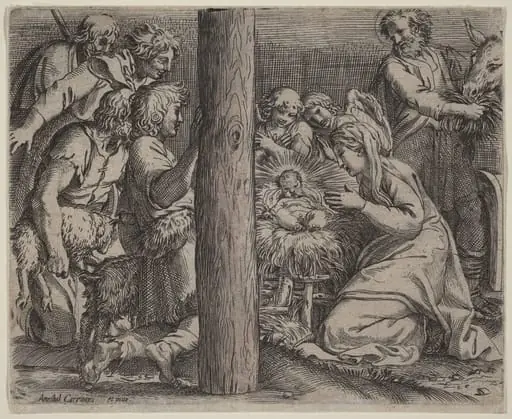 The Adoration of the Shepherds
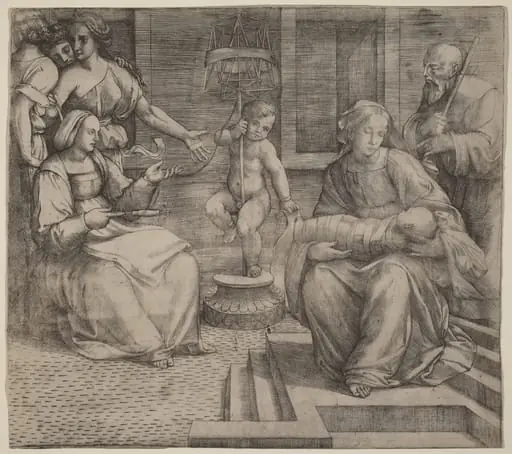 Holy Family with Saint Elizabeth and the Infant Saint John the Baptist
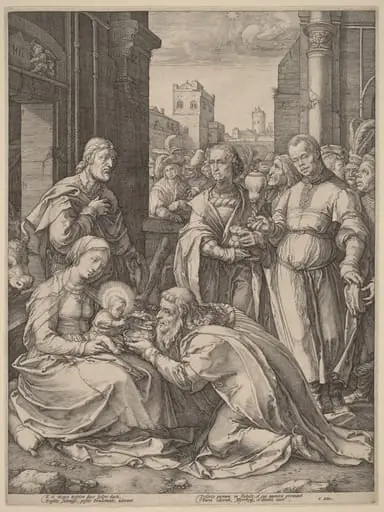 The Adoration of the Magi
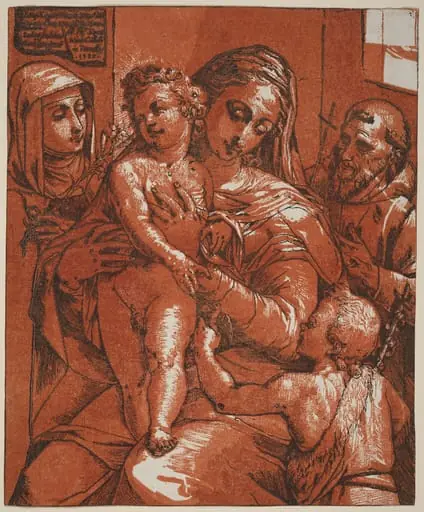 Madonna and Child Accompanied by Saints
 The Virgin and the Cradle with Saint Elisabeth and Saint Anne