Artwork
Ajinta Cave No. 19
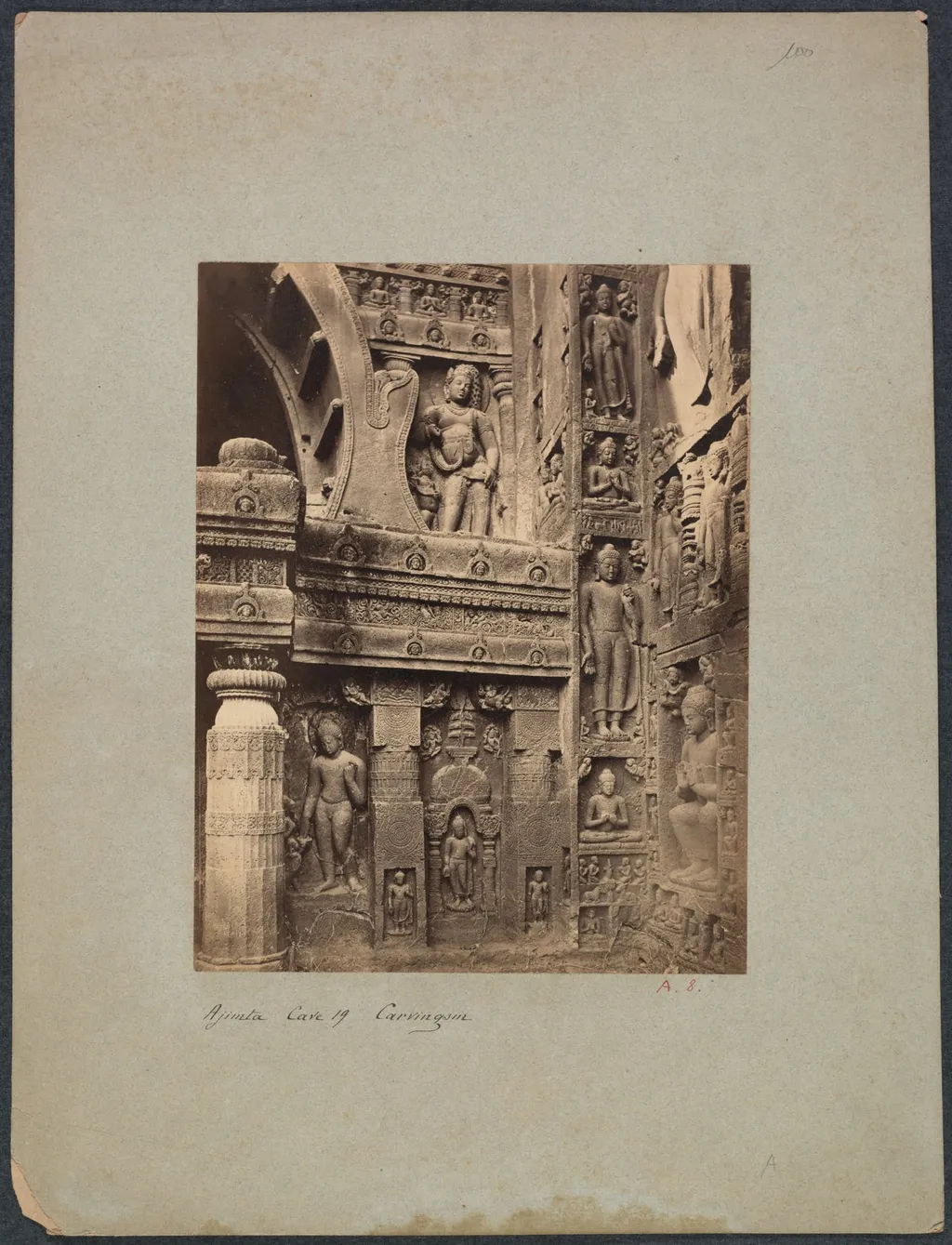
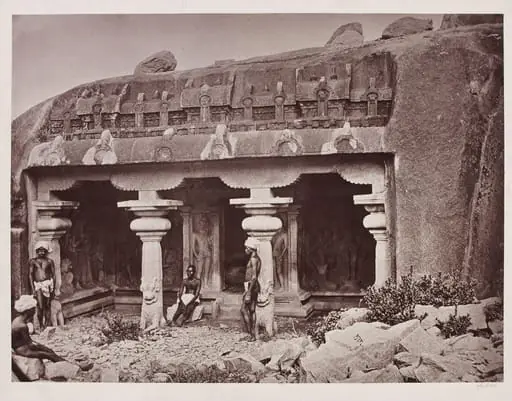
Ajinta Cave No. 19 is a photography by the Impressionist artist Francis Frith & Co.. It dates from 1864 and is held in the collection of the Cleveland Museum of Art.
About this work
Overview
This photograph, taken by Francis Frith & Co. in 1864, documents the interior of Cave 19 at the Ajanta complex in India. It captures the arrangement of sculpted figures carved into the rock walls, preserved through centuries of religious use. The image serves as an early visual record of the site, made during a period of growing European interest in South Asian antiquities.
Subject & Meaning
The carved figures depict Buddhist deities, disciples, and narrative scenes from the Jataka tales. Their placement within the cave reflects liturgical organization, with standing and seated forms arranged to guide devotional movement. The dense composition suggests a sacred space designed for contemplation, where imagery functioned as both teaching tool and object of reverence.
Technique & Style
The photograph reveals the high-relief carving technique used by ancient artisans, with figures emerging sharply from the rock surface. The interplay of natural light and shadow, visible in the dim recesses of the cave, enhances the three-dimensionality of the forms. The close spacing of elements creates a rhythmic, almost architectural density that emphasizes the sacred atmosphere.
History & Provenance
Cave 19 was carved in the 5th century CE during the Vakataka dynasty’s patronage of Buddhism. The photograph was taken over a millennium later, as British colonial surveyors and photographers began documenting India’s ancient sites. The image entered The Cleveland Museum of Art’s collection as part of a broader effort to preserve and study non-Western heritage through photographic archives.
Context
By the mid-19th century, European photographers like Frith documented them as archaeological curiosities.
Ajanta’s caves were abandoned by the 7th century and largely forgotten until their rediscovery in 1819. By the mid-19th century, European photographers like Frith documented them as archaeological curiosities. This image reflects the intersection of colonial documentation and emerging scholarly interest in India’s pre-Islamic artistic traditions, often viewed through a lens of historical preservation.
Legacy
The photograph remains a key reference for understanding the original spatial and visual experience of Ajanta Cave 19 before modern conservation interventions. It preserves details that may have altered over time due to environmental exposure or restoration. As an early photographic record, it anchors scholarly study and public awareness of South Asia’s early Buddhist art.
Artist & collection

 Untitled
 Goldsmith's Arch, Rome
 Sculpture - Architectural Details - Cornice of the Temple of Concord on the Clivus Capitolinus, now in the Tabularium.
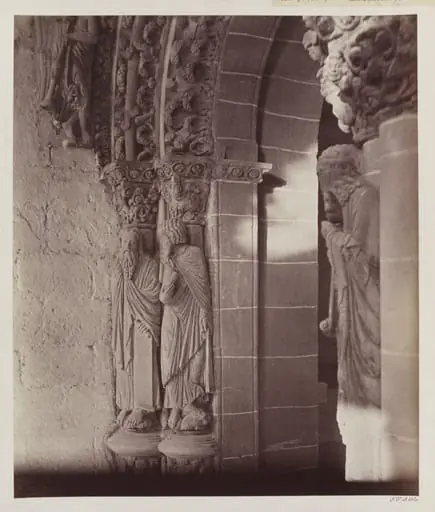 Cathedral, Santiago, Spain, Portico de la Gloria, Sculpture on the North wall
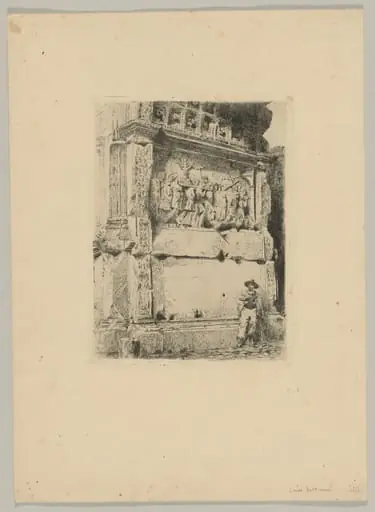 Rome, Arch of Titus
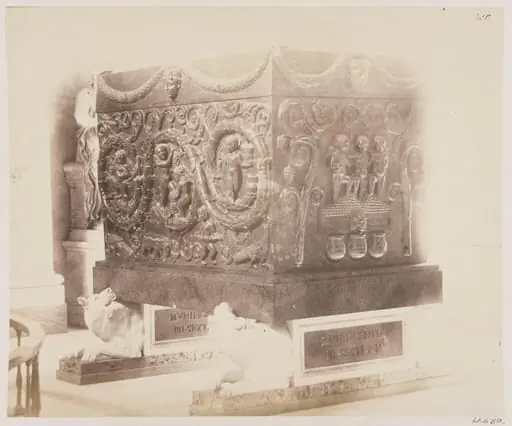 Sculpture - Sarcophagus of Porphyry of S. Constantia, A.D. 350
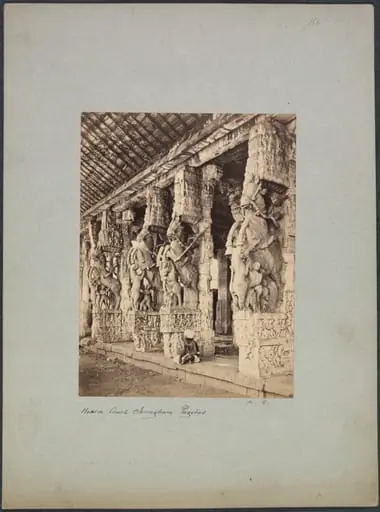 Trichinopoly Horse Court
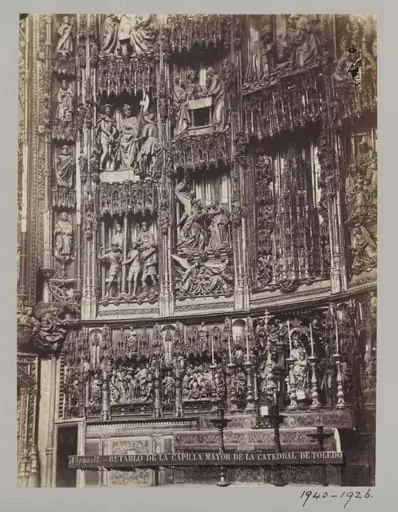 Altarpiece in Toledo Cathedral, Spain
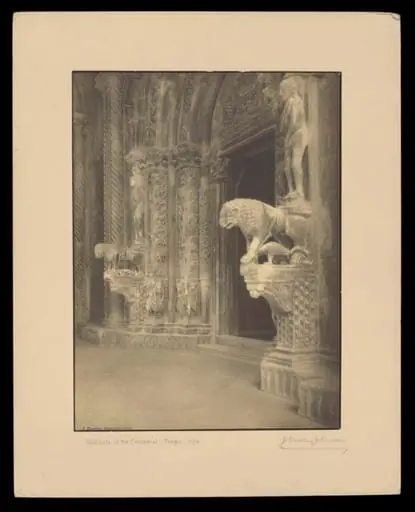 Vestibule of the Cathedral, Trogir
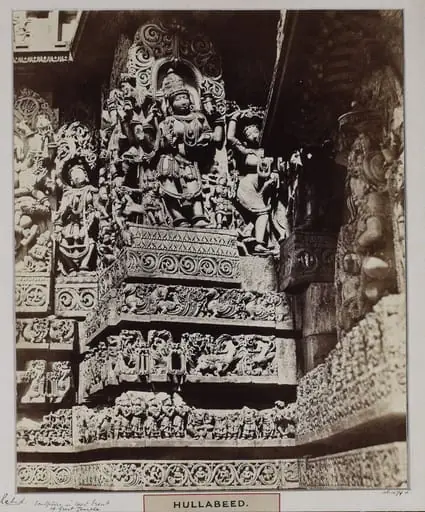 Western terraced front of the great temple at Halebid
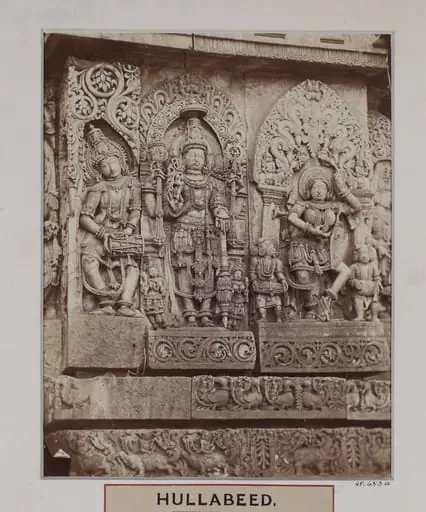 Relief sculpture of the great temple at Halebid
 Cave sanctuary at Mahabalipuram