Artwork
Sculpture - Architectural Details - Cornice of the Temple of Concord on the Clivus Capitolinus, now in the Tabularium.
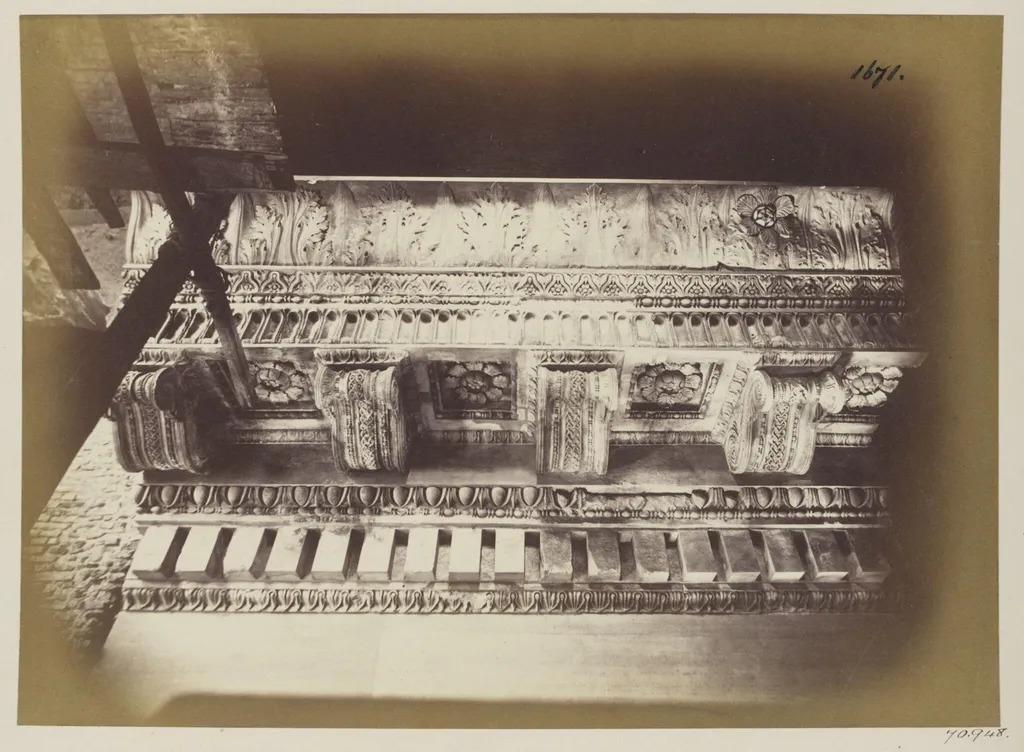
Sculpture - Architectural Details - Cornice of the Temple of Concord on the Clivus Capitolinus, now in the Tabularium. is a photographic photography by the Impressionist artist John Henry Parker. It dates from 1868 and is held in the collection of the Victoria and Albert Museum.
About this work
Overview
This photograph captures the intricately carved cornice of the Temple of Concord, originally situated on the Clivus Capitolinus and now preserved in the Tabularium. The image is part of a comprehensive photographic survey of Roman monuments conducted between 1867 and 1870.
Subject & Meaning
The cornice, with its layered design featuring arches, leaf and flower patterns, and columns, suggests grandeur and elegance, indicative of its origins as part of a significant architectural structure.
Technique & Style
The photograph, set against a dark background to accentuate details, employs a style that emphasizes clarity and documentation over artistic interpretation, characteristic of architectural photography of the time. Note: The initial description mistakenly associates the work with Impressionism, which is incorrect for this type of photography.
History & Provenance
Created under John Henry Parker’s direction as part of a large-scale project (1867-1870) involving multiple photographers, the image is part of a collection exceeding 3,300 photographs, with a portion housed at the Victoria and Albert Museum.
Context
The photograph is contextualized within a broader 19th-century effort to systematically document classical to 17th-century European architecture, reflecting a growing interest in historical preservation and academic study.
Artist & collection
Artist
John Henry Parker liked to explore old churches in Rome. He'd photograph the sculptures and carvings he found. One thing that stands out is his attention to detail - he'd capture tiny parts of bigger pieces, like the…

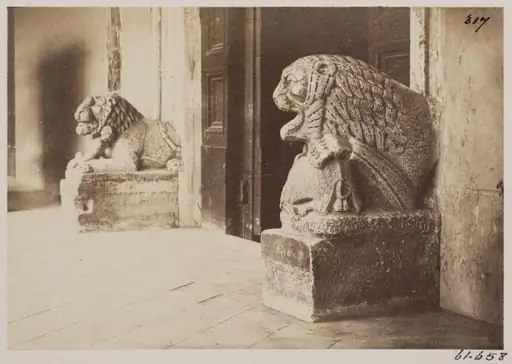 Sculptures - Lions at the Door of the Church of S. Lorenzo
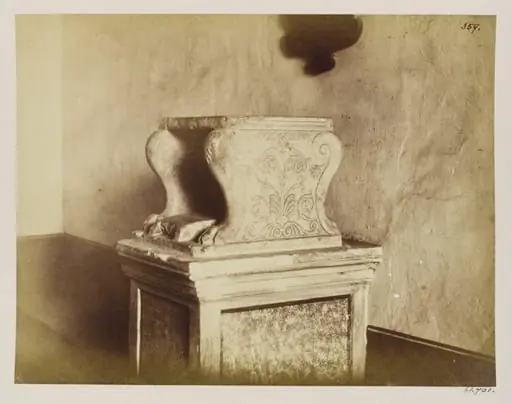 Sculptures - Marble Seat of S. Gregory in the Church of S. Stefano Rotondo, with Shallow Carving, c. A.D. 590.
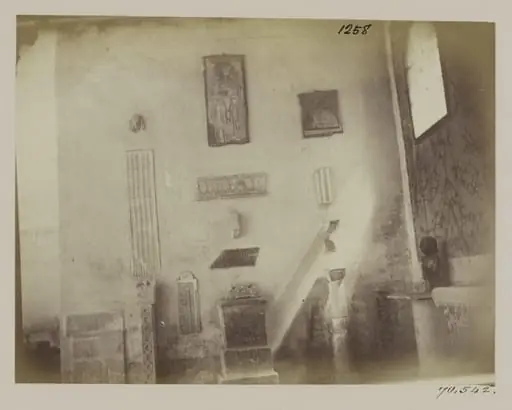 Church of S. Giorgio in Velabro - Fragments of marble sculpture, Tombs, &c., from the old Church, built into the wall.
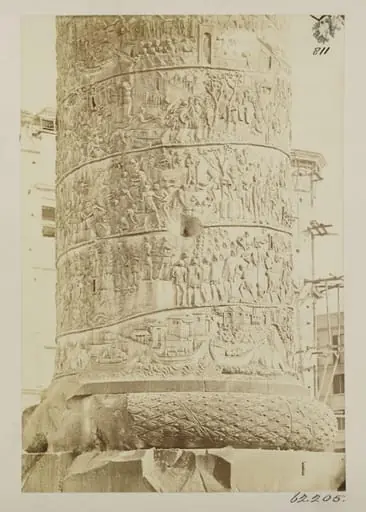 Sculptures - Details of Sculpture from Trajan's Column.
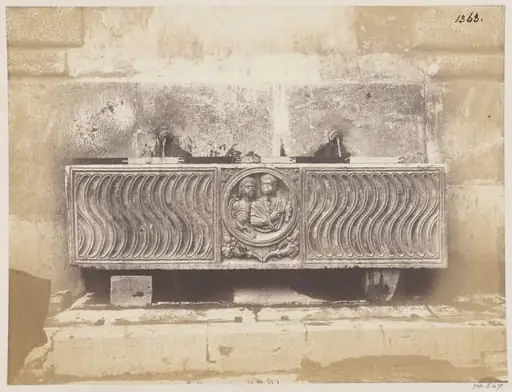 Sculpture - Sarcophagus of the fourth century made into a fountain, near the Church of S. Maria, in the Piazza del Popolo
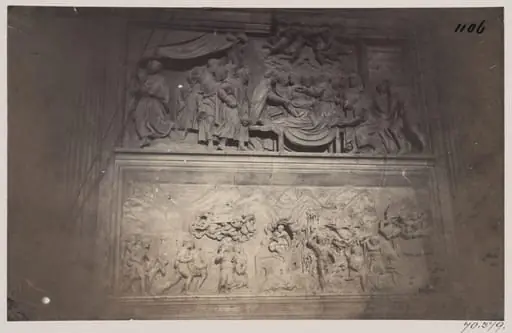 Out of Rome - House of the Blessed Virgin at Loreto. Sculpture of the Santissima Casa carried by Angels, A.D. 1520
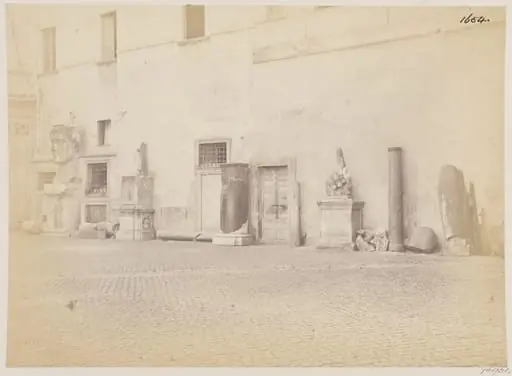 Sculpture - View on the left side of the Court-yard of the Palazzo de' Conservatori on the Capitol, shewing fragments of colossal Statues
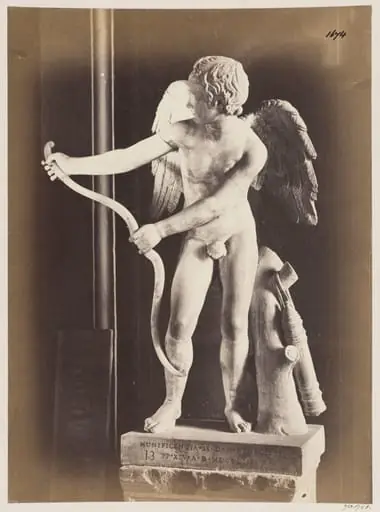 Sculpture - Statue of Cupid with his bow, in the Capitoline Museum.
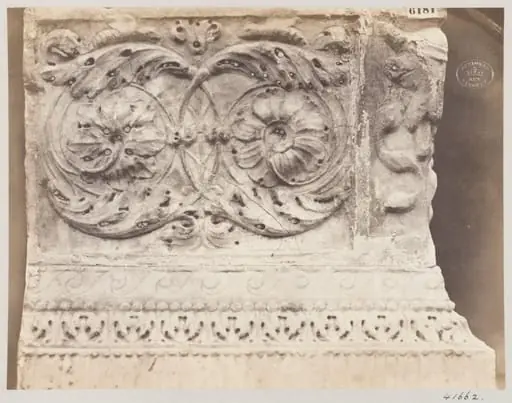 Marble portion of a sacophagus ornamented with bas-relief foliage
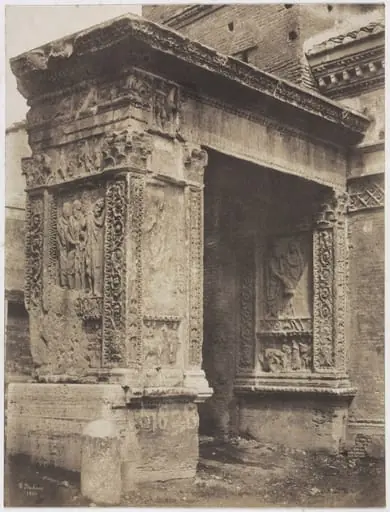 Goldsmith's Arch, Rome
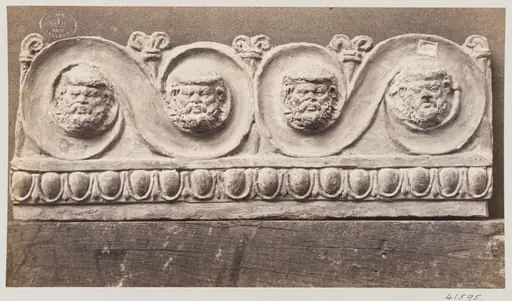 Bas-relief scroll with four masques in terra cotta
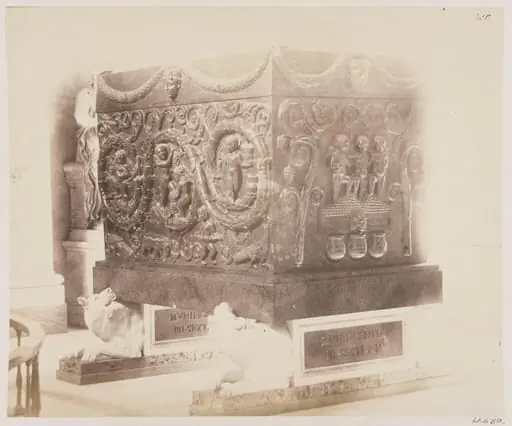 Sculpture - Sarcophagus of Porphyry of S. Constantia, A.D. 350
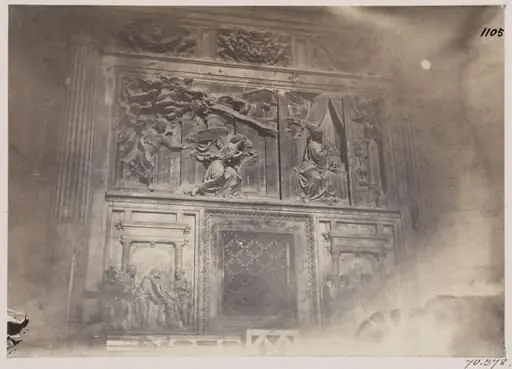 Out of Rome - House of the Blessed Virgin at Loreto. Sculpture of the Annunciation, A.D. 1520
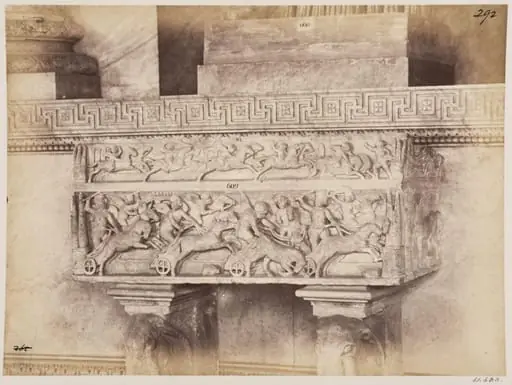 Sculpture - Chariot-race and horse-race, on a Sarcophagus (now in the Vatican Museum)
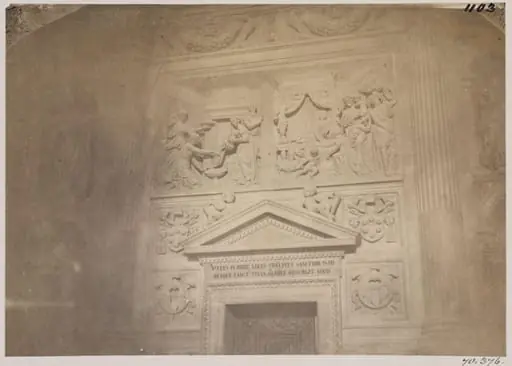 Out of Rome - House of the Blessed Virgin at Loreto. Sculpture of the Nativity over a Doorway, with the Arms of the Medici, Leo X., A.D. 1520