Artwork
Amiens, the Banks of the Somme
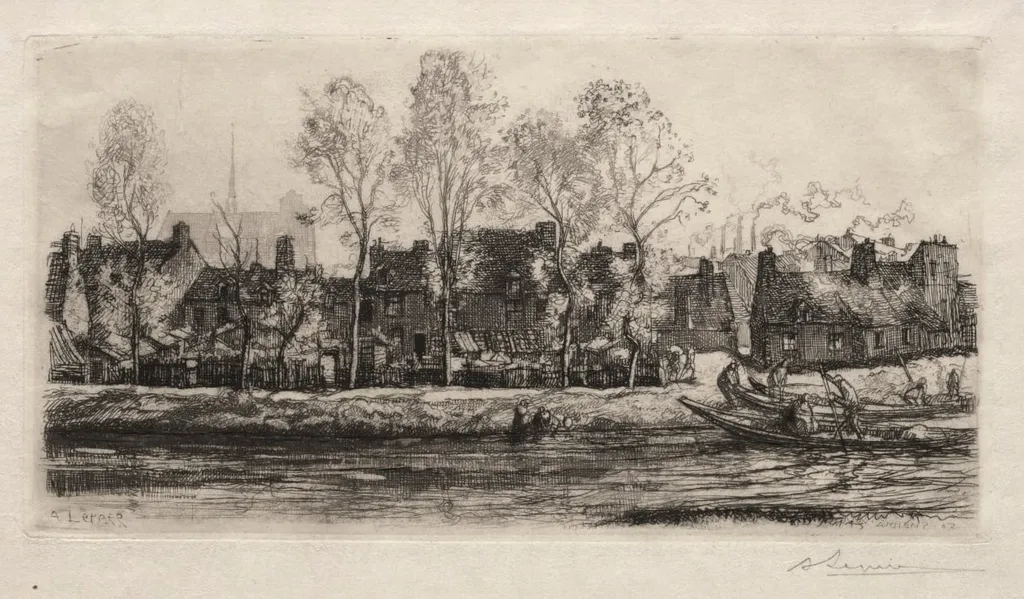
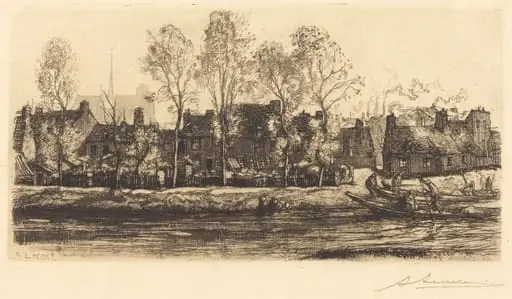
Amiens, the Banks of the Somme is a print by Auguste Lepère. It dates from 1907 and is held in the collection of the Cleveland Museum of Art. Created in 1907 by French artist Auguste Louis Lepère, this wood engraving depicts a tranquil stretch of the Somme River near Amiens.
About this work
Overview
The work is part of the Cleveland Museum of Art’s permanent collection, reflecting early 20th-century interest in intimate, observational printmaking.
Created in 1907 by French artist Auguste Louis Lepère, this wood engraving depicts a tranquil stretch of the Somme River near Amiens. Lepère, instrumental in the revival of wood engraving as a fine art medium, rendered the scene with delicate, fluid lines that suggest movement and atmosphere rather than precise detail. The work is part of the Cleveland Museum of Art’s permanent collection, reflecting early 20th-century interest in intimate, observational printmaking.
Subject & Meaning
The scene captures a quiet riverside community, with modest dwellings lining the water’s edge and bare trees framing the composition. Figures and animals move subtly through the landscape—a lone figure in a small boat, others walking nearby—emphasizing routine, unremarkable life. There is no narrative climax; instead, the work honors the dignity of ordinary moments, aligning with broader artistic trends that valued quiet observation over dramatic spectacle.
Technique & Style
Lepère employed wood engraving to achieve fine tonal gradations through incised lines, allowing light and shadow to emerge organically. His brush-like strokes are swift and suggestive, avoiding heavy detail in favor of atmospheric suggestion. The absence of bold outlines and the soft interplay of positive and negative space lend the image a sketchlike immediacy, as if captured in a single, fleeting glance.
History & Provenance
The print entered the Cleveland Museum of Art’s collection in the 20th century, likely through acquisitions focused on European graphic arts of the period. Lepère’s reputation as a revivalist of wood engraving ensured his works were sought after by institutions interested in the technical and aesthetic evolution of printmaking. Its preservation reflects ongoing scholarly attention to the medium’s resurgence in the late 19th and early 20th centuries.
Context
In early 20th-century France, artists increasingly turned away from grand historical themes toward scenes of daily life, influenced by Realism and Impressionism. Lepère’s work aligns with this shift, using traditional print techniques to convey modern sensibilities. His focus on provincial landscapes and unidealized figures resonated with contemporaries seeking authenticity in art, distinct from academic conventions.
Legacy
Lepère’s contributions helped reestablish wood engraving as a legitimate medium for fine art, influencing later printmakers in Europe and beyond. While not widely known today, his emphasis on subtle technique and quiet observation left a mark on the trajectory of modern printmaking. This work remains a quiet testament to the power of restraint and the beauty found in unadorned observation.
Artist & collection
Artist
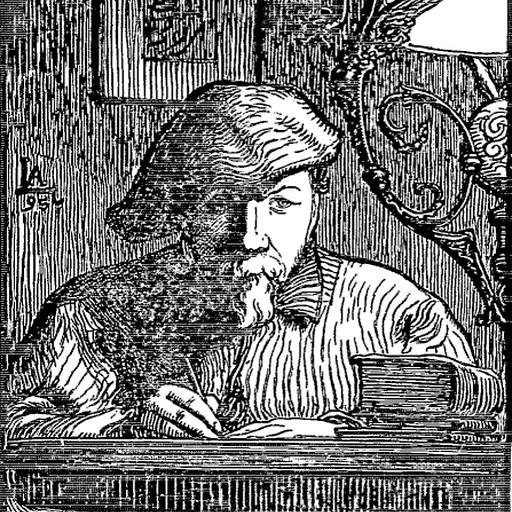
Louis-Auguste Lepère (30 November 1849 – 20 November 1918) was a French painter and etcher. Lepère is also considered a leader in the creative revival of wood engraving in Europe.

 Fulham
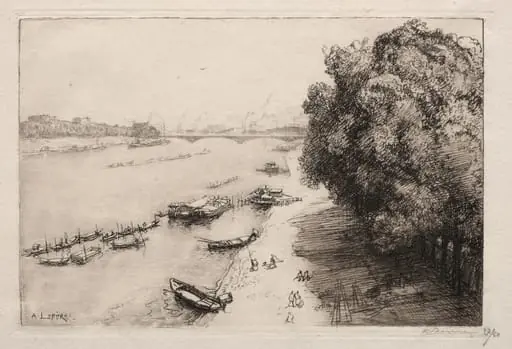 La Seine au Pont Nationale
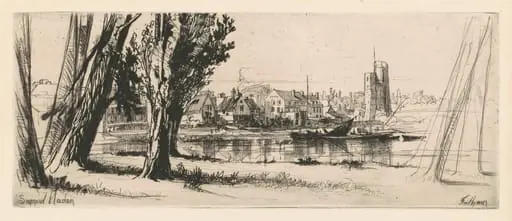 Fulham
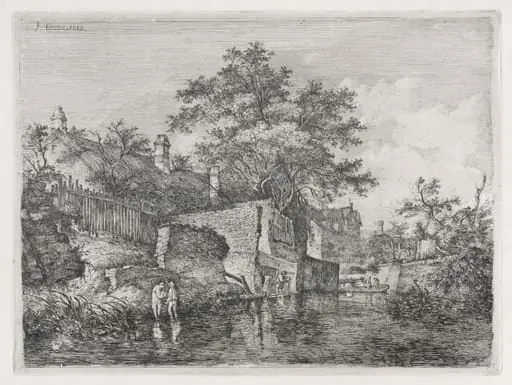 Front of the New Mills
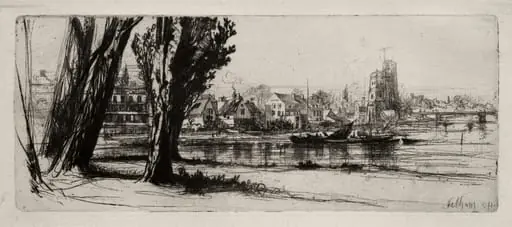 Fulham
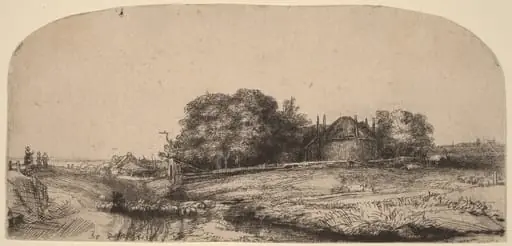 Landscape with a Hay Barn and a Flock of Sheep
 Harry Kelly's, Putney
 Churchyard at the Waterside
 The 'Adam and Eve', Old Chelsea
 The 'Adam and Eve', Old Chelsea
 The 'Adam and Eve', Old Chelsea
 Banks of the Somme at Amiens (Bords de la Somme a Amiens)