Artwork
Kidwelly Castle
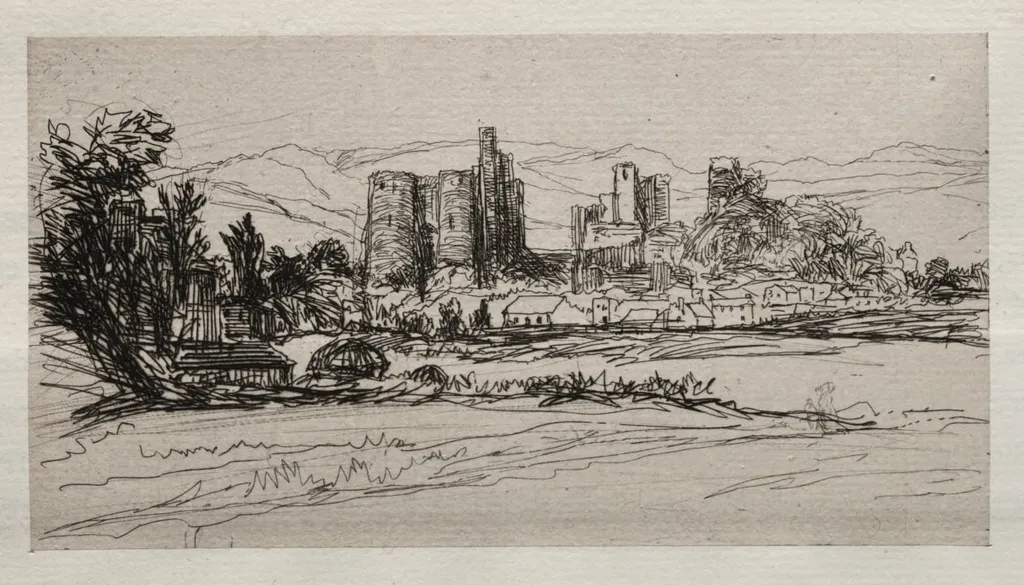
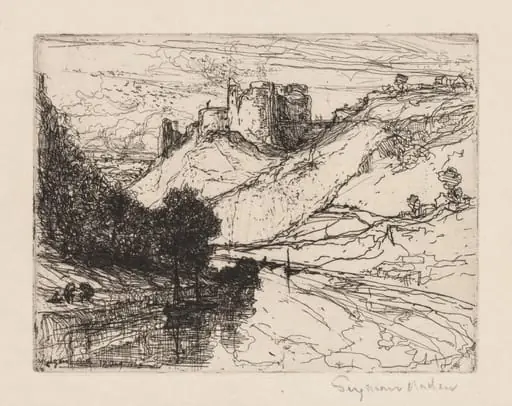
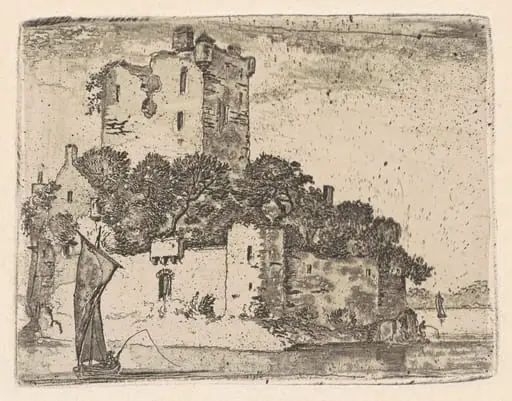
Kidwelly Castle is a print by the Impressionist artist Francis Seymour Haden. It dates from 1859 and is held in the collection of the Cleveland Museum of Art.
About this work
Overview
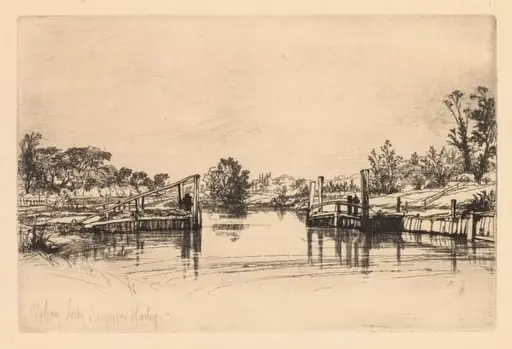
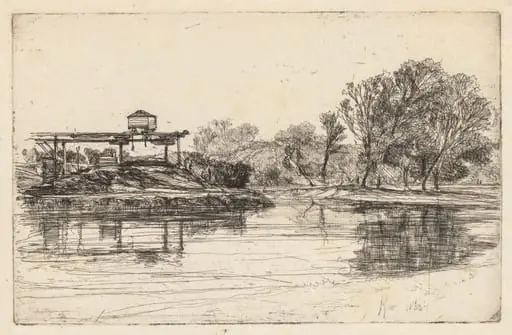
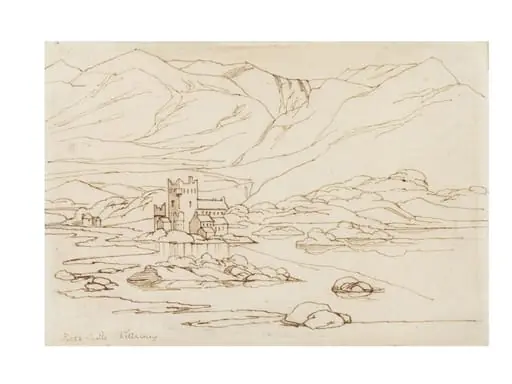
Created in 1859 by Francis Seymour Haden, this print depicts Kidwelly Castle in Wales. Rendered in ink and wash, it captures the structure from a distance, framed by dense foliage and a reflective stretch of water. The composition balances architectural solidity with atmospheric softness, emphasizing mood over precise detail. The work is part of the collection at The Cleveland Museum of Art.
Subject & Meaning
Kidwelly Castle, a medieval fortification with Norman origins, stands as a quiet monument to history. Haden presents it not as a ruin or tourist site, but as an integrated element of the landscape—surrounded by trees, water, and humble foreground structures. The scene suggests contemplation rather than grandeur, inviting reflection on time’s quiet erosion of human constructs.
Technique & Style
Haden employed drypoint and etching to achieve subtle tonal gradations, using fine lines and washes to suggest texture and depth.
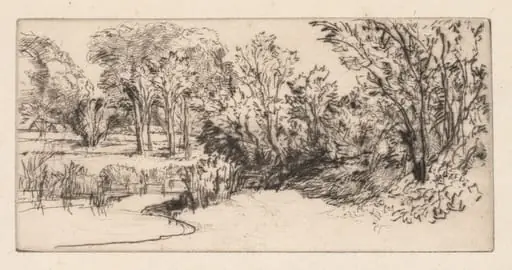
Haden employed drypoint and etching to achieve subtle tonal gradations, using fine lines and washes to suggest texture and depth. The sky is lightly inked, allowing the paper’s tone to suggest overcast light. Trees and water are rendered with loose, suggestive strokes, avoiding sharp definition. This approach aligns with emerging 19th-century tendencies toward atmospheric suggestion rather than topographic precision.
History & Provenance
The print was made during Haden’s early period of landscape exploration, following his training as a surgeon and his growing interest in printmaking. It entered The Cleveland Museum of Art’s collection in the 20th century, likely through a donation or acquisition focused on British graphic art. Its preservation reflects early institutional interest in printmakers outside the mainstream.
Context
Haden worked during a time when British artists were redefining landscape representation, moving away from romanticized vistas toward quieter, more personal observations. Though not formally part of the Impressionist movement, his focus on light, atmosphere, and everyday scenery aligned with broader European shifts. His prints were often circulated among collectors and fellow artists, influencing the revival of etching as a fine art medium.
Legacy
Haden’s work contributed to the renaissance of etching in Britain during the late 19th century. Kidwelly Castle exemplifies his quiet, observational style, which emphasized mood and materiality over narrative. Though less known than his contemporaries, his prints are recognized for their technical restraint and poetic sensitivity, influencing later generations of printmakers seeking intimacy over spectacle.
Artist & collection