Artwork
The Holy Family or Trinity on Earth
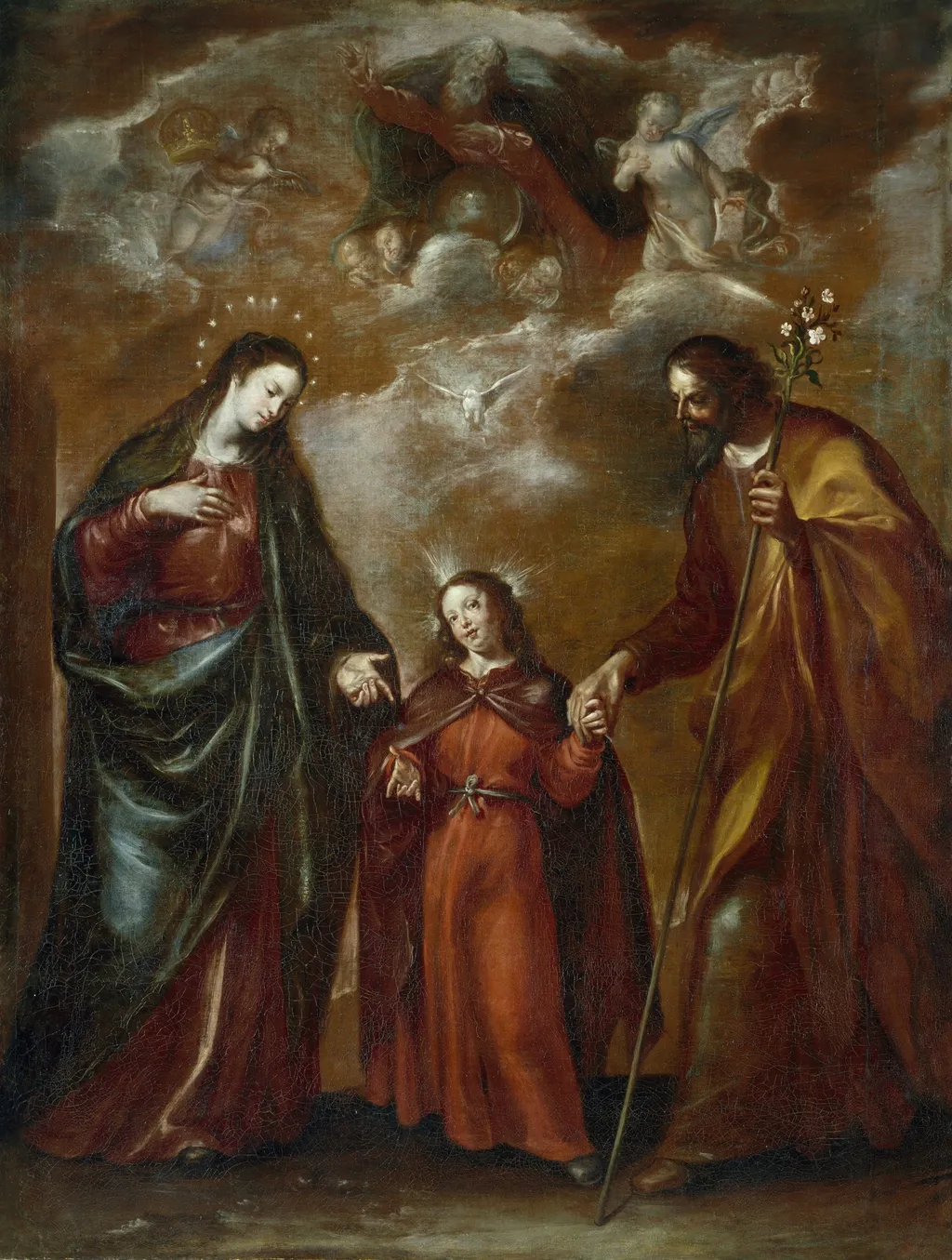
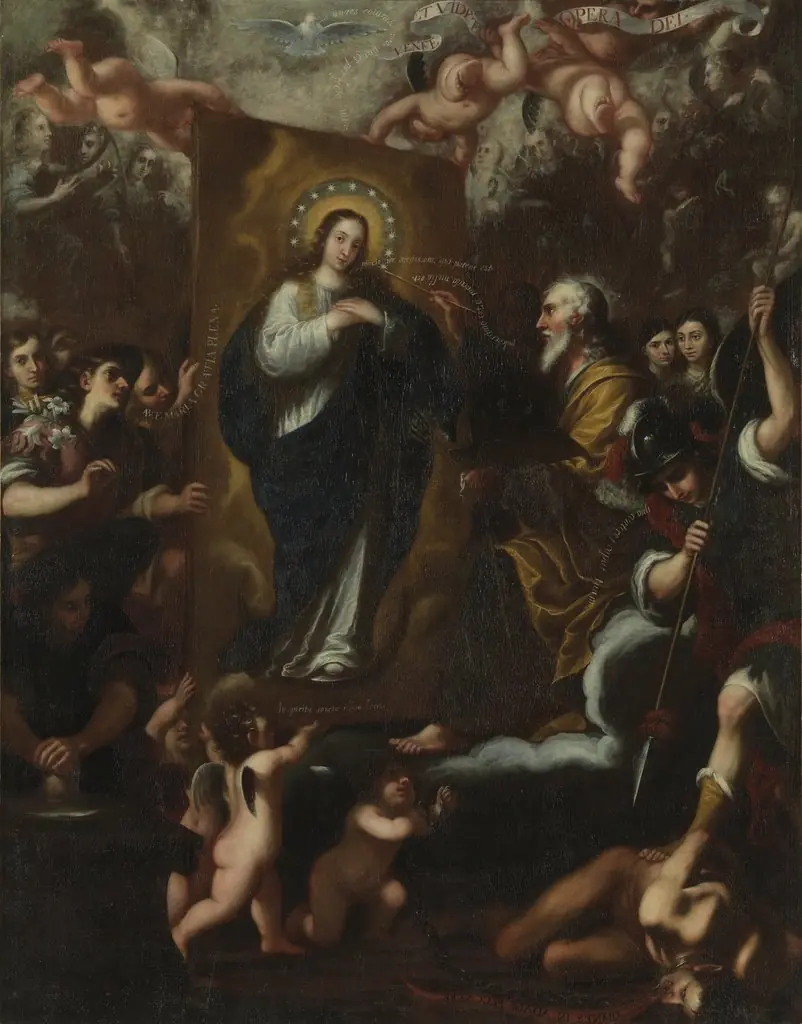
The Holy Family or Trinity on Earth is an oil painting by the Early Baroque Italian artist Francisco Camilo. It dates from 1601 and is held in the collection of the Museo del Prado.
About this work
Overview
Set against a darkened background, the figures emerge through controlled illumination, a hallmark of the era’s religious painting.
Francisco Camilo’s *The Holy Family or Trinity on Earth* is an oil painting completed in 1601, during the early Baroque period. The work depicts three central figures—Mary, Joseph, and the Christ Child—arranged in a closely grouped composition. Set against a darkened background, the figures emerge through controlled illumination, a hallmark of the era’s religious painting. The work has been part of the Museo del Prado’s collection in Madrid since its acquisition.
Subject & Meaning
The painting presents the Holy Family as an earthly manifestation of the Trinity, a theme occasionally explored in Counter-Reformation art. Mary, dressed in traditional blue and red, stands to the left, her expression serene. Joseph, holding a staff and a bundle of flowering rods, occupies the right, his aged features conveying quiet devotion. Between them, the Christ Child clutches a small cross, foreshadowing his future role. The inclusion of celestial figures above reinforces the divine nature of the scene.
Technique & Style
Camilo employs chiaroscuro to model the figures, using stark contrasts between light and shadow to heighten their three-dimensional presence. The soft, diffused light on the faces and drapery draws attention to the figures while the dark background pushes them forward. Brushwork remains refined, particularly in the delicate rendering of fabrics and facial details. The composition’s vertical alignment and symmetrical balance reflect the structured, devotional priorities of early Baroque religious painting.
History & Provenance
Painted in 1601, the work entered the Spanish royal collection before becoming part of the Museo del Prado’s holdings. Its early history remains largely undocumented, though its stylistic traits align with Camilo’s training under Pedro de las Cuevas in Madrid. The artist’s Italian heritage, inherited from his father, may have influenced the painting’s treatment of light and form, bridging Spanish and Italian Baroque conventions.
Context
Created during the Counter-Reformation, the painting reflects the Catholic Church’s emphasis on accessible, emotionally resonant imagery. The Holy Family’s intimate grouping and the Christ Child’s symbolic cross align with efforts to reinforce doctrinal themes through visual narrative. Camilo’s work sits within a broader tradition of Spanish religious painting, where clarity of subject and devotional immediacy were prioritized over complex allegory.
Own this work as a print
Artist & collection
Artist
Francisco Camilo (Madrid 1610–Madrid 1671) was a Spanish painter, the son of an Italian immigrant who had settled in Madrid.

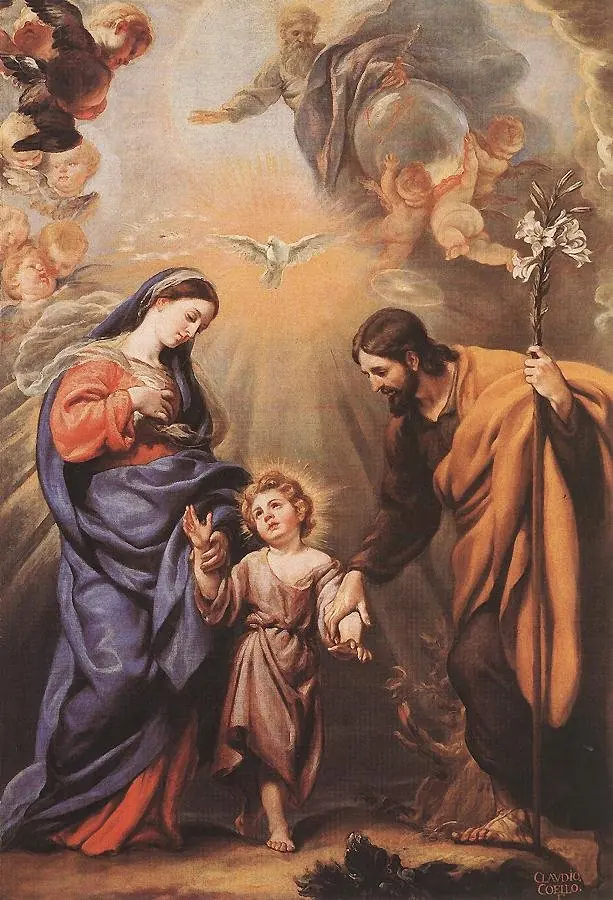 The Holy Family
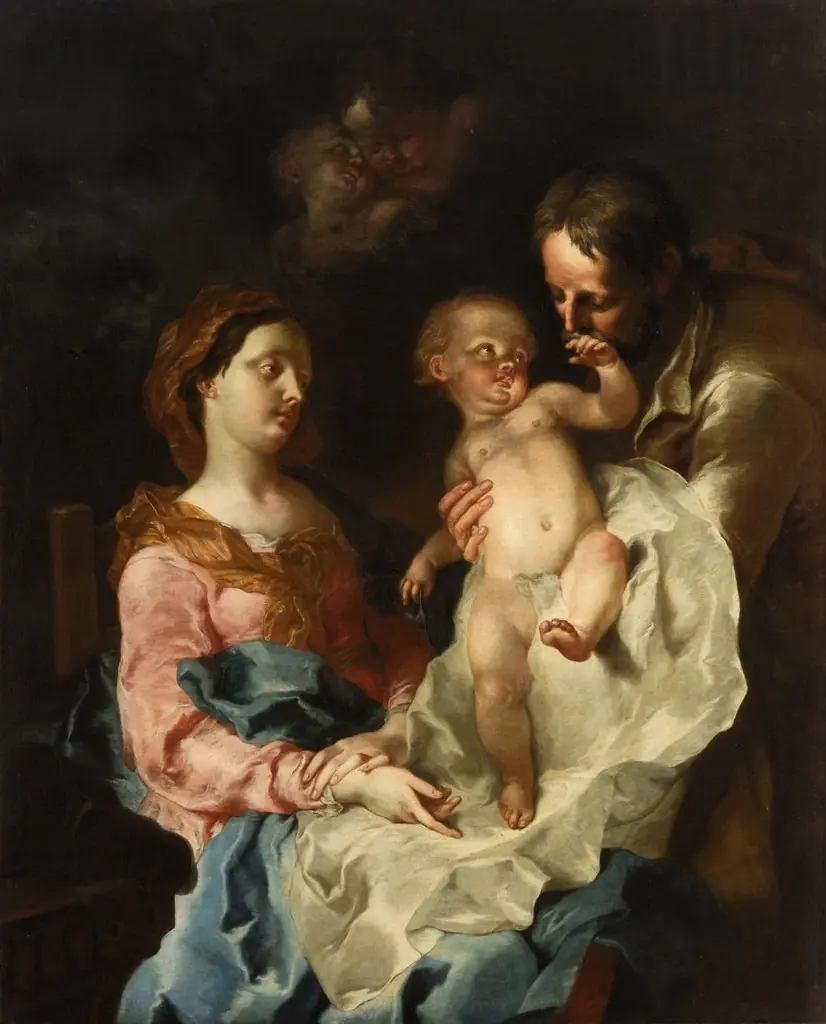 The Holy Family
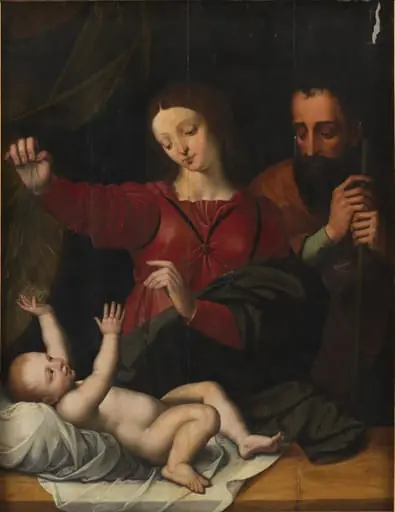 The Holy Family
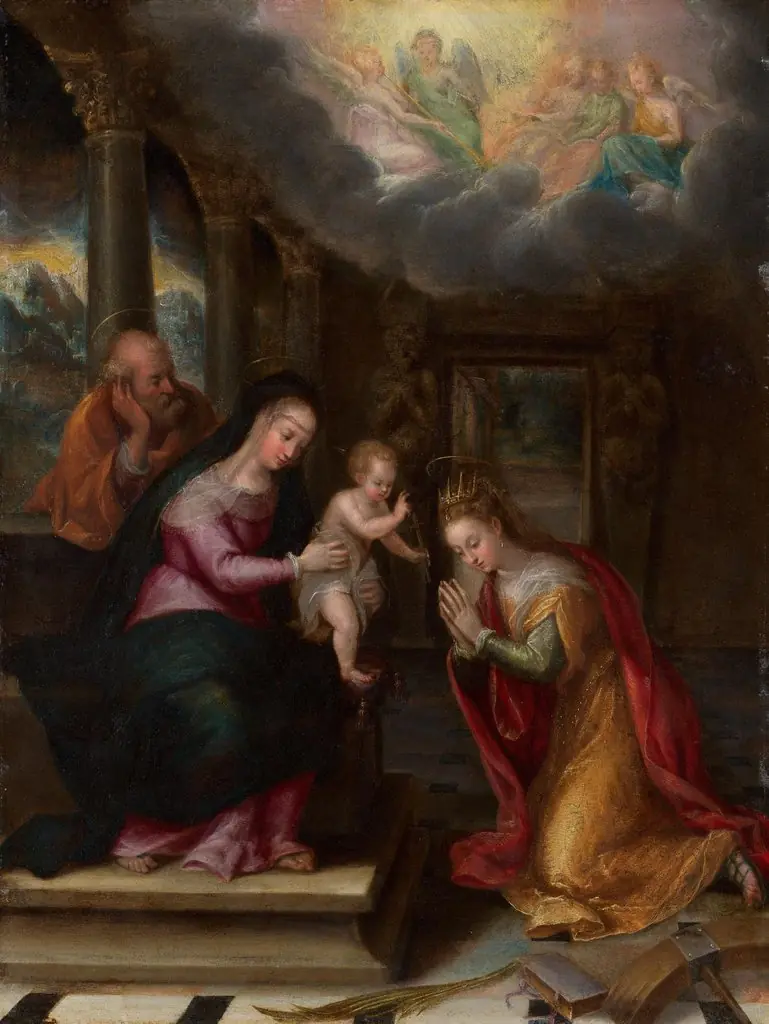 Mariage mystique de sainte Catherine
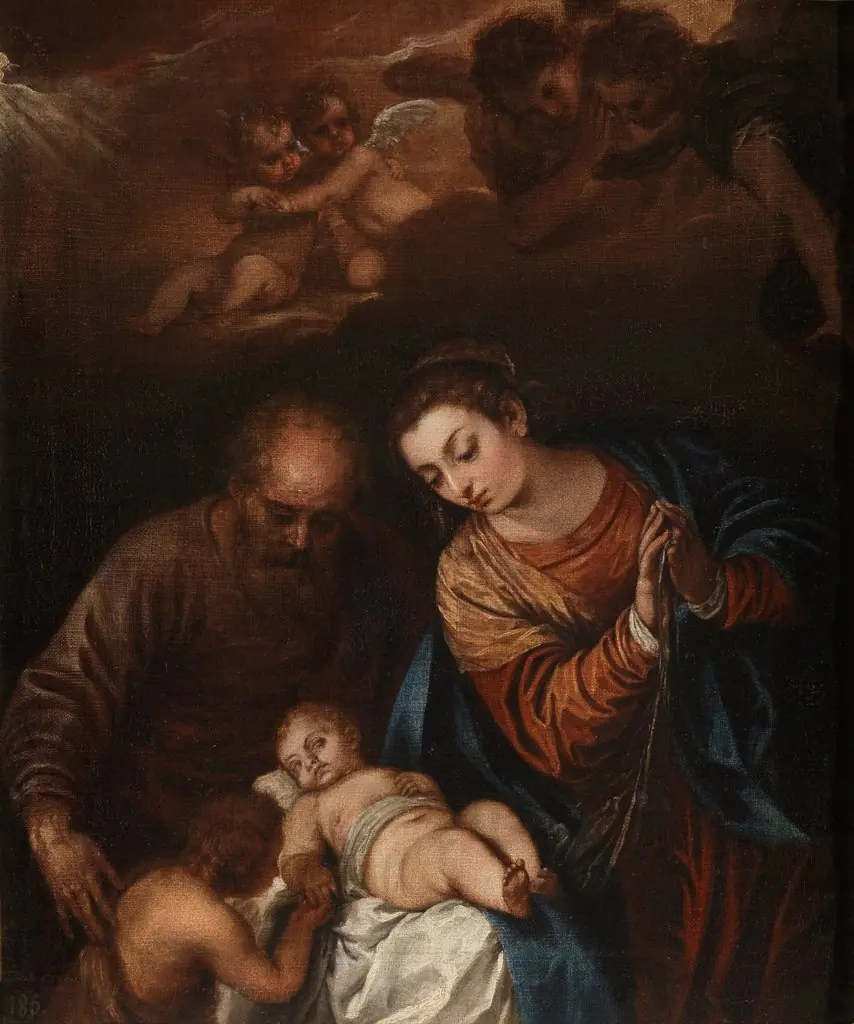 La Sagrada Familia
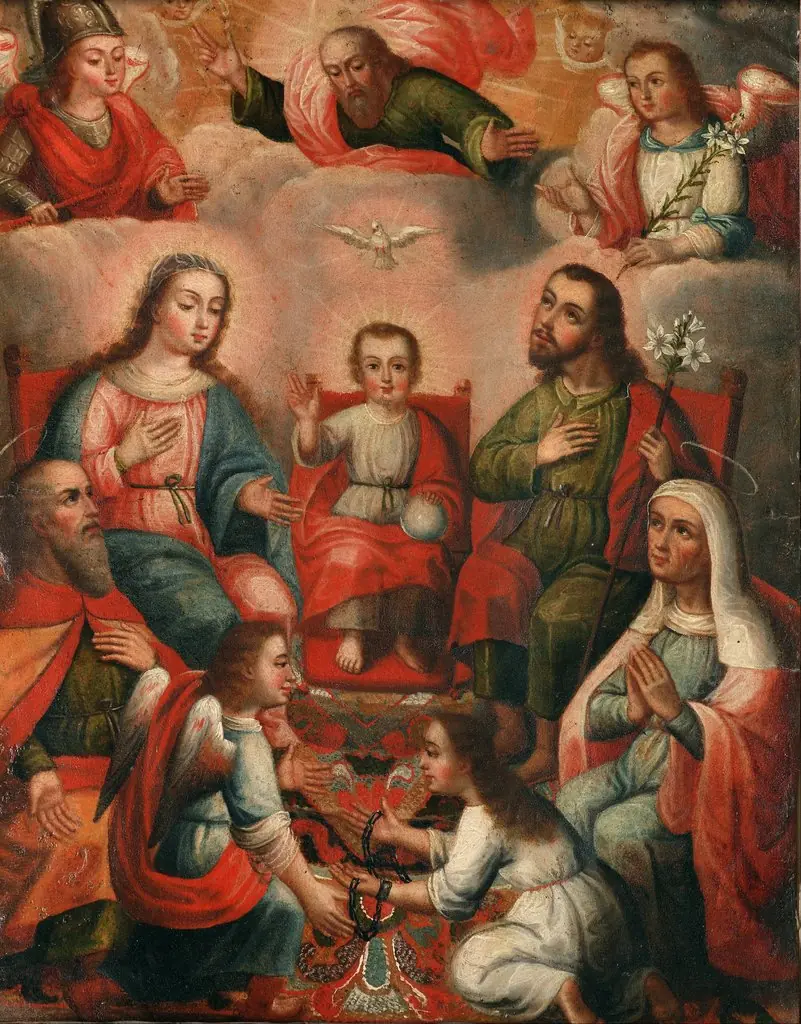 The family of Christ Child with the imprisoned soul of Divine Love
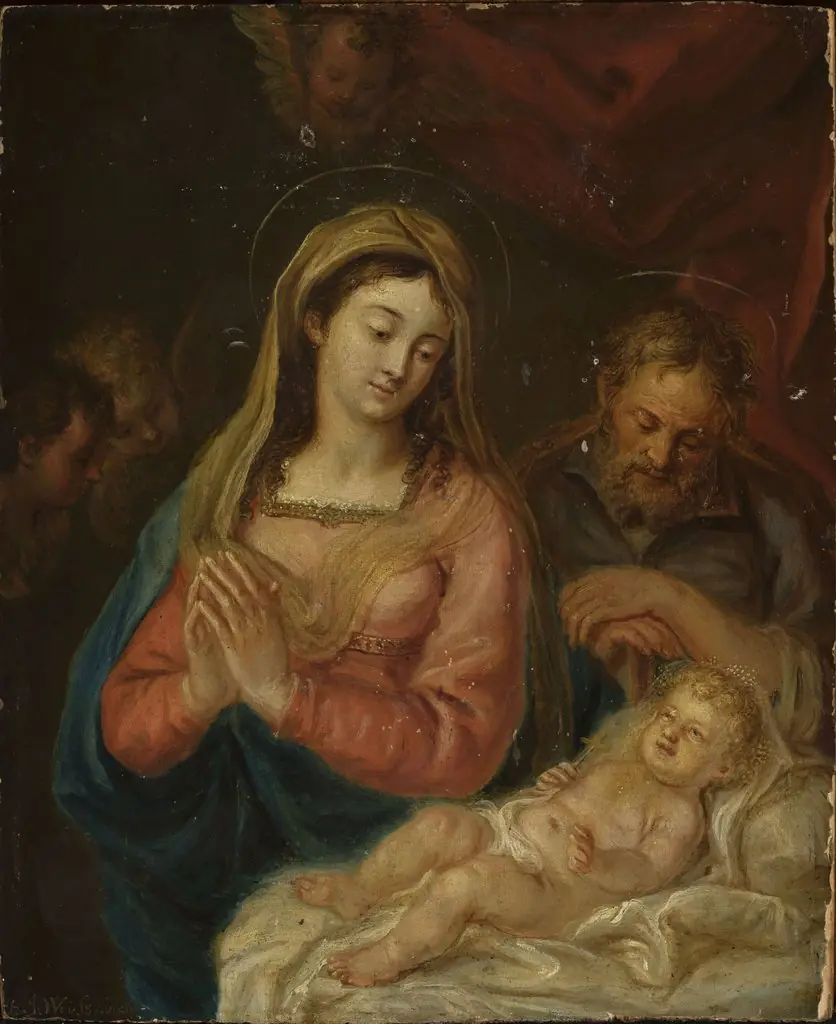 Holy Family
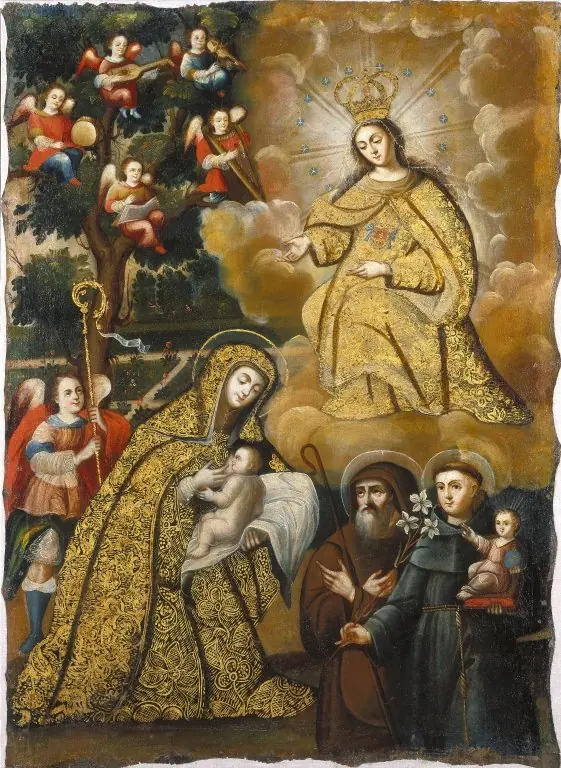 The Virgin of Mercy with Three Saints
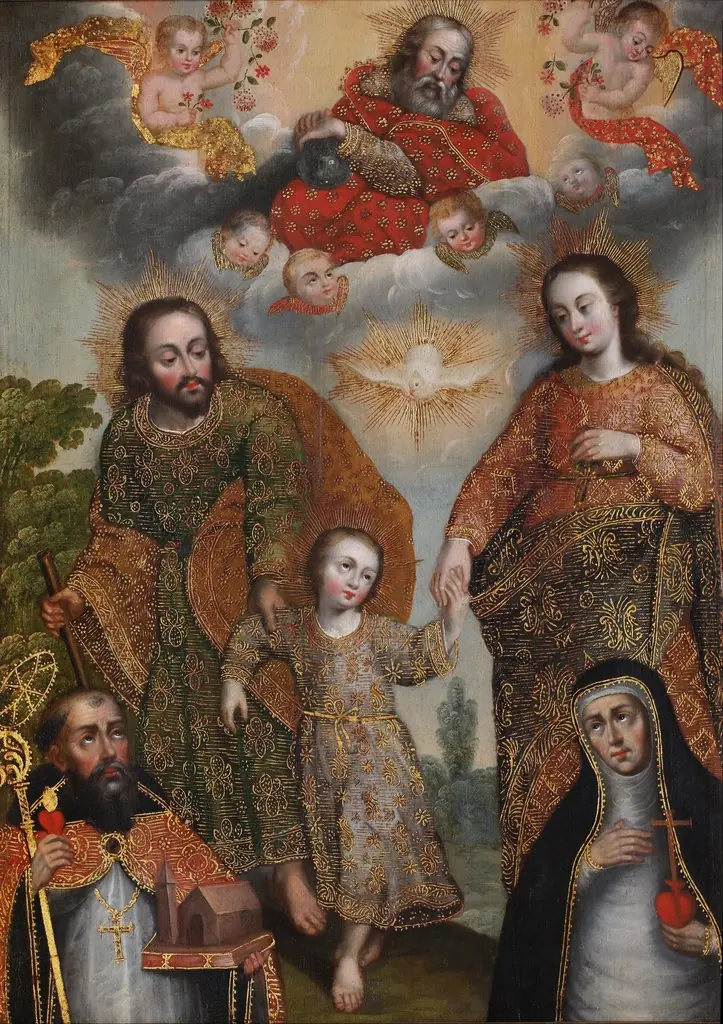 Double Trinity with Saint Augustine and Saint Catherine of Siena
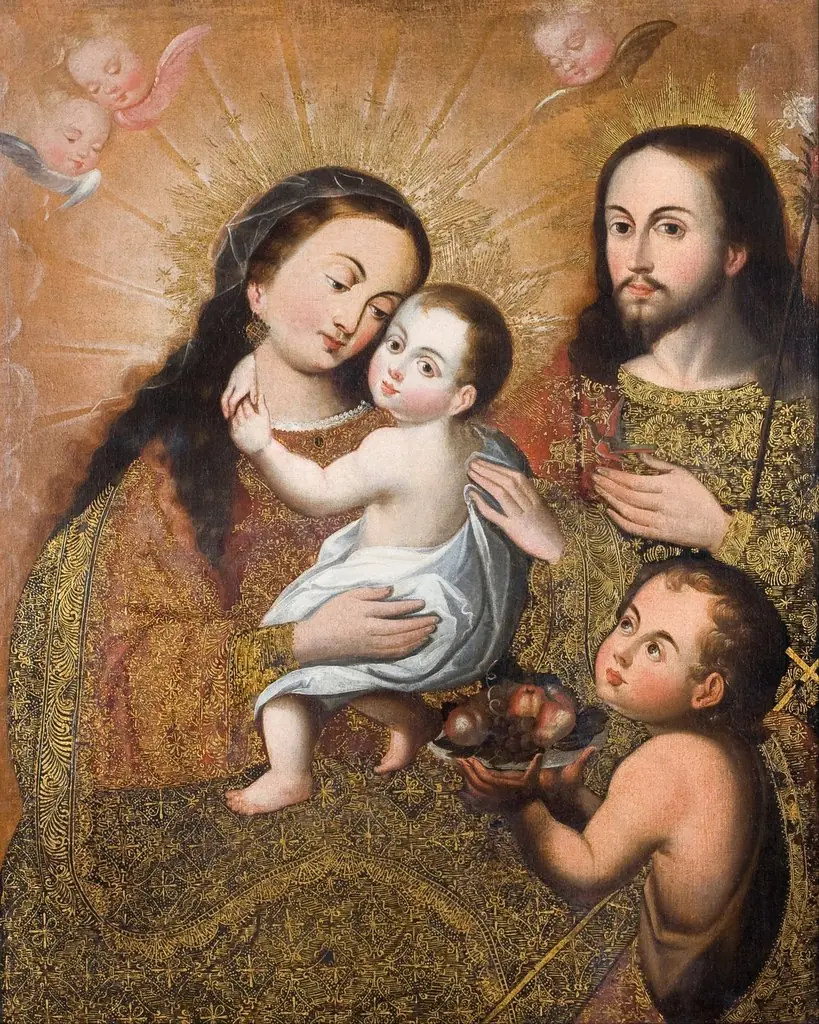 Holy Family with Saint John and a Goldfinch
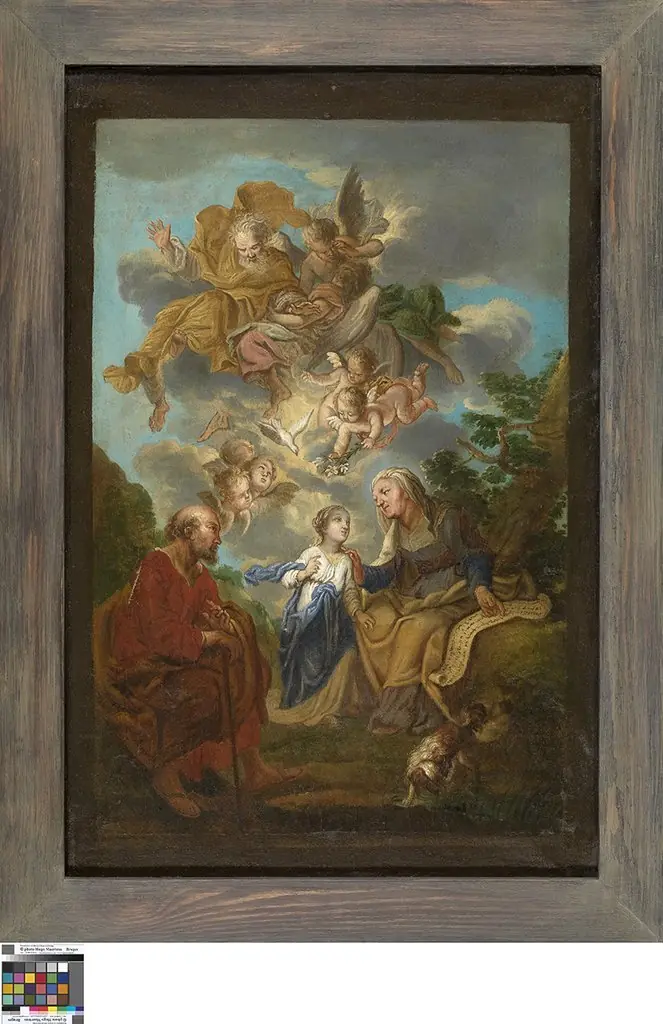 Education of Mary
 God the Father painting the Immaculate Conception