Artwork
Cristo yacente
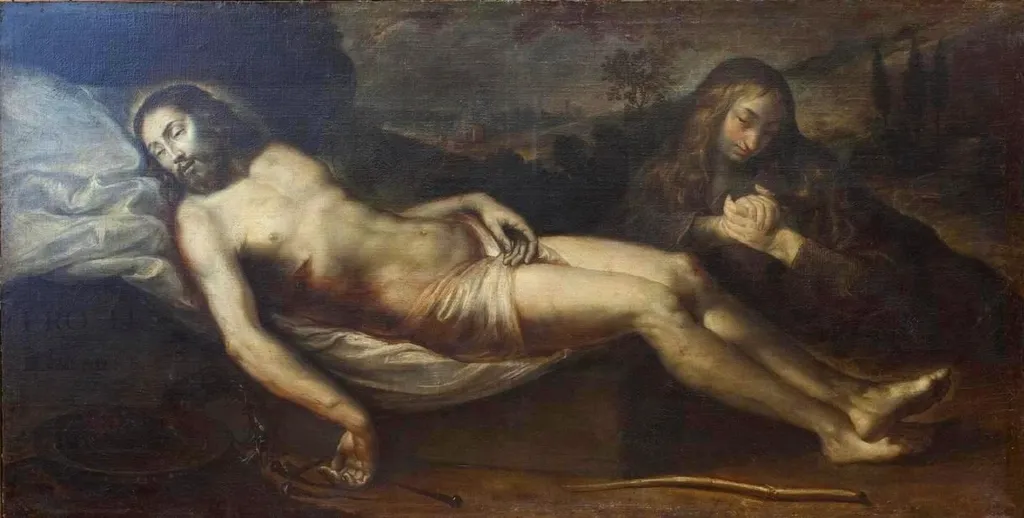
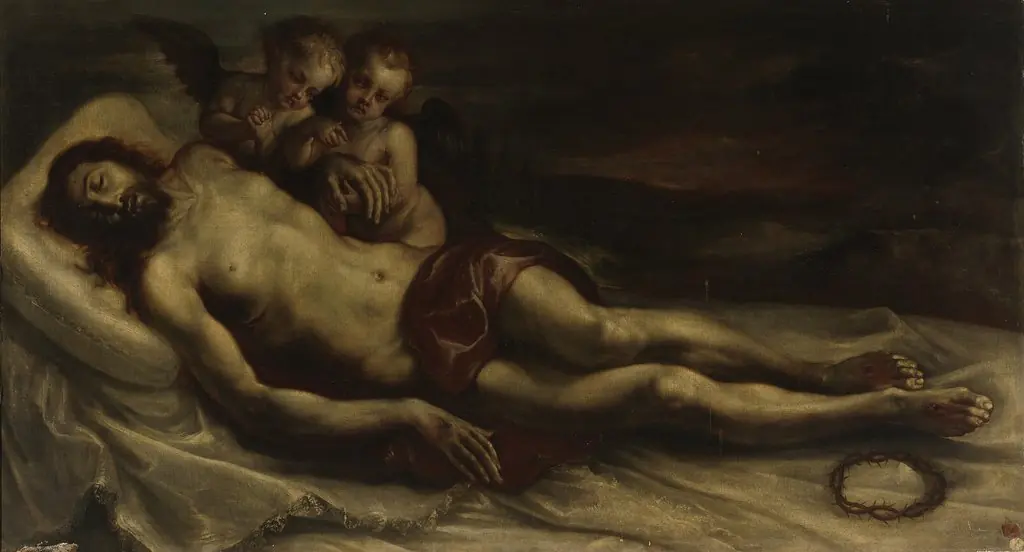
Cristo yacente is an oil painting by the Early Baroque Italian artist Francisco Camilo. It dates from 1647 and is held in the collection of the Museo del Prado.
About this work
Overview
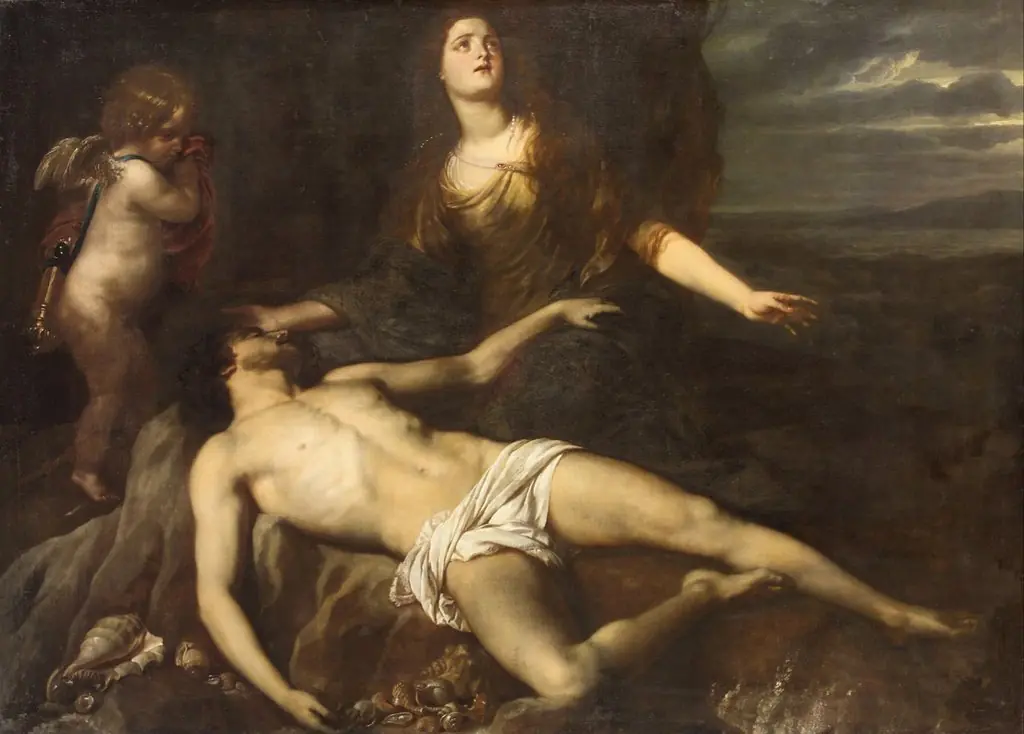
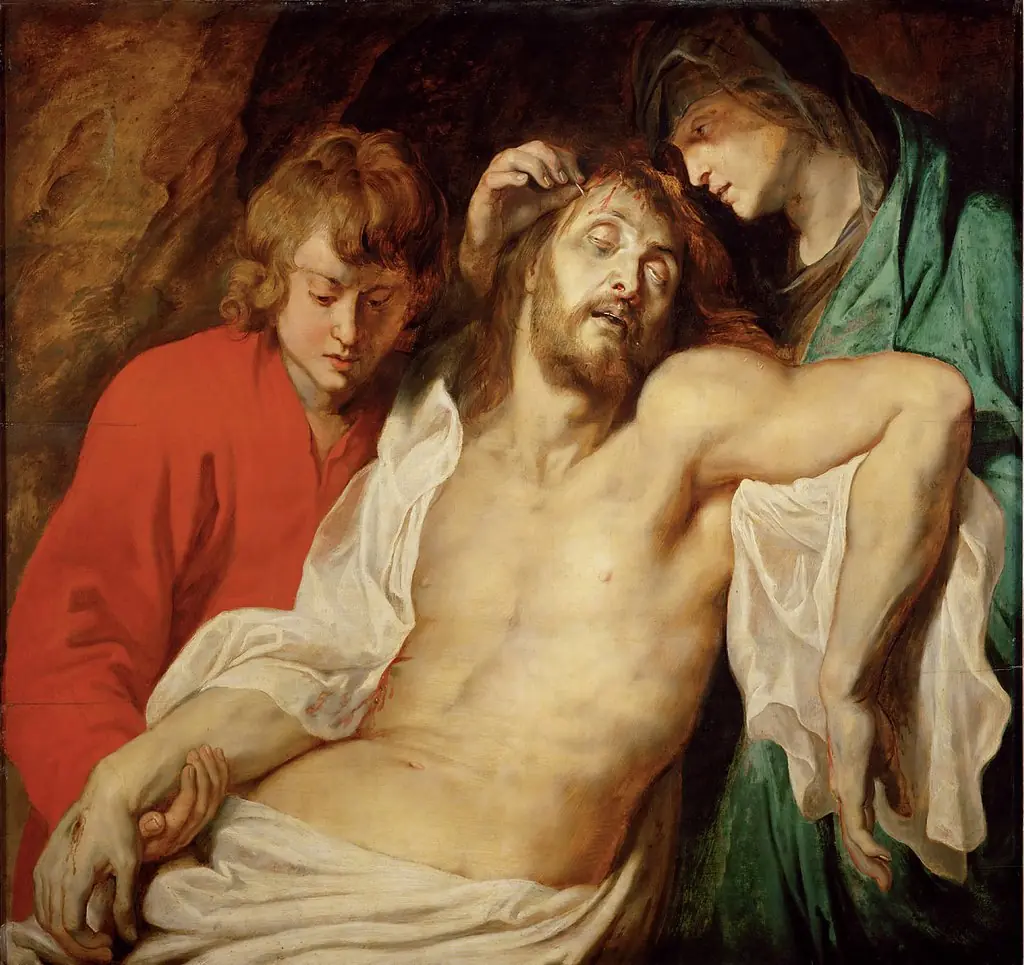
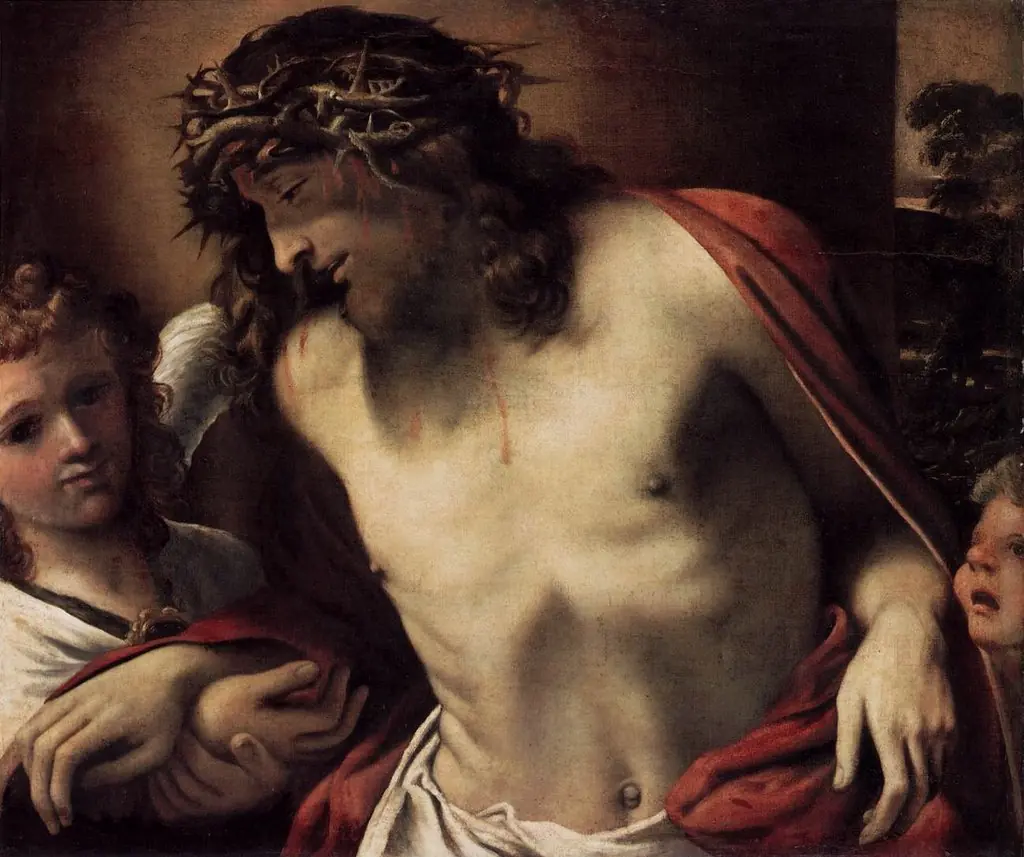
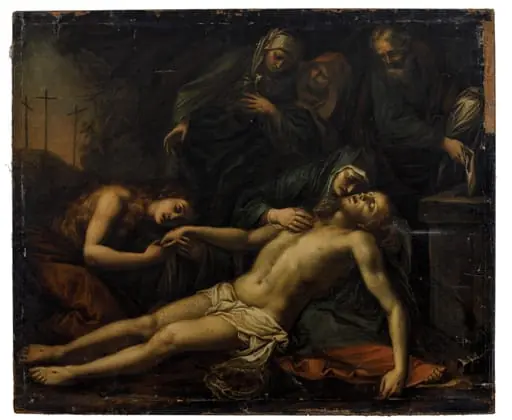
Executed in 1647, *Cristo yacente* is an oil painting by Francisco Camilo, a Madrid-born artist active during the early Baroque period. The work reflects the influence of Italianate styles that permeated Spanish religious art in the seventeenth century. Its composition centers on the lifeless body of Christ, rendered with a heightened sense of physical and emotional weight.
Subject & Meaning
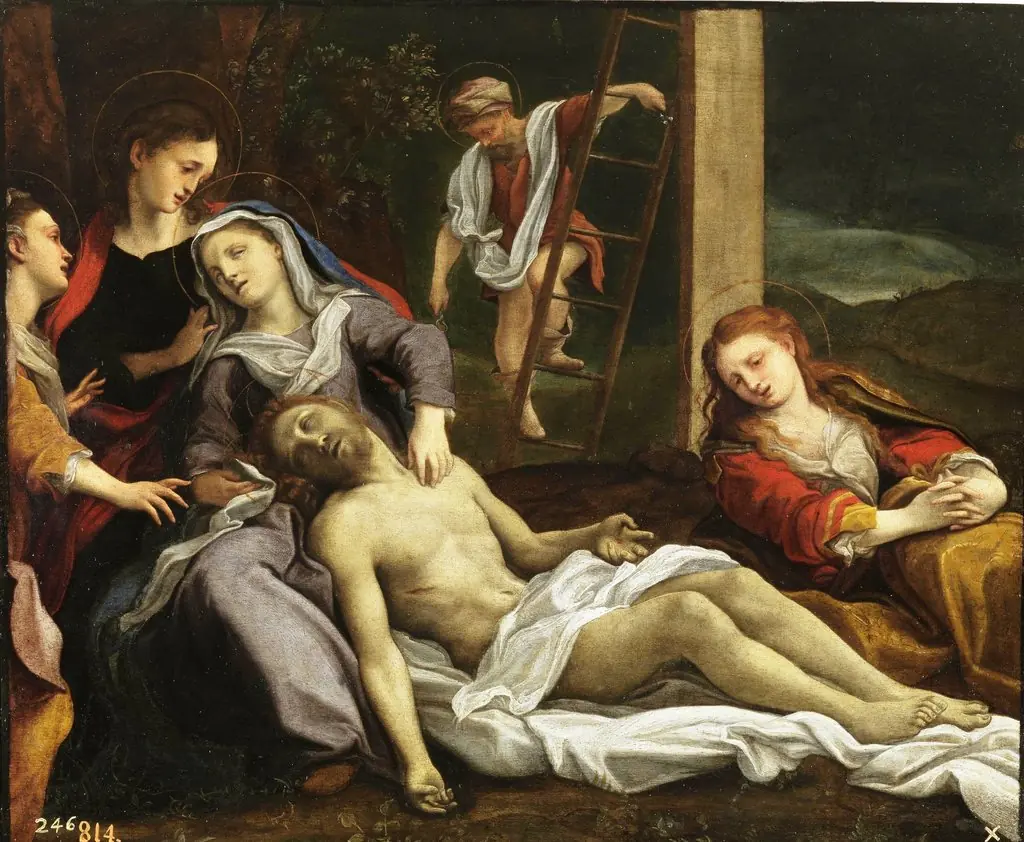
A grieving female figure kneels in devotion, her clasped hands and downcast expression conveying mourning.
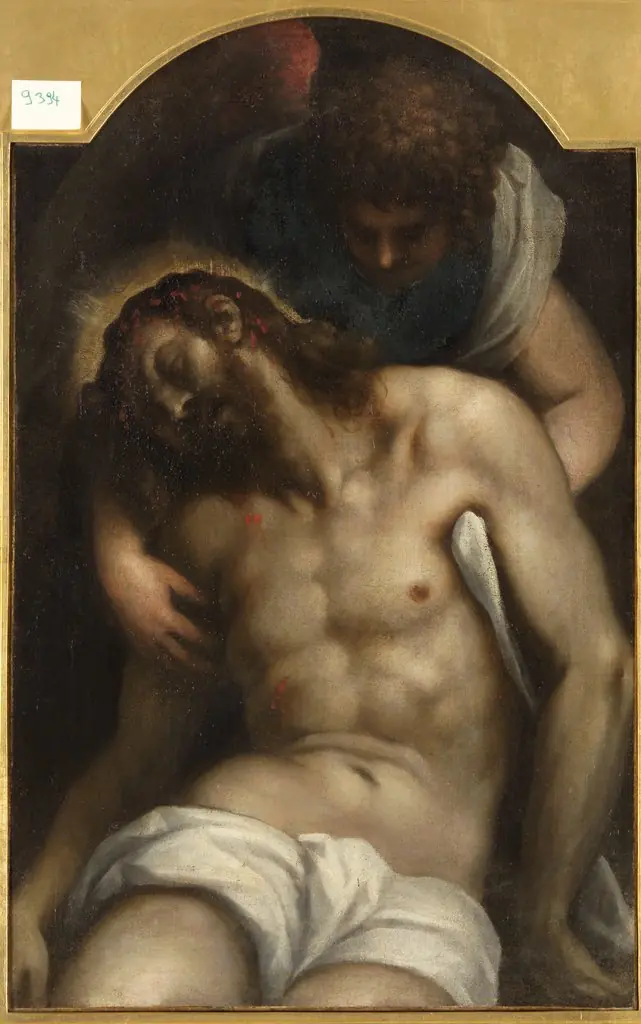
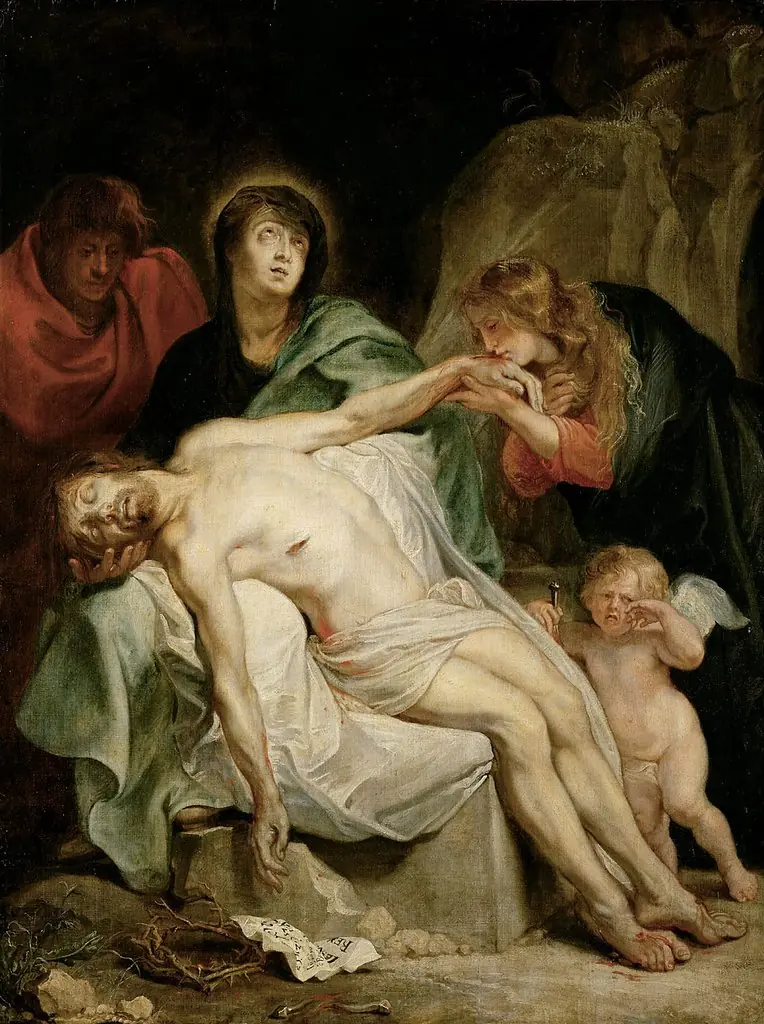
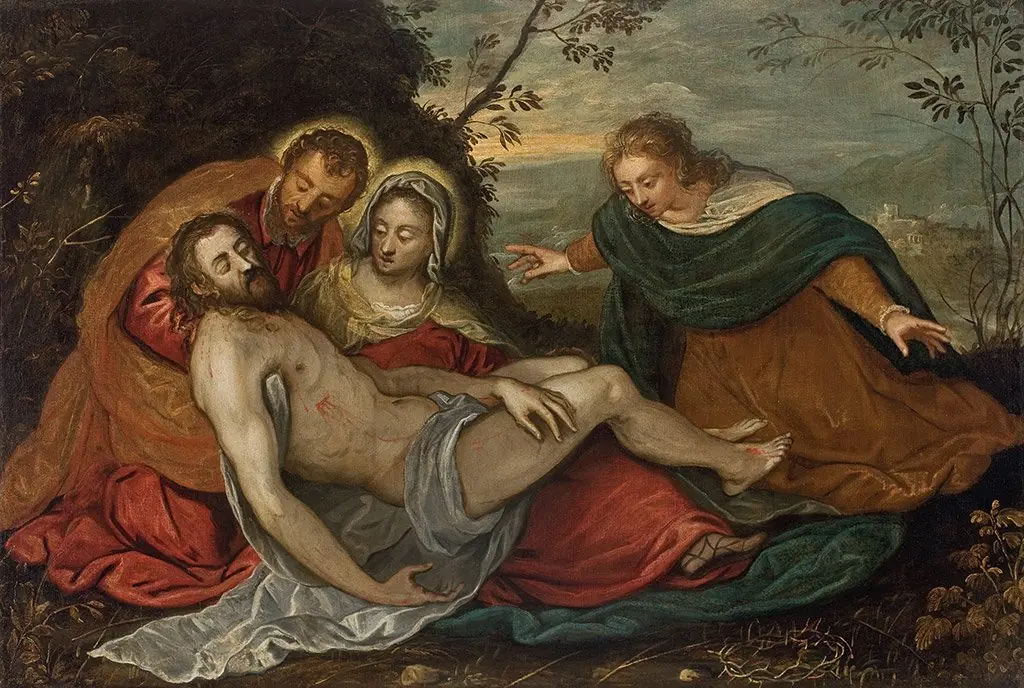
The painting depicts Christ’s body after crucifixion, laid out and partially shrouded in linen. A grieving female figure kneels in devotion, her clasped hands and downcast expression conveying mourning. The scene evokes themes of sacrifice and piety, characteristic of Counter-Reformation imagery, which sought to elicit emotional engagement from viewers through visceral depictions of sacred narratives.
Technique & Style
Camilo employs *chiaroscuro* to structure the composition, using stark contrasts between light and shadow to isolate the figures against a darkened backdrop. The soft modeling of Christ’s form and the delicate rendering of drapery demonstrate the artist’s technical precision. This approach aligns with the dramatic, theatrical qualities of early Baroque painting, emphasizing volume and presence through controlled illumination.
History & Provenance
The work was produced in Madrid, where Camilo trained under Pedro de las Cuevas, his stepfather and a prominent local artist. *Cristo yacente* has remained in institutional collections, currently housed in the Museo del Prado. Its creation date situates it within a period of artistic exchange between Spanish and Italian traditions, reflecting broader cultural shifts in religious art.
Context
During the seventeenth century, Spanish religious painting responded to the doctrinal and emotional demands of the Counter-Reformation. Works like *Cristo yacente* served both devotional and didactic purposes, reinforcing Catholic teachings through vivid, accessible imagery. The painting’s somber tone and dramatic lighting align with the era’s emphasis on personal reflection and spiritual intensity.
Artist & collection
Artist
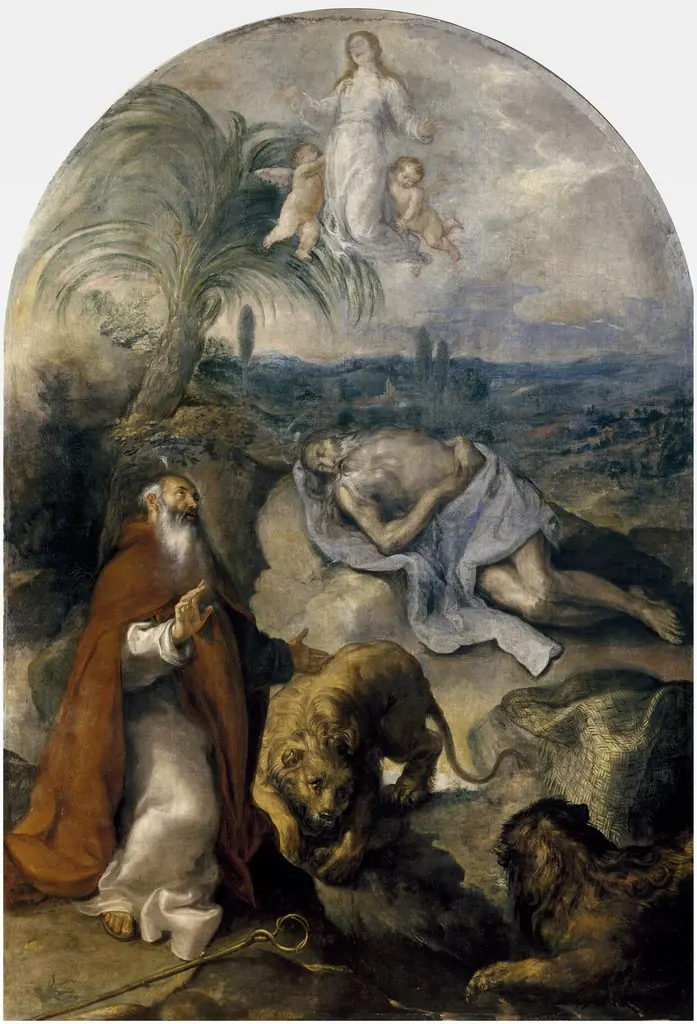
Francisco Camilo (Madrid 1610–Madrid 1671) was a Spanish painter, the son of an Italian immigrant who had settled in Madrid.