Artwork
Disasters of War: Pl. 58, It is no use shouting
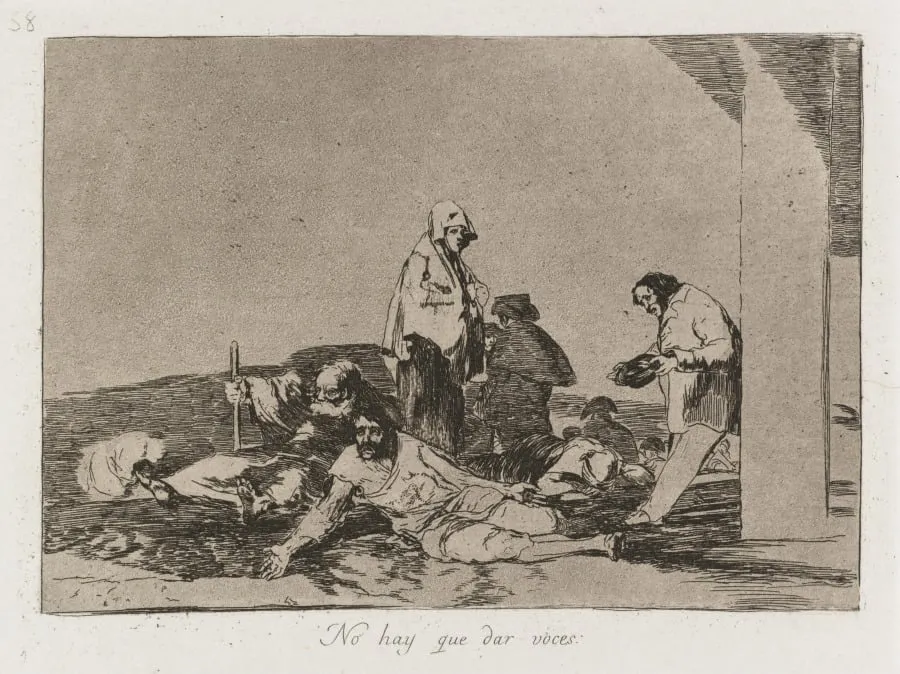
Disasters of War: Pl. 58, It is no use shouting is a print by the Romanticist artist Francisco Goya. It dates from 1812 and is held in the collection of the Cleveland Museum of Art. Created in 1812, this etching is the fifty-eighth plate in Francisco de Goya’s series 'The Disasters of War.
About this work
Overview
Created in 1812, this etching is the fifty-eighth plate in Francisco de Goya’s series 'The Disasters of War.
Created in 1812, this etching is the fifty-eighth plate in Francisco de Goya’s series 'The Disasters of War.' It depicts a grim aftermath of violence near water, where figures attend to dead and dying bodies. The scene conveys exhaustion and futility, with no heroic gestures or clear resolution. The work belongs to a larger collection documenting the brutality of the Peninsular War, rendered in stark monochrome to emphasize emotional weight over narrative clarity.
Subject & Meaning
The image shows three individuals near a mound of corpses, one holding a shovel, another wrapped in a cloak, and a third bent over the dead. Their postures suggest resignation rather than action. The Spanish title, 'No hay que dar voces,' translates to 'It is no use shouting,' underscoring the silence of despair. The scene rejects catharsis, presenting suffering as overwhelming and unresponsive to outcry or intervention.
Technique & Style
Goya used etching and aquatint to achieve deep blacks and textured gradations, mimicking the murk of mud and water. The rough, uneven lines evoke chaos and decay, while the absence of detail in the background blurs the boundary between earth and water. Figures are rendered with minimal definition, emphasizing their anonymity and the dehumanizing scale of death. The monochromatic palette intensifies the somber tone.
History & Provenance
The print was produced between 1810 and 1820 as part of Goya’s private response to the violence of the Napoleonic occupation of Spain. Though not published during his lifetime, the series was preserved by his family and later acquired by institutions. The Cleveland Museum of Art holds this plate as part of its collection of Goya’s prints, acquired in the 20th century after passing through private European hands.
Context
Goya created this series amid the chaos of the Peninsular War, witnessing atrocities committed by both French and Spanish forces. Unlike official war art, these prints avoided glorification, instead focusing on civilian suffering and moral collapse. The work reflects a shift in European art toward unflinching realism, anticipating later movements that rejected idealized narratives of conflict.
Legacy
This plate, like others in the series, influenced 20th-century artists confronting war’s horrors, from Otto Dix to Francis Bacon. Its unembellished portrayal of death without redemption challenged traditional artistic conventions. The series gained broader recognition after its 1863 publication, cementing Goya’s role as a precursor to modern visual critiques of violence and human cruelty.
Artist & collection
Artist
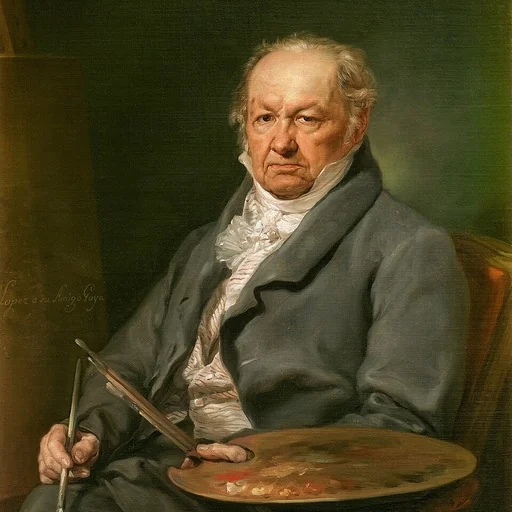
Francisco José de Goya y Lucientes (; Spanish: ; 30 March 1746 – 16 April 1828) was a Spanish romantic painter and printmaker.

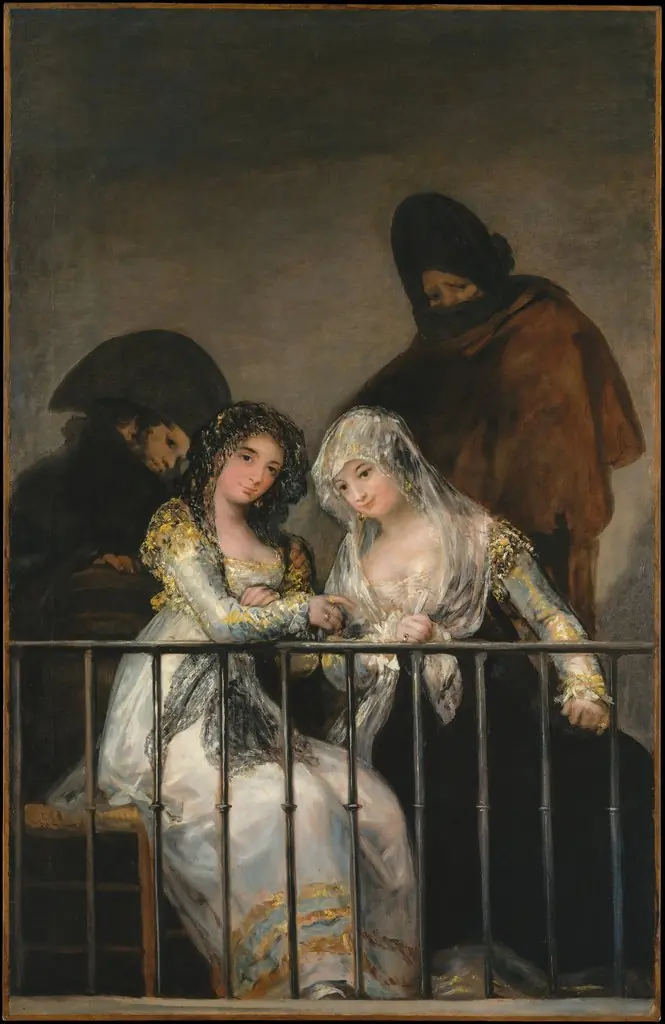
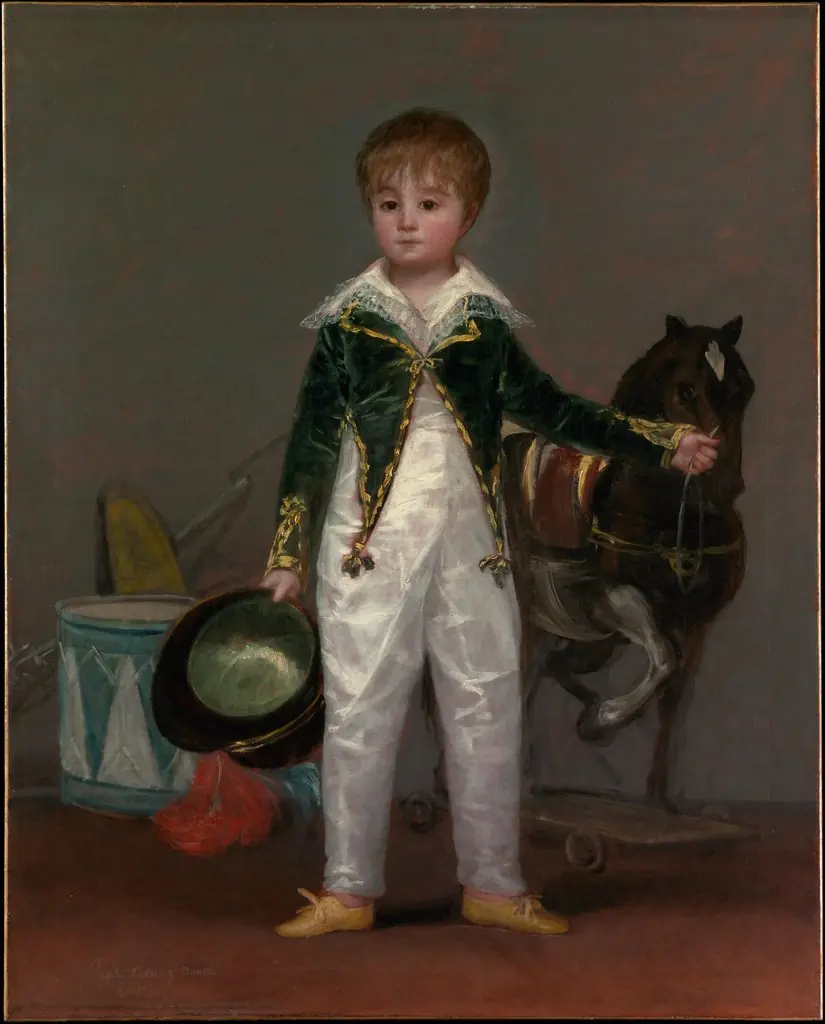
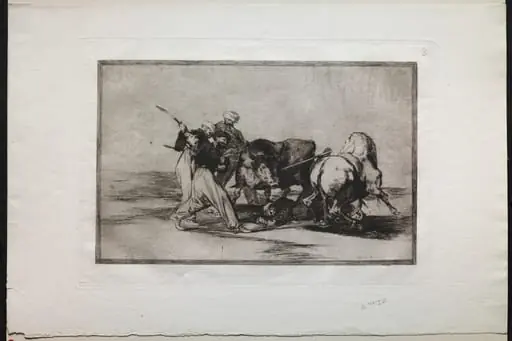 Bullfights: The Moors Settled in Spain, Giving Up the Superstitions of the Qur’an, Adopted this Art of Hunting, and Spear a Bull in the Open
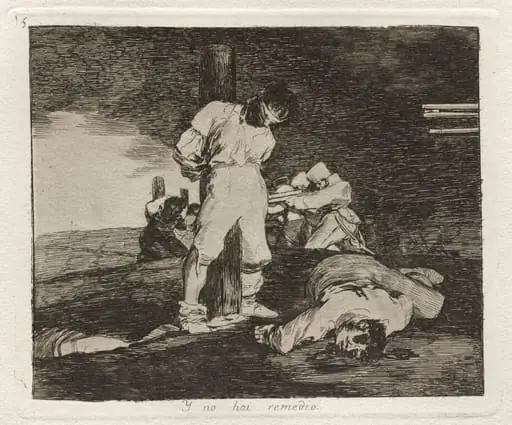 Y no hai remedio (And There's No Help for It)
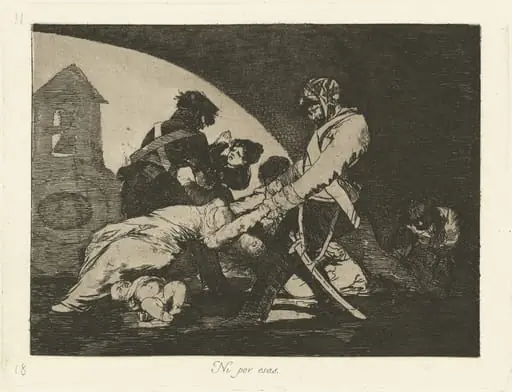 Ni por esas (Neither Do These)
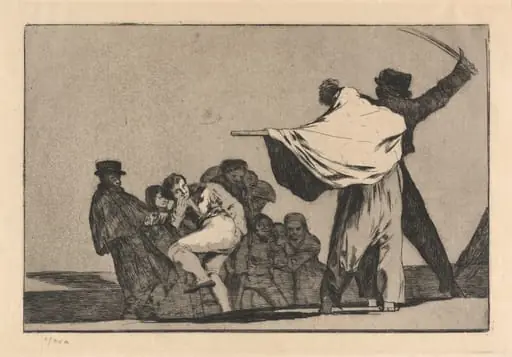 Disparate conocido (Well-Known Folly)
 Disparate conocido (Well-Known Folly)
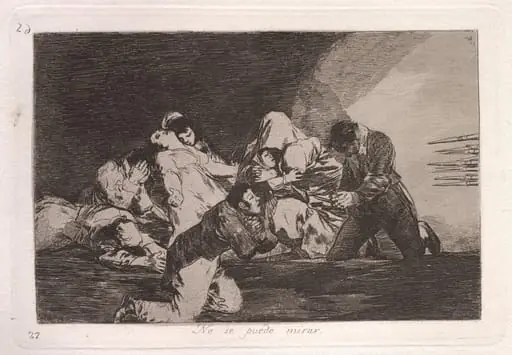 No se puede mirar (One Can't Look)
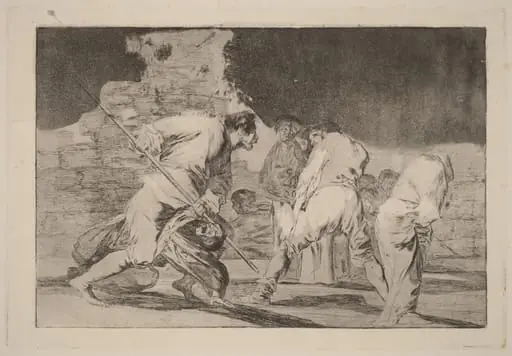 Disparate furioso (Furious Folly)
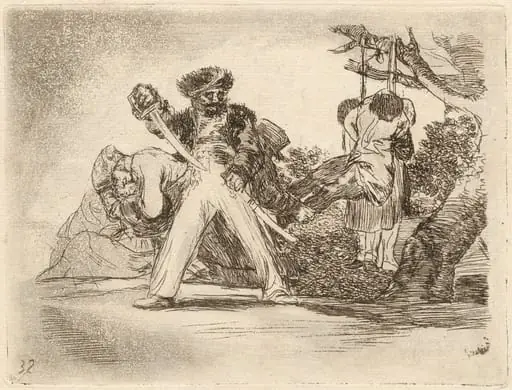 Fuerte cosa es! (That's Tough!)