Artwork
To the Count Palatine, Plate 33
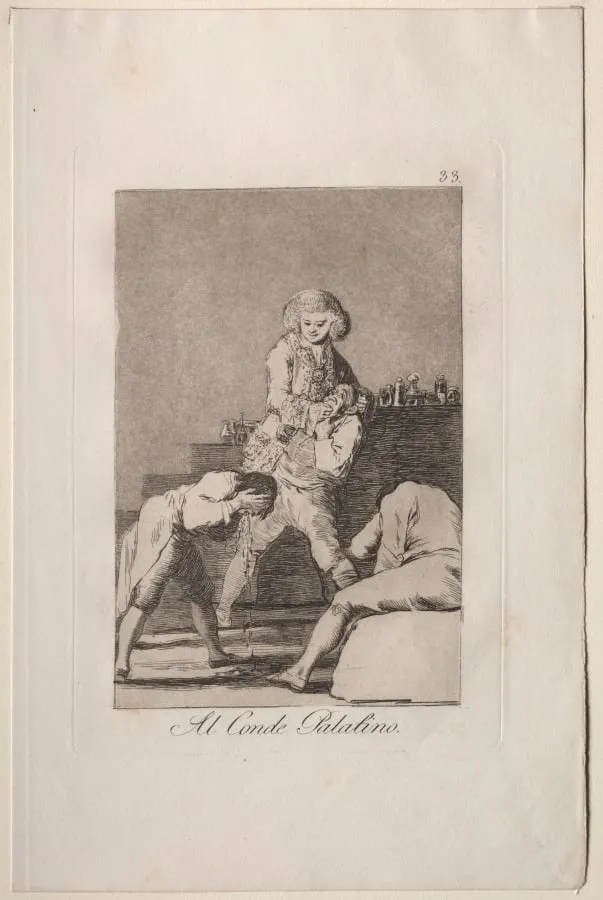
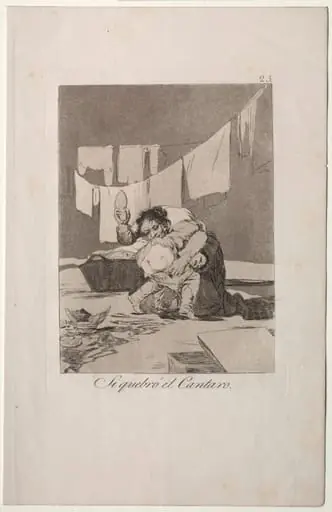
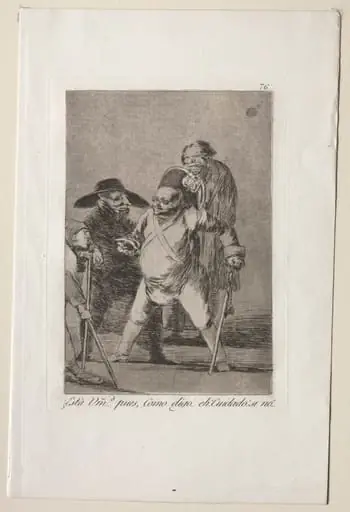
To the Count Palatine, Plate 33 is a print by the Romanticist artist Francisco Goya. It dates from 1799 and is held in the collection of the Cleveland Museum of Art. Created around 1799, this print by Francisco de Goya is part of a larger series exploring human folly and social decay.
About this work
Overview
Created around 1799, this print by Francisco de Goya is part of a larger series exploring human folly and social decay. It is one of 80 etchings in the Caprichos collection, published as a set to critique Spanish society. The work is currently held at The Cleveland Museum of Art, where it is displayed as an example of Goya’s incisive satirical vision during his early career.
Subject & Meaning
The arrangement suggests a moment of moral or domestic crisis, possibly alluding to hidden rituals, neglect, or the absurdity of authority in private life.
The scene depicts three figures in a shadowed interior: a man in elaborate attire holds a child while observing two others. One figure kneels near the floor, the other slumps in despair. The title, referencing the Count Palatine, may mock aristocratic pretension. The arrangement suggests a moment of moral or domestic crisis, possibly alluding to hidden rituals, neglect, or the absurdity of authority in private life.
Technique & Style
Goya employed etching and aquatint to achieve deep shadows and subtle tonal gradations. The dim lighting isolates the figures, heightening psychological tension. Fine lines define textures of fabric and wood, while the background shelves, filled with jars, suggest a space of alchemy or medicine—adding ambiguity to the scene’s purpose. The composition avoids clarity, inviting interpretation rather than narrative resolution.
History & Provenance
The print was produced as part of Goya’s Caprichos series, released in 1799 after years of private work. It was initially sold by subscription to a limited audience, reflecting Goya’s desire to reach educated patrons without institutional approval. The Cleveland Museum of Art acquired the print in the 20th century, where it now serves as a key example of late 18th-century Spanish printmaking.
Context
Made during a period of political unrest and Enlightenment skepticism in Spain, the Caprichos series responded to superstition, corruption, and class hypocrisy. Goya, then a court painter, used satire to expose societal flaws under the guise of fantasy. The work aligns with broader European trends in dark humor and psychological realism, anticipating Romanticism’s fascination with the irrational and the grotesque.
Legacy
This print, like others in the Caprichos, influenced later artists seeking to merge social critique with visual ambiguity. Its psychological depth and technical innovation helped redefine printmaking as a vehicle for personal and political expression. Goya’s unflinching gaze at human frailty laid groundwork for modern art’s engagement with moral complexity and institutional critique.
Artist & collection
Artist
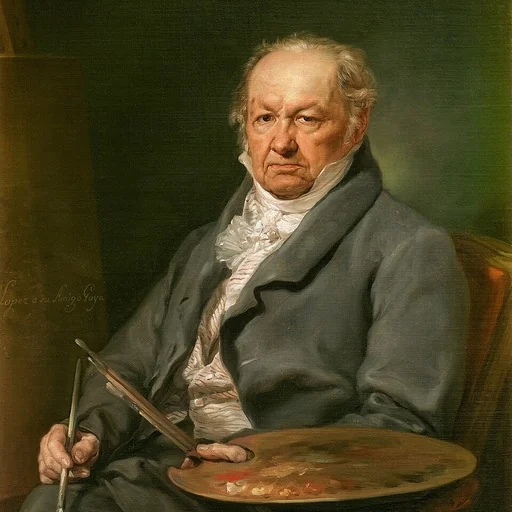
Francisco José de Goya y Lucientes (; Spanish: ; 30 March 1746 – 16 April 1828) was a Spanish romantic painter and printmaker.