Artwork
Saint Euphemia
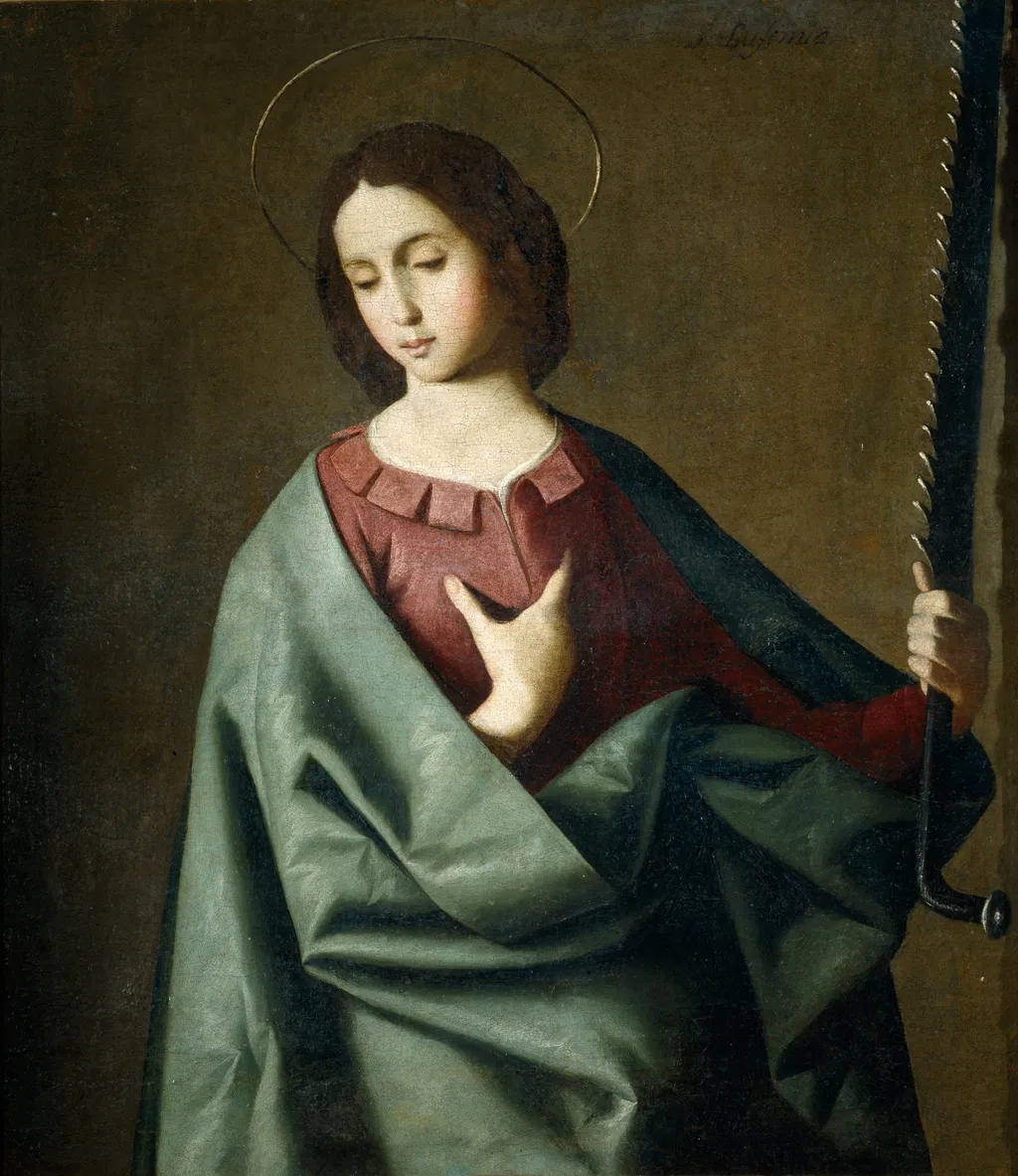
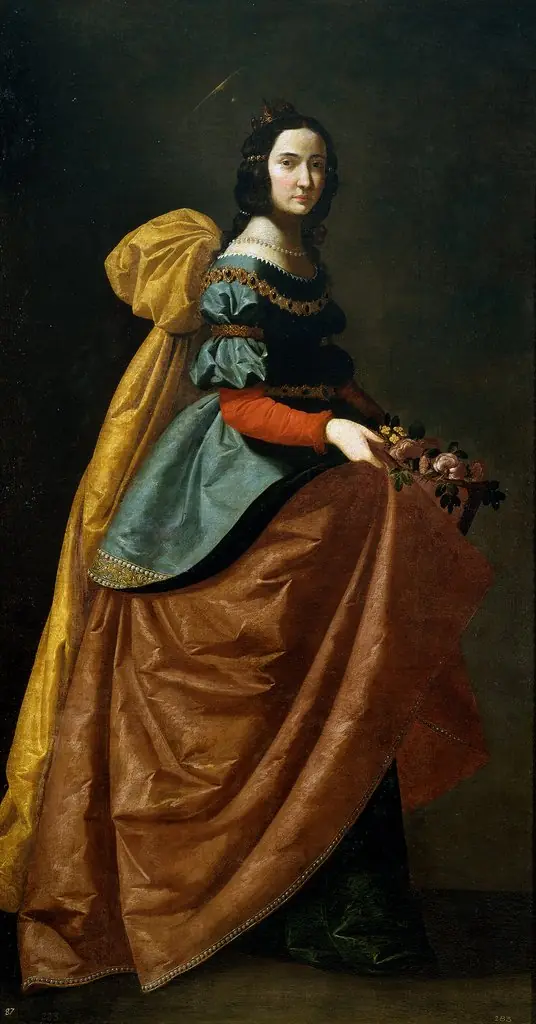
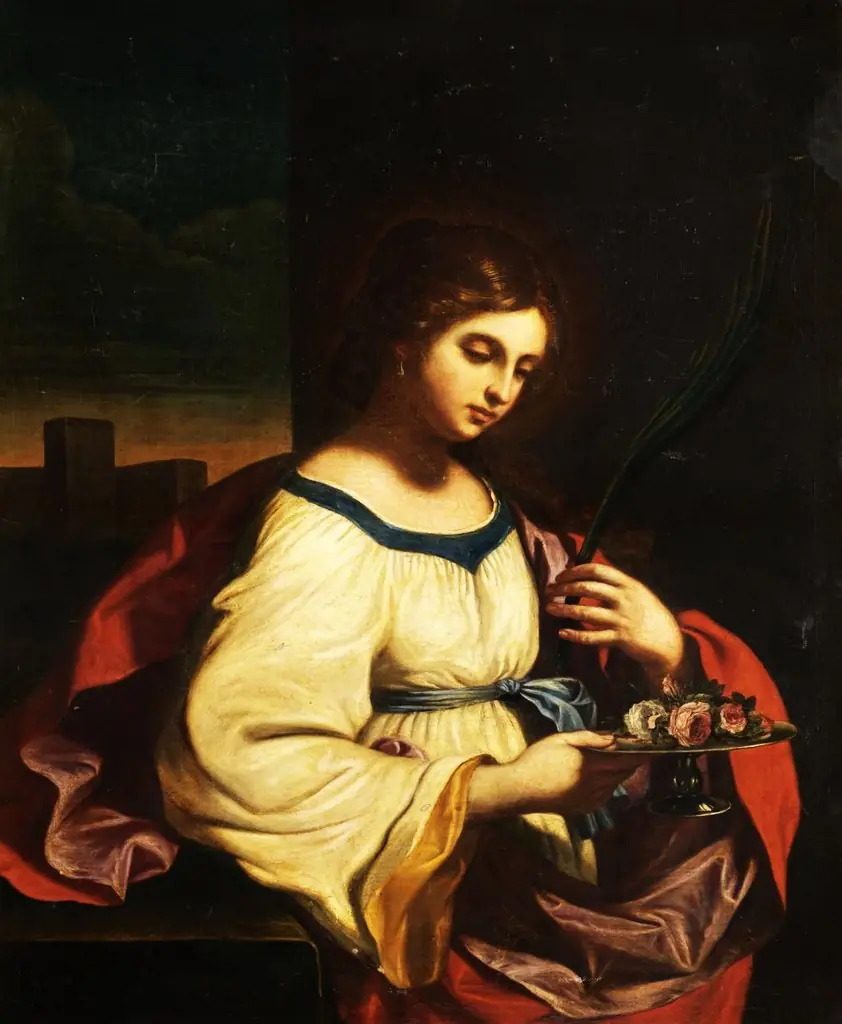
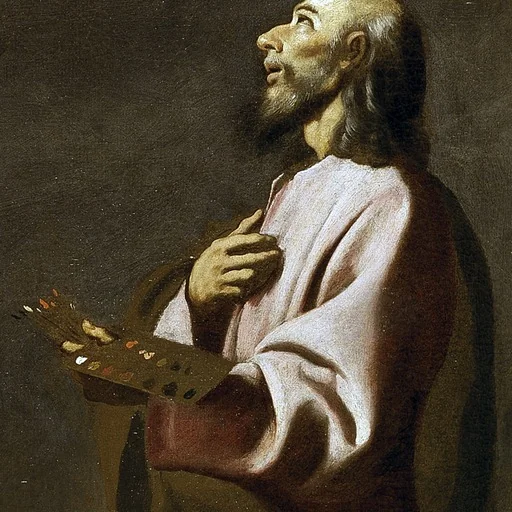
Saint Euphemia is an oil painting by the Early Baroque Italian artist Francisco de Zurbarán. It dates from 1635 and is held in the collection of the Museo del Prado.
About this work
Overview
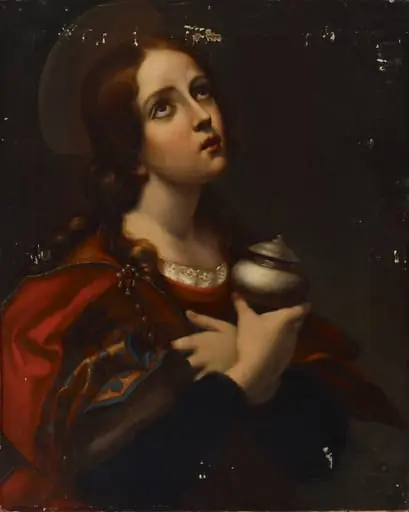
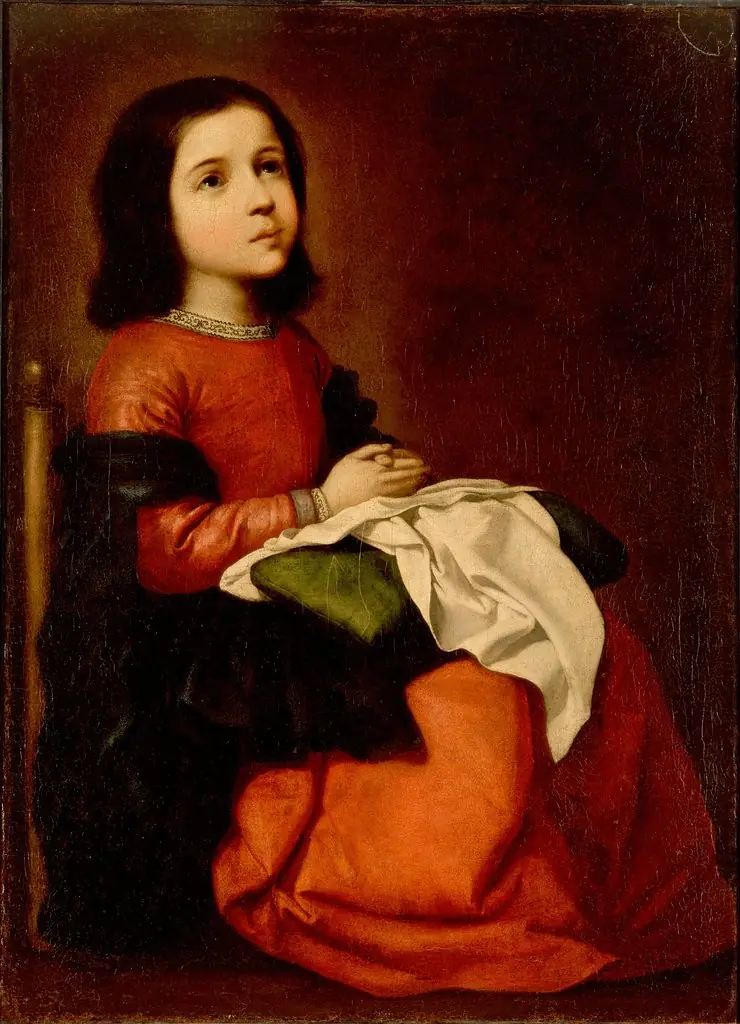
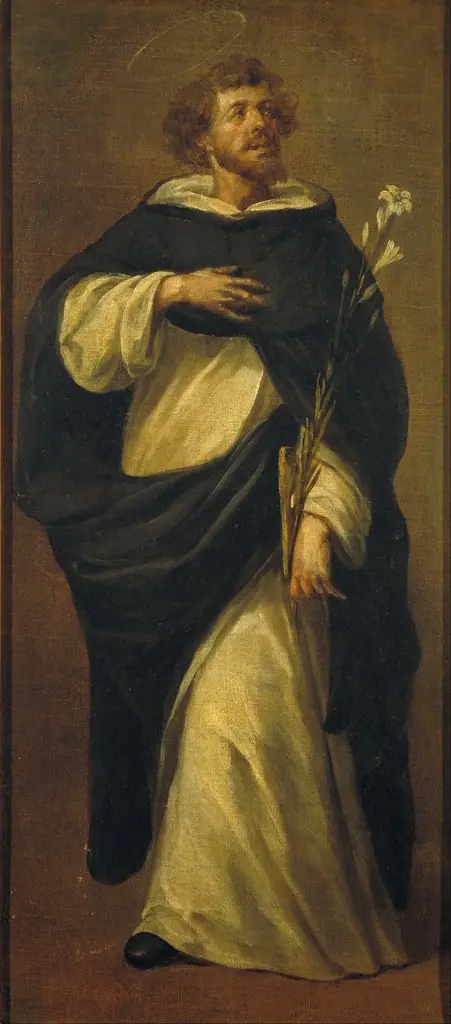
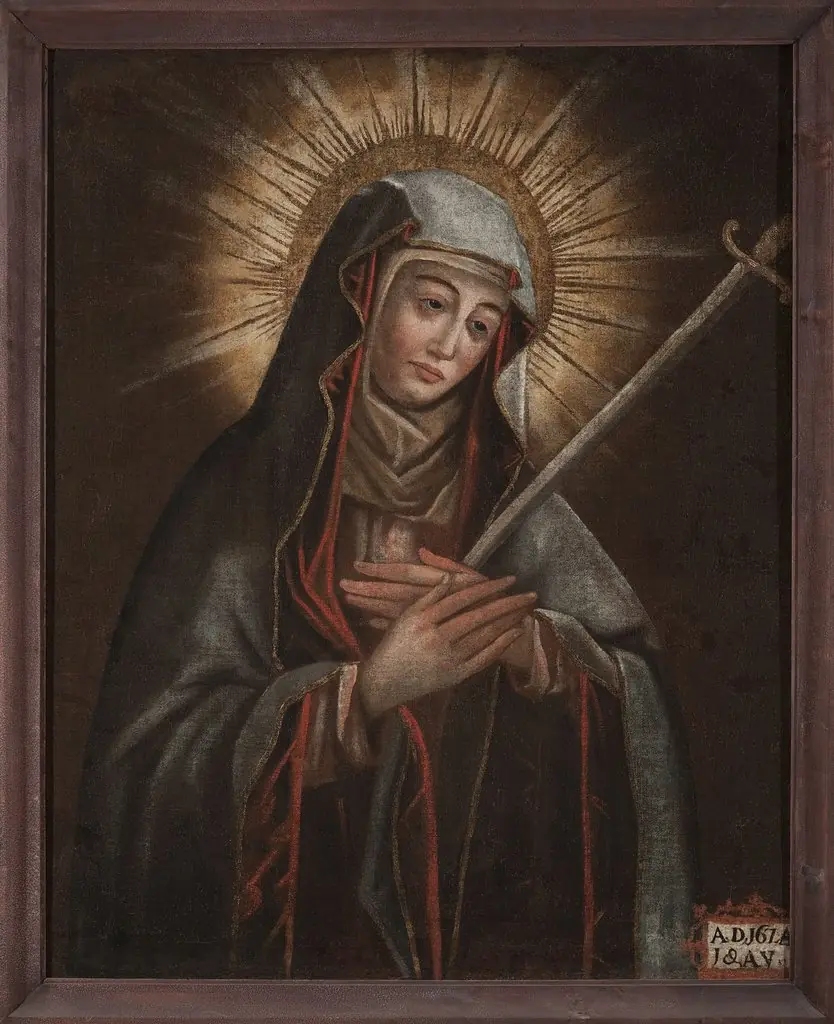
Painted in 1635 by Francisco de Zurbarán, this oil on canvas work depicts Saint Euphemia, a Christian martyr. The painting is part of the permanent collection at the Museo del Prado in Madrid. It presents the saint in a contemplative pose, isolated against a deep, unmodulated background, emphasizing her spiritual presence through minimal setting and focused lighting.
Subject & Meaning
Saint Euphemia is portrayed as a serene martyr, her closed eyes and folded hands suggesting prayer or inner devotion. The golden halo signifies her sanctity, while the long red cloth may reference her martyrdom, possibly alluding to the blood of sacrifice or the cloth used in her burial. Her calm demeanor conveys acceptance of divine will, consistent with hagiographic traditions of the time.
Technique & Style
Zurbarán employs chiaroscuro to define the saint’s form, using stark contrasts between light and shadow to model her figure with sculptural clarity. The dark background recedes entirely, directing attention to her pale skin and the rich red of her collar and cloth. Brushwork is restrained, favoring solidity over ornamentation, reflecting the austere aesthetic of Spanish Counter-Reformation art.
History & Provenance
The painting was completed during Zurbarán’s most productive period, likely commissioned for a religious institution in Spain. It entered the Museo del Prado’s collection in the early nineteenth century following the secularization of monasteries. Its preservation has remained consistent, with no major alterations or reattributions recorded since its acquisition.
Context
Created during the height of the Spanish Counter-Reformation, the painting reflects the Church’s emphasis on clear, emotionally restrained depictions of saints to inspire piety. Zurbarán’s focus on solitary, contemplative figures aligned with the spiritual ideals of the era, particularly among Carthusian and Franciscan communities who valued silence and devotion.
Legacy
This work exemplifies Zurbarán’s mastery in conveying spiritual gravity through simplicity. While not widely reproduced in popular culture, it remains a key reference in studies of Spanish Baroque religious art. Its influence endures in the way later artists approached the depiction of solitary saints with psychological depth and formal economy.
Own this work as a print
Artist & collection
Artist
Francisco de Zurbarán was a Spanish Baroque painter. He is known primarily for his religious paintings depicting monks, nuns, and martyrs, and for his still-lifes. Zurbarán gained the nickname "Spanish Caravaggio",…