Artwork
The Adoration of the Magi
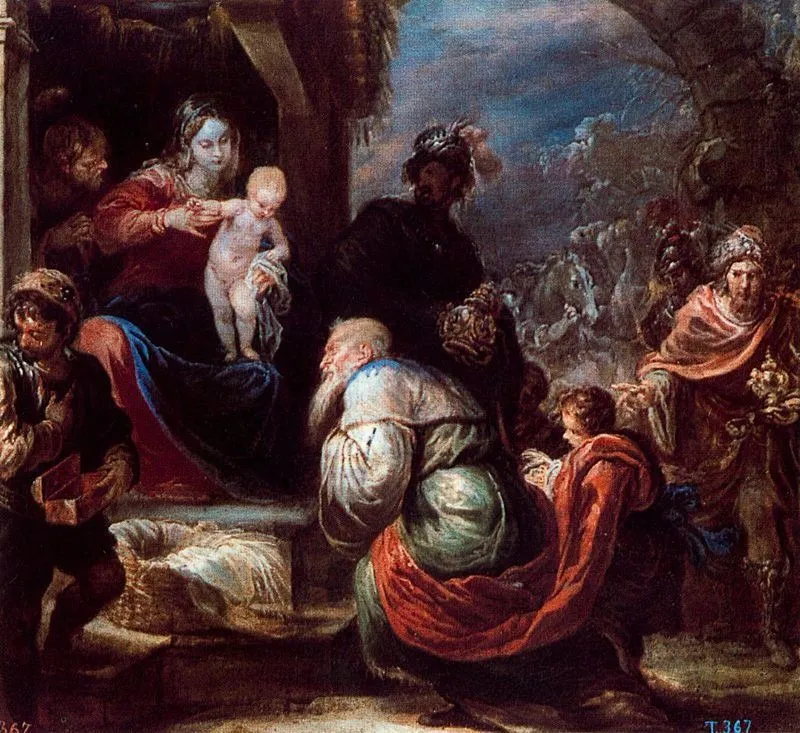
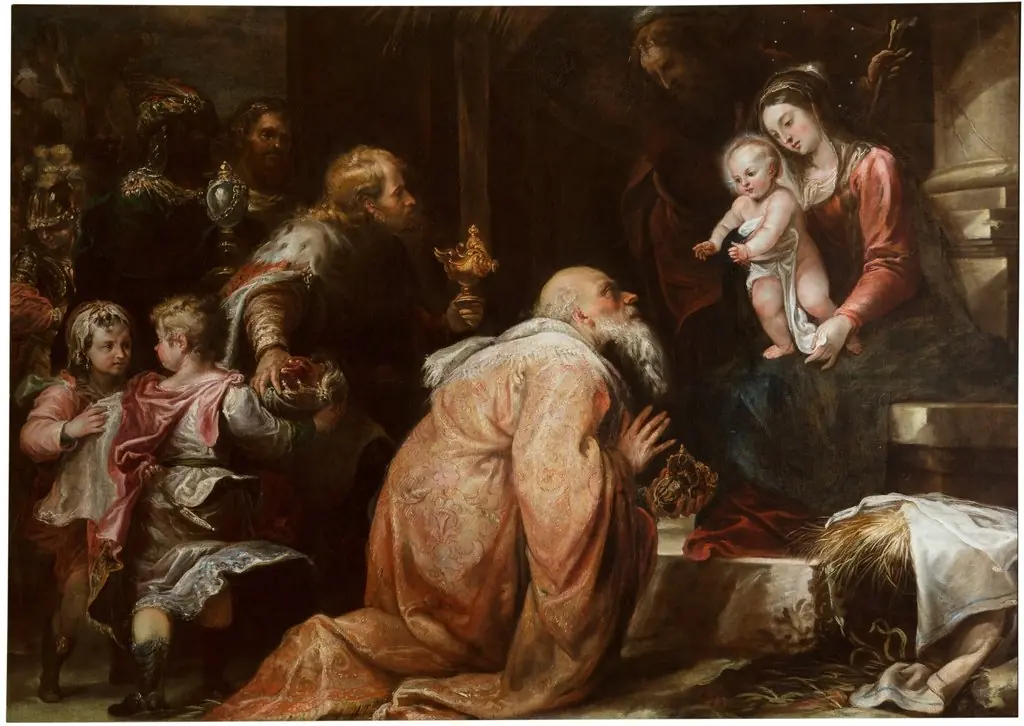
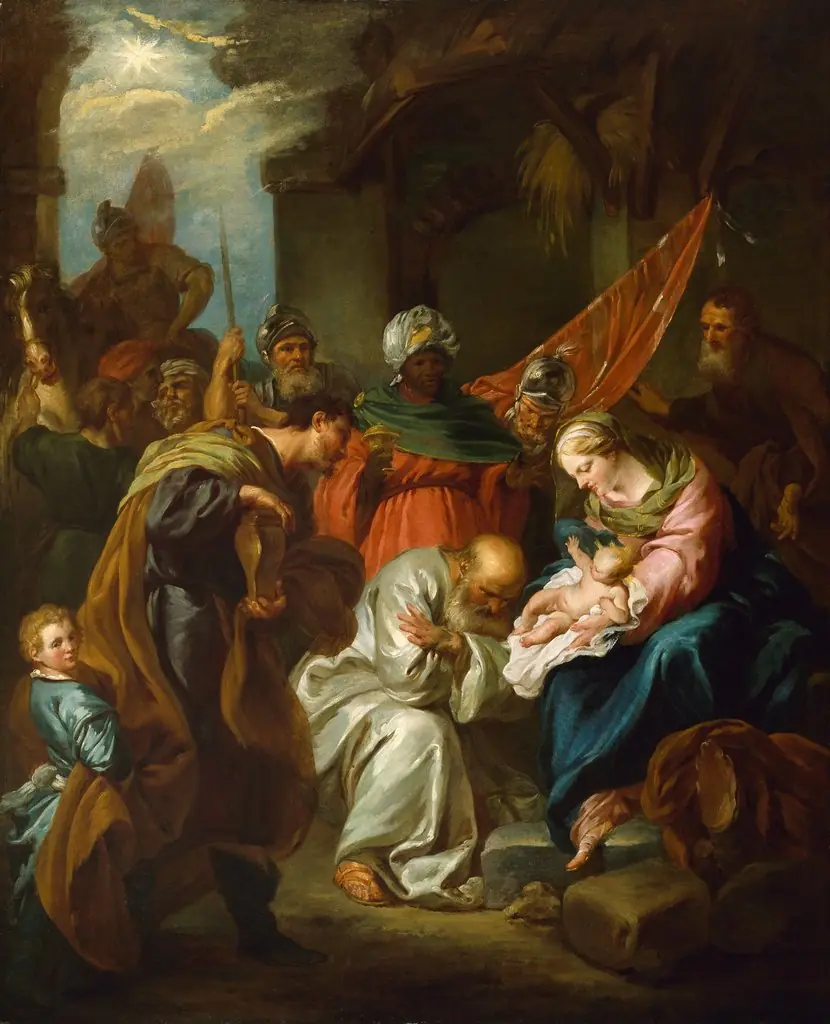
The Adoration of the Magi is an oil painting by the Early Baroque Italian artist Francisco Rizi. It dates from 1650 and is held in the collection of the Museo del Prado.
About this work
Overview
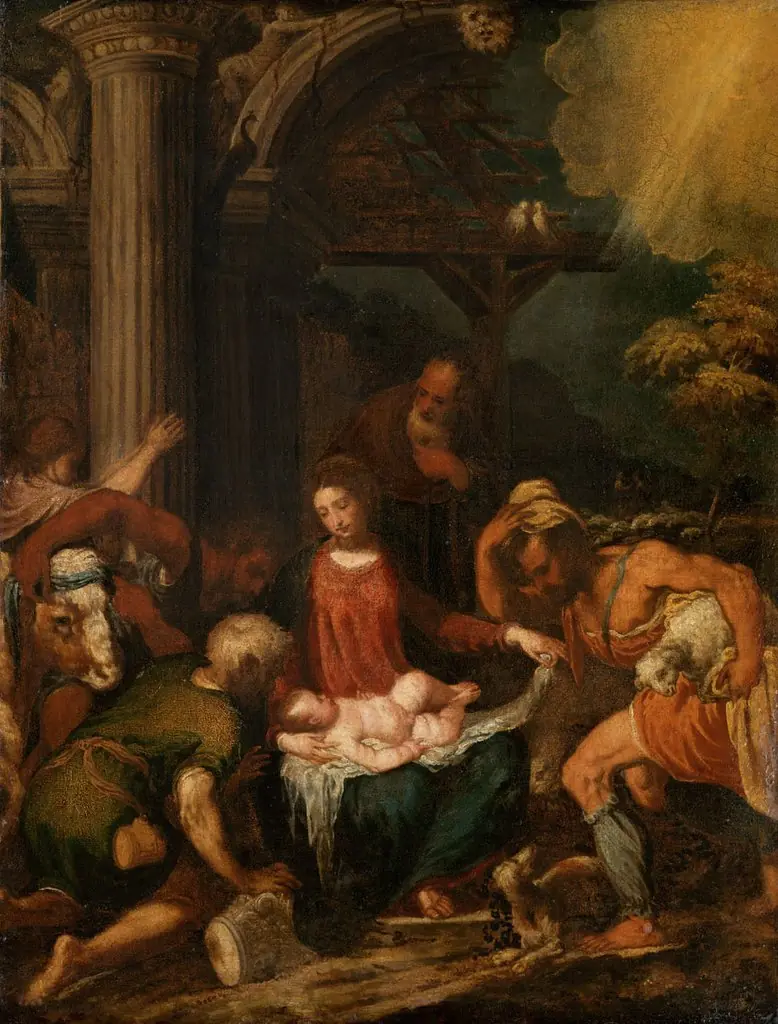
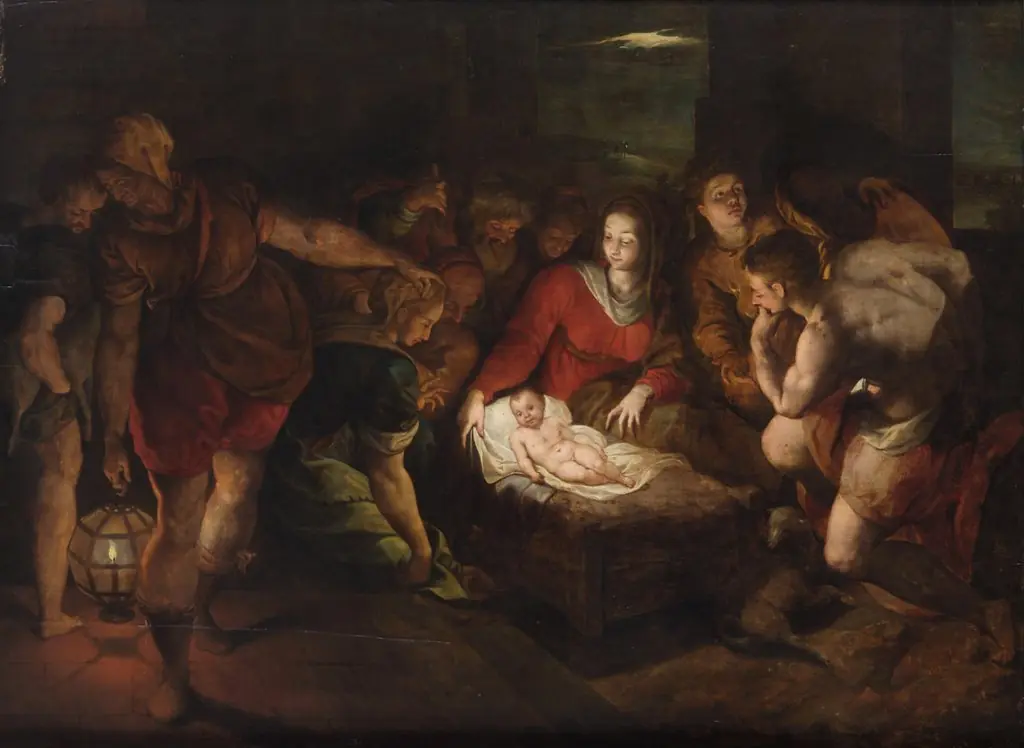
Francisco Rizi’s oil painting titled *The Adoration of the Magi*, executed around 1650, is part of the collection at Madrid’s Museo del Prado. The work presents a nocturnal tableau centered on the infant Christ, surrounded by a gathering of figures in a dimly lit cavernous setting.
Subject & Meaning
At the composition’s heart stands a woman in a vivid red robe cradling the pale newborn, evoking the biblical scene of the Magi’s homage. Surrounding participants kneel or stand, some bearing bundles that suggest the traditional gifts of gold, frankincense, and myrrh, while another figure bows his head in a gesture of prayerful reverence.
Technique & Style
Rizi employs a pronounced chiaroscuro, contrasting deep shadows with illuminated highlights to heighten drama. The palette is dominated by earthy tones, allowing the woman’s red garment to command visual attention. The interplay of light and dark creates a sense of three‑dimensional depth within the confined interior.
History & Provenance
Created in the mid‑17th century, the painting entered the Prado’s holdings as part of its extensive Baroque collection. Its attribution to Rizi, a prominent Spanish court painter, has been consistently affirmed by museum records and scholarly catalogues.
Context
The work reflects the Counter‑Reformation’s emphasis on devotional imagery, using theatrical lighting to draw the viewer into the sacred narrative. Its composition aligns with contemporary Spanish interpretations of biblical episodes, where emotional intensity is conveyed through stark illumination and restrained color schemes.
Artist & collection