Artwork
Death of Epaminondas
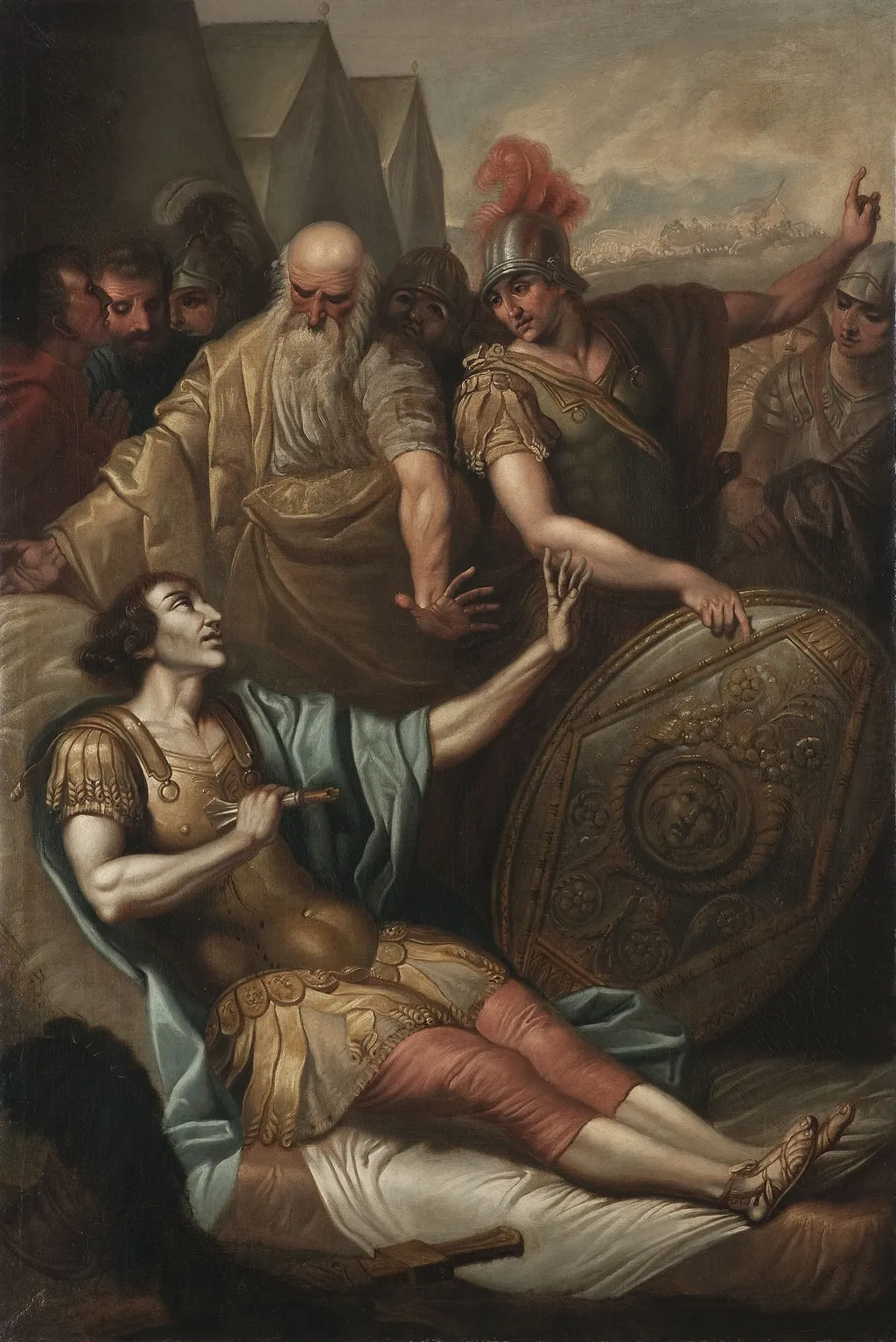
Death of Epaminondas is an oil painting by the Neoclassicist artist Franciszek Smuglewicz. It dates from 1799 and is held in the collection of the National Museum in Warsaw.
About this work
Overview
Franciszek Smuglewicz’s 1799 oil painting *Death of Epaminondas* belongs to the neoclassical tradition. Executed toward the end of the 18th century, the work is part of the collection of the National Museum in Warsaw and illustrates a moment from ancient Greek history.
Subject & Meaning
The canvas captures the wounded Theban commander Epaminondas lying on the ground amid a group of mournful figures. The composition emphasizes the pathos of his final moments, reflecting the neoclassical interest in moral exempla drawn from antiquity.
Technique & Style
Smuglewicz employs a restrained palette and clear modeling of forms, using chiaroscuro to give volume to the figures and to heighten the somber atmosphere. The arrangement of light and shadow directs attention to the central body while the background recedes into muted tones.
Context
Created during the height of neoclassicism, the painting aligns with contemporary European efforts to revive classical themes as moral instruction. Smuglewicz, trained by his father Łukasz and alongside his brother Antoni, was instrumental in establishing a Lithuanian artistic tradition that merged local sensibilities with broader Enlightenment ideals.
History & Provenance
Since its completion, *Death of Epaminondas* has remained in Poland, eventually entering the holdings of the National Museum in Warsaw, where it is displayed as part of the museum’s representation of late‑18th‑century Polish‑Lithuanian art.
Own this work as a print
Artist & collection
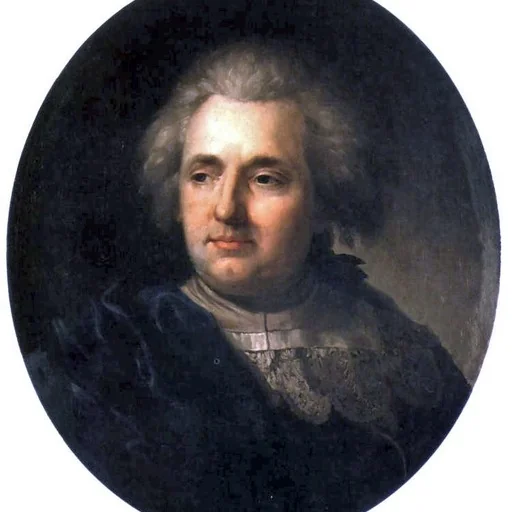
Artist
Franciszek Smuglewicz (Lithuanian: Pranciškus Smuglevičius; 6 October 1745 – 18 September 1807) was a Polish-Lithuanian draughtsman and painter.

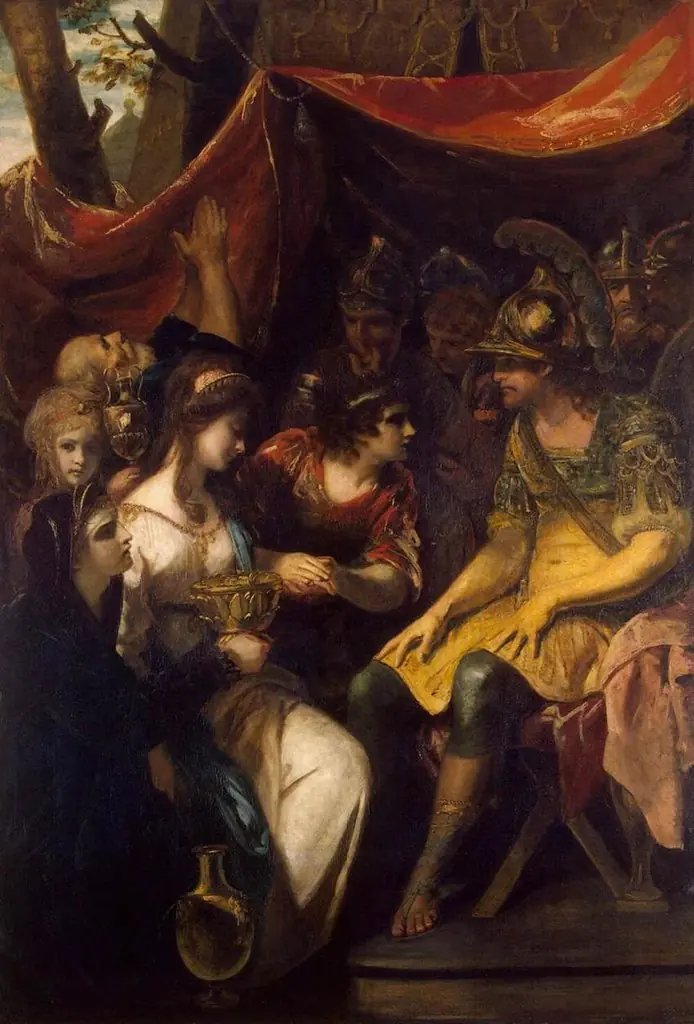 Continence of Scipio
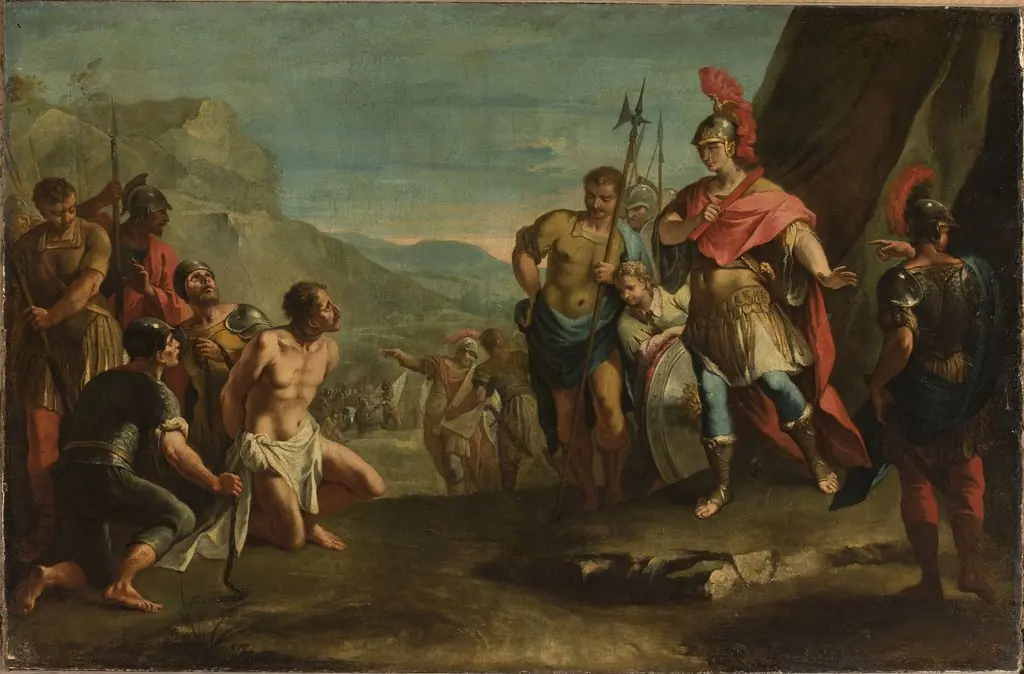 Killer of Darius before Alexander (King Porus and Alexander the Great)
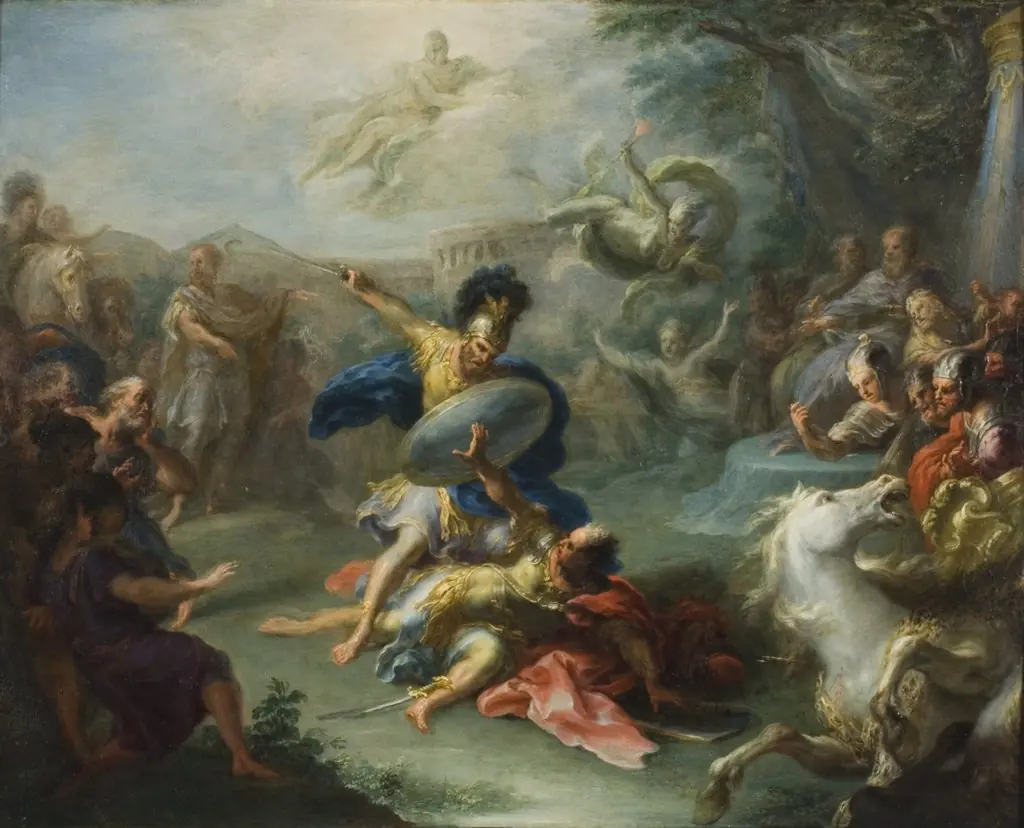 The Fight between Aeneas and King Turnus, from Virgil’s Aeneid
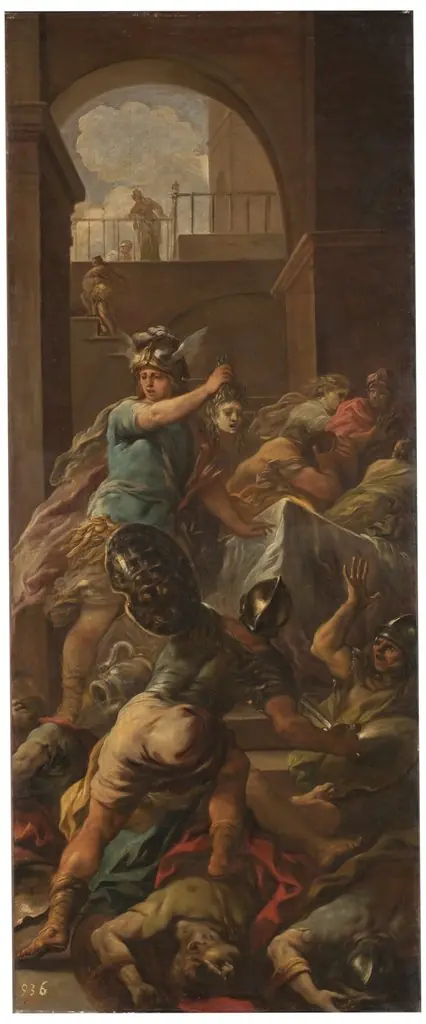 Perseo vencedor de Medusa
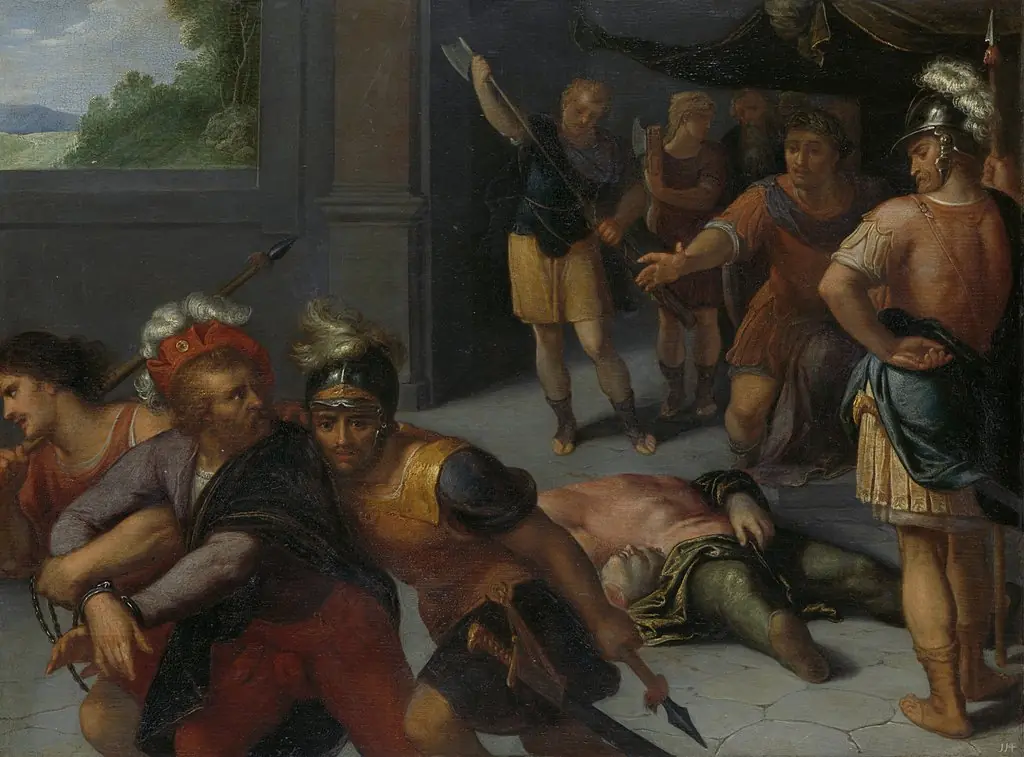 Beheading of Julius Paulus and Imprisonment of Claudius Civilis
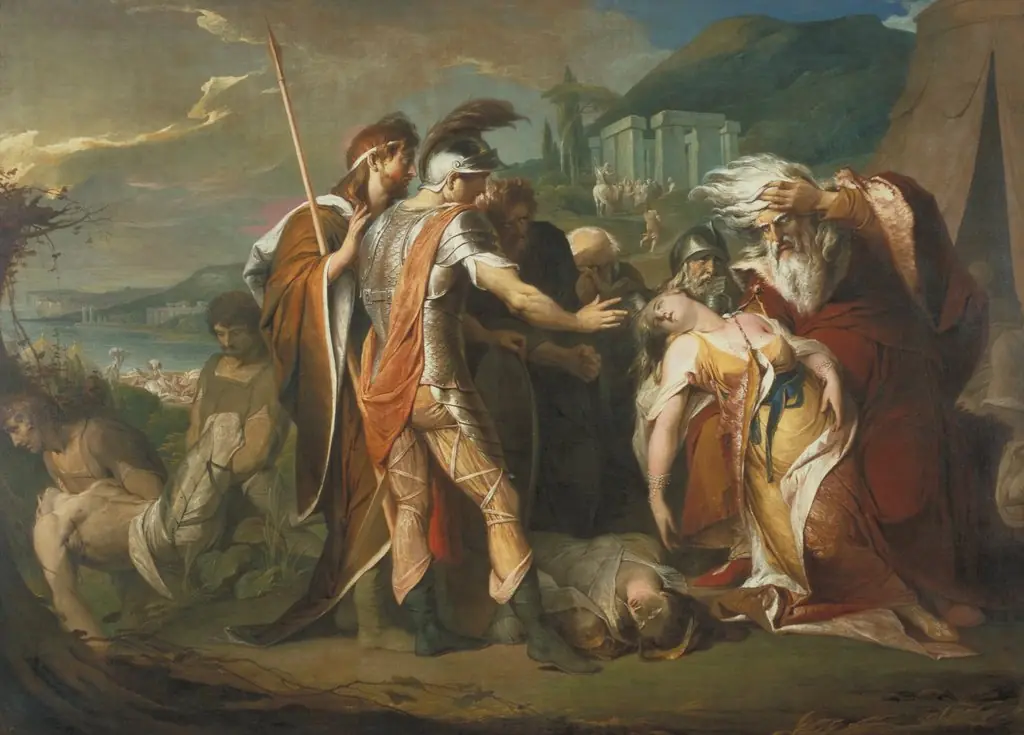 King Lear Weeping over the Dead Body of Cordelia
 The Rescue of Agrippina, Mother of Nero
 David med Goliats sværd på skulderen. Andre med hans hoved på en stage
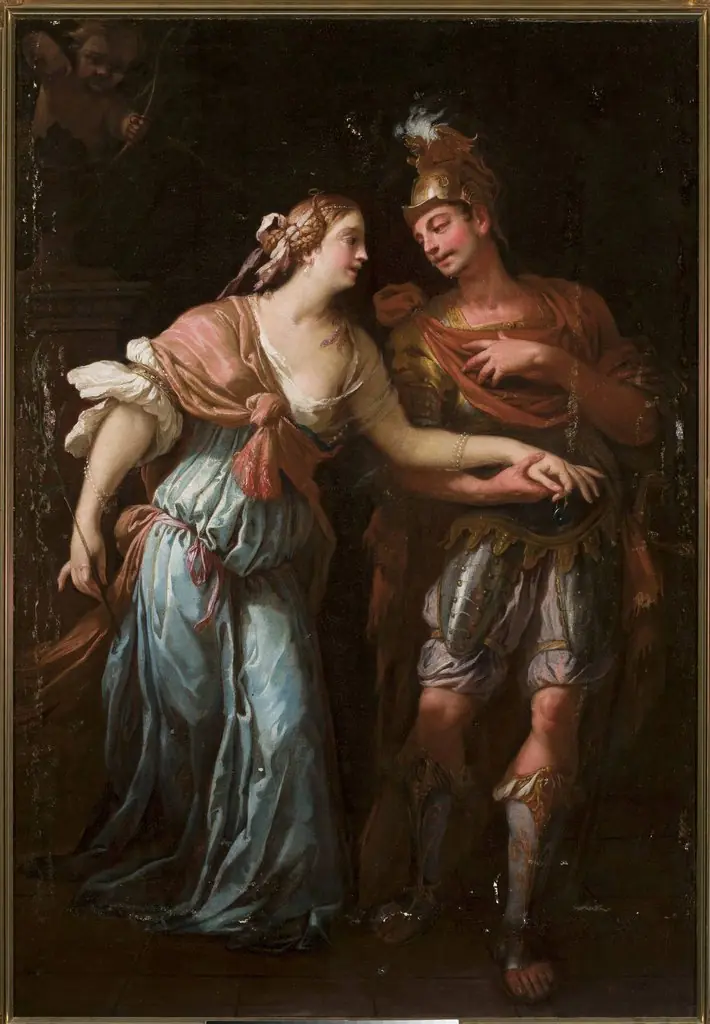
 Godofredo y el Consejo escuchan la demanda de Armida