Artwork
Stonehenge at Daybreak
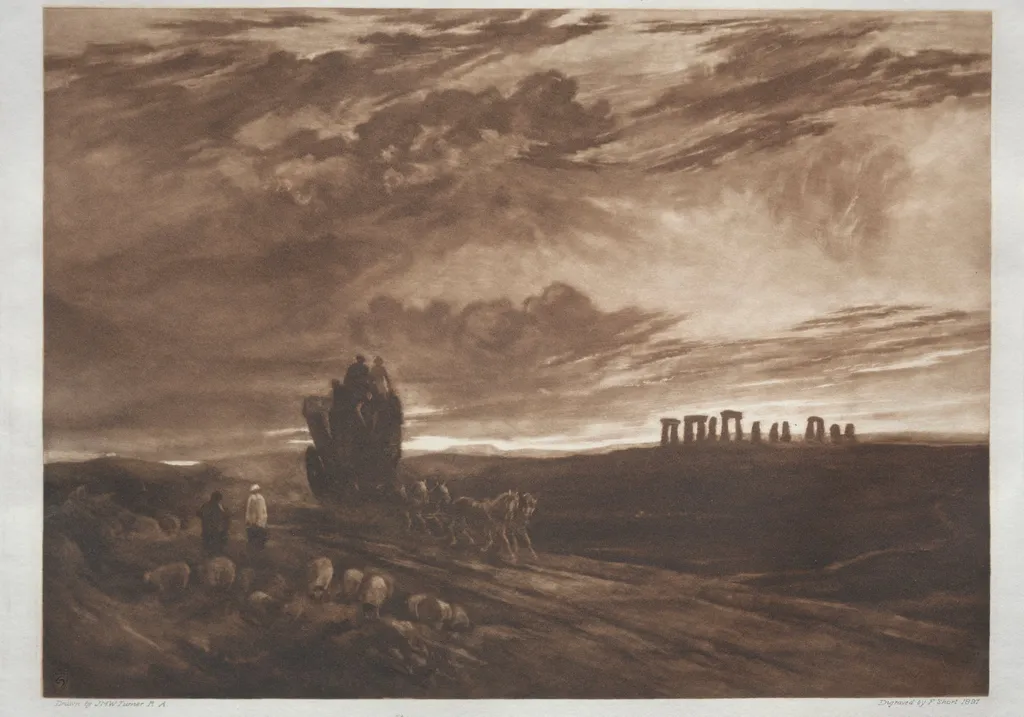
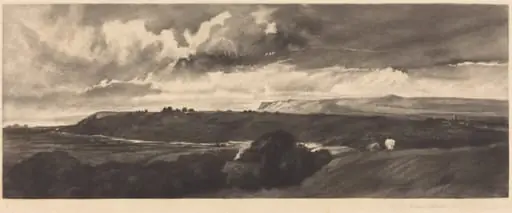
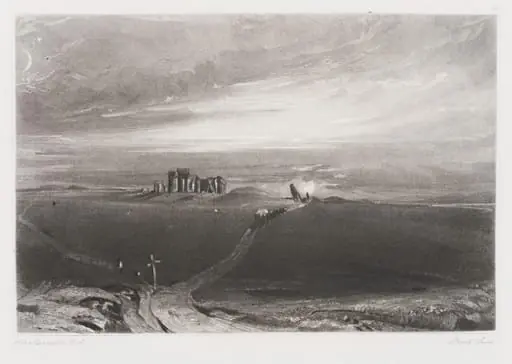
Stonehenge at Daybreak is a print by the Impressionist artist Frank Short. It dates from 1897 and is held in the collection of the Cleveland Museum of Art.
About this work
Overview
Frank Short created *Stonehenge at Daybreak* in 1897 as a mezzotint and aquatint print, showcasing his mastery of tonal gradation and delicate line work.
Frank Short created *Stonehenge at Daybreak* in 1897 as a mezzotint and aquatint print, showcasing his mastery of tonal gradation and delicate line work. The image captures a quiet rural landscape at dawn, blending natural observation with technical precision. Short, a leading figure in late 19th-century British printmaking, used this work to demonstrate the expressive potential of traditional print techniques in evoking mood rather than mere documentation.
Subject & Meaning
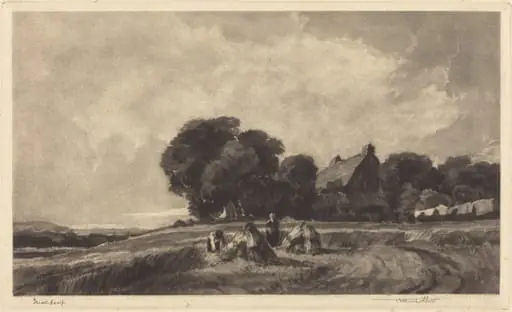
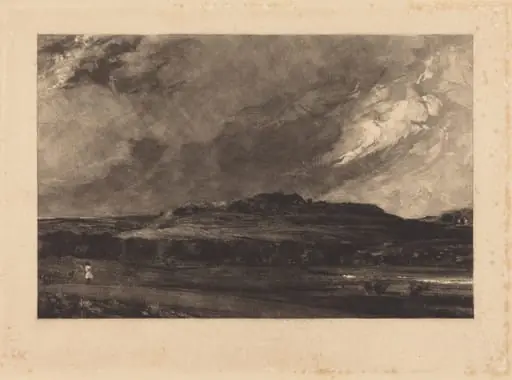
The scene presents Stonehenge not as a monument of grandeur, but as a quiet presence within an everyday pastoral setting. A lone figure guides a cart, sheep graze nearby, and a small group stands at the stones—suggesting routine human interaction with ancient structures. The dawn light and atmospheric clouds imply transition, perhaps reflecting on time’s passage or the enduring yet unobtrusive role of heritage in daily life.
Technique & Style
Short employed mezzotint and aquatint to achieve subtle shifts in tone, creating a hazy, luminous quality that mimics early morning mist. Drypoint lines define the cart’s wheels and the stones’ edges with crispness, contrasting the soft, blurred horizons. His layered approach avoids sharp contrasts, favoring a muted palette and atmospheric depth that lends the scene a contemplative, almost ethereal stillness.
History & Provenance
The print was produced during Short’s tenure as a central figure in Britain’s printmaking revival. It was likely issued in a limited edition, common for artist-printmakers of the era. The work entered the collection of The Cleveland Museum of Art through documented acquisition, preserving its place within the broader context of late Victorian print culture and the artist’s legacy as an educator and advocate for print as fine art.
Context
In the late 1890s, British artists increasingly turned to landscape and historical sites as subjects imbued with emotional resonance rather than political or mythological narrative. Short’s work aligns with this trend, reflecting a broader cultural interest in rural life and ancient monuments as symbols of continuity. His technical innovations helped elevate printmaking beyond reproduction toward original artistic expression.
Legacy
Short’s *Stonehenge at Daybreak* exemplifies his influence on the revival of intaglio techniques in Britain. His emphasis on tonal subtlety and atmospheric effect inspired later generations of printmakers to prioritize mood and texture over detail. As a teacher and institutional leader, he ensured these methods remained central to printmaking pedagogy, securing the medium’s place in fine art discourse well into the 20th century.
Own this work as a print
Artist & collection
Artist
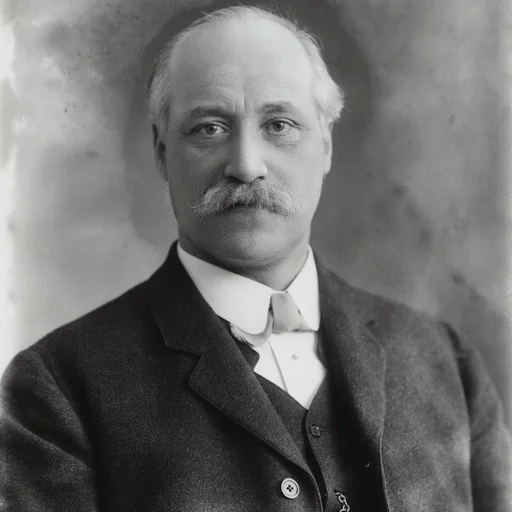
Sir Francis Job Short PPRE (19 June 1857 – 22 April 1945) was a British printmaker and teacher of printmaking.