Artwork
Stonehenge
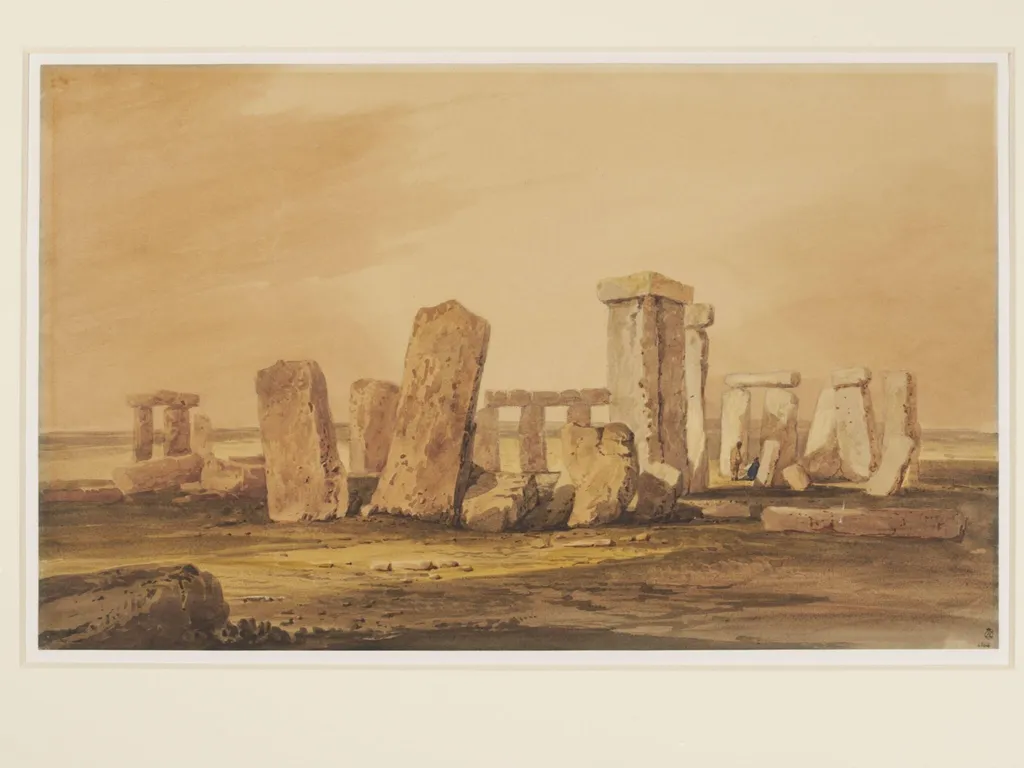
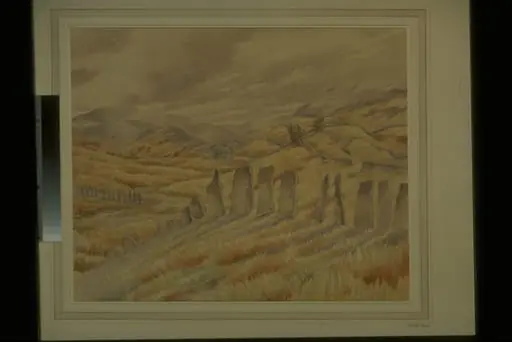
Stonehenge is a watercolor work on paper by the Romanticist artist Samuel Prout. It dates from 1805 and is held in the collection of the Victoria and Albert Museum.
About this work
Overview
Prout’s approach combines observational precision with a quiet atmospheric sensitivity, distinguishing it from purely documentary renderings of the time.
Samuel Prout created this watercolour of Stonehenge in 1805, early in his career, during a period of collaboration with antiquarian John Britton. The work was likely produced for inclusion in Britton’s publication series documenting England’s architectural heritage. Prout’s approach combines observational precision with a quiet atmospheric sensitivity, distinguishing it from purely documentary renderings of the time.
Subject & Meaning
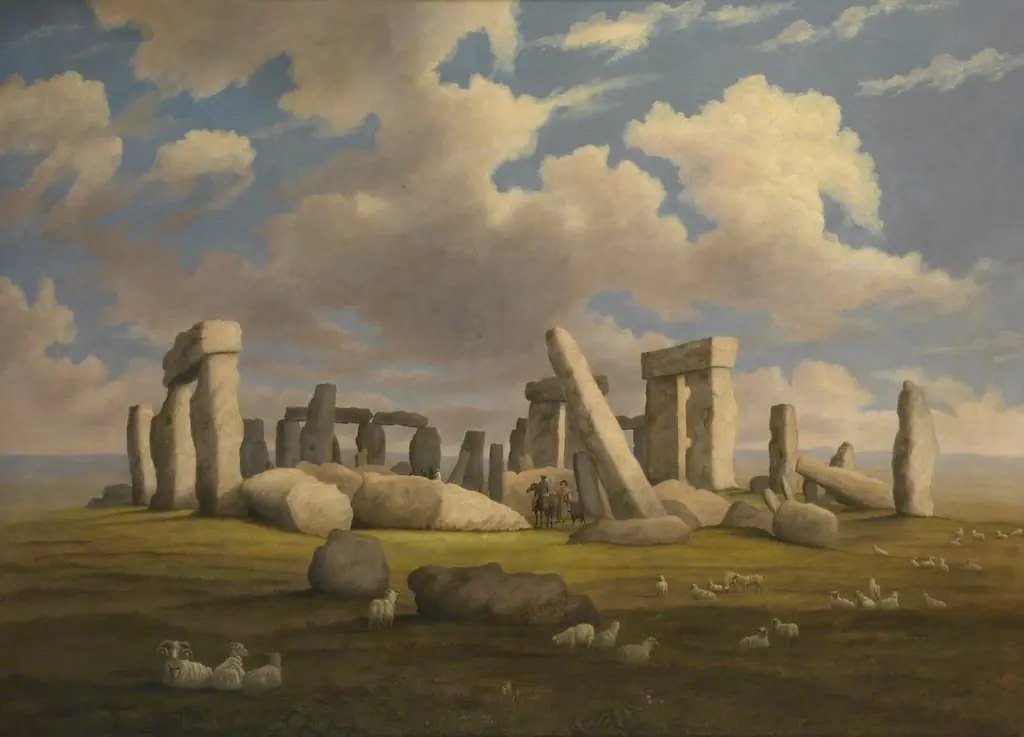
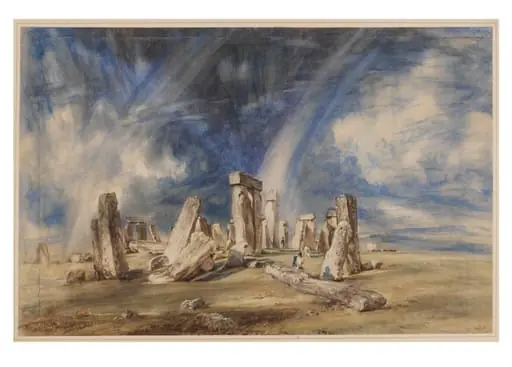
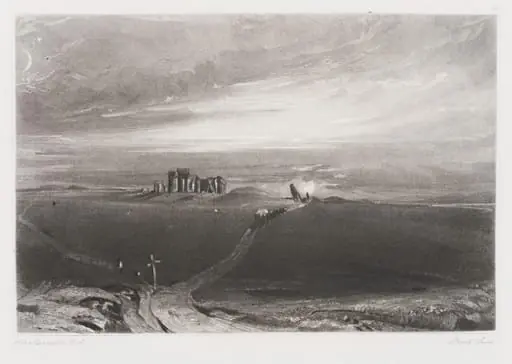
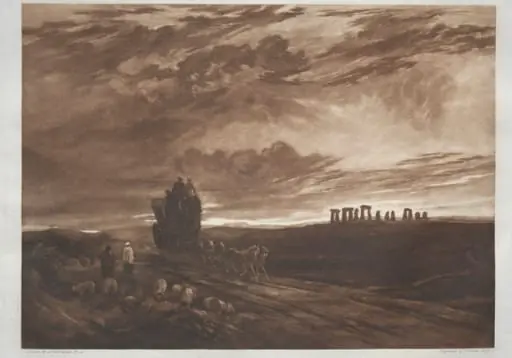
The painting presents Stonehenge as a solitary, weathered monument rising from an open landscape. Its arrangement of uneven stones, some tilted or fractured, evokes time’s erosion and the site’s ancient origins. Rather than emphasizing mystery or grandeur, Prout treats the stones as quiet witnesses to history, aligning with the antiquarian interest in preserving visual records of enduring structures.
Technique & Style
Prout employed delicate washes of grey, brown, and muted ochre to suggest the stones’ porous surfaces and the hazy, overcast sky. The underdrawing reveals careful planning, with light pencil lines guiding the placement of each monolith. Soft tonal transitions and minimal detail in the background enhance the sense of distance and stillness, reflecting a restrained, topographical aesthetic.
History & Provenance
The watercolour was made during Prout’s fieldwork in Wiltshire in 1805–1806, undertaken at Britton’s request for the series *Beauties of England*. Technical examination of the paper and pigments supports this dating, and its connection to Britton’s project confirms its role as part of a broader effort to document historic sites with scholarly care.
Context
In the early 19th century, antiquarianism was gaining momentum as a means of preserving national heritage. Prout’s work reflects this trend, prioritizing accurate representation over romantic embellishment. While contemporaries like Turner explored dramatic natural forces, Prout focused on quiet observation, aligning with the methodical spirit of his collaborators.
Legacy
This watercolour contributed to a growing visual archive of Britain’s ancient monuments, influencing later topographical artists and historians. Though not widely exhibited in Prout’s lifetime, its inclusion in Britton’s publications ensured its circulation among educated audiences interested in archaeology and landscape history.
Artist & collection
Artist
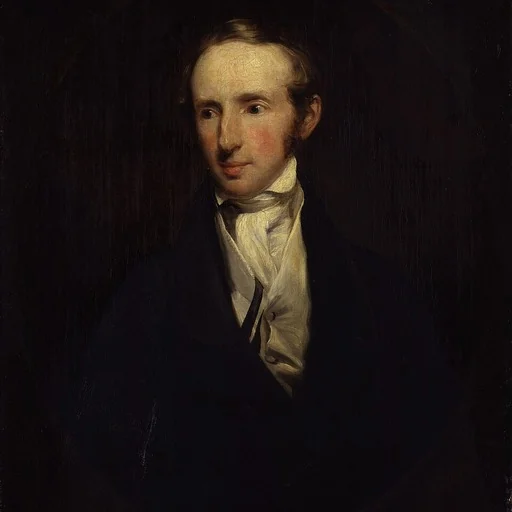
Samuel Prout (; 17 September 1783 – 10 February 1852) was a British watercolourist, and one of the masters of watercolour architectural painting, who largely invented the genre of the grand steet scene in British…