Artwork
The Weary Plowman
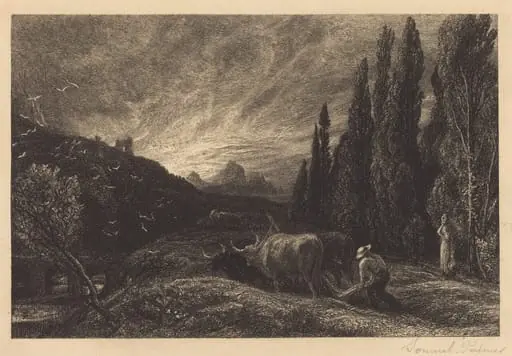
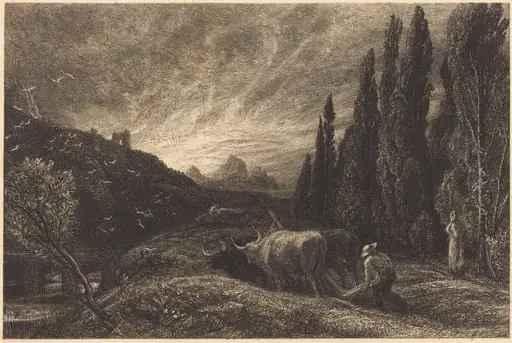
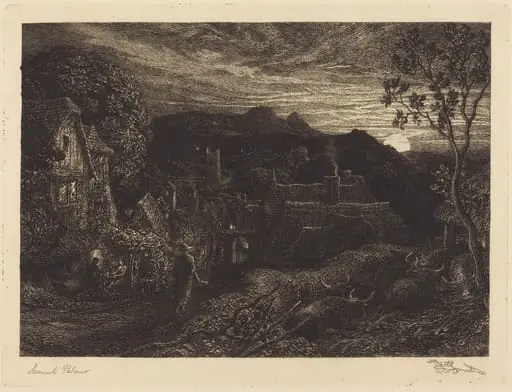
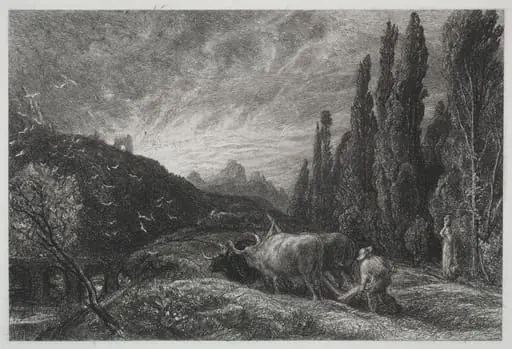
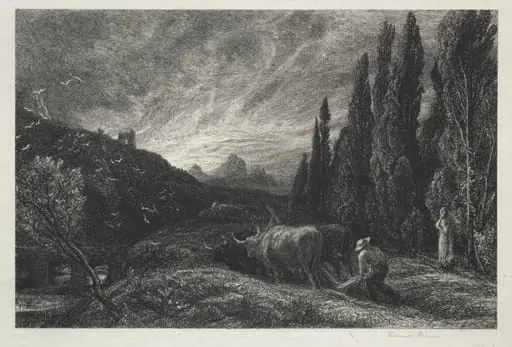
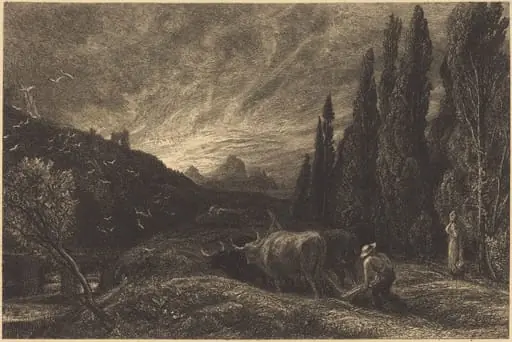
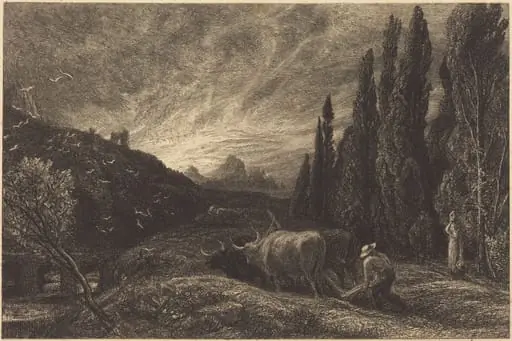
The Weary Plowman is a print by the Impressionist artist Samuel Palmer. It dates from 1858 and is held in the collection of the Cleveland Museum of Art.
About this work
Overview
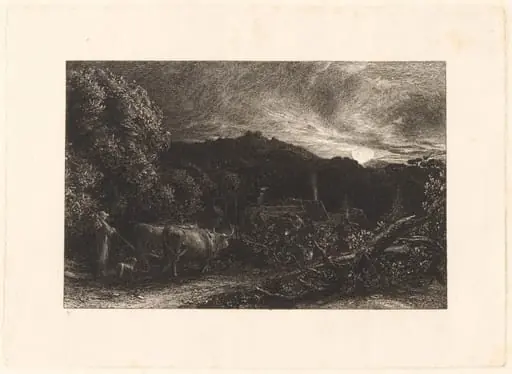
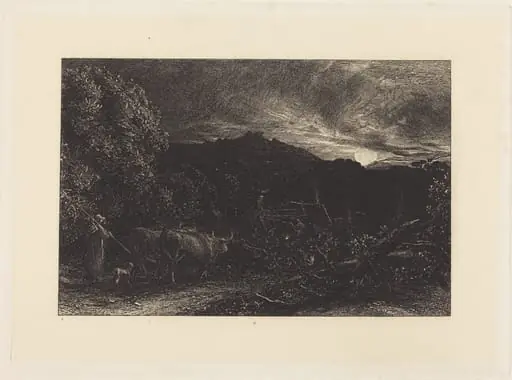
Created in 1858, *The Weary Plowman* is a print by Samuel Palmer that captures a solitary rural laborer at rest.
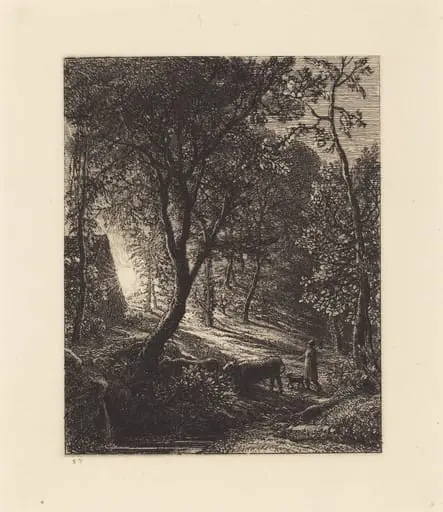
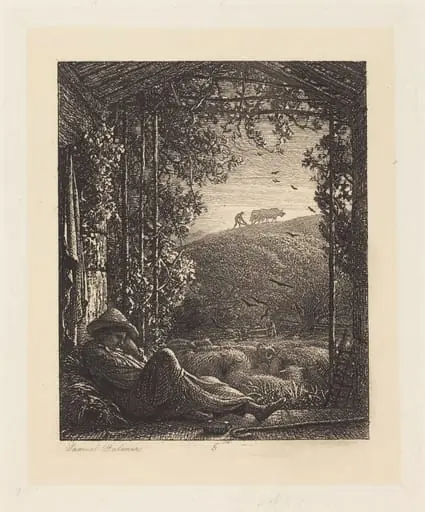
Created in 1858, *The Weary Plowman* is a print by Samuel Palmer that captures a solitary rural laborer at rest. Though often associated with oil paintings, Palmer also worked extensively in etching and ink, and this piece reflects his sustained engagement with the English countryside. The subject, a plowman accompanied by a cow, is rendered with quiet dignity, consistent with Palmer’s broader focus on agrarian life as a site of spiritual and emotional resonance.
Subject & Meaning
The figure of the plowman, paused mid-journey with staff in hand and cow ahead, evokes exhaustion and stillness rather than triumph. Palmer avoids overt sentimentality, instead presenting labor as an unglamorous, enduring rhythm of rural existence. The absence of narrative drama invites contemplation of solitude and the passage of time, aligning the image with Romantic ideals that found transcendence in humble, everyday moments.
Technique & Style
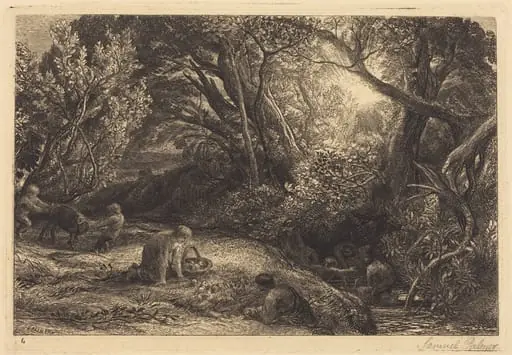
Palmer employed fine, textured lines and muted tonal contrasts to suggest the weight of earth and the softness of twilight. Brushwork, though adapted to print, retains a tactile quality—rough edges and layered hatching convey the texture of soil, foliage, and worn fabric. The palette, dominated by earth browns and olive greens, reinforces a sense of quietude, avoiding bright hues in favor of subdued naturalism that mirrors the time of day and the mood of the scene.
History & Provenance
This work emerged during Palmer’s later years, after his most intense visionary period in the 1820s and 30s. By 1858, he had shifted from mystical landscapes to more grounded depictions of rural labor, influenced by his move to Shoreham and later to Kent. The print likely circulated among collectors and fellow artists interested in the revival of traditional English pastoral themes, though it was never widely reproduced.
Context
In mid-19th century Britain, industrialization reshaped the countryside, prompting artists to revisit agrarian life as both memory and ideal. Palmer’s work stood apart from urban realism, offering instead a meditative vision of labor untouched by modernity. His prints, though less publicized than his paintings, contributed to a broader cultural nostalgia for pre-industrial rhythms, resonating with writers and thinkers wary of rapid change.
Legacy
Though not widely known during his lifetime, Palmer’s later prints like *The Weary Plowman* gained recognition in the 20th century as quiet counterpoints to Victorian grandeur. They influenced later British artists drawn to intimate, non-idealized rural scenes. Today, the work is valued for its restraint and emotional depth, offering a subtle meditation on labor, time, and the enduring presence of the land.
Artist & collection
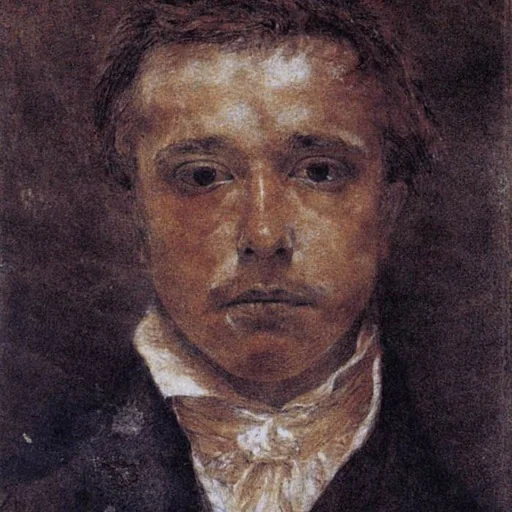
Artist
Samuel Palmer Hon.RE (Hon. Fellow of the Society of Painter-Etchers) (27 January 1805 – 24 May 1881) was a British landscape painter, etcher and printmaker. He was also a prolific writer. Palmer was a key figure in…