Artwork
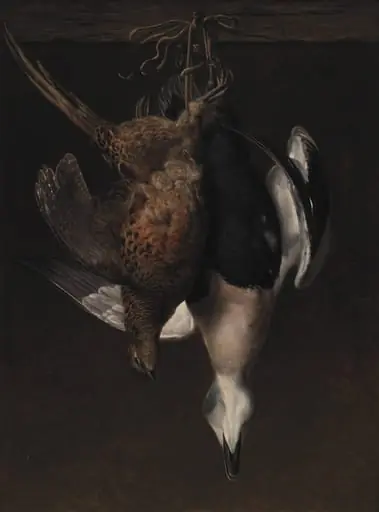
Stilleven met vogels
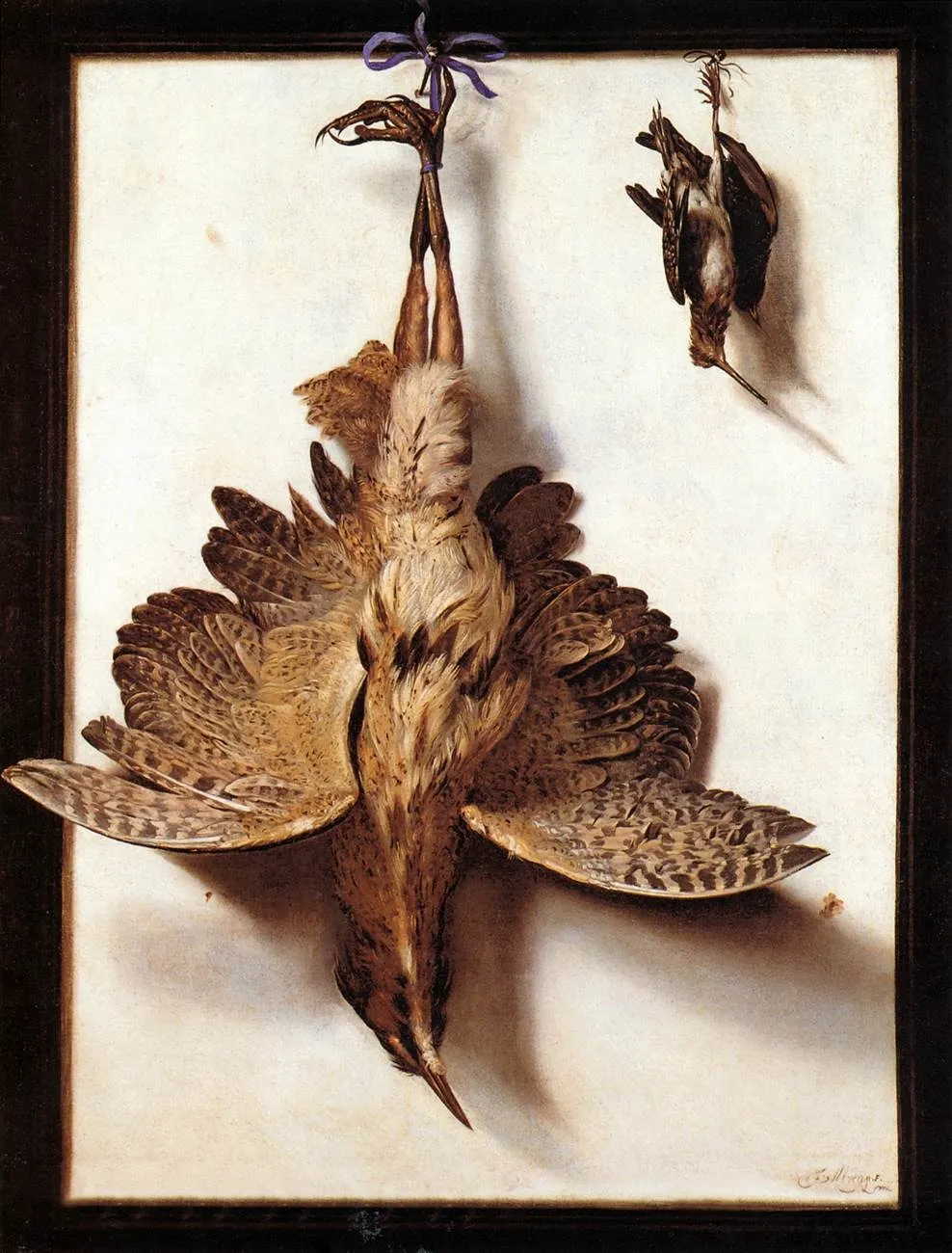
Stilleven met vogels is an oil painting by the Dutch Golden Age artist Frans Cuyck van Myerop. It dates from 1664 and is held in the collection of the Groeningemuseum.
About this work
Overview
Created during the height of the artist's career, this piece reflects the period's fascination with natural history and the display of hunting prowess.
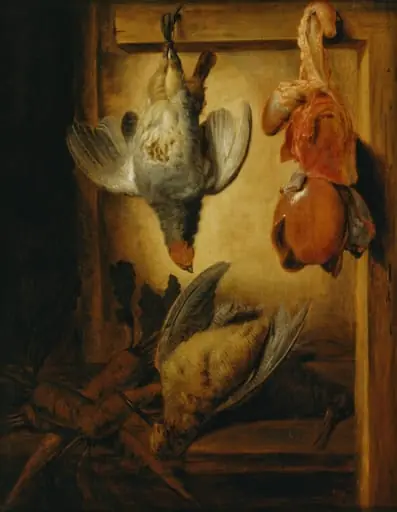
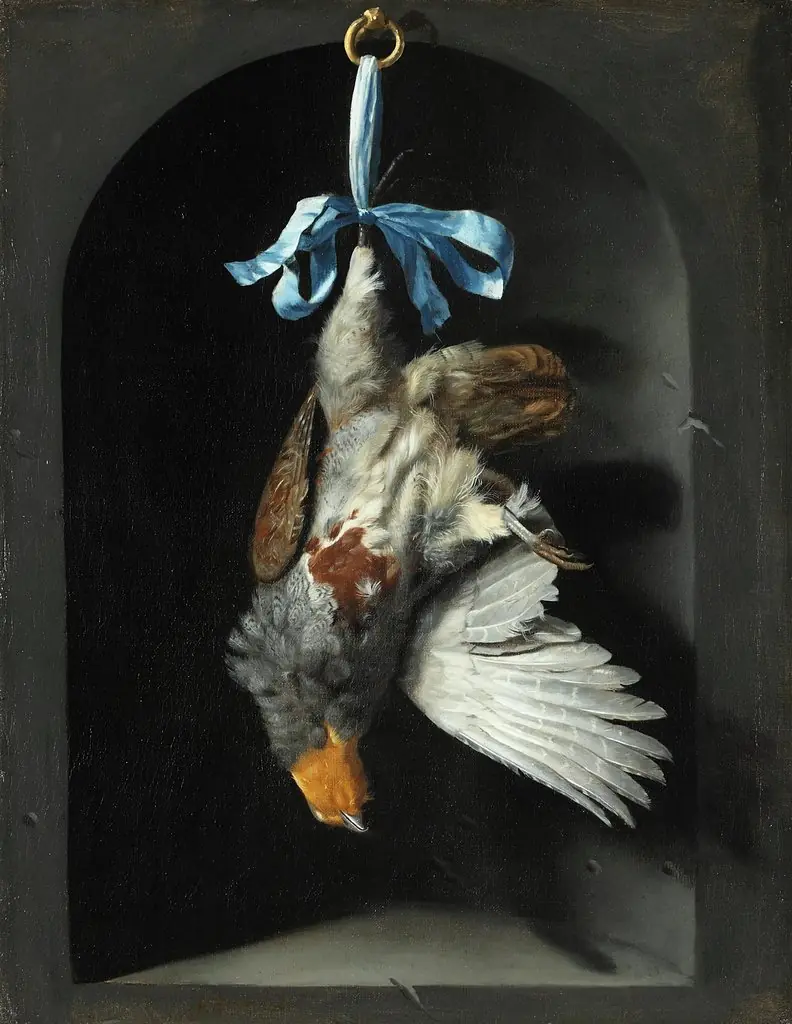
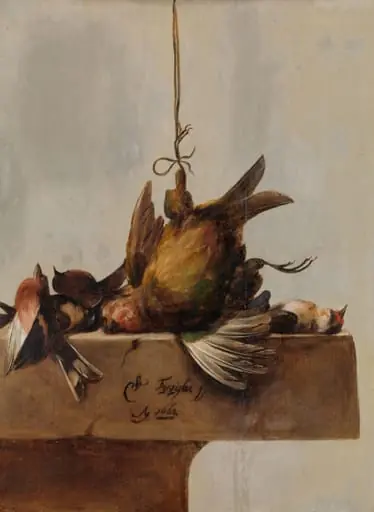
Painted in 1664 by Frans Cuyck van Myerop, Stilleven met vogels is a Dutch still life depicting two dead game birds suspended by their feet from a metal hook against a dark, neutral background. The composition centers on the larger bird, identified as a Eurasian Bittern, which hangs prominently in the middle ground, while a smaller bird is positioned to its right. Cuyck van Myerop executes the scene with precise realism, meticulously rendering the texture of the plumage, the sheen of the beaks, and the anatomical details of the carcasses. The work exemplifies the artist's specialization in game pieces, a subgenre of still life popular in the Dutch Golden Age that emphasized the technical skill required to capture the tactile qualities of fur and feathers. Created during the height of the artist's career, this piece reflects the period's fascination with natural history and the display of hunting prowess. The stark lighting isolates the subjects, drawing attention to the contrast between the organic forms and the void behind them, a characteristic approach in 17th-century Dutch vanitas and game paintings.
Subject & Meaning
The central figure is a larger bird identified as a Eurasian Bittern, with a smaller companion positioned to the right. Both are displayed lifeless, their bodies hanging by the feet, a traditional vanitas motif that invites contemplation of mortality and the fleeting nature of beauty.
Technique & Style
Rendered in oil, the painting employs a subtle chiaroscuro that models the birds’ plumage and beaks, giving them a palpable sense of volume against the flat background. Fine brushwork captures the texture of feathers, while the limited palette emphasizes the contrast between the dark forms and the surrounding light.
History & Provenance
Created in 1664, the work has remained in the Flemish region and is now housed in the Groeningemuseum. Its provenance reflects the museum’s commitment to preserving 17th‑century Dutch and Flemish paintings, situating the piece within a broader narrative of Northern European still‑life traditions.
Artist & collection