Artwork
The Triumphal Arch of Titus in Rome
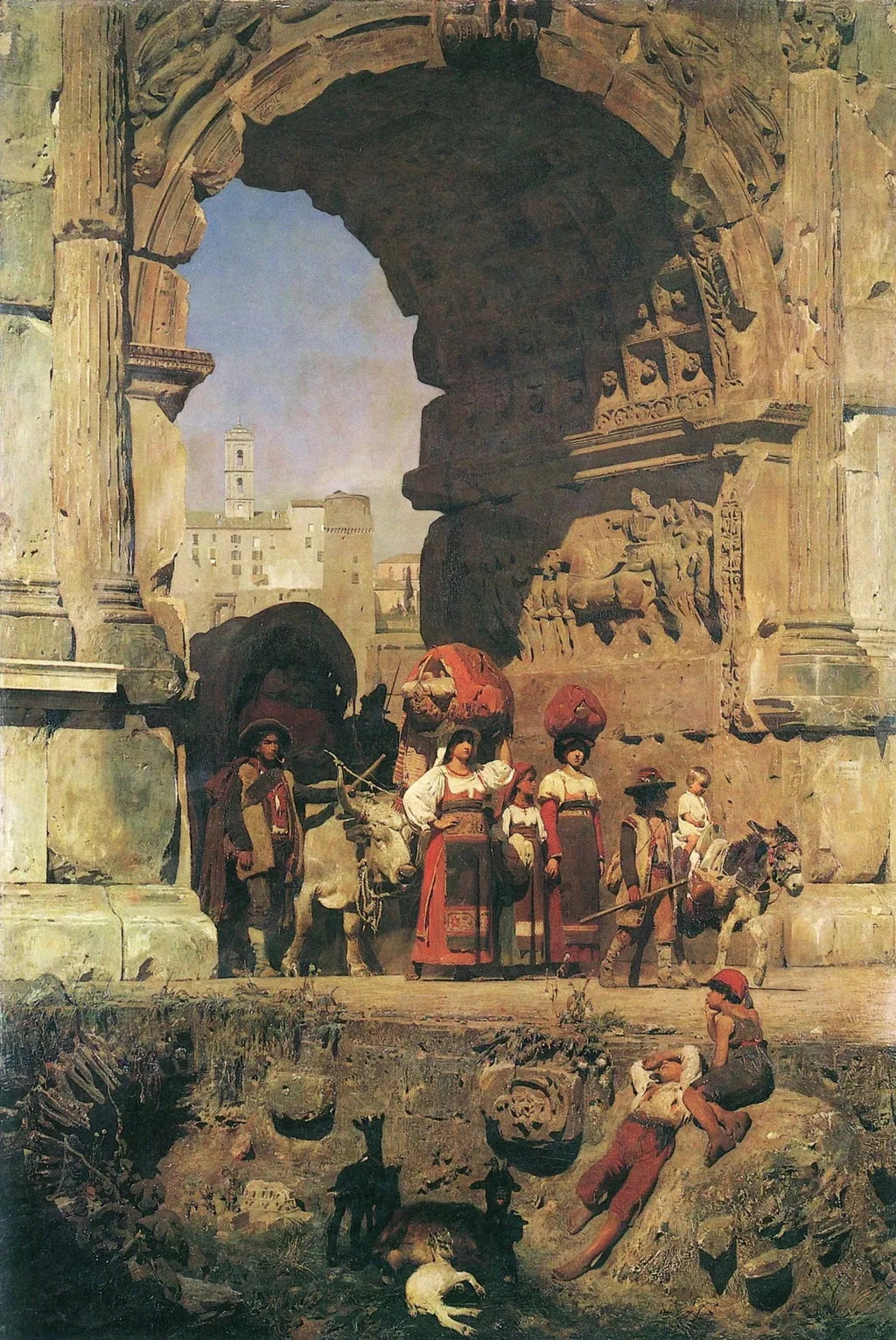
The Triumphal Arch of Titus in Rome is an oil painting by the Realist artist Franz von Lenbach. It dates from 1860 and is held in the collection of the Hungarian National Gallery.
About this work
Overview
Painted in 1860 by German artist Franz von Lenbach, this oil-on-canvas work depicts the Arch of Titus in Rome as a solitary monument amid ancient ruins.
Painted in 1860 by German artist Franz von Lenbach, this oil-on-canvas work depicts the Arch of Titus in Rome as a solitary monument amid ancient ruins. Though Lenbach is better known for his portraits, this landscape reflects his early engagement with historical sites and architectural detail. The painting is part of the Hungarian National Gallery’s collection and exemplifies his commitment to observed reality before he gained fame for his aristocratic commissions.
Subject & Meaning
The painting centers on the Arch of Titus, a Roman structure commemorating Emperor Titus’s victory in the Jewish War. Surrounded by weathered columns and fragmented stonework, the arch stands as a silent witness to time’s passage. The sparse human figures in the foreground suggest contemplation rather than celebration, emphasizing decay over glory. The scene invites reflection on the endurance and erosion of imperial power.
Technique & Style
Lenbach employed meticulous brushwork and layered glazes to achieve subtle transitions in light and texture. The deep blue sky and soft cloud formations enhance the arch’s solidity, while the play of natural illumination reveals the weathering of marble and stone. His approach aligns with Realism, prioritizing accurate observation over idealization. The rendering of architectural details—carvings, weathering, and structural joints—demonstrates a disciplined attention to physical truth.
History & Provenance
Created during Lenbach’s formative years, the painting predates his rise as a portraitist to European nobility. It was likely painted during a study trip to Italy, a common practice among 19th-century German artists. The work entered the Hungarian National Gallery’s collection in the late 19th or early 20th century, possibly through acquisition or donation, though specific provenance details prior to its institutional ownership remain undocumented.
Context
In the mid-19th century, European artists increasingly turned to classical ruins as subjects, influenced by Romanticism’s fascination with antiquity and the rise of archaeological interest. Lenbach’s depiction aligns with this trend, yet avoids melodrama. His focus on quiet, unembellished observation reflects the broader Realist shift away from historical idealization toward truthful representation of the physical world.
Legacy
Though overshadowed by Lenbach’s later portraits, this painting reveals his foundational skill in capturing spatial depth and material texture. It stands as an early indicator of his technical precision and sensitivity to light, qualities that would define his portrait work. The piece contributes to understanding his artistic evolution and the broader European engagement with Roman heritage during the 19th century.
Artist & collection
Artist
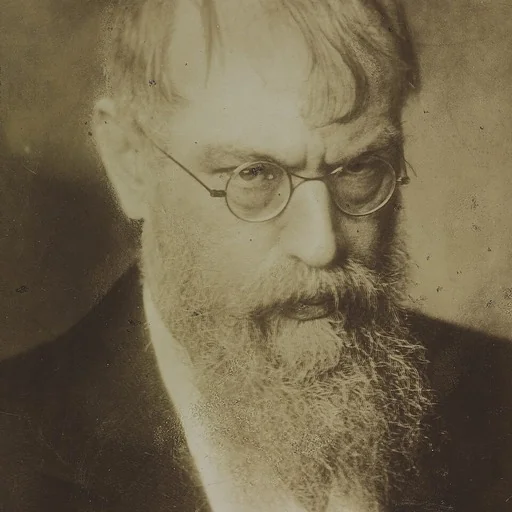
Franz Seraph Lenbach, after 1882, Ritter von Lenbach (13 December 1836 – 6 May 1904), was a German painter known primarily for his portraits of prominent personalities from the nobility, the arts, and industry.



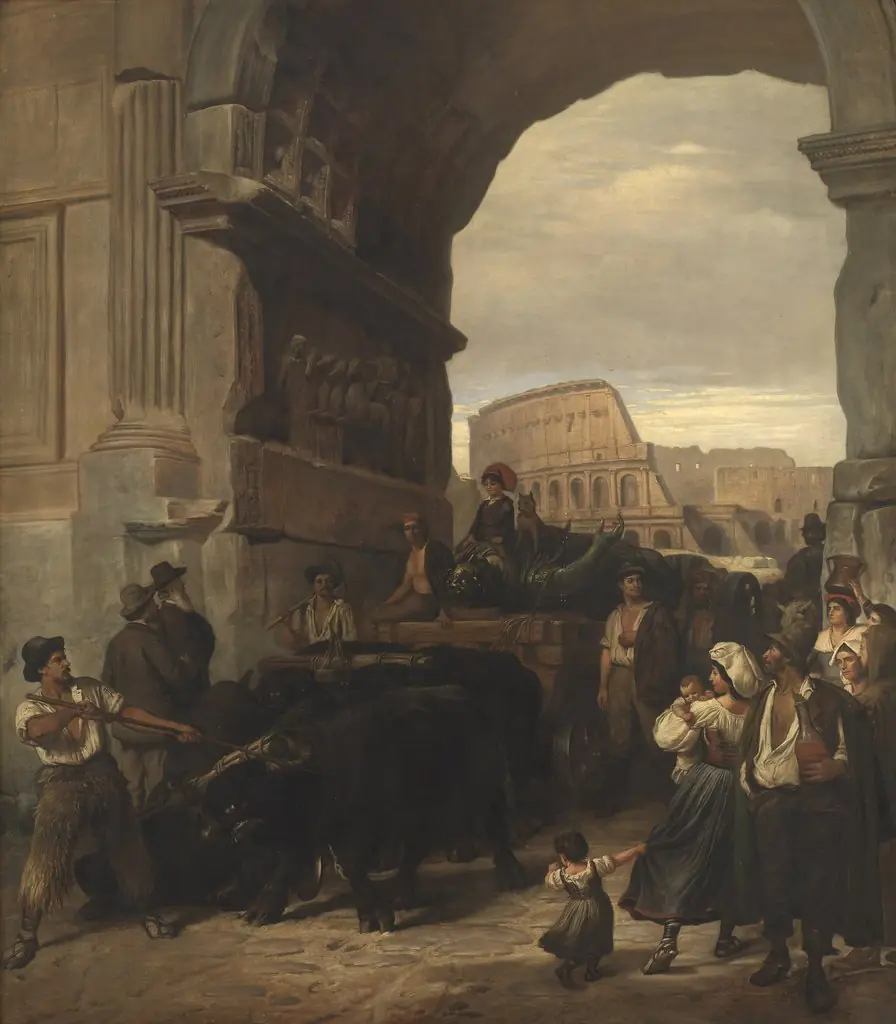 Roman Workmen Transporting an Antique Imperial Statue from the Colosseum through the Arch of Titus to the Capitoline Museums
 Forum of Nerva, Rome
 Ansicht eines Säulenganges im Tempel der Diana zu Spalato
 Puerta árabe de la plaza de armas en el puente de Alcántara de Toledo
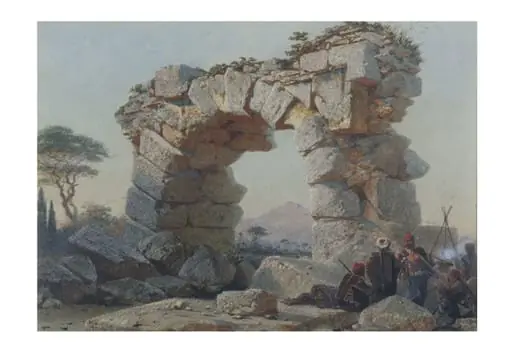 Roman Arch at Spalato
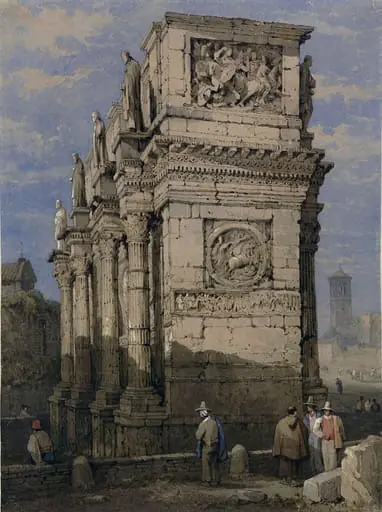 Arch of Constantine, Rome
 Italian Village Forge
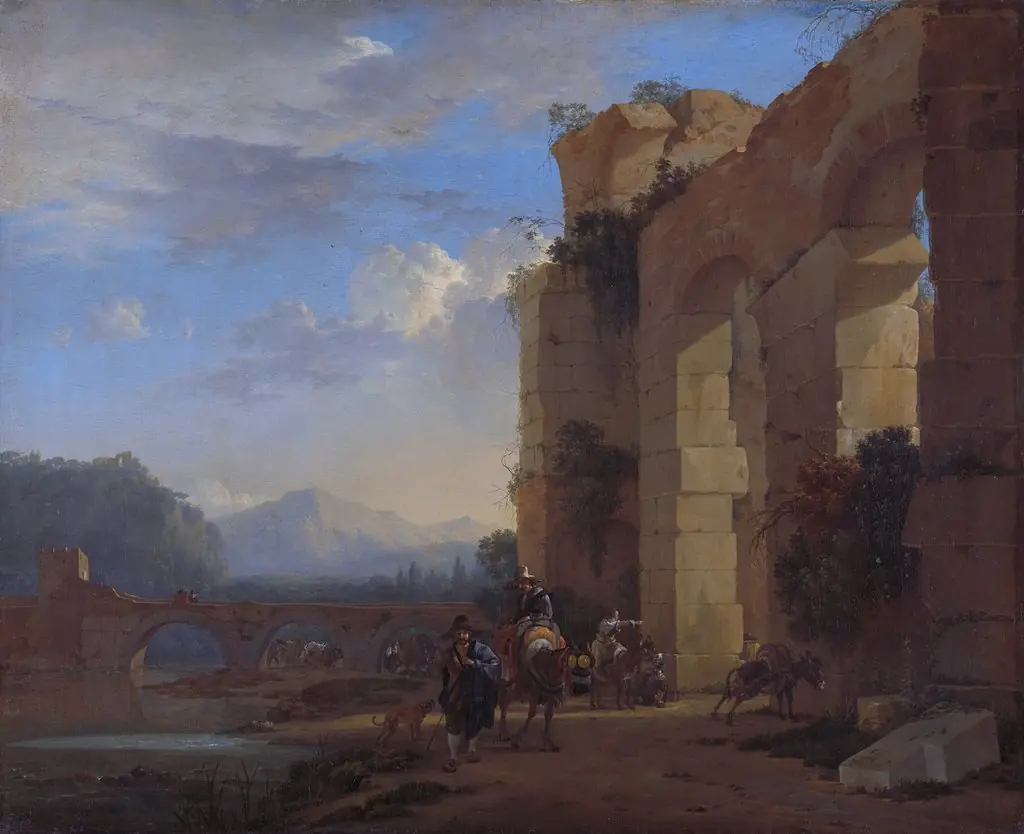 Muleteers beside an Italian Ruin
 Romerske landfolk drager til marked
 The Courtyard of the Palazzo del Bargello. Florence
 Hof der Fürstenburg in Burgeis
 Landscape with Roman Arch