Artwork
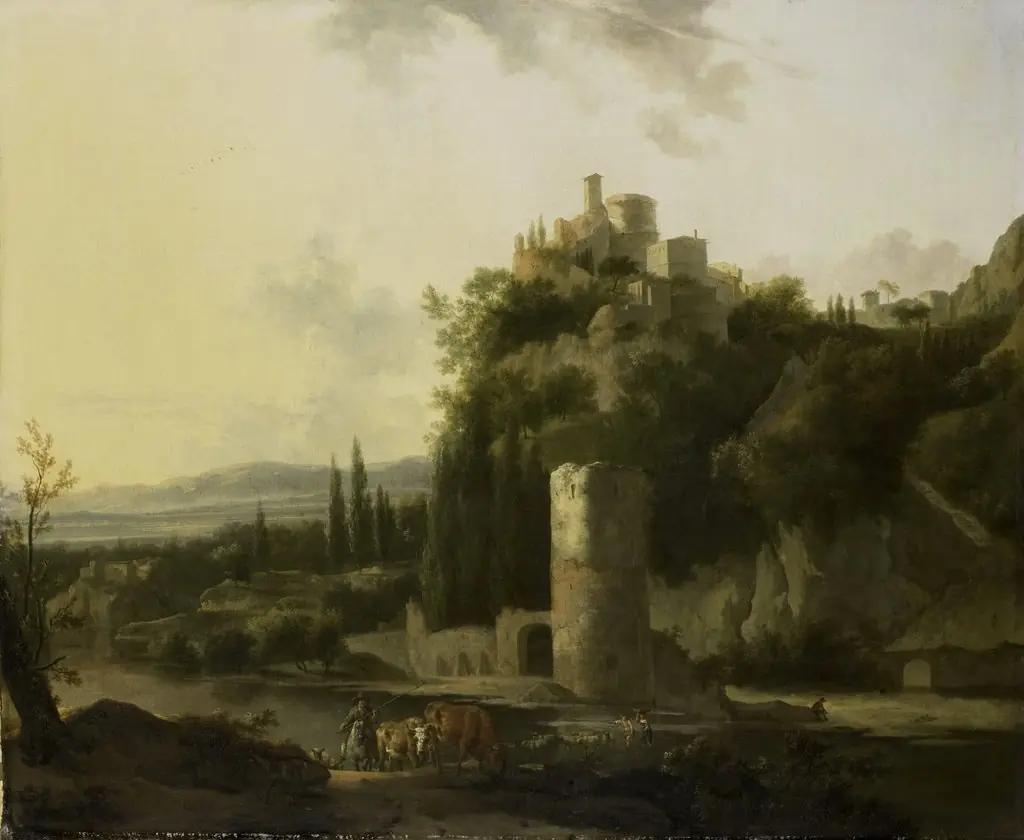
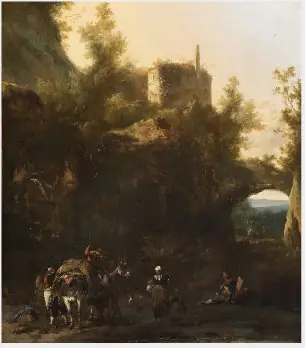
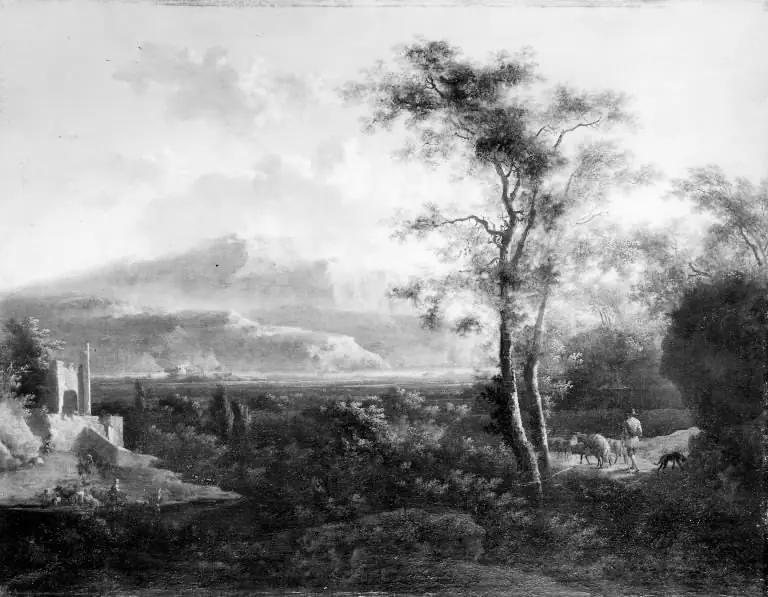
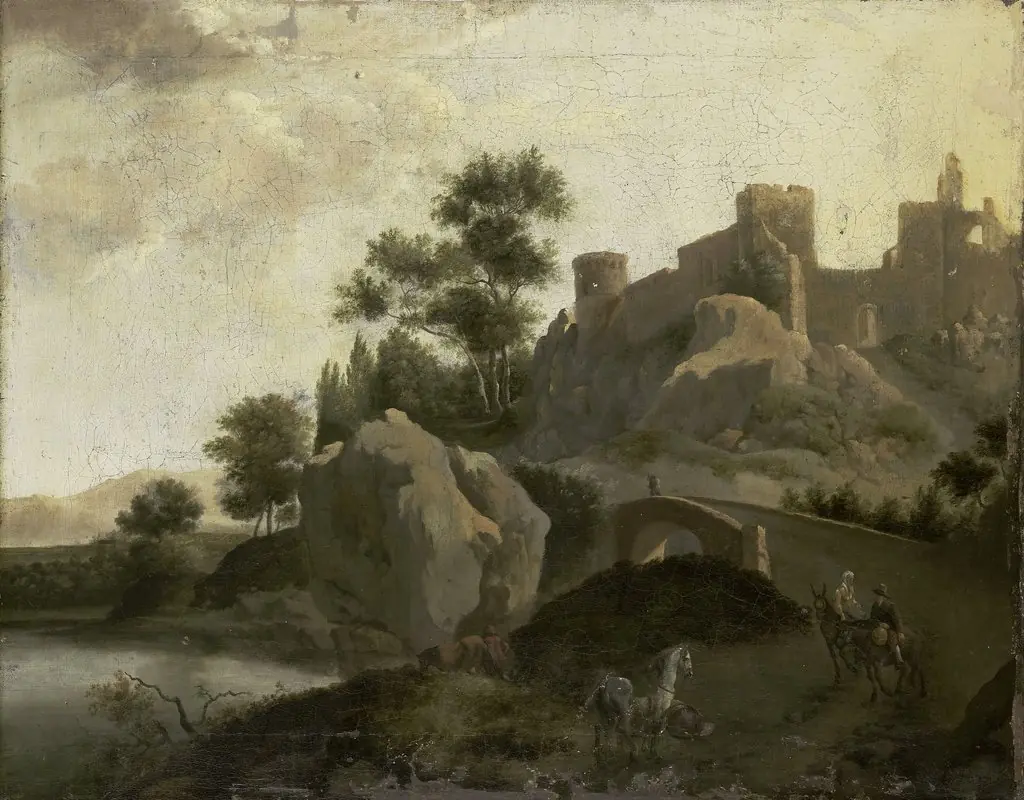
Landscape with the Castle of Francheville
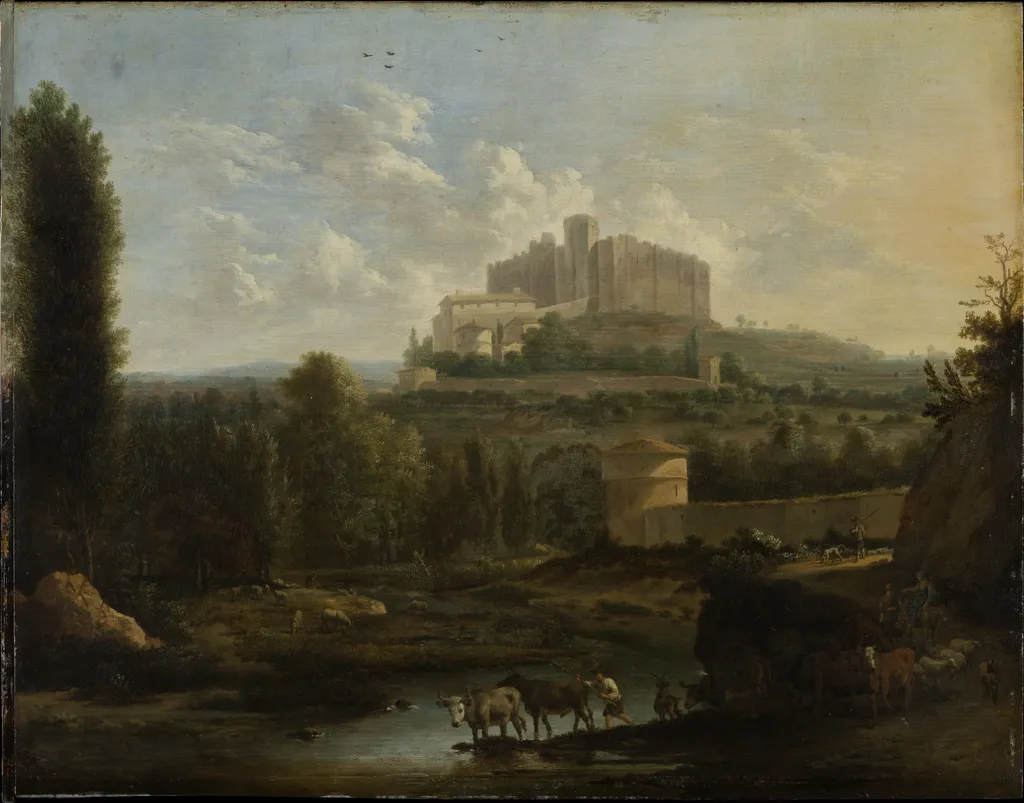
Landscape with the Castle of Francheville is an oil painting by the Dutch Golden Age artist Frederik de Moucheron. It dates from 1669 and is held in the collection of the Städel Museum.
About this work
Overview
Painted in 1669 by Frederik de Moucheron, this oil-on-canvas work presents a tranquil rural scene centered on the Castle of Francheville.
Painted in 1669 by Frederik de Moucheron, this oil-on-canvas work presents a tranquil rural scene centered on the Castle of Francheville. Though the castle anchors the composition, the painting’s emphasis lies in the quiet daily life of the foreground. De Moucheron, active during the Dutch Golden Age, was known for crafting atmospheric landscapes, often leaving figures and animals to be completed by collaborators.
Subject & Meaning
The scene captures a shepherd guiding cattle across a shallow stream, accompanied by a dog, while the castle rises in the distance. This juxtaposition of humble labor and noble architecture reflects a common Dutch interest in harmonious coexistence between nature, human activity, and inherited structures. The absence of drama or narrative tension suggests an appreciation for quiet, unremarkable moments in the countryside.
Technique & Style
De Moucheron employed subtle chiaroscuro to model forms and suggest depth, particularly in the rolling terrain and cloud-covered sky. His brushwork is restrained, favoring soft transitions over sharp detail, which enhances the painting’s serene mood. The composition follows Italianate conventions, with a receding plane and elevated vantage point, typical of Dutch artists influenced by southern landscapes.
History & Provenance
The painting entered the collection of the Städel Museum in Frankfurt, where it remains today. Its documented history traces back to the 17th century, though specific ownership prior to its acquisition by the museum is not fully established. The work’s survival in good condition reflects its continued recognition among collectors of Dutch landscape painting.
Context
During the Dutch Golden Age, landscape painting flourished as a distinct genre, divorced from religious or mythological themes. Artists like de Moucheron responded to a growing market for serene, idealized views of nature and architecture. His Italianate style—though depicting a French castle—drew on Dutch interpretations of southern scenery, blending local sensibilities with foreign motifs.
Legacy
De Moucheron’s work exemplifies the collaborative nature of Dutch landscape production, where specialists handled figures and animals. While less celebrated than contemporaries like Ruisdael, his paintings contribute to the period’s broader exploration of atmosphere and spatial harmony. Today, his oeuvre remains a quiet testament to the Dutch fascination with the everyday rhythms of the natural world.
Artist & collection
Artist
Frederik de Moucheron (1633 – 5 January 1686) was a Dutch Golden Age landscape painter and draughtsman. He mainly produced (Italianate) landscapes that were furnished with human and animal figures by various colleagues.

![Landscape with a Calm (Un Tem[p]s calme et serein), by Nicolas Poussin](https://artifactworldgallery.com/img/nicolas-poussin--landscape-with-a-calm-un-tem-p-s-calme-et-serein--5d21533dd1b104bd-w320.webp)