Artwork
A Lectern Cloth with the Marriage at Cana
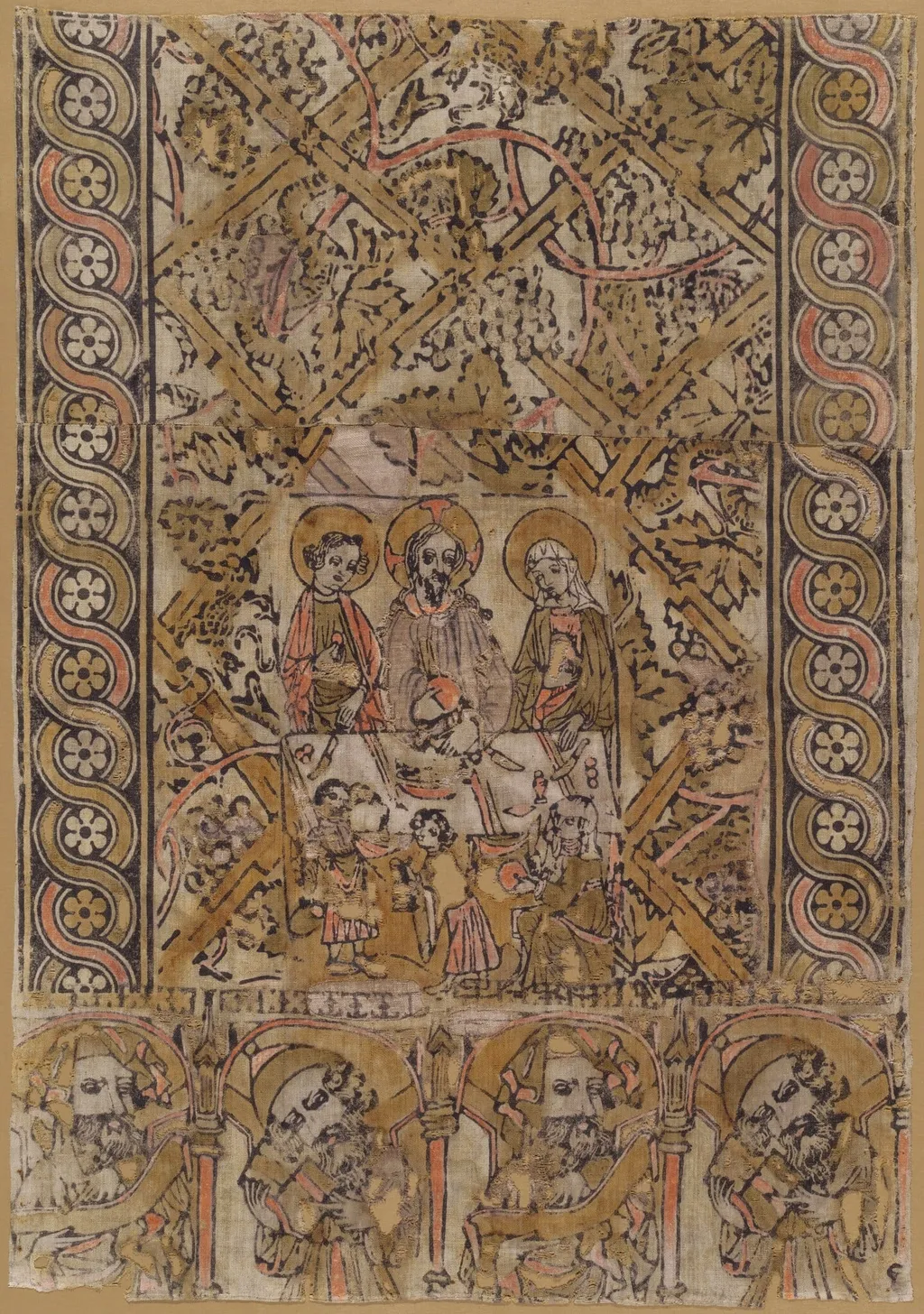
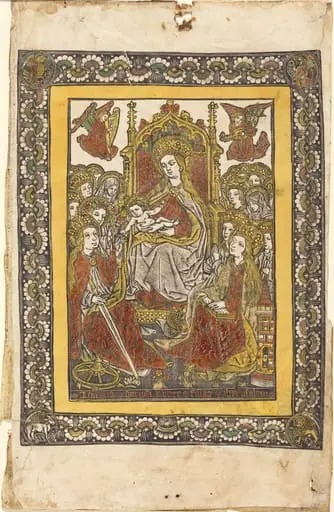
A Lectern Cloth with the Marriage at Cana is an ink print by the Renaissance artist German 15th Century. It dates from 1400 and is held in the collection of the National Gallery of Art. This linen textile features a hand-colored woodcut depicting the Marriage at Cana, a biblical miracle where Jesus turns water into wine.
About this work
Overview
This linen textile features a hand-colored woodcut depicting the Marriage at Cana, a biblical miracle where Jesus turns water into wine.
This linen textile features a hand-colored woodcut depicting the Marriage at Cana, a biblical miracle where Jesus turns water into wine. Printed in brown and red pigments, the image was applied to fabric using carved wooden blocks, then individually painted by hand. Decorative borders of circular and leaf motifs frame the scene, suggesting liturgical use. The composition is dense with figures, arranged in tiers that guide the eye from celestial to earthly action.
Subject & Meaning
The scene illustrates the first miracle of Jesus at a wedding in Cana, as described in the Gospel of John. Central figures under a tree likely represent Jesus, his mother, and the bridegroom, while servants attend to stone jars below. The hand-holding gesture may signify blessing or unity. The inclusion of attendants and architectural elements underscores the event’s social and sacred significance, reinforcing themes of divine intervention in human celebration.
Technique & Style
The image was produced via woodcut printing, a relief technique where carved blocks transferred ink to linen. Colors were added manually after printing, resulting in subtle variations between copies. The linear, stylized figures and crowded composition reflect late medieval Northern European print traditions. Background foliage and architectural details are rendered with rhythmic, repetitive lines, emphasizing pattern over naturalism.
History & Provenance
Such liturgical cloths were likely used in church ceremonies, possibly as altar frontals or lectern coverings, during the late 15th or early 16th century. Their survival is rare, as textiles deteriorate more readily than paper. The faded pigments and wear suggest prolonged use in devotional settings. No definitive record of origin exists, but stylistic parallels link it to workshops in the Rhineland or southern Germany.
Context
Produced during a period when printed religious imagery became more accessible, this cloth reflects the blending of devotional practice with emerging print technologies. While manuscripts remained dominant in elite circles, woodcuts on fabric offered affordable, durable imagery for parish churches. The choice of the Marriage at Cana aligns with popular themes emphasizing Christ’s compassion and the sanctity of marriage in medieval Christian life.
Legacy
Few examples of hand-colored woodcut textiles from this era survive, making this object a rare witness to the intersection of print, textile, and liturgy. It demonstrates how religious narratives were adapted for tactile, functional use beyond books and panels. Its preservation offers insight into how ordinary worship spaces engaged with sacred stories through material culture, not just doctrine.
Artist & collection

Artist
This 15th-century German artist carved vivid religious scenes into metal and wood, then hand-painted them in bright, symbolic colors.

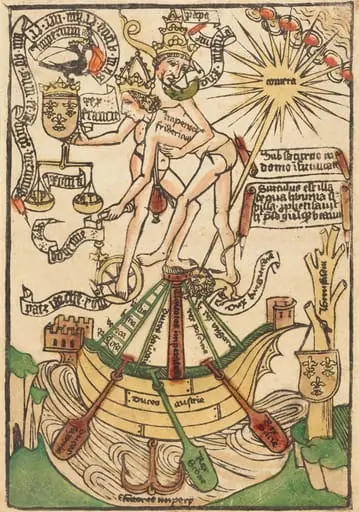 Allegory of the Meeting of Pope Paul II and Emperor Frederick III
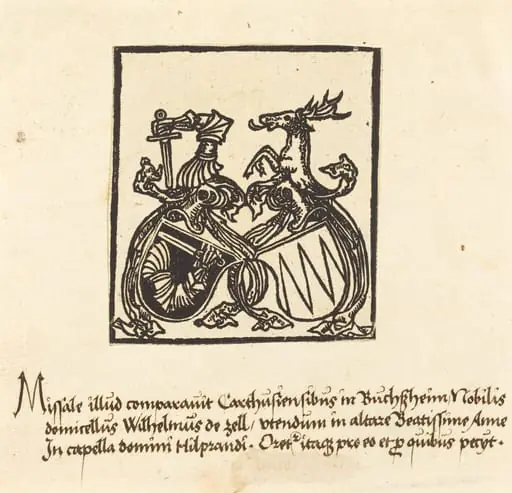 Bookplate of Wilhelm von Zell
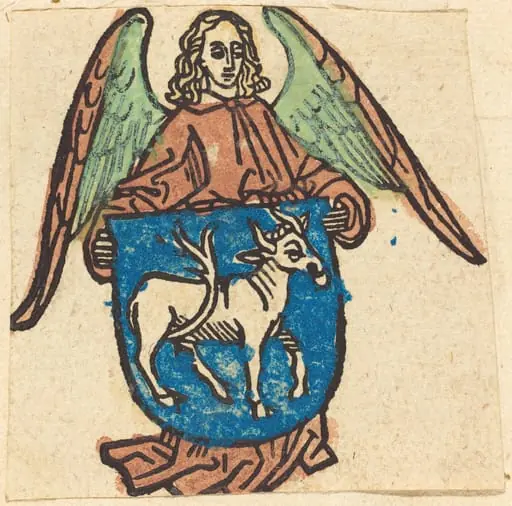 Bookplate of Hilprand Brandenburg of Bibrach
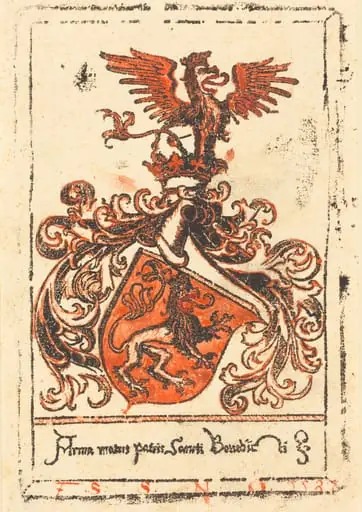 Bookplate of the Abbey of Ottobeuren
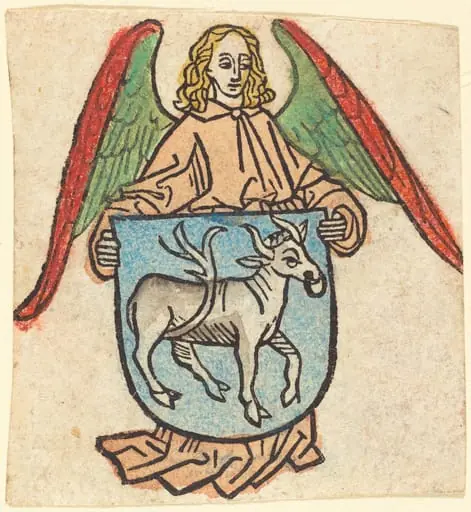 Bookplate of Hilprand Brandenburg of Bibrach
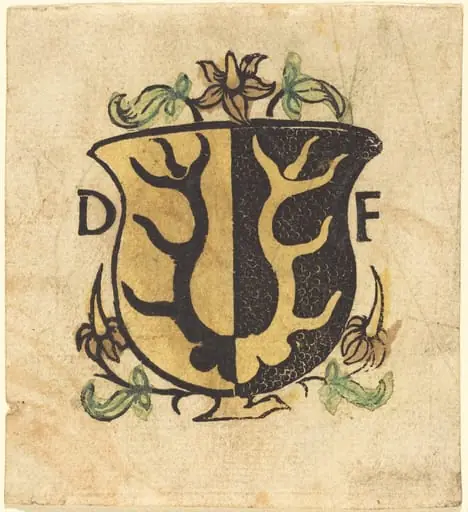 Bookplate of Dominicus Frauenfelder
![Studies for Six Figures (sheet from a model book) [recto], by German 15th Century](https://artifactworldgallery.com/img/german-15th-century--studies-for-six-figures-sheet-from-a-model-book-recto--4837429e0755bc3f-w320.webp) Studies for Six Figures (sheet from a model book) [recto]
Studies for Six Figures (sheet from a model book) [recto]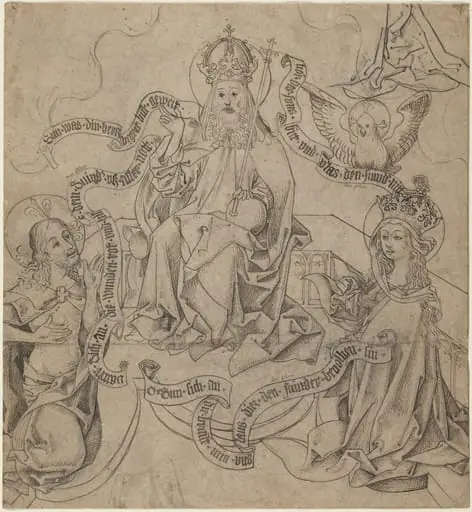 Christ and Mary Interceding with God the Father
![Christ in Majesty [recto], by French 12th Century](https://artifactworldgallery.com/img/french-12th-century--christ-in-majesty-recto--312aa8dd5634bdac-w320.webp)