Artwork
Landscape
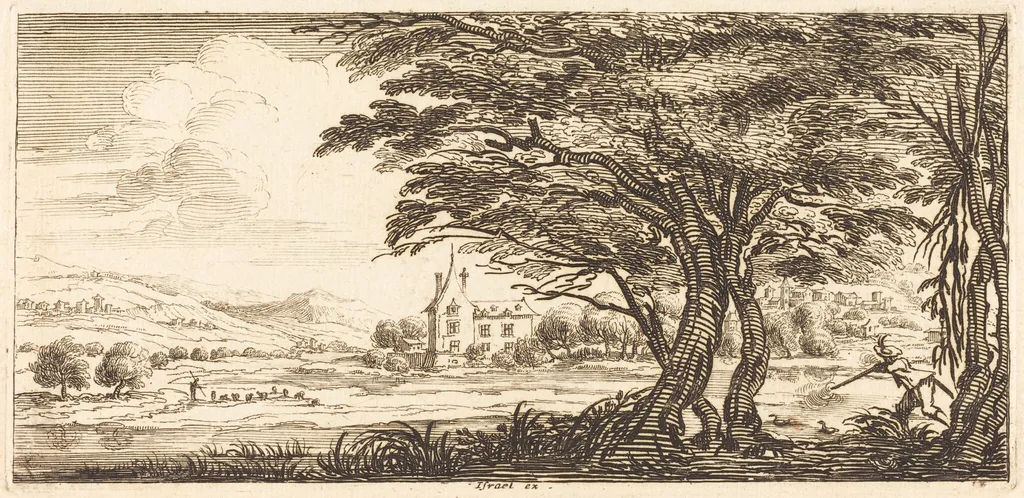
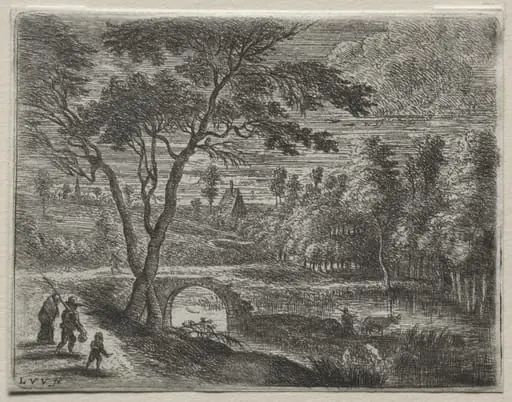
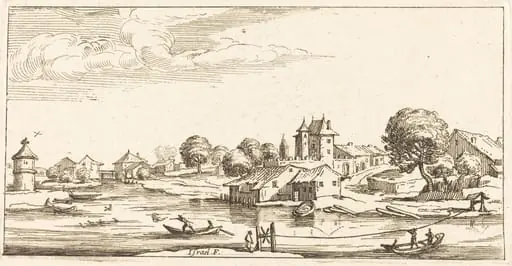
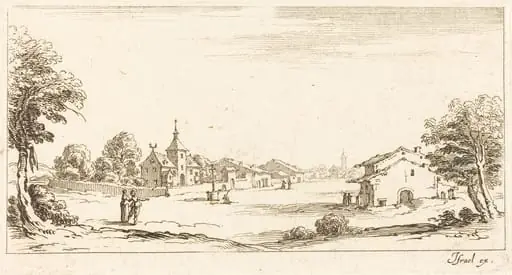
Landscape is an ink print by the Baroque artist French 17th Century. It dates from 1635 and is held in the collection of the National Gallery of Art. This etching on laid paper depicts a tranquil rural scene, rendered in fine linear detail.
About this work
Overview
The composition centers on a large, spreading tree whose branches dominate the upper portion, framing a distant village nestled beside a winding river.
This etching on laid paper depicts a tranquil rural scene, rendered in fine linear detail. The composition centers on a large, spreading tree whose branches dominate the upper portion, framing a distant village nestled beside a winding river. Rolling hills and scattered foliage recede into the background, all defined by delicate, dark ink lines. The paper’s characteristic laid pattern, visible upon close inspection, confirms its use in traditional printmaking methods.
Subject & Meaning
The scene presents an unembellished view of countryside life, with modest buildings and a single church spire suggesting a quiet, settled community. The dominant tree may imply stability or continuity, while the river subtly connects the land and settlement. No human figures are present, emphasizing solitude and the quiet rhythm of nature over narrative or drama.
Technique & Style
The work was created using etching on a metal plate, a process involving acid to bite fine lines into a wax-coated surface. The artist exploited the technique’s precision to render intricate textures—tree bark, water ripples, and distant hills—with controlled, thin strokes. The laid paper’s grid-like texture, a result of its handmade manufacturing, enhances the tactile quality of the print.
History & Provenance
Though the artist’s identity is not specified, the method and paper type align with 17th- to 19th-century European printmaking traditions. Laid paper was standard for etchings before machine-made wove paper became common. The work likely originated as part of a series or standalone study, possibly intended for private collectors rather than public display.
Context
During the period when this print was made, landscape etchings were valued for their ability to capture natural scenery with technical refinement. Artists often worked from direct observation or sketches, translating rural views into intimate prints for scholarly or artistic audiences. This piece reflects a broader trend toward documenting the quiet beauty of the countryside, away from urban centers.
Legacy
As a representative example of etched landscape printmaking, this work contributes to the historical record of how natural environments were visually interpreted before photography. Its restrained composition and attention to texture influenced later generations of printmakers who sought to convey atmosphere through line alone, preserving a quiet aesthetic tradition.
Artist & collection

Artist
Seventeenth-century French printmakers turned ink into story. Their tools were burin and acid, paper their stage. Look at the Beggar Woman with Rosary (1622), etched on laid paper, her hands folded around faith, or The…

 Landscape
 River Bank
 The Broken Bridge
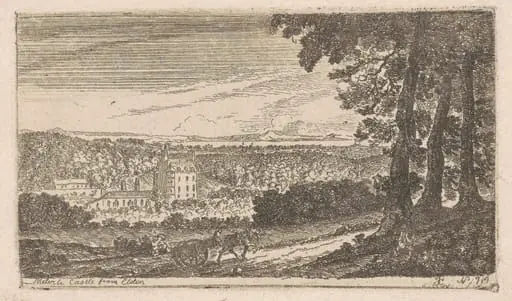 Melville Castle from Eldin
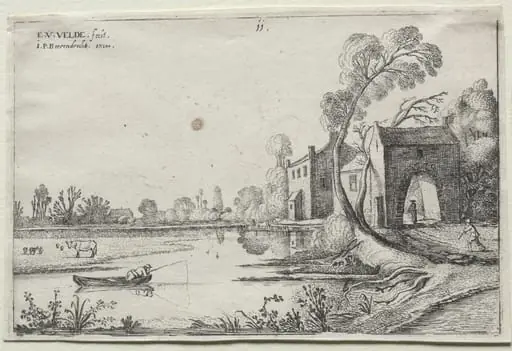 Landscape with a River and a Gatehouse
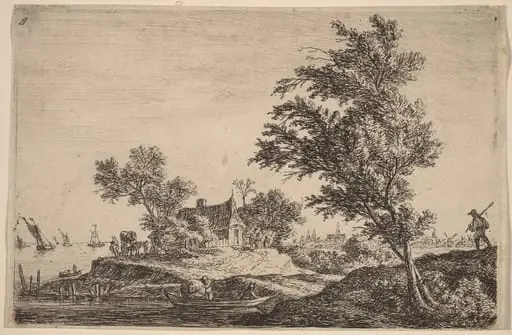 Traveler Passing Two Large Trees
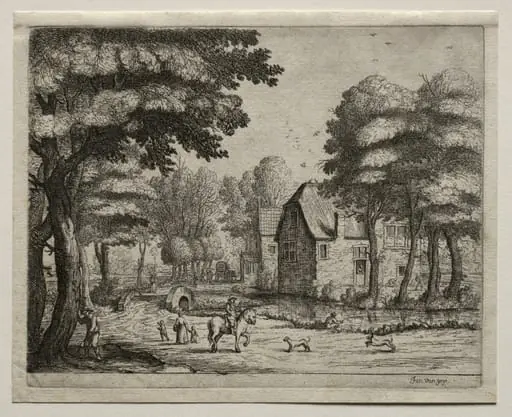 The Stone Bridge
 Landscape
 Two Casks in Front of a Cottage
 Some Pleasing Landscapes and Ruins of Ancient Monuments: Dilapidated Farm
 Landscape with Fisherman Carrying his Net
 Landscape