Artwork
Landscape
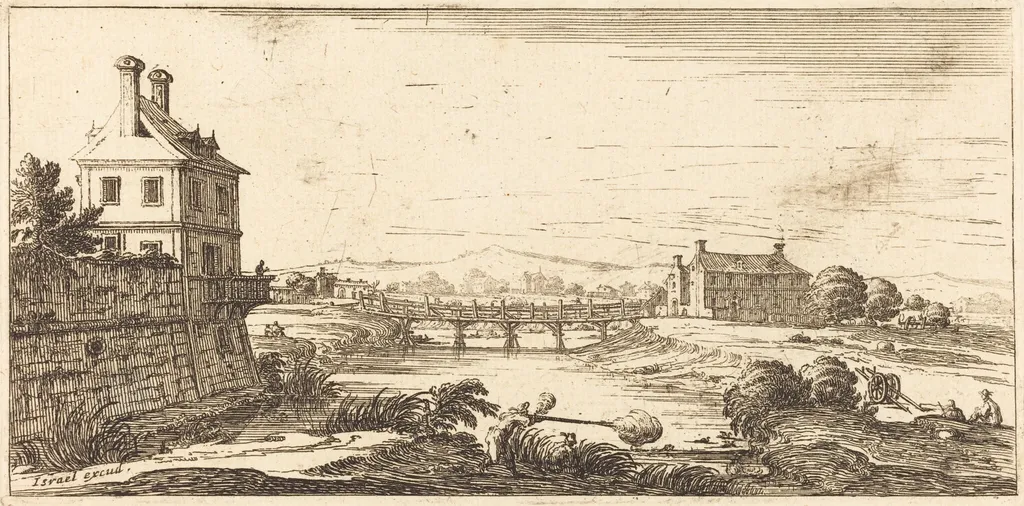
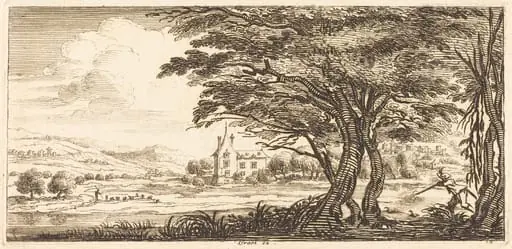
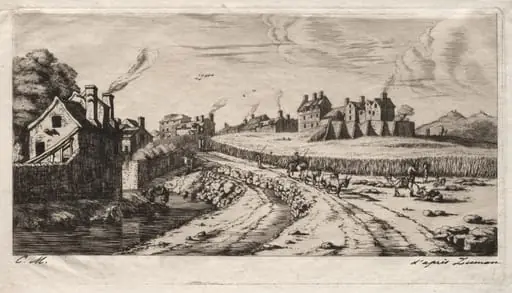
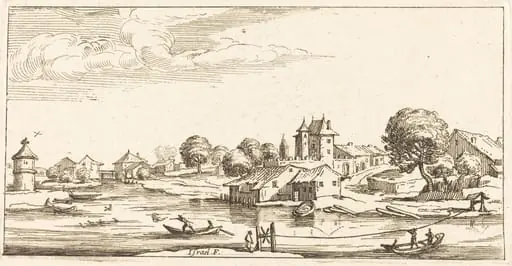
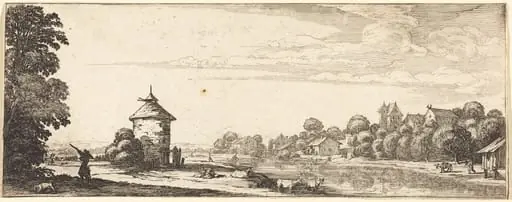
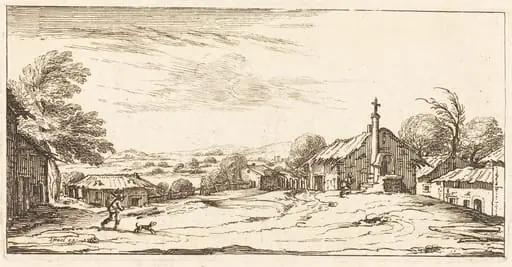
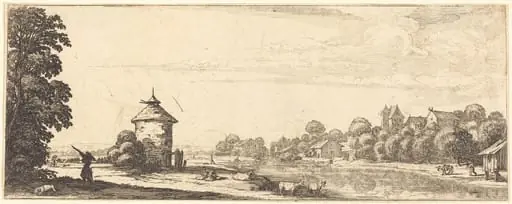
Landscape is an ink print by the Baroque artist French 17th Century. It dates from 1635 and is held in the collection of the National Gallery of Art.
About this work
Overview
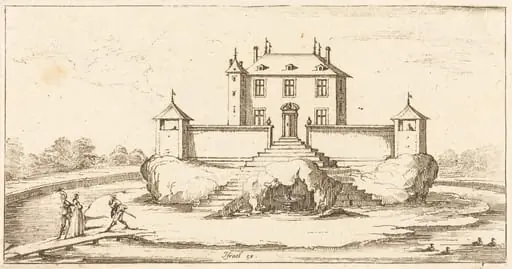
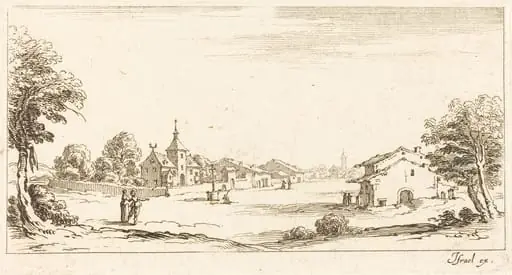
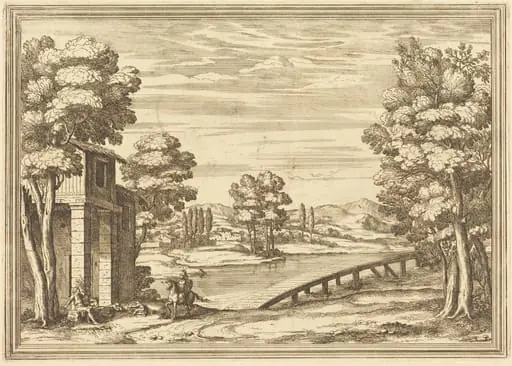
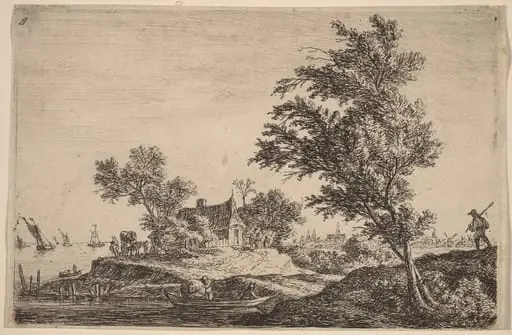
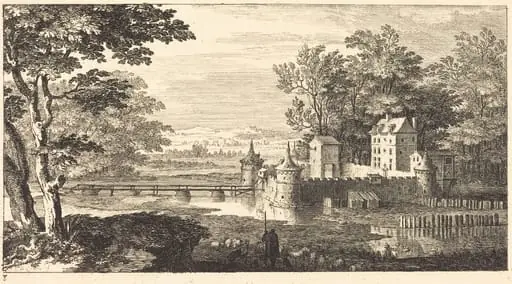
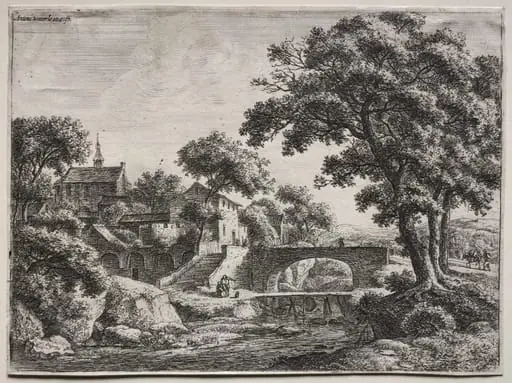
This etching on laid paper presents a quiet rural landscape, rendered in fine linear detail. The composition centers on a substantial house with a chimney and enclosed yard, positioned to the left, while a bridge crosses a stream flowing toward the right, linking to a secondary structure. Scattered trees and a pale sky frame the scene, suggesting a calm, unhurried environment.
Subject & Meaning
The scene captures everyday rural life: figures tending fields near the water imply labor integrated into the natural setting. The house and bridge suggest settled habitation and connection between spaces. No dramatic events occur; instead, the work conveys continuity and quiet productivity, reflecting an idealized but unromanticized view of agrarian existence.
Technique & Style
The artist employed etching, using acid to bite lines into a metal plate, then inked and printed the image onto laid paper. Fine, controlled strokes define architecture, foliage, and figures, while varying line density creates subtle tonal shifts. The medium’s precision suits the delicate balance between structure and nature, emphasizing clarity over emotional intensity.
History & Provenance
The work’s origin is not documented in available records, but its technique and composition align with 17th- to 18th-century Northern European printmaking traditions. Laid paper and the subject matter suggest a regional, possibly Dutch or Flemish, context. No known collector history or exhibition record accompanies the piece.
Context
During the period when such prints were common, landscape etchings served both as artistic expression and as records of place. They appealed to urban audiences seeking connection to rural life, often idealized. This work fits within a broader tradition of topographical prints that valued observation over fantasy, reflecting a growing interest in the everyday environment.
Legacy
Though not attributed to a major artist, the etching contributes to the broader archive of modest landscape prints that documented rural life with quiet dignity. Its preservation offers insight into how ordinary scenes were rendered and valued in pre-industrial visual culture, serving as a quiet counterpoint to more dramatic or monumental works of the era.
Artist & collection

Artist
Seventeenth-century French printmakers turned ink into story. Their tools were burin and acid, paper their stage. Look at the Beggar Woman with Rosary (1622), etched on laid paper, her hands folded around faith, or The…