Artwork
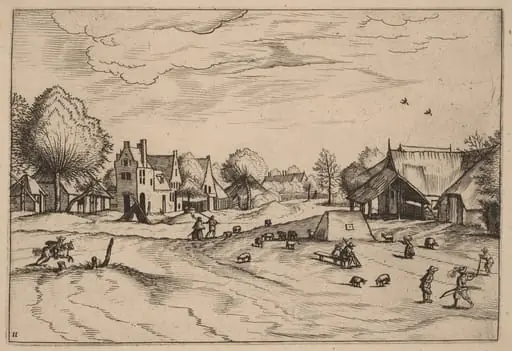
Village Street
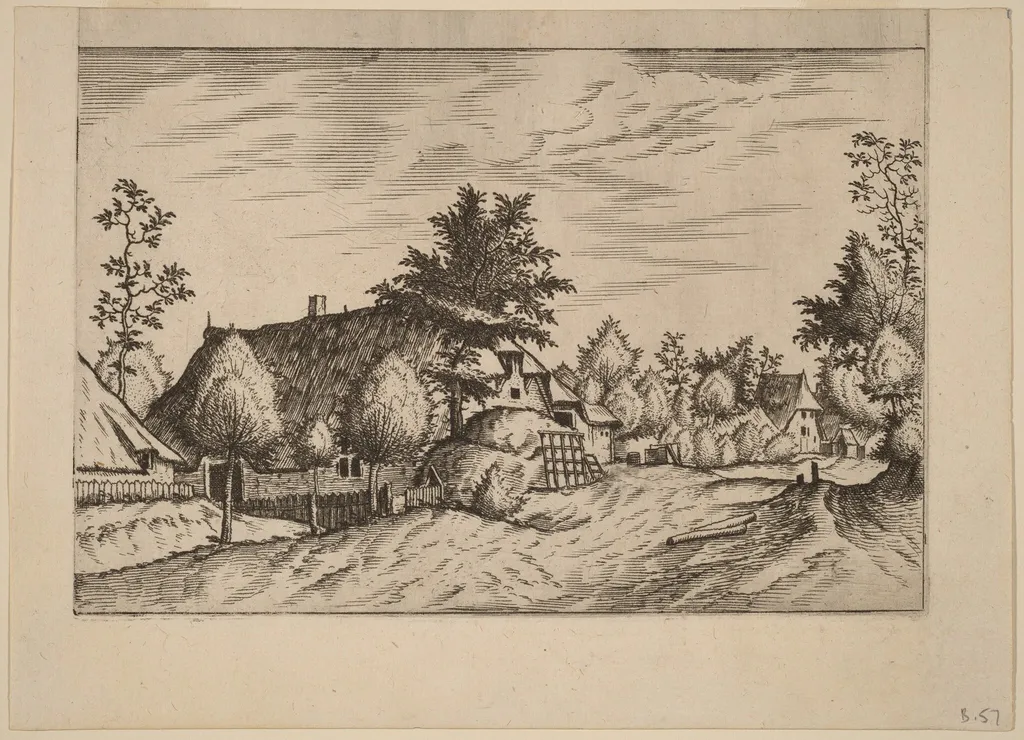
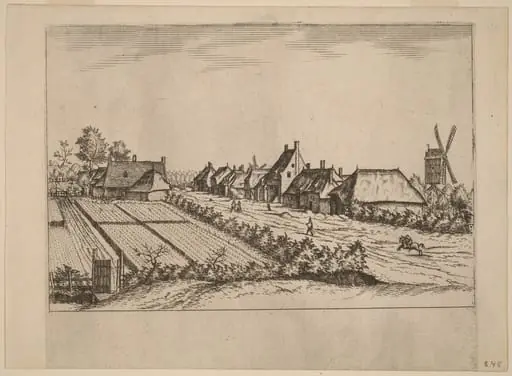
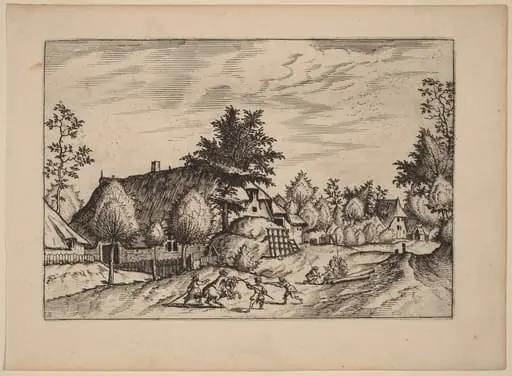
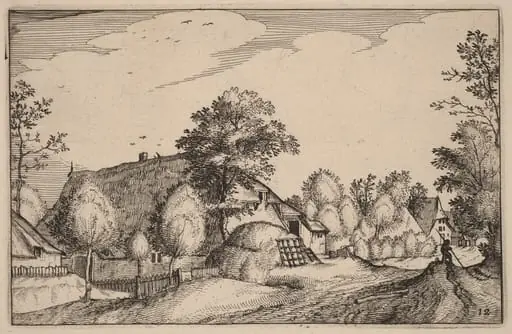
Village Street is an ink print by the Renaissance artist Johannes van Doetechum the Elder. It dates from 1560 and is held in the collection of the National Gallery of Art.
About this work
Overview
Village Street is a 1560 etching retouched with engraving, created by Johannes van Doetecum the Elder, a Dutch engraver-cartographer known for his detailed genre scenes and maps.
Subject & Meaning
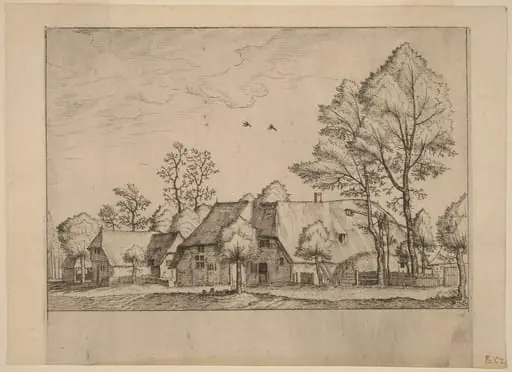
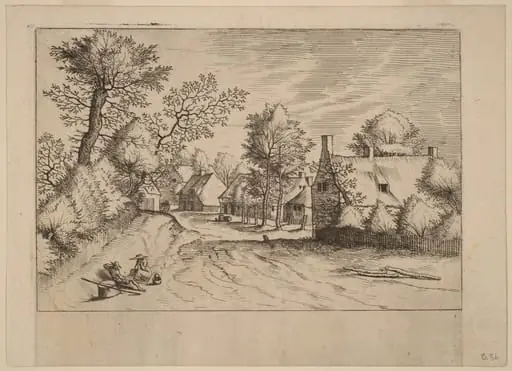
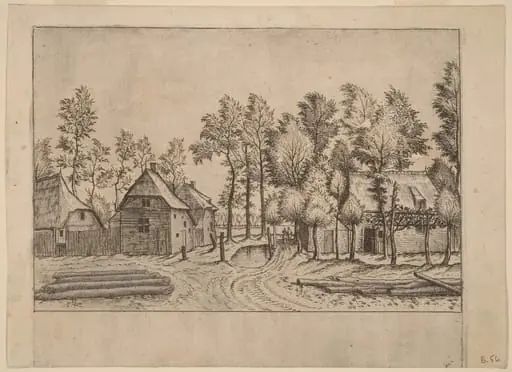
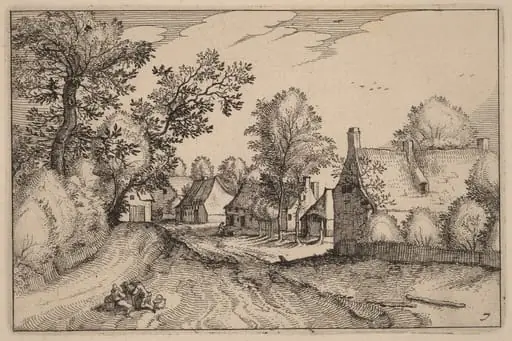
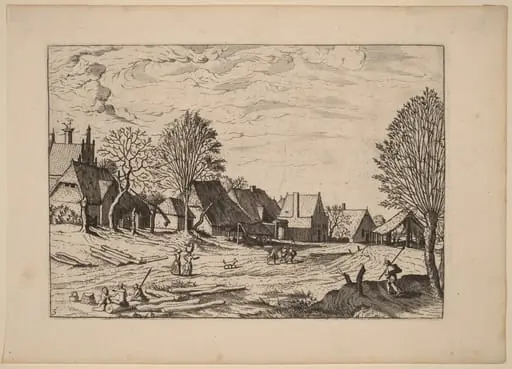
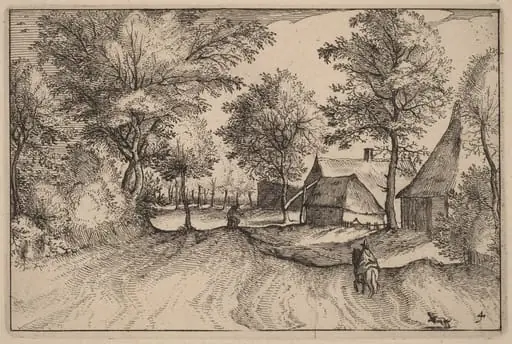
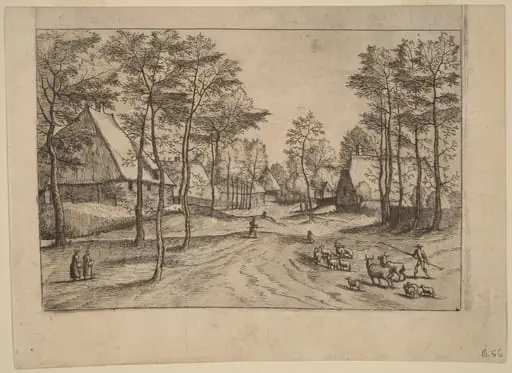
The print depicts a serene rural street scene, reflecting the 16th-century artistic interest in everyday life. A river divides the scene, with a thatched-roof house, trees, and a fence on one bank, and more houses and a church tower visible through the foliage on the other.
Technique & Style
The work showcases Doetecum's mastery of etching and engraving. Fine lines achieve a three-dimensional effect, particularly in the textured rendering of trees and water, demonstrating technical skill in capturing depth with ink on paper.
History & Provenance
Johannes van Doetecum the Elder, born in Deventer and active in Haarlem, collaborated with his brother Lucas and fathered three engravers who continued the family's artistic legacy.
Context
Village Street aligns with the period's focus on genre scenes, a trend influenced by artists like Pieter Bruegel the Elder, whose works Doetecum often reproduced in etching.
Own this work as a print
Artist & collection

Artist
Johannes van Doetechum the Elder
Joannes van Doetecum the Elder (1530 – 1605) was a Dutch engraver-cartographer known for his etched works after genre scenes by Pieter Bruegel the Elder and maps of various cities in the Netherlands.