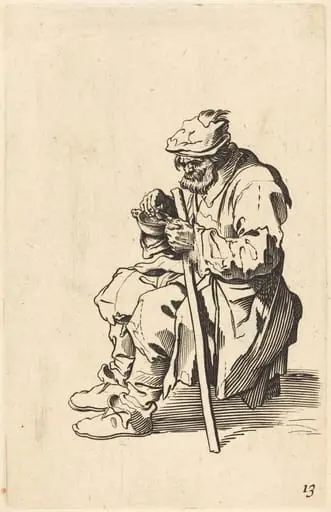
Artwork
The Sick Man
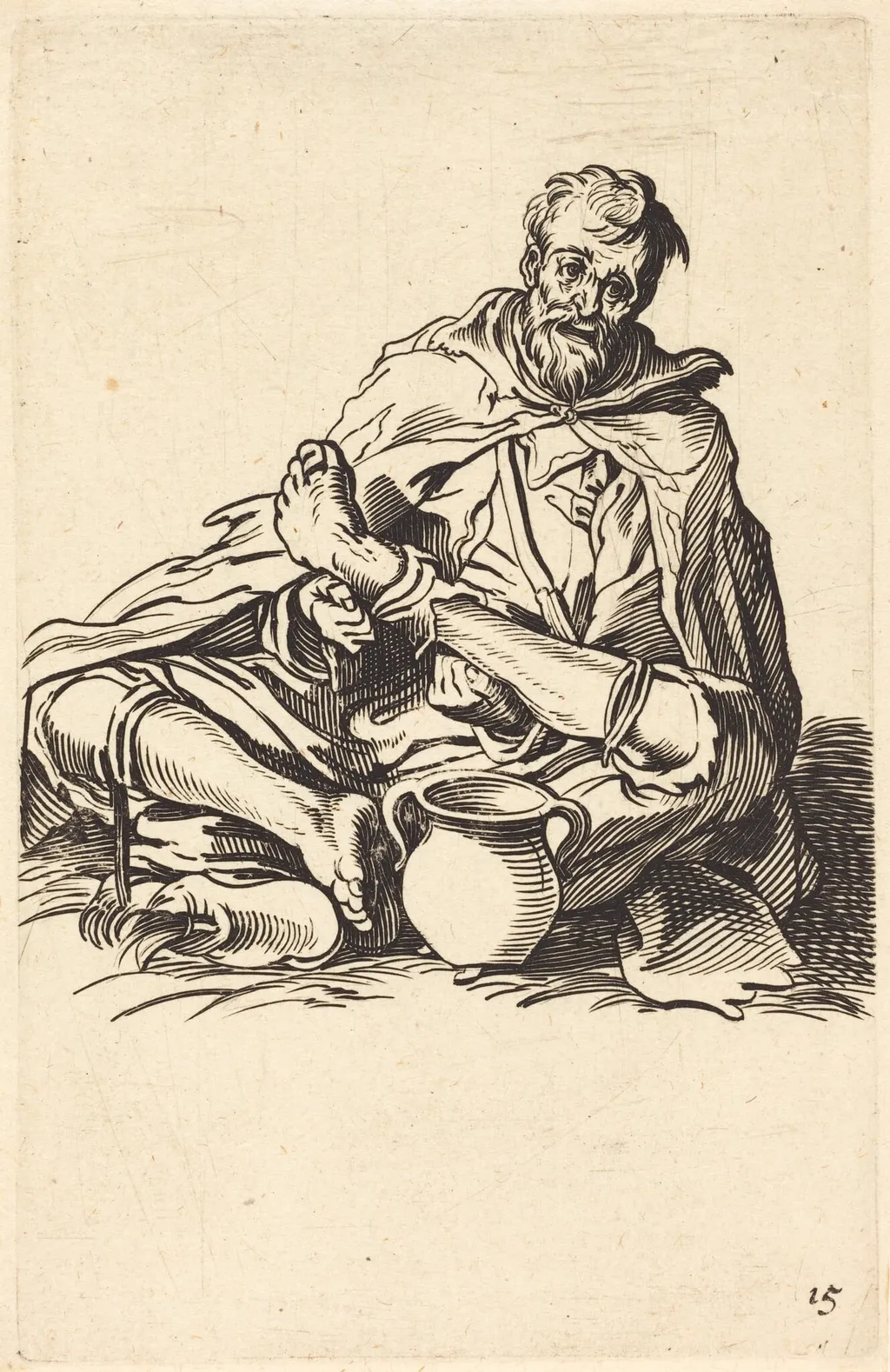
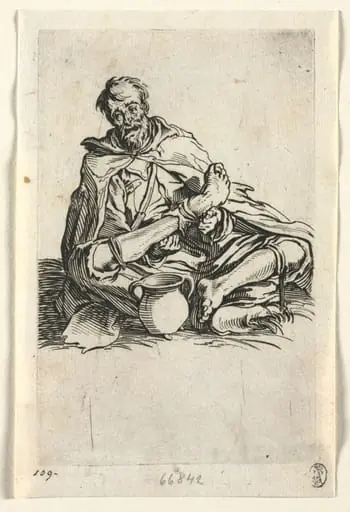
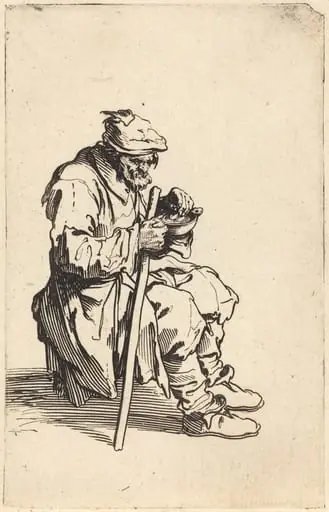
The Sick Man is an ink print by the Baroque artist French 17th Century. It dates from 1622 and is held in the collection of the National Gallery of Art.
About this work
Overview
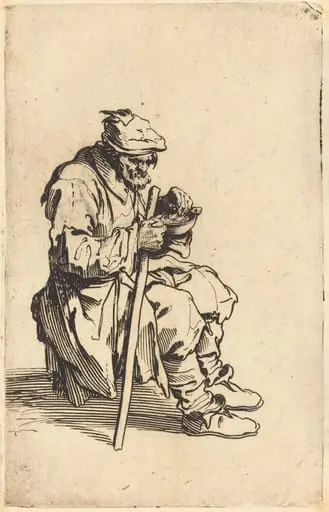
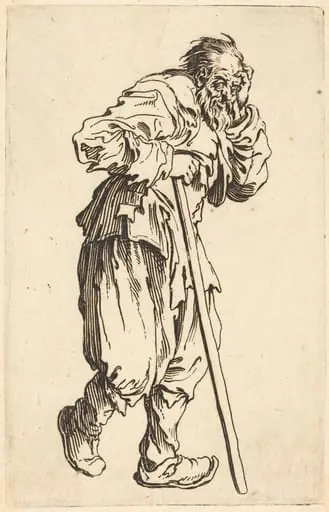
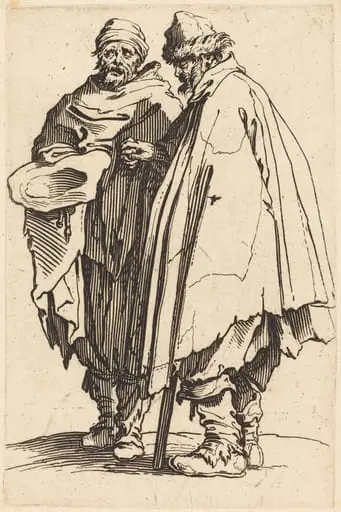
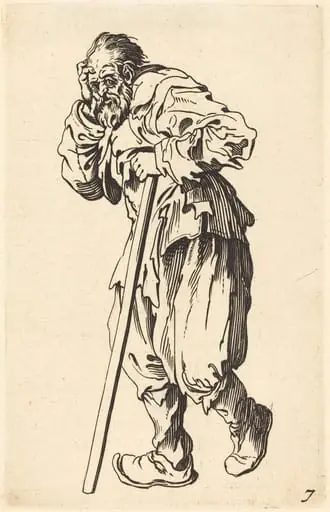
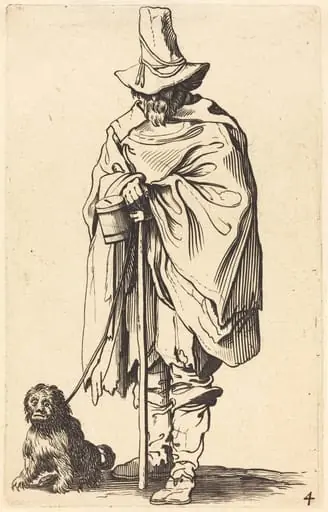
The Sick Man is an etching on laid paper depicting a weary, bearded figure seated on the ground, clad in a heavy cloak. The subject's exhausted expression and posture convey a sense of distress.
Subject & Meaning
The etching focuses on a hunched, bearded man, emphasizing his fatigue through deep facial lines, wide, distracted eyes, and a slouched pose. One hand grasps a small cup, while the other rests on his knee, suggesting a moment of pause or contemplation.
Technique & Style
Executed in etching, the work utilizes shading to render intricate details of wrinkles and fabric folds, achieving a realistic, rough-hewn quality characteristic of contemporary etchings, which prioritized simplicity alongside meticulous detail.
Context
The etching's style aligns with the prevalent techniques of its time, reflecting the era's approach to printmaking. For insight into the creative process, the etching technique itself was a common method for artists to produce detailed, replicable images.
Artist & collection

Artist
Seventeenth-century French printmakers turned ink into story. Their tools were burin and acid, paper their stage. Look at the Beggar Woman with Rosary (1622), etched on laid paper, her hands folded around faith, or The…