Artwork
The Watermill
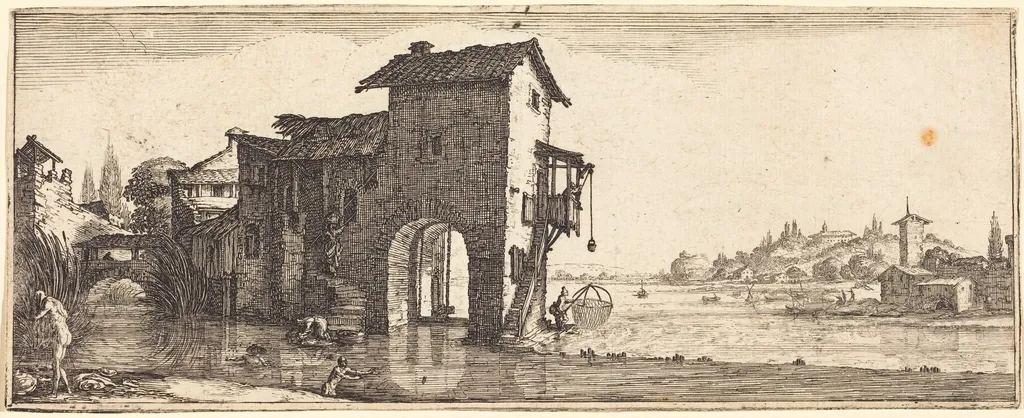
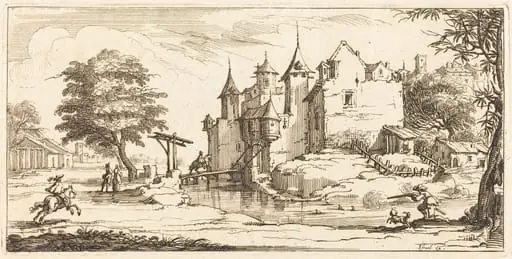
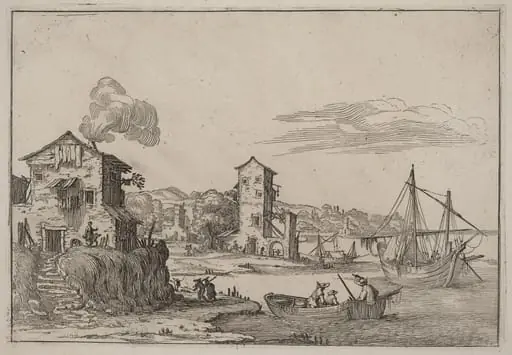
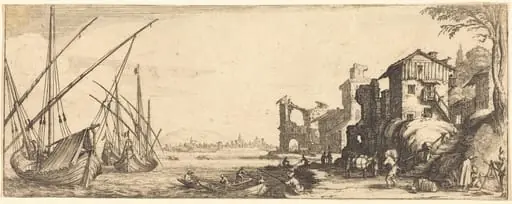
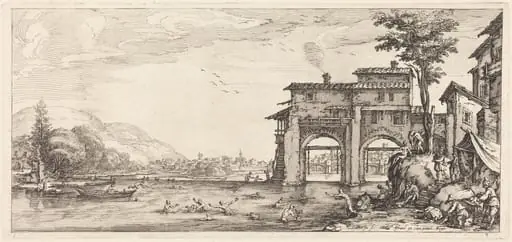
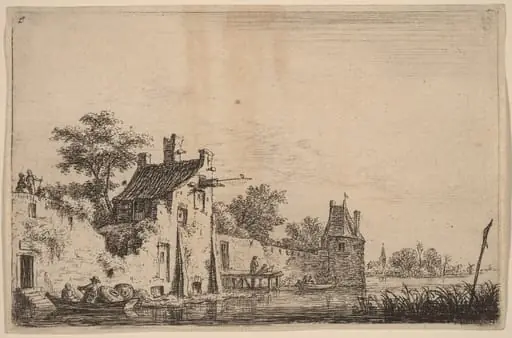
The Watermill is an ink print by the Baroque artist French 17th Century. It dates from 1634 and is held in the collection of the National Gallery of Art. The work is a black‑and‑white etching on laid paper that depicts a river scene centered on an aged watermill.
About this work
Overview
The work is a black‑and‑white etching on laid paper that depicts a river scene centered on an aged watermill. The mill’s tall tower and partially submerged wooden wheel dominate the composition, while figures populate the banks and a modest settlement with trees, buildings, and boats recedes in the distance.
Subject & Meaning
The image presents a tranquil rural landscape where human activity intertwines with industrial function. Workers and passersby near the water’s edge suggest daily labor tied to the mill, while the quiet town beyond hints at the broader community that depends on the water‑driven mechanism for its livelihood.
Technique & Style
Executed through etching, the artist employed fine, incised lines to render textures such as rippling water, the mill’s stonework, and the folds of clothing. The use of laid paper provides a subtle grain that enhances the tonal contrasts, allowing intricate detail to emerge within the monochrome palette.
History & Provenance
The print is catalogued as a single work on paper, with no specific dates or ownership records supplied in the available information. Its creation aligns with the tradition of 19th‑century European printmaking, where etching served both documentary and aesthetic purposes for depicting industrial and pastoral scenes.
Artist & collection

Artist
Seventeenth-century French printmakers turned ink into story. Their tools were burin and acid, paper their stage. Look at the Beggar Woman with Rosary (1622), etched on laid paper, her hands folded around faith, or The…