Artwork
"Do Not Give Your Right Hand to All and Sundry" [fol. 13 recto]
!["Do Not Give Your Right Hand to All and Sundry" [fol. 13 recto], by French early 16th Century, ink, 1514](https://artifactworldgallery.com/img/french-early-16th-century--do-not-give-your-right-hand-to-all-and-sundry-fol-13-recto--3038ce878ea69e05-w1024.webp)
"Do Not Give Your Right Hand to All and Sundry" [fol. 13 recto] is an ink drawing by the Renaissance artist French early 16th Century. It dates from 1514 and is held in the collection of the National Gallery of Art. The work titled “Do Not Give Your Right Hand to All and Sundry” is a pen drawing executed in brown ink on laid paper.
About this work
This painting is titled "Do Not Give Your Right Hand to All and Sundry".
It's an allegory, which means it uses symbols to convey a message. The fact that it's from the early 16th Century makes it interesting, as it shows the thoughts and values of that time.
You can learn more about this style by looking into the movement: Renaissance.
Overview
The work titled “Do Not Give Your Right Hand to All and Sundry” is a pen drawing executed in brown ink on laid paper. Catalogued as folio 13 recto, the piece belongs to the early sixteenth‑century repertoire of European art, a period marked by the transition from medieval conventions to Renaissance humanism.
Subject & Meaning
The image functions as an allegory, employing symbolic figures and gestures to warn against indiscriminate generosity. The central motif of a right hand being offered—or withheld—serves as a visual proverb, reflecting contemporary moral teachings that cautioned viewers to exercise discernment in the distribution of favors and resources.
Technique & Style
Rendered with a single brown ink pen, the drawing relies on line, hatching, and cross‑hatching to model forms and suggest texture on the characteristic laid paper surface. The linear precision and restrained palette are typical of early Renaissance draftsmanship, where emphasis on clarity of idea often outweighed ornamental coloration.
Context
Created in the early 1500s, the piece emerges from the broader Renaissance movement that revived classical learning and moral philosophy. Allegorical drawings such as this were commonly used for didactic purposes, circulating among educated circles as visual aids for sermons, treatises, or private contemplation on ethical conduct.
Artist & collection

Artist
A French draftsman from the early 1500s filled sheets of laid paper with tiny, sharp-tongued instructions—ink sketches paired with warnings like “Do Not Eat Your Heart Out” or “Feed Not Things That Have Sharp Claws.”…

!["Do Not Eat Your Heart Out" [fol. 22 recto], by French early 16th Century](https://artifactworldgallery.com/img/french-early-16th-century--do-not-eat-your-heart-out-fol-22-recto--003887c9850175b9-w320.webp) "Do Not Eat Your Heart Out" [fol. 22 recto]
"Do Not Eat Your Heart Out" [fol. 22 recto]![The Calumny of Apelles [fol. 6 recto], by French early 16th Century](https://artifactworldgallery.com/img/french-early-16th-century--the-calumny-of-apelles-fol-6-recto--037fde9ac8dbd27b-w320.webp) The Calumny of Apelles [fol. 6 recto]
The Calumny of Apelles [fol. 6 recto]!["Do Not Make Water on Clippings from Nails or Hair" [fol. 30 recto], by French early 16th Century](https://artifactworldgallery.com/img/french-early-16th-century--do-not-make-water-on-clippings-from-nails-or-hair-fol-30-rec--03ca31c36e5a66b9-w320.webp) "Do Not Make Water on Clippings from Nails or Hair" [fol. 30 recto]
"Do Not Make Water on Clippings from Nails or Hair" [fol. 30 recto]!["You Are Tying a Dolphin by the Tail" [fol. 17 recto], by French early 16th Century](https://artifactworldgallery.com/img/french-early-16th-century--you-are-tying-a-dolphin-by-the-tail-fol-17-recto--0abe83abfb5ccd1d-w320.webp) "You Are Tying a Dolphin by the Tail" [fol. 17 recto]
"You Are Tying a Dolphin by the Tail" [fol. 17 recto]!["Feed Not Things That Have Sharp Claws" [fol. 38 recto], by French early 16th Century](https://artifactworldgallery.com/img/french-early-16th-century--feed-not-things-that-have-sharp-claws-fol-38-recto--1f28115410528631-w320.webp) "Feed Not Things That Have Sharp Claws" [fol. 38 recto]
"Feed Not Things That Have Sharp Claws" [fol. 38 recto]![A Courtier Standing Between Covetousness and Dissimulation [fol. 14 recto], by French early 16th Century](https://artifactworldgallery.com/img/french-early-16th-century--a-courtier-standing-between-covetousness-and-dissimulation-f--2578f4fe9846edc2-w320.webp) A Courtier Standing Between Covetousness and Dissimulation [fol. 14 recto]
A Courtier Standing Between Covetousness and Dissimulation [fol. 14 recto]![A Fool Feeding Flowers to Swine [fol. 42 recto], by French early 16th Century](https://artifactworldgallery.com/img/french-early-16th-century--a-fool-feeding-flowers-to-swine-fol-42-recto--27579a7c495e1682-w320.webp) A Fool Feeding Flowers to Swine [fol. 42 recto]
A Fool Feeding Flowers to Swine [fol. 42 recto]!["You Are Shooting at Heaven" [fol. 9 recto], by French early 16th Century](https://artifactworldgallery.com/img/french-early-16th-century--you-are-shooting-at-heaven-fol-9-recto--28e4ef6e8d8a696d-w320.webp) "You Are Shooting at Heaven" [fol. 9 recto]
"You Are Shooting at Heaven" [fol. 9 recto]
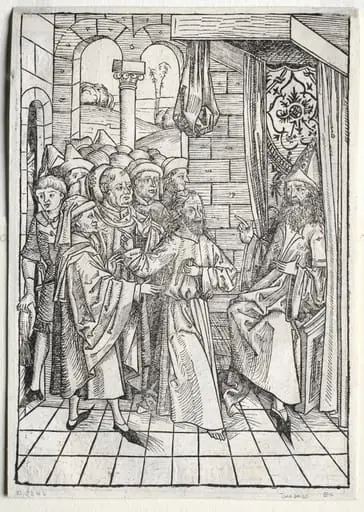 Der Schatzbehalter: Christ before Caiaphas (verso)
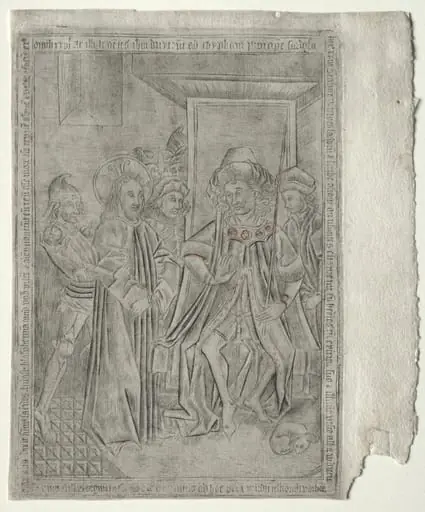 The Passion: Christ before Caiaphas
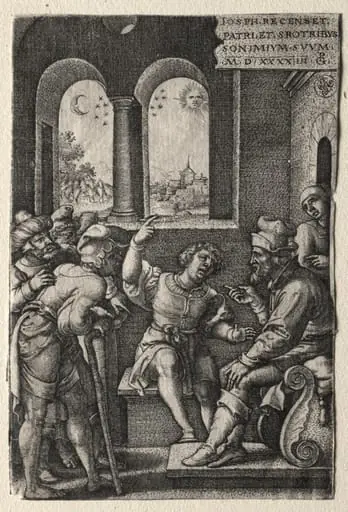 The Story of Joseph: Joseph Recounting his Dreams to his Father
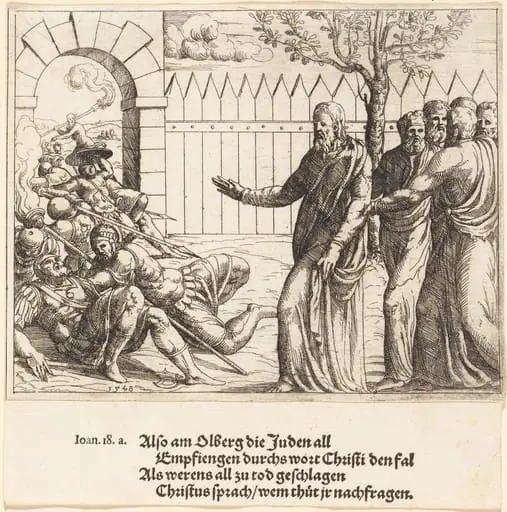 Jesus Identifies Himself before the Arrest
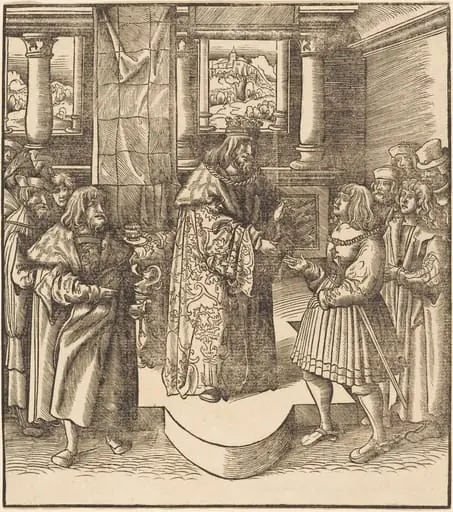 The Old White King Sending His Messengers to Portugal
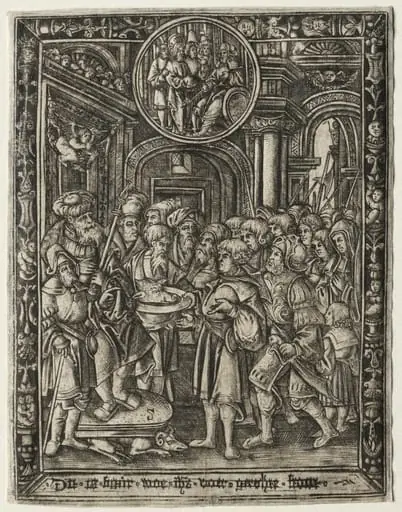 The Old King on His Throne
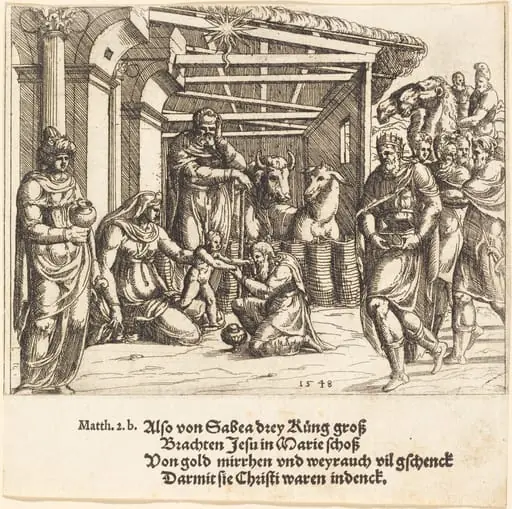 The Adoration of the Magi
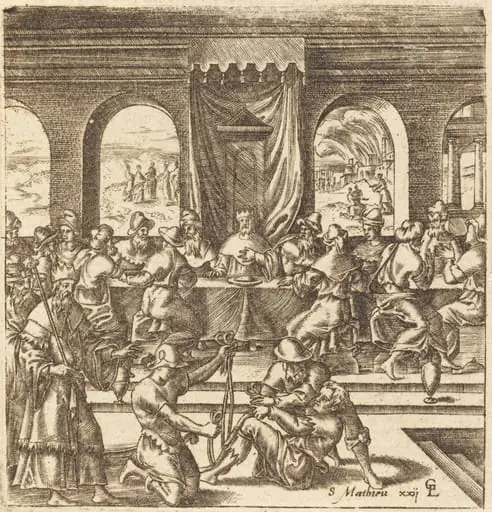 The Parable of the Marriage Feast
![The High Priest before Pilate [verso], by German 16th Century](https://artifactworldgallery.com/img/german-16th-century--the-high-priest-before-pilate-verso--0e55f00eccfecd8d-w320.webp) The High Priest before Pilate [verso]
The High Priest before Pilate [verso]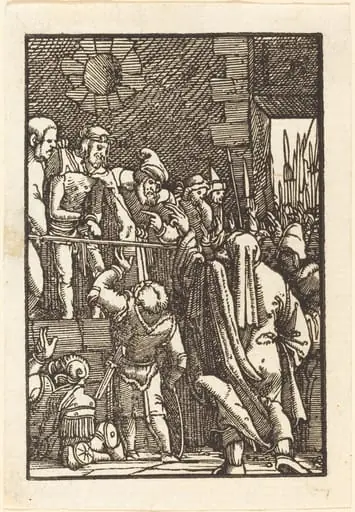 Ecce Homo