Artwork
"Obliterate the Trace of the Pot in the Ashes" [fol. 32 verso / 33 recto]
!["Obliterate the Trace of the Pot in the Ashes" [fol. 32 verso / 33 recto], by French early 16th Century, ink, 1514](https://artifactworldgallery.com/img/french-early-16th-century--obliterate-the-trace-of-the-pot-in-the-ashes-fol-32-verso-33--e808688d684304b0-w1024.webp)
"Obliterate the Trace of the Pot in the Ashes" [fol. 32 verso / 33 recto] is an ink drawing by the Renaissance artist French early 16th Century. It dates from 1514 and is held in the collection of the National Gallery of Art.
About this work
Overview
The work, titled “Obliterate the Trace of the Pot in the Ashes,” is a pen and brown‑ink drawing on laid paper, enriched with watercolor washes and gilded accents. Executed as a single sheet, it presents a densely populated scene of allegorical figures rendered in a style reminiscent of illuminated manuscript pages.
Subject & Meaning
The composition juxtaposes a crowned figure on a throne clutching a globe with a red‑clad woman bearing a heart, while a nude woman entwined with a serpent balances on another globe. Surrounding them are hybrid creatures—winged, bestial, and human—accompanied by Latin banners such as *Temperantia* and *Cupiditas*, suggesting a visual exploration of virtues, vices, and cosmic order.
Technique & Style
Ink lines are finely worked, creating intricate swirls and textures, while watercolor glazing adds muted tonal depth. Gold leaf highlights punctuate the scene, emphasizing key elements and lending a luminous quality typical of late medieval or early Renaissance manuscript illumination.
History & Provenance
The drawing is catalogued as folio 32 verso and 33 recto, indicating it forms part of a larger bound volume. Its precise origin, date, and ownership trail remain undocumented in the provided information, limiting definitive attribution.
Context
The allegorical iconography aligns with didactic visual programs common in medieval moral literature, where personified virtues and vices are displayed alongside symbolic objects such as globes, hearts, and serpents to convey ethical teachings.
Legacy
While the piece’s influence on later artistic movements is not recorded, its synthesis of manuscript illumination techniques with allegorical narrative reflects a transitional moment between medieval visual culture and emerging Renaissance sensibilities.
Artist & collection

Artist
A French draftsman from the early 1500s filled sheets of laid paper with tiny, sharp-tongued instructions—ink sketches paired with warnings like “Do Not Eat Your Heart Out” or “Feed Not Things That Have Sharp Claws.”…

!["Do Not Eat Your Heart Out" [fol. 22 recto], by French early 16th Century](https://artifactworldgallery.com/img/french-early-16th-century--do-not-eat-your-heart-out-fol-22-recto--003887c9850175b9-w320.webp) "Do Not Eat Your Heart Out" [fol. 22 recto]
"Do Not Eat Your Heart Out" [fol. 22 recto]![The Calumny of Apelles [fol. 6 recto], by French early 16th Century](https://artifactworldgallery.com/img/french-early-16th-century--the-calumny-of-apelles-fol-6-recto--037fde9ac8dbd27b-w320.webp) The Calumny of Apelles [fol. 6 recto]
The Calumny of Apelles [fol. 6 recto]!["Do Not Make Water on Clippings from Nails or Hair" [fol. 30 recto], by French early 16th Century](https://artifactworldgallery.com/img/french-early-16th-century--do-not-make-water-on-clippings-from-nails-or-hair-fol-30-rec--03ca31c36e5a66b9-w320.webp) "Do Not Make Water on Clippings from Nails or Hair" [fol. 30 recto]
"Do Not Make Water on Clippings from Nails or Hair" [fol. 30 recto]!["You Are Tying a Dolphin by the Tail" [fol. 17 recto], by French early 16th Century](https://artifactworldgallery.com/img/french-early-16th-century--you-are-tying-a-dolphin-by-the-tail-fol-17-recto--0abe83abfb5ccd1d-w320.webp) "You Are Tying a Dolphin by the Tail" [fol. 17 recto]
"You Are Tying a Dolphin by the Tail" [fol. 17 recto]!["Feed Not Things That Have Sharp Claws" [fol. 38 recto], by French early 16th Century](https://artifactworldgallery.com/img/french-early-16th-century--feed-not-things-that-have-sharp-claws-fol-38-recto--1f28115410528631-w320.webp) "Feed Not Things That Have Sharp Claws" [fol. 38 recto]
"Feed Not Things That Have Sharp Claws" [fol. 38 recto]![A Courtier Standing Between Covetousness and Dissimulation [fol. 14 recto], by French early 16th Century](https://artifactworldgallery.com/img/french-early-16th-century--a-courtier-standing-between-covetousness-and-dissimulation-f--2578f4fe9846edc2-w320.webp) A Courtier Standing Between Covetousness and Dissimulation [fol. 14 recto]
A Courtier Standing Between Covetousness and Dissimulation [fol. 14 recto]![A Fool Feeding Flowers to Swine [fol. 42 recto], by French early 16th Century](https://artifactworldgallery.com/img/french-early-16th-century--a-fool-feeding-flowers-to-swine-fol-42-recto--27579a7c495e1682-w320.webp) A Fool Feeding Flowers to Swine [fol. 42 recto]
A Fool Feeding Flowers to Swine [fol. 42 recto]!["You Are Shooting at Heaven" [fol. 9 recto], by French early 16th Century](https://artifactworldgallery.com/img/french-early-16th-century--you-are-shooting-at-heaven-fol-9-recto--28e4ef6e8d8a696d-w320.webp) "You Are Shooting at Heaven" [fol. 9 recto]
"You Are Shooting at Heaven" [fol. 9 recto]
![A Dialogue on Human Favor (recto) [fol. 15 verso / 16 recto], by French early 16th Century](https://artifactworldgallery.com/img/french-early-16th-century--a-dialogue-on-human-favor-recto-fol-15-verso-16-recto--a4f1453e0385d8d6-w320.webp) A Dialogue on Human Favor (recto) [fol. 15 verso / 16 recto]
A Dialogue on Human Favor (recto) [fol. 15 verso / 16 recto]!["Do Not Turn Back When You Arrive at the End" [fol. 26 verso / 27 recto], by French early 16th Century](https://artifactworldgallery.com/img/french-early-16th-century--do-not-turn-back-when-you-arrive-at-the-end-fol-26-verso-27--e11e5d3478112a7e-w320.webp) "Do Not Turn Back When You Arrive at the End" [fol. 26 verso / 27 recto]
"Do Not Turn Back When You Arrive at the End" [fol. 26 verso / 27 recto]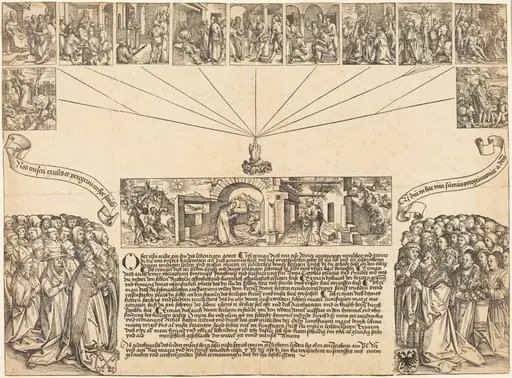 The Nativity and Passion of Christ
![Hope, Reaching for Heaven, Stands among Sad and Happy Men, Joys, and Fear [fol. 19 recto], by French early 16th Century](https://artifactworldgallery.com/img/french-early-16th-century--hope-reaching-for-heaven-stands-among-sad-and-happy-men-joys--be22f2c7f44a28d1-w320.webp) Hope, Reaching for Heaven, Stands among Sad and Happy Men, Joys, and Fear [fol. 19 recto]
Hope, Reaching for Heaven, Stands among Sad and Happy Men, Joys, and Fear [fol. 19 recto]![Allegory of the Life of a Scholar in a Rich Household [fol. 3 verso / 4 recto], by French 16th Century](https://artifactworldgallery.com/img/french-16th-century--allegory-of-the-life-of-a-scholar-in-a-rich-household-fol-3--52df746155b443e5-w320.webp) Allegory of the Life of a Scholar in a Rich Household [fol. 3 verso / 4 recto]
Allegory of the Life of a Scholar in a Rich Household [fol. 3 verso / 4 recto]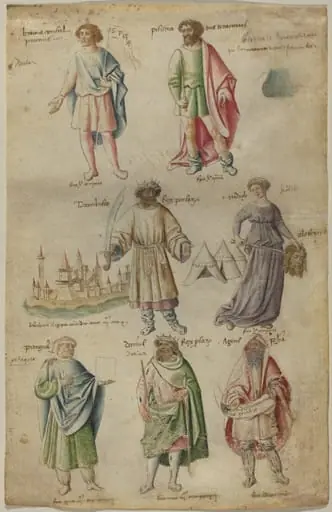 Seven Famous Figures from Ancient History
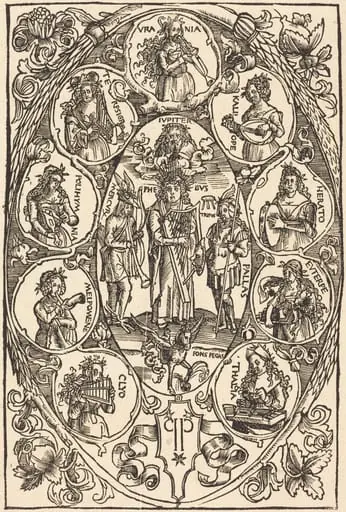 Apollo and the Muses
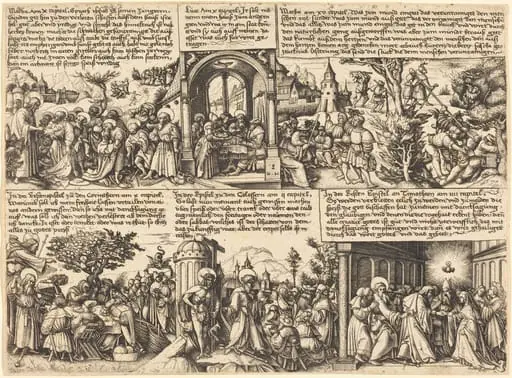 Jesus Christ Giving the Mission to the Apostles and Other New Testament Scenes
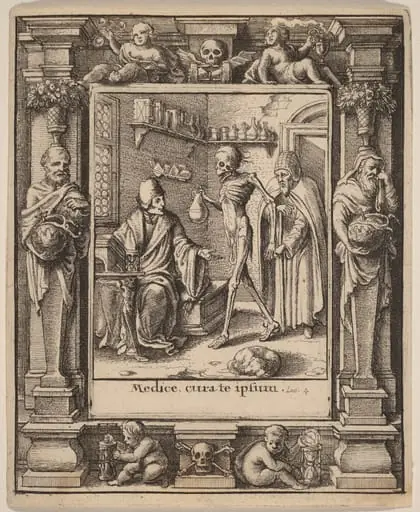 Doctor
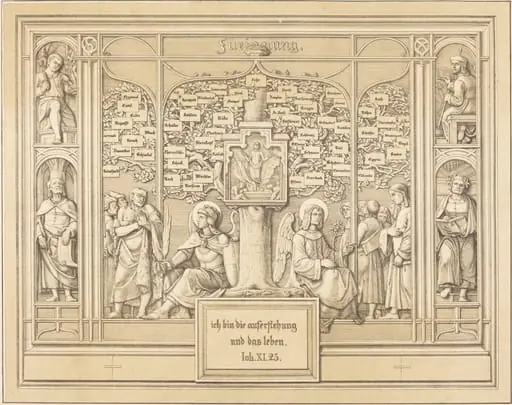 Dedication: Ich bin die Auferstehung und das Leben (I am the resurrection and the life)
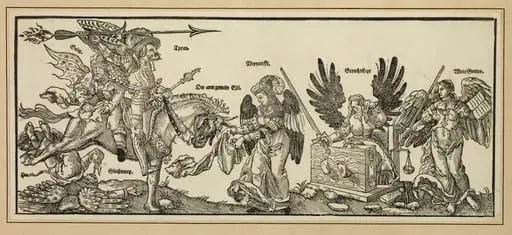 The poor common donkey
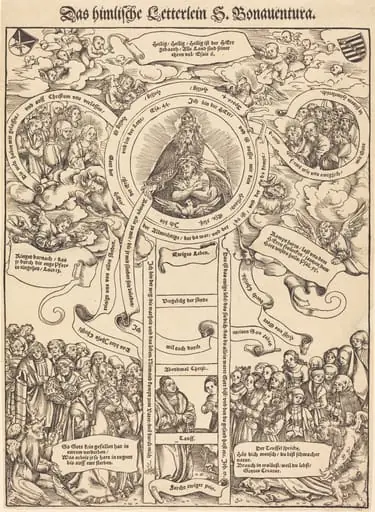 The Celestial Ladder of Saint Bonaventura