Artwork
Hope, Reaching for Heaven, Stands among Sad and Happy Men, Joys, and Fear [fol. 19 recto]
![Hope, Reaching for Heaven, Stands among Sad and Happy Men, Joys, and Fear [fol. 19 recto], by French early 16th Century, ink, 1514](https://artifactworldgallery.com/img/french-early-16th-century--hope-reaching-for-heaven-stands-among-sad-and-happy-men-joys--be22f2c7f44a28d1-w1024.webp)
Hope, Reaching for Heaven, Stands among Sad and Happy Men, Joys, and Fear [fol. 19 recto] is an ink drawing by the Renaissance artist French early 16th Century. It dates from 1514 and is held in the collection of the National Gallery of Art. The drawing, executed in pen and brown ink on laid paper, presents a gathering of figures rendered in Renaissance attire.
About this work
For more information on the Renaissance movement, explore the works of artists from this period, such as French early 16th Century.
This drawing features a group of people in various poses, with some standing and others sitting. The figures are dressed in Renaissance-style clothing, with intricate details and folds in their garments. A banner with illegible text is visible at the top of the image.
In the foreground, a figure is shown with their arm outstretched, as if reaching for something. The background of the drawing is plain, with no discernible setting or scenery. The overall mood of the image appears to be one of contemplation and introspection.
The artist's use of pen and brown ink creates a sense of depth and texture, with subtle variations in shading and line work. For more information on the Renaissance movement, explore the works of artists from this period, such as French early 16th Century.
Overview
The drawing, executed in pen and brown ink on laid paper, presents a gathering of figures rendered in Renaissance attire. Arranged both standing and seated, the composition includes a banner bearing unreadable lettering at the top. A central figure extends an arm outward, suggesting a gesture of reaching or aspiration, while the background remains unadorned, focusing attention on the group’s interaction.
Subject & Meaning
The work juxtaposes individuals displaying a range of emotional states—hope, melancholy, joy, and fear—implied by their varied postures and expressions. The outstretched arm may symbolize a yearning for transcendence or divine connection, aligning with the title’s reference to reaching heaven amidst contrasting human conditions.
Technique & Style
Employing fine pen lines and brown ink washes, the artist achieves subtle gradations of tone that convey the folds and textures of the period clothing. Delicate hatching creates depth, while the restrained palette emphasizes the figures’ forms over any elaborate setting, characteristic of Renaissance drawing practices.
Context
The piece reflects Renaissance interests in humanist themes, portraying a spectrum of emotional experiences within a single tableau. The inclusion of a banner, though illegible, suggests a textual element common in contemporary illustrated manuscripts, linking visual narrative with written discourse.
Artist & collection

Artist
A French draftsman from the early 1500s filled sheets of laid paper with tiny, sharp-tongued instructions—ink sketches paired with warnings like “Do Not Eat Your Heart Out” or “Feed Not Things That Have Sharp Claws.”…

!["Do Not Eat Your Heart Out" [fol. 22 recto], by French early 16th Century](https://artifactworldgallery.com/img/french-early-16th-century--do-not-eat-your-heart-out-fol-22-recto--003887c9850175b9-w320.webp) "Do Not Eat Your Heart Out" [fol. 22 recto]
"Do Not Eat Your Heart Out" [fol. 22 recto]![The Calumny of Apelles [fol. 6 recto], by French early 16th Century](https://artifactworldgallery.com/img/french-early-16th-century--the-calumny-of-apelles-fol-6-recto--037fde9ac8dbd27b-w320.webp) The Calumny of Apelles [fol. 6 recto]
The Calumny of Apelles [fol. 6 recto]!["Do Not Make Water on Clippings from Nails or Hair" [fol. 30 recto], by French early 16th Century](https://artifactworldgallery.com/img/french-early-16th-century--do-not-make-water-on-clippings-from-nails-or-hair-fol-30-rec--03ca31c36e5a66b9-w320.webp) "Do Not Make Water on Clippings from Nails or Hair" [fol. 30 recto]
"Do Not Make Water on Clippings from Nails or Hair" [fol. 30 recto]!["You Are Tying a Dolphin by the Tail" [fol. 17 recto], by French early 16th Century](https://artifactworldgallery.com/img/french-early-16th-century--you-are-tying-a-dolphin-by-the-tail-fol-17-recto--0abe83abfb5ccd1d-w320.webp) "You Are Tying a Dolphin by the Tail" [fol. 17 recto]
"You Are Tying a Dolphin by the Tail" [fol. 17 recto]!["Feed Not Things That Have Sharp Claws" [fol. 38 recto], by French early 16th Century](https://artifactworldgallery.com/img/french-early-16th-century--feed-not-things-that-have-sharp-claws-fol-38-recto--1f28115410528631-w320.webp) "Feed Not Things That Have Sharp Claws" [fol. 38 recto]
"Feed Not Things That Have Sharp Claws" [fol. 38 recto]![A Courtier Standing Between Covetousness and Dissimulation [fol. 14 recto], by French early 16th Century](https://artifactworldgallery.com/img/french-early-16th-century--a-courtier-standing-between-covetousness-and-dissimulation-f--2578f4fe9846edc2-w320.webp) A Courtier Standing Between Covetousness and Dissimulation [fol. 14 recto]
A Courtier Standing Between Covetousness and Dissimulation [fol. 14 recto]![A Fool Feeding Flowers to Swine [fol. 42 recto], by French early 16th Century](https://artifactworldgallery.com/img/french-early-16th-century--a-fool-feeding-flowers-to-swine-fol-42-recto--27579a7c495e1682-w320.webp) A Fool Feeding Flowers to Swine [fol. 42 recto]
A Fool Feeding Flowers to Swine [fol. 42 recto]!["You Are Shooting at Heaven" [fol. 9 recto], by French early 16th Century](https://artifactworldgallery.com/img/french-early-16th-century--you-are-shooting-at-heaven-fol-9-recto--28e4ef6e8d8a696d-w320.webp) "You Are Shooting at Heaven" [fol. 9 recto]
"You Are Shooting at Heaven" [fol. 9 recto]
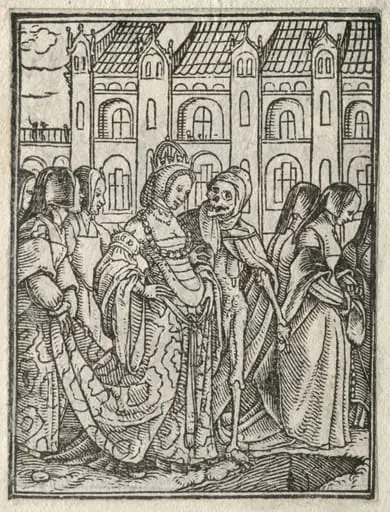 The Dance of Death: The Cardinal; The Empress
![Allegory of the Life of a Scholar in a Rich Household [fol. 3 verso / 4 recto], by French 16th Century](https://artifactworldgallery.com/img/french-16th-century--allegory-of-the-life-of-a-scholar-in-a-rich-household-fol-3--52df746155b443e5-w320.webp) Allegory of the Life of a Scholar in a Rich Household [fol. 3 verso / 4 recto]
Allegory of the Life of a Scholar in a Rich Household [fol. 3 verso / 4 recto]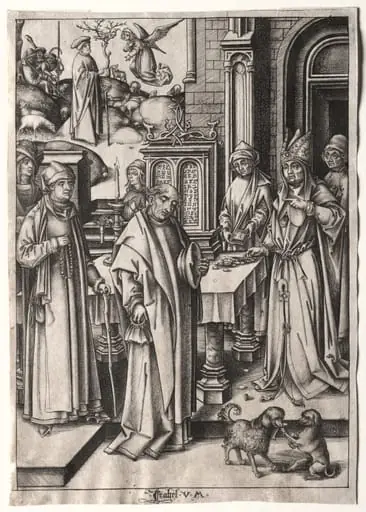 Life of the Virgin: High Priest Rejecting the Offering of Joachim
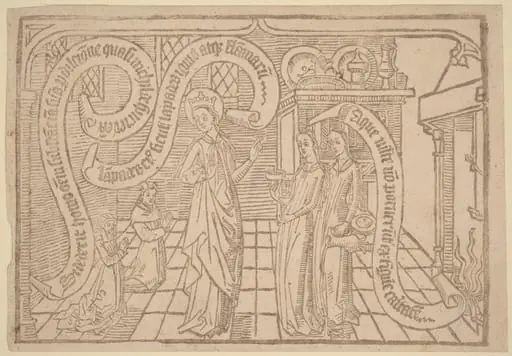 Page from "Canticum Canticorum": 2nd Edition
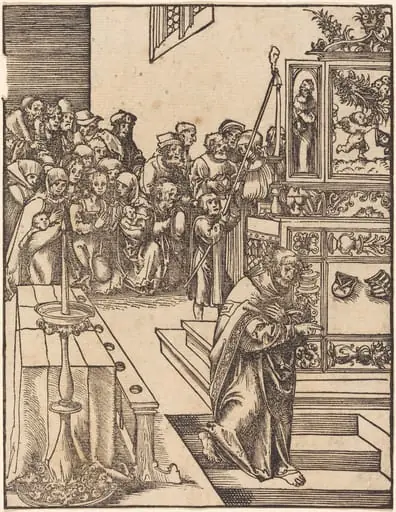 Saint John the Evangelist
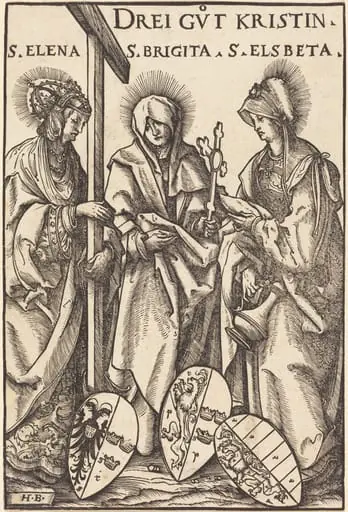 Saint Helena, Saint Brigitta and Saint Elizabeth
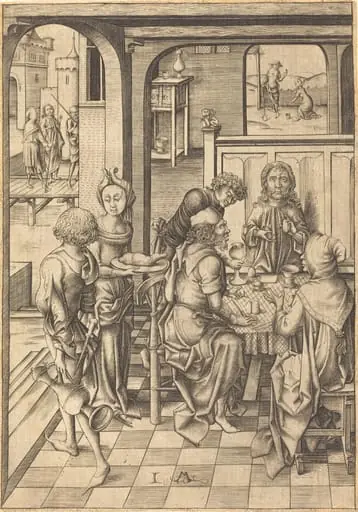 Christ at Emmaus
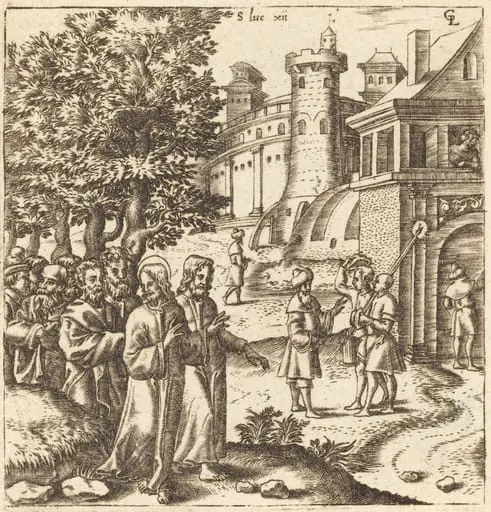 Christ Teaching the Multitude
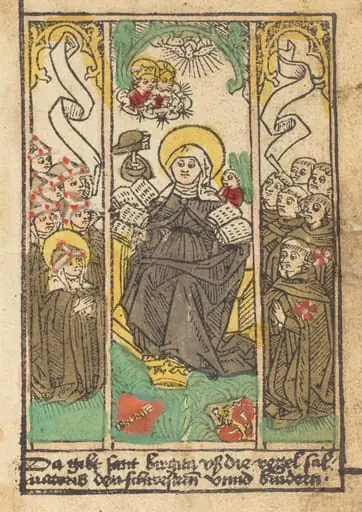 Saint Bridget
 The Death of Lucretia
 Saint John the Evangelist
 Coat of Arms of the Passion