Artwork
Allegory of the Life of a Scholar in a Rich Household [fol. 3 verso / 4 recto]
![Allegory of the Life of a Scholar in a Rich Household [fol. 3 verso / 4 recto], by French 16th Century, ink, 1514](https://artifactworldgallery.com/img/french-16th-century--allegory-of-the-life-of-a-scholar-in-a-rich-household-fol-3--52df746155b443e5-w1024.webp)
Allegory of the Life of a Scholar in a Rich Household [fol. 3 verso / 4 recto] is an ink drawing by the Renaissance artist French 16th Century. It dates from 1514 and is held in the collection of the National Gallery of Art. This drawing, created during the Renaissance, depicts a symbolic representation of scholarly life within an affluent domestic setting.
About this work
Overview
Executed in pen and brown ink on laid paper, it belongs to a tradition of illustrated manuscripts where intellectual pursuits were visually encoded.
This drawing, created during the Renaissance, depicts a symbolic representation of scholarly life within an affluent domestic setting. Executed in pen and brown ink on laid paper, it belongs to a tradition of illustrated manuscripts where intellectual pursuits were visually encoded. The work is not a painting, as sometimes misstated, but a refined ink drawing, likely part of a larger codex or album.
Subject & Meaning
The scene portrays a scholar engaged in study amid signs of wealth—furniture, textiles, and attendants—suggesting the idealized integration of learning into elite household life. Rather than a literal record, it functions as an allegory, valorizing intellectual labor as a refined activity worthy of noble patronage. The setting implies that scholarship was both a personal pursuit and a social asset in Renaissance culture.
Technique & Style
The artist employed fine pen strokes and subtle washes of brown ink to define forms with clarity and restraint. Laid paper, with its characteristic chain lines, provided a textured ground that enhanced the ink’s tonal variation. The composition is orderly, with figures arranged to guide the viewer’s eye through a sequence of scholarly activities, reflecting Renaissance ideals of balance and rational structure.
History & Provenance
The drawing survives as a single folio, likely from a manuscript or collection of illustrated scenes. Its exact origin and creator remain undocumented, though its style aligns with Northern Italian or Flemish workshop practices of the 15th or early 16th century. It was probably produced for a private patron interested in humanist themes, rather than for public display.
Context
During the Renaissance, scholars were increasingly valued as cultural intermediaries, especially in wealthy households that commissioned art to reflect intellectual sophistication. This drawing reflects the era’s growing emphasis on education, classical learning, and the domestication of knowledge. It contrasts with earlier medieval depictions by emphasizing individual contemplation over religious instruction.
Legacy
Though not widely known today, such drawings contributed to the visual vocabulary of humanist ideals in early modern Europe. They influenced later genre scenes and illustrated books that linked learning with domestic life. As artifacts of private patronage, they offer insight into how intellectual identity was cultivated and displayed beyond academic institutions.
Artist & collection

Artist
A French artist from the 1500s made metal sculptures and prints that feel like Renaissance snapshots.

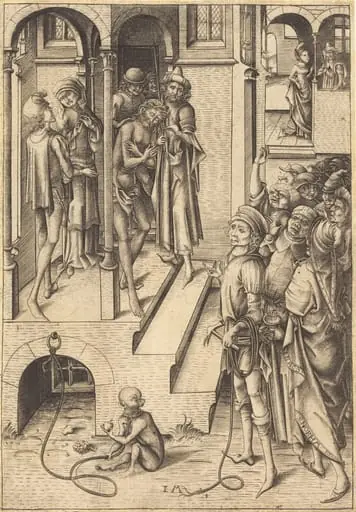 Ecce Homo
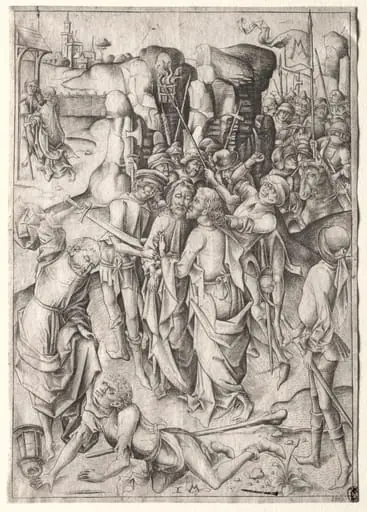 The Passion: Christ Taken Captive
![Hope, Reaching for Heaven, Stands among Sad and Happy Men, Joys, and Fear [fol. 19 recto], by French early 16th Century](https://artifactworldgallery.com/img/french-early-16th-century--hope-reaching-for-heaven-stands-among-sad-and-happy-men-joys--be22f2c7f44a28d1-w320.webp) Hope, Reaching for Heaven, Stands among Sad and Happy Men, Joys, and Fear [fol. 19 recto]
Hope, Reaching for Heaven, Stands among Sad and Happy Men, Joys, and Fear [fol. 19 recto]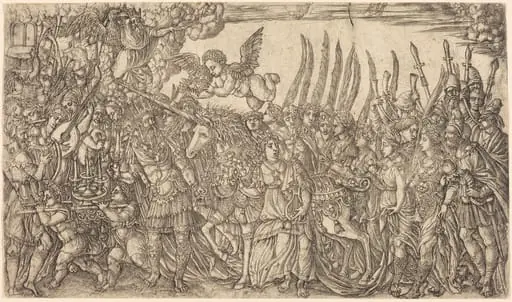 The Triumph of the Unicorn
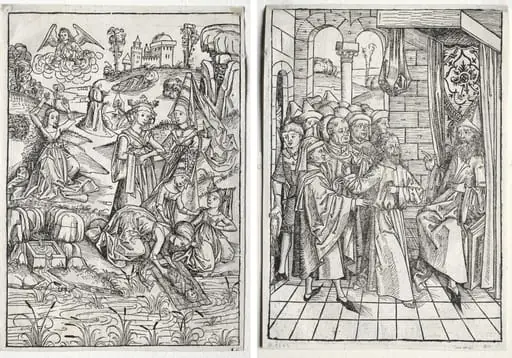 Der Schatzbehalter: Moses Found by Pharaoh's Daughter (recto); Der Schatzbehalter: Christ before Caiaphas (verso)
 The Passion: The Raising of Lazarus
 The Stoning of Saint Stephen
 The Conversion of Saint Paul
 The Martyrdom of the Ten Thousand
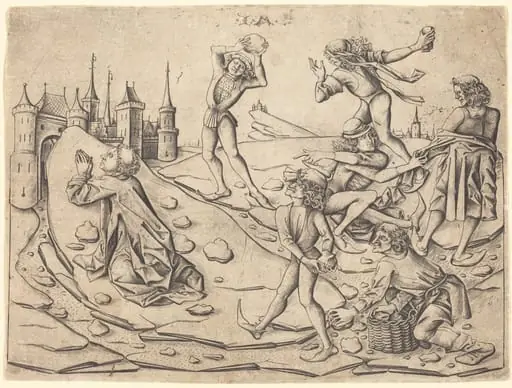 The Stoning of Saint Stephen
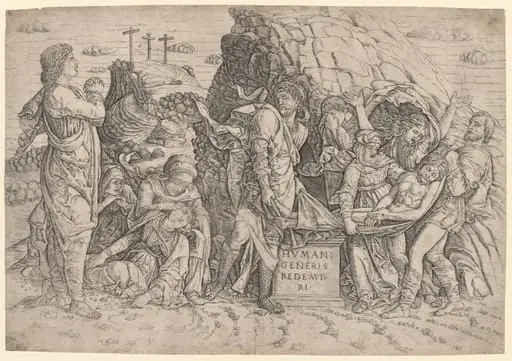 Entombment
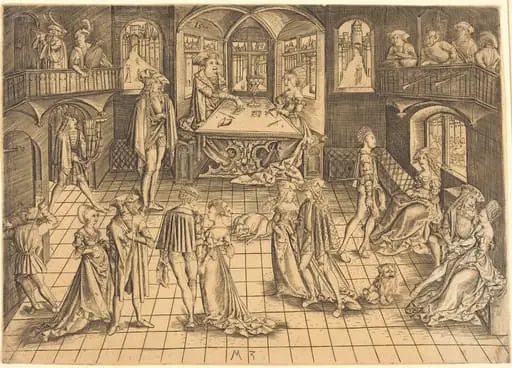 The Ball