Artwork
A Man with a Turban and Striped Shirt
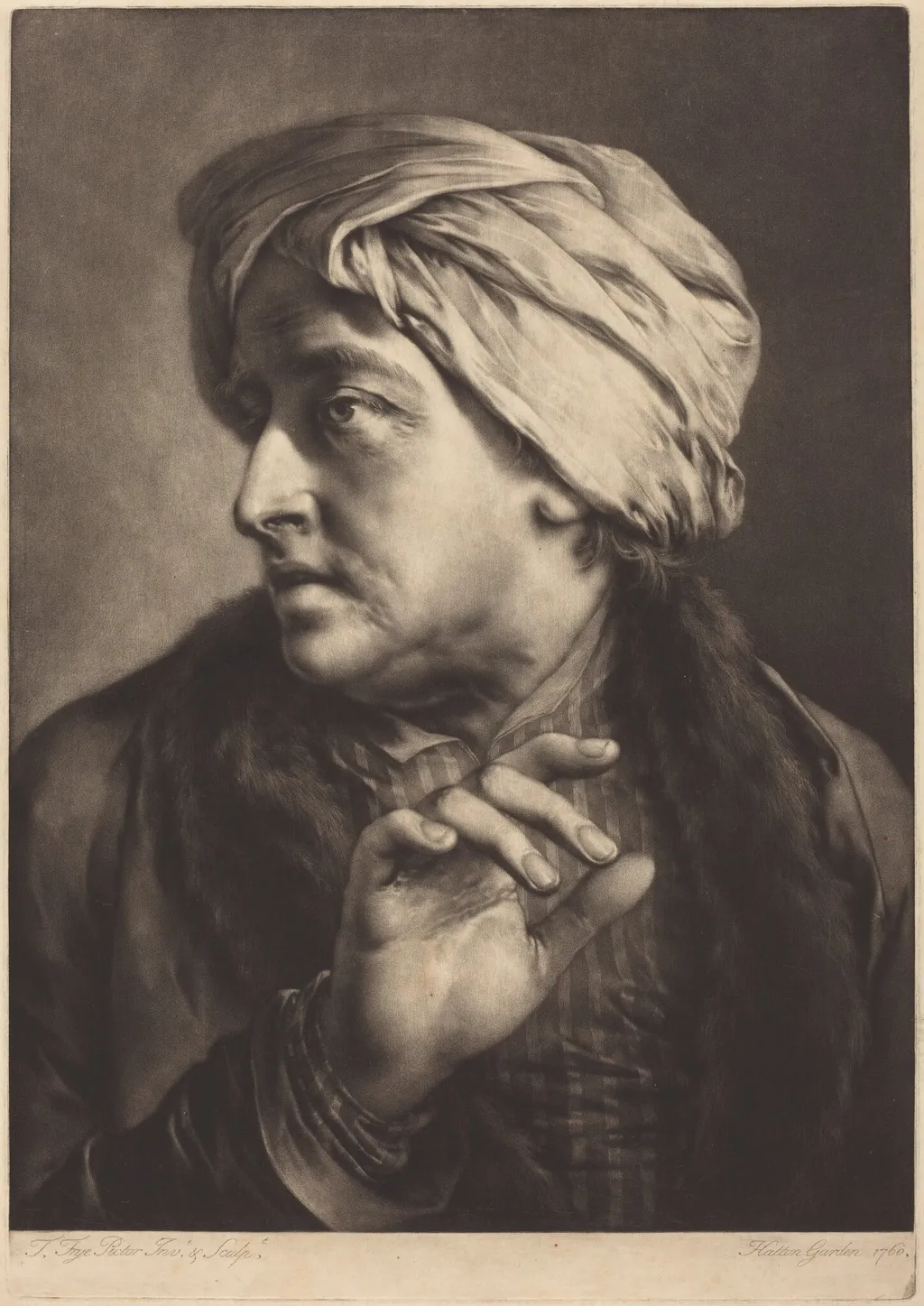
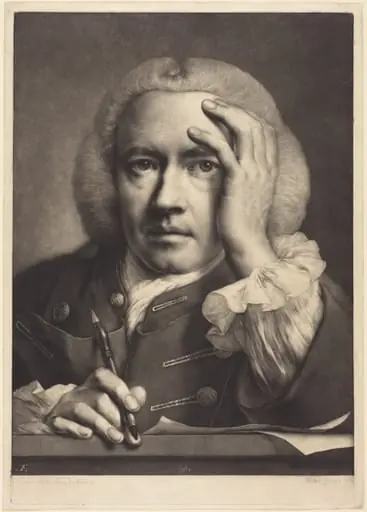
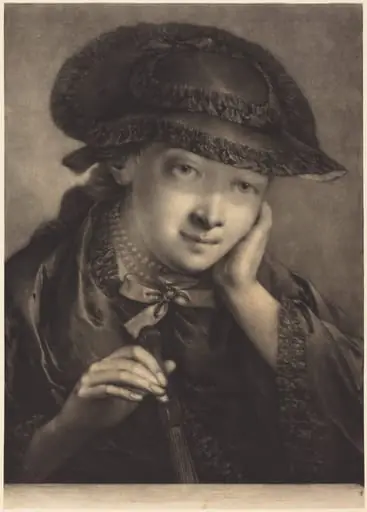
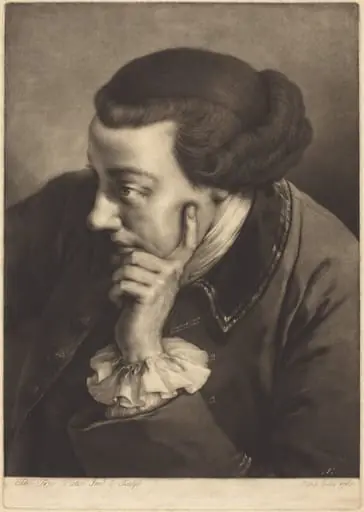
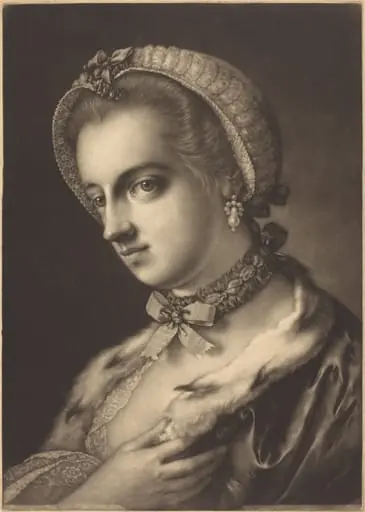
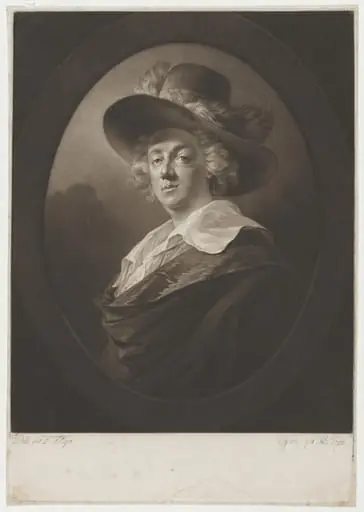
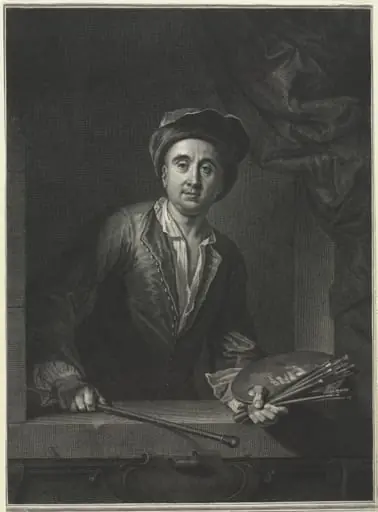
A Man with a Turban and Striped Shirt is an ink print by the Romanticist artist Thomas Frye. It dates from 1760 and is held in the collection of the National Gallery of Art.
About this work
Overview
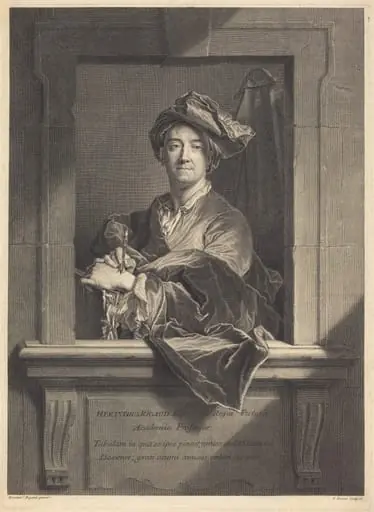
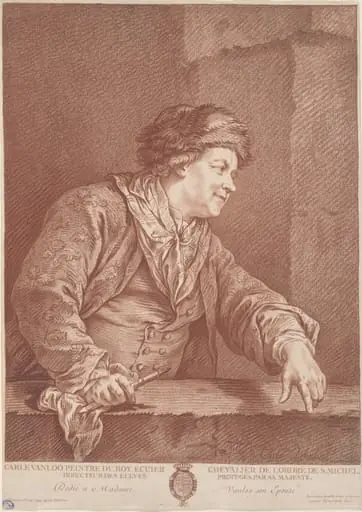
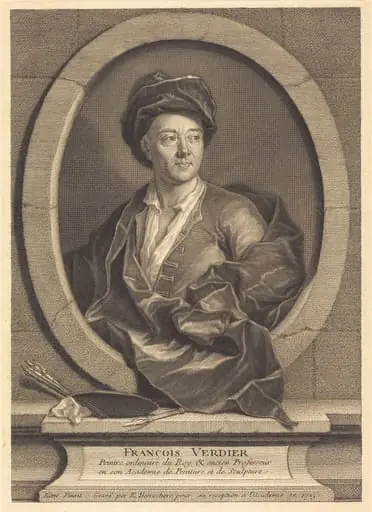
Thomas Frye’s 1760 print, titled *A Man with a Turban and Striped Shirt*, is a mezzotint on laid paper that combines tonal shading with engraved line work. The image presents a close‑up profile of a seated figure whose turban and striped garment are set against a deep, uniform background, emphasizing the sitter’s facial features and hands.
Subject & Meaning
The work portrays an unidentified male sitter, shown in profile with a loosely wrapped turban and a high‑collared, striped shirt. His hands are joined near his chest, a pose that suggests a contemplative or formal bearing, while the stark contrast between light and dark draws attention to his expression and attire.
Technique & Style
Frye employed the mezzotint process, a method that creates rich, velvety tones by roughening a copper plate and then smoothing areas to hold less ink. He supplemented this with fine engraved lines to delineate details in the fabric and facial features, achieving a nuanced depth uncommon in early British prints.
History & Provenance
Thomas Frye, an Anglo‑Irish artist known for portraiture in oil, pastel, and early mezzotint, produced this print during a prolific period that also saw him manage London’s Bow porcelain factory. The factory, which he claimed pioneered English porcelain production, ceased operation shortly after his death in 1762, situating the print at the end of his active career.
Context
The portrait reflects mid‑18th‑century British interest in exotic dress, such as turbans, which were fashionable in portraiture as symbols of travel or cultural curiosity. Frye’s use of mezzotint aligns with contemporary developments in printmaking that sought to replicate the tonal qualities of painting.
Legacy
While Frye is more often remembered for his contributions to English porcelain, his early mezzotints, including this work, illustrate his role in advancing the medium’s expressive possibilities. The print remains a reference point for scholars studying the intersection of portraiture, print technology, and 18th‑century visual culture.
Artist & collection
Artist
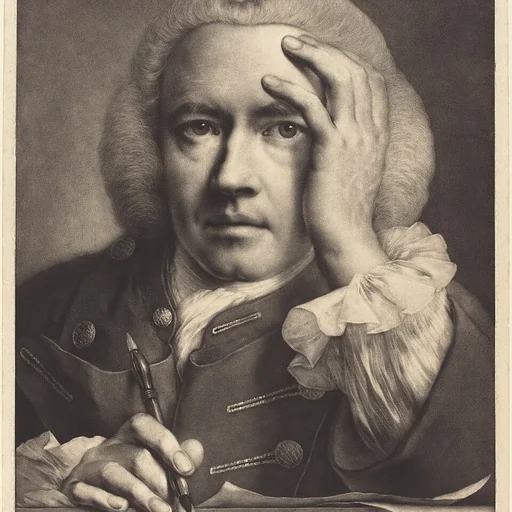
Thomas Frye (c. 1710 – 3 April 1762) was an Anglo-Irish artist, best known for his portraits in oil and pastel, including some miniatures and his early mezzotint engravings. He was also the patentee of the Bow porcelain…