Artwork
Hyacinthe Rigaud
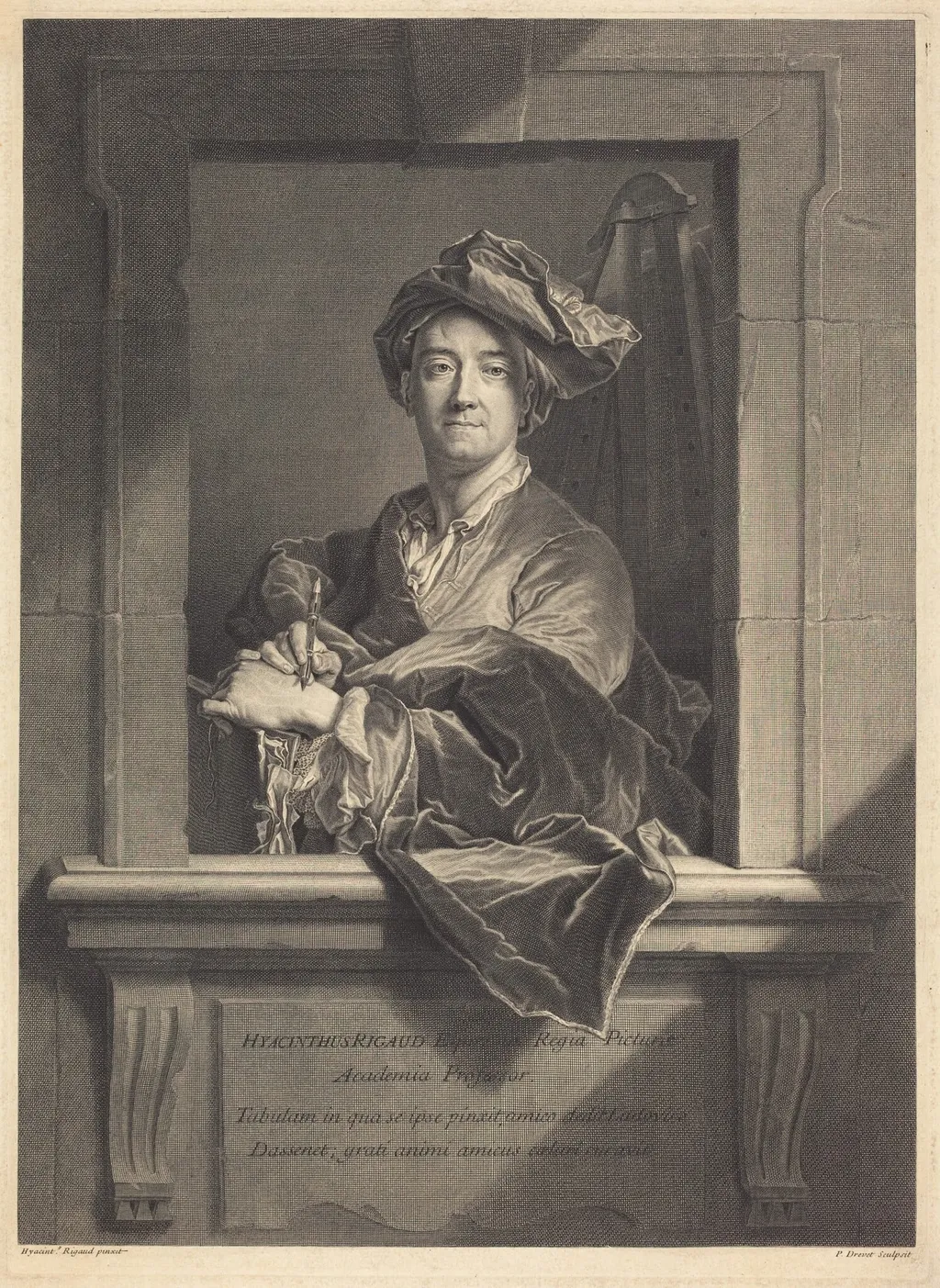
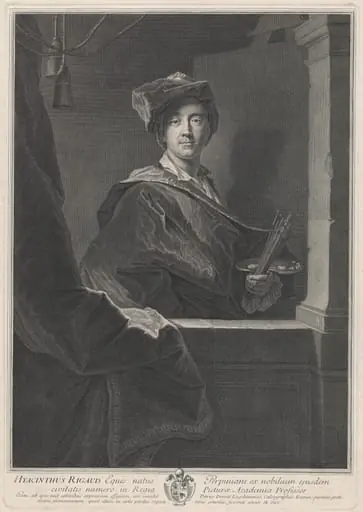
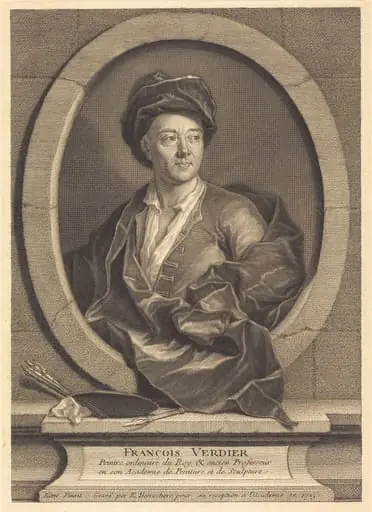
Hyacinthe Rigaud is an ink print by the Baroque artist Pierre Drevet. It dates from 1714 and is held in the collection of the National Gallery of Art.
About this work
Overview
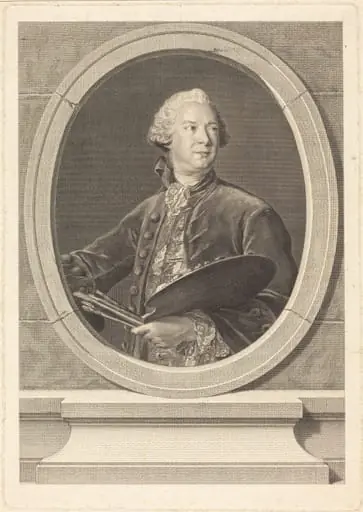
This 1714 engraving, executed on laid paper, presents a portrait of Hyacinthe Rigaud, the celebrated French painter noted for his sumptuous depictions of aristocratic sitters. The image is rendered in the precise, reproductive manner typical of early‑18th‑century French printmaking, allowing the likeness to circulate beyond the original painted portrait.
Subject & Meaning
Rigaud is shown in a velvet robe and hat, his posture relaxed as he leans against a stone‑framed ledge. A quill pen rests in his hand, a visual cue that emphasizes his identity as an artist and underscores the intellectual labor behind his celebrated portraiture.
Technique & Style
Pierre Drevet, a foremost portrait engraver of his era, employed fine line work and careful shading to convey the texture of velvet and the sheen of metal. The engraving’s smooth tonal transitions reflect the Baroque preference for dramatic yet controlled representation, while the laid‑paper substrate adds a subtle tactile quality.
History & Provenance
Created within the prolific Drevet family workshop, the print forms part of a broader tradition of reproducing notable figures for a cultured audience. Drevet’s reputation, built alongside his son and nephew, ensured wide distribution of the image, contributing to Rigaud’s public profile in the early 1700s.
Context
The work belongs to a period when French portrait engraving served both documentary and decorative functions, often accompanying printed biographies or serving as collectibles for connoisseurs. Its Baroque aesthetic aligns with the prevailing taste for grandeur and refined detail in courtly visual culture.
Artist & collection
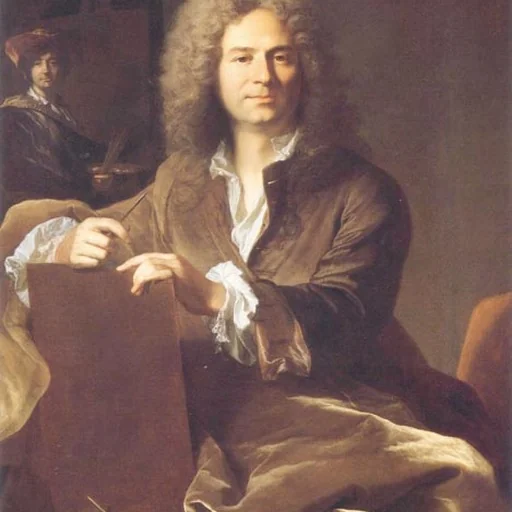
Artist
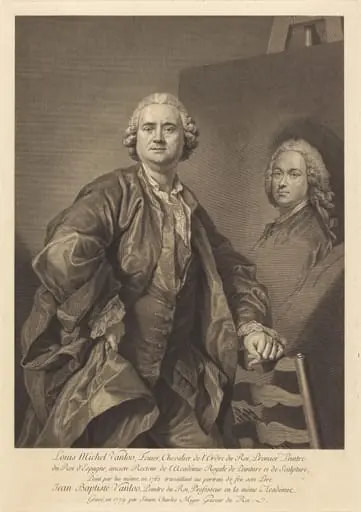
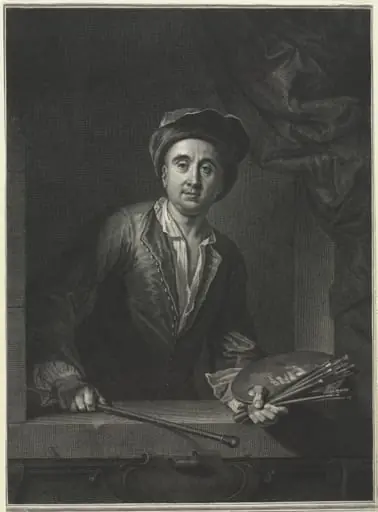
The Drevet Family were leading portrait engravers of France for over a hundred years. Their fame began with Pierre, and was sustained by his son, Pierre-Imbert, and by his nephew, Claude.