Artwork
Johannes van den Popeliere
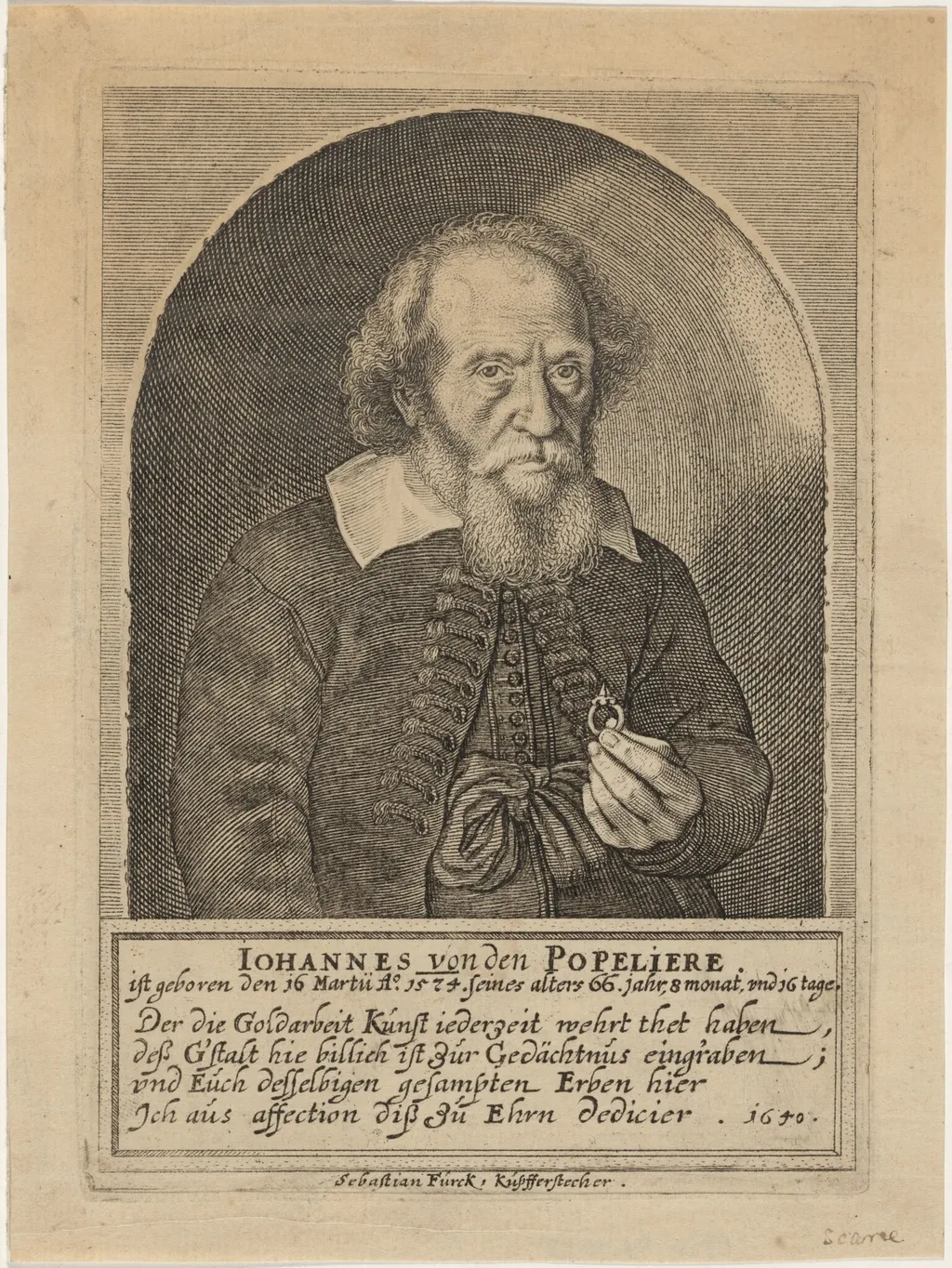
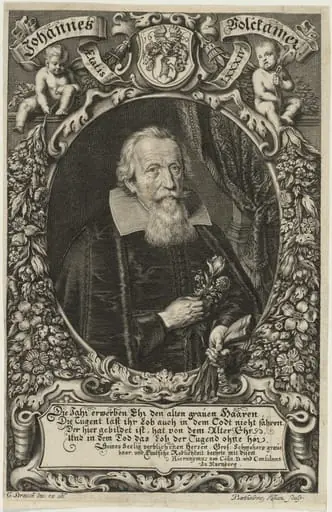
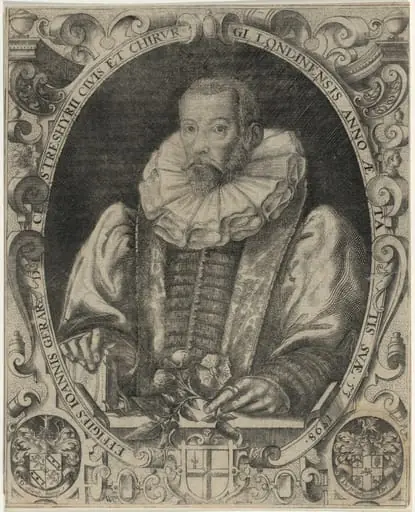
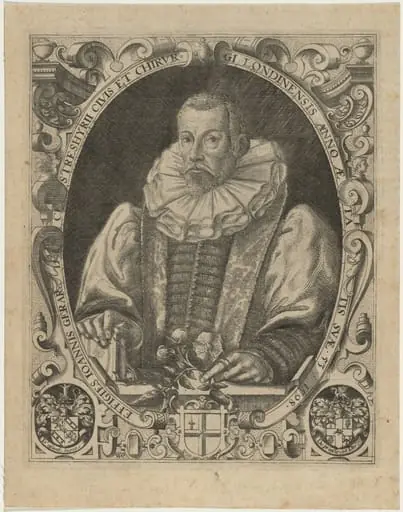
Johannes van den Popeliere is an ink print by the Baroque artist Sebastian Furck. It dates from 1628 and is held in the collection of the National Gallery of Art.
About this work
Overview
Sebastian Furck’s 1628 engraving presents a monochrome portrait of an elderly gentleman, distinguished by a long white beard and curled hair. He is dressed in a dark, textured robe with a prominent high collar and holds a diminutive object in his right hand. The figure is set against an unadorned background, his expression solemn, marked by pronounced lines around the eyes and mouth.
Subject & Meaning
The sitter, identified by the inscription as Johannes von den Popeliere, is depicted at an advanced age, suggesting a commemoration of his life or status. The inclusion of a small handheld item may allude to a personal attribute, profession, or scholarly pursuit, while the austere setting emphasizes the individual’s character over any narrative backdrop.
Technique & Style
Executed entirely with line work, the engraving demonstrates Furrow’s skill in rendering texture and volume through hatching and cross‑hatching. The contrast between the dark robe and the lighter facial features relies on fine incisions, a hallmark of early 17th‑century printmaking that allowed for detailed, reproducible images without the use of color.
History & Provenance
Created in 1628, the print bears both the sitter’s name and age, as well as Furck’s signature, indicating it was likely intended as a formal portrait for personal or familial circulation. Its survival in collections suggests it was valued as a documentary image of Popeliere, though specific ownership records beyond the original dedication are not documented.
Context
Furck worked within the German engraving tradition, where portrait prints served both commemorative and informational purposes. The plain background and focus on facial realism reflect contemporary preferences for direct, unembellished representation of notable individuals, aligning the work with other early modern portraiture intended for private remembrance.
Artist & collection