Artwork
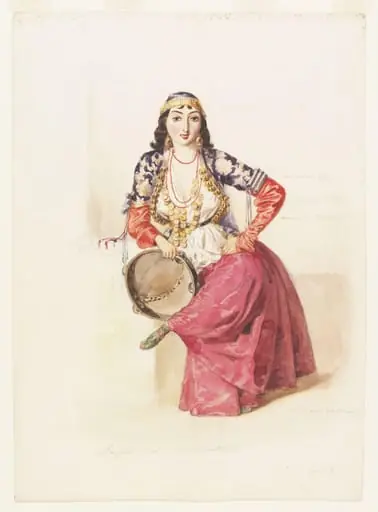
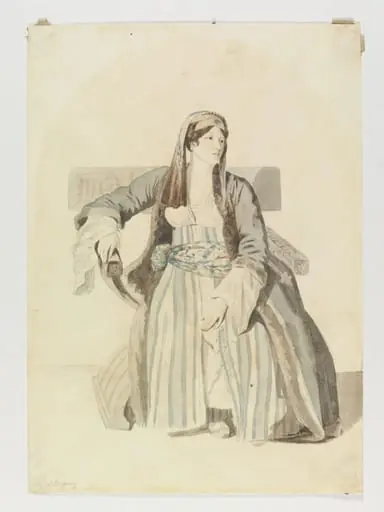
Dame Arménienne dErivan
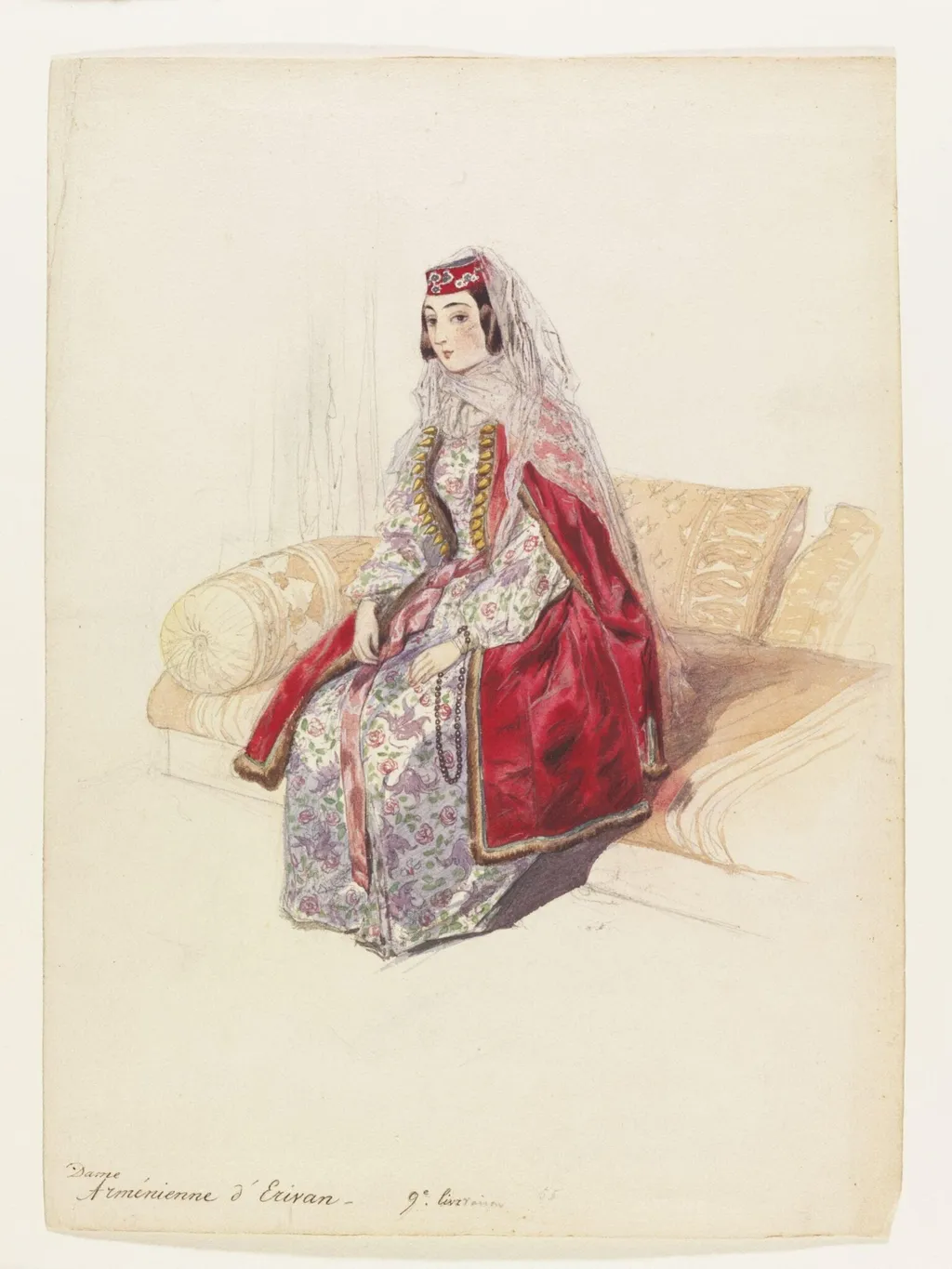
Dame Arménienne dErivan is a watercolor work on paper by the Romanticist artist Grigoriy Grigorievich Gagarin. It dates from 1842 and is held in the collection of the Victoria and Albert Museum.
About this work
Overview
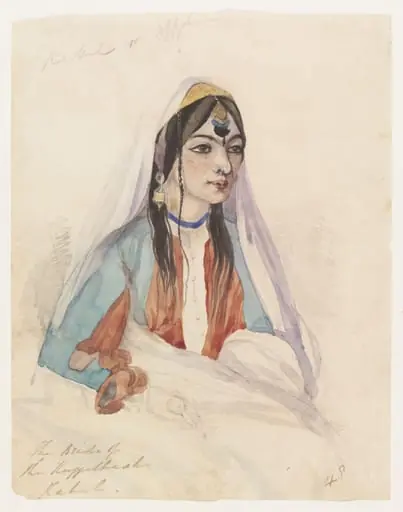
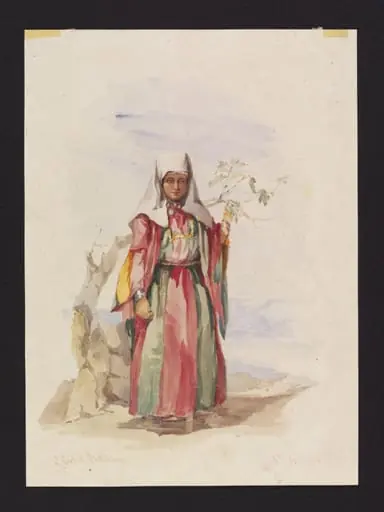
The work is a watercolour executed in 1842 by Prince Grigoriy Grigorievich Gagarin, titled *Dame Arménienne d’Erivan*. It portrays a seated woman in an elaborate costume, rendered with delicate washes and a restrained background. The image was originally published as plate 45 in the eighth livraison of Gagarin’s illustrated volume *Scènes, paysages, moeurs et costumes du Caucase*.
Subject & Meaning
The figure is a woman from the Armenian community of Erivan, depicted in a long, floral‑patterned dress with a red cape, a white veil, and a decorative headband. She holds a rosary, suggesting personal piety, while the opulent gold trim and tassels on her attire emphasize status and cultural identity within the region’s diverse social fabric.
Technique & Style
Gagarin employs the transparent qualities of watercolour to model the folds of the dress and the soft sheen of the gold embellishments. The composition is simple, with a plain backdrop that isolates the sitter, a characteristic of Romantic portraiture that foregrounds emotion and individuality over elaborate setting.
History & Provenance
After its inclusion in the 1842 publication, the watercolour entered the art market and was recorded as sold at Sotheby’s “Islamic” auction on 19 April 1978, according to auction specialist Rodney Searight. The sale indicates the work’s continued relevance to collectors of Caucasian and Islamic art.
Context
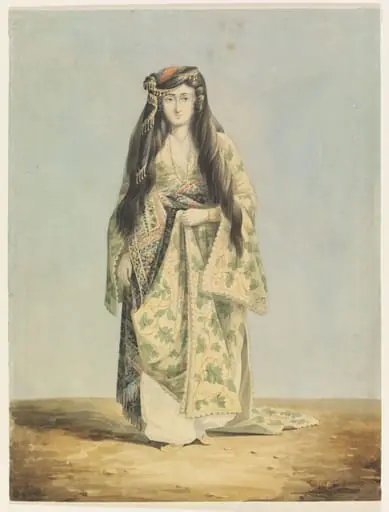
Created during the height of Romanticism, the drawing reflects the period’s fascination with exotic locales and ethnic costumes. Gagarin’s broader project documented the peoples and landscapes of the Caucasus, aligning with contemporary European interests in travel, ethnography, and the visual representation of peripheral cultures.
Artist & collection
Artist
This Russian prince-turned-diplomat sketched the Caucasus like a tourist with a sharp eye.