Artwork
Georgien (Kakhétie.)
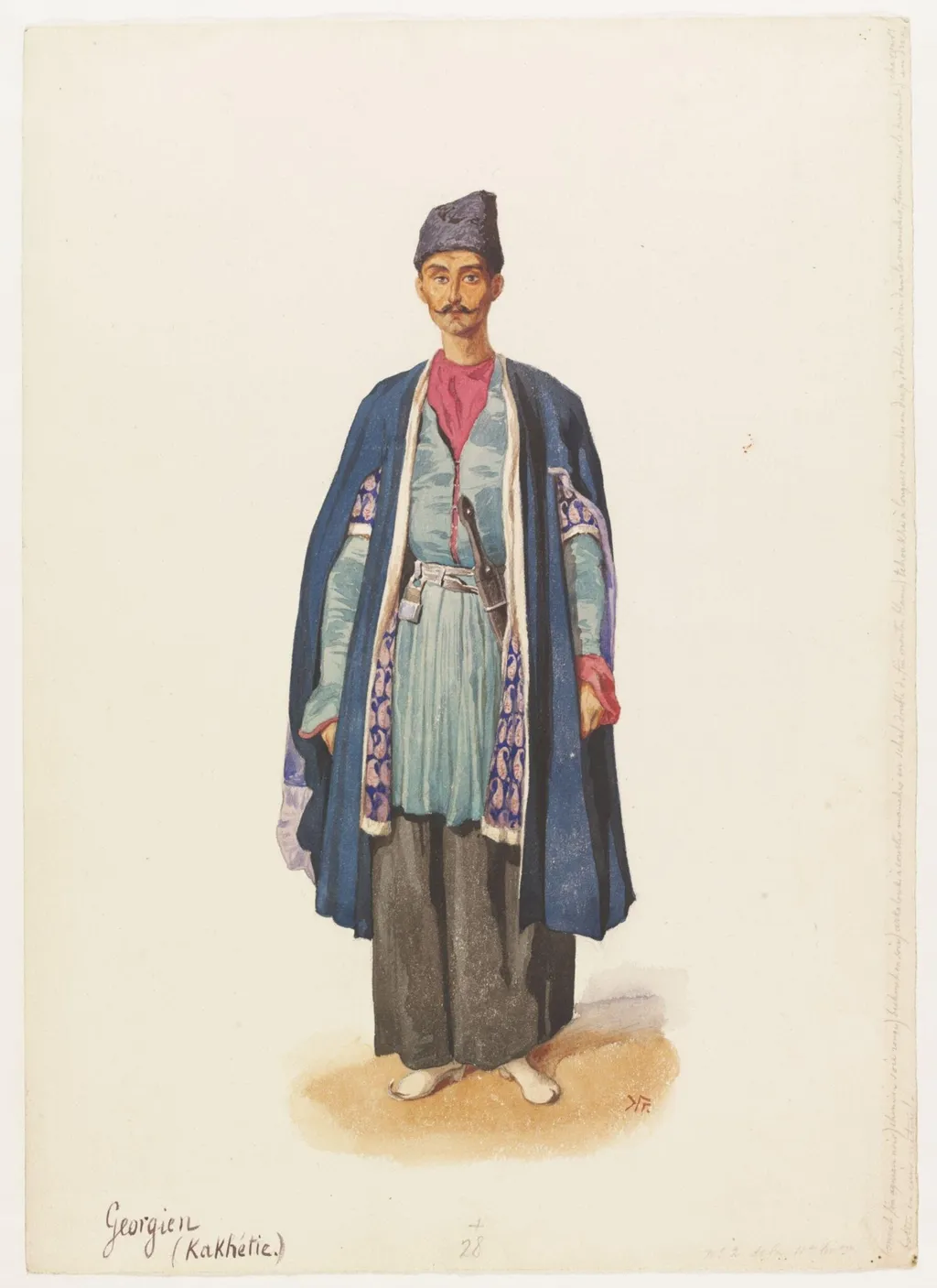
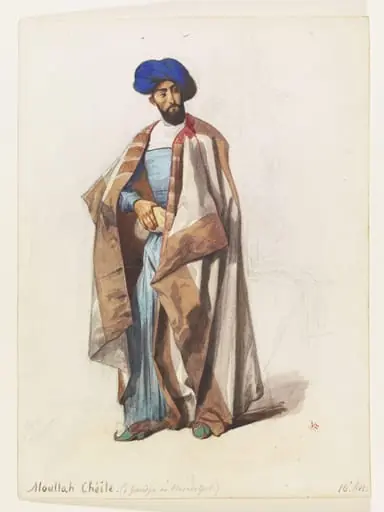
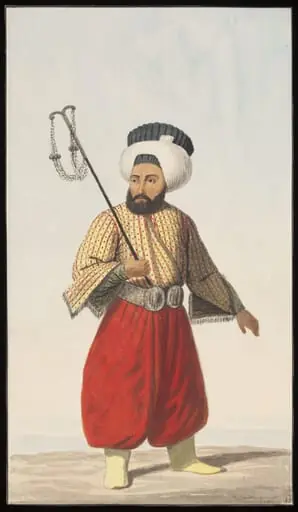
Georgien (Kakhétie.) is a watercolor work on paper by the Romanticist artist Grigoriy Grigorievich Gagarin. It dates from 1842 and is held in the collection of the Victoria and Albert Museum. This watercolour portrait depicts a man from Kakhétie, a region in the Caucasus, created by Prince Gagarin around 1842.
About this work
This watercolor portrait shows a man from Kakhétie, a rugged region in the Caucasus. Prince Gagarin painted it around 1842, capturing local dress in bright detail.
His travels weren’t just sightseeing—they fed a book called Scenes, paysages, moeurs et costumes du Caucase. The museum calls this one “superbly” accurate.
Want to see more of Gagarin’s work? Look up the Victoria and Albert Museum.
Overview
This watercolour portrait depicts a man from Kakhétie, a region in the Caucasus, created by Prince Gagarin around 1842. The work showcases the artist's attention to detail in capturing local dress.
Subject & Meaning
The subject is a representation of the people of Kakhétie, highlighting their traditional attire. Gagarin's accurate observation of the colourful costumes is evident in the work.
Technique & Style
Gagarin's use of watercolour allows for a vivid representation of the subject's clothing and surroundings. The level of detail achieved in the portrait demonstrates the artist's skill.
History & Provenance
Gagarin travelled to the Caucasus in the 1840s, later publishing his studies in lithograph form. The portrait was likely one of these studies, later included in his publication 'Scenes, paysages, moeurs et costumes du Caucase'.
Context
Gagarin's artistic training in Italy and diplomatic missions influenced his work. He became a respected figure in St Petersburg's artistic establishment, serving as Vice-President of the Academy of Fine Arts from 1859 to 1879.
Artist & collection
Artist
This Russian prince-turned-diplomat sketched the Caucasus like a tourist with a sharp eye.

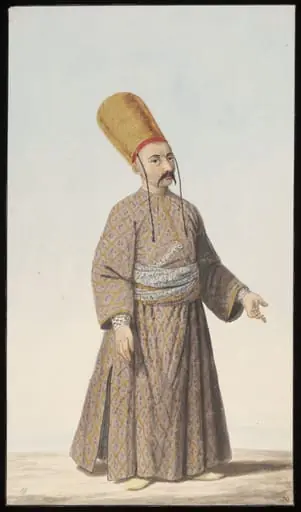 Zülüflü Baltaci, or Page of the first rank to the Sultan
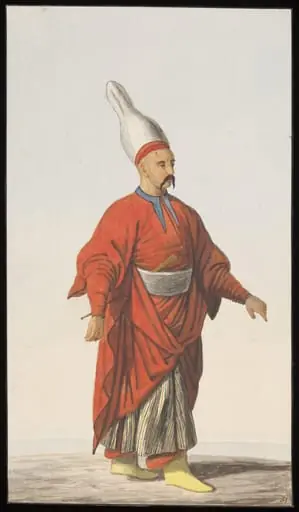 Kozbekçisi, or Steward of the Sultan's Wardrobe
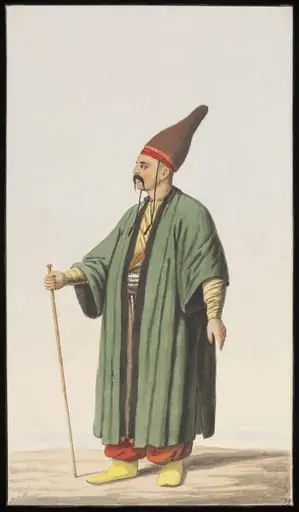 Zülüflü Baltaci, or Page to the Sultan
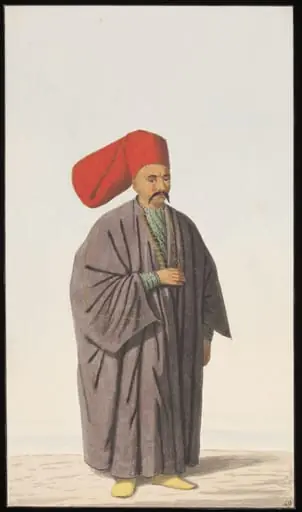 Bostancibasi, or member of the Imperial Guard
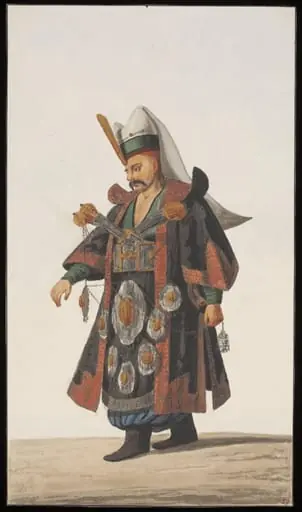 Ascibasi, or Commander of the Janisseries in ceremonial dress
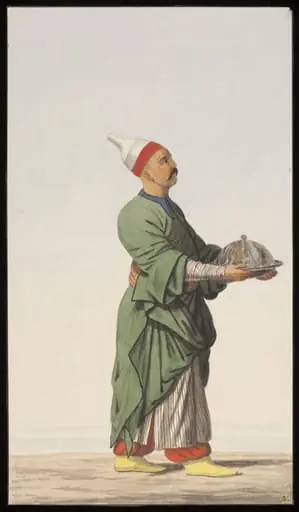 Saray Ekmekcisi, or Palace confectioner
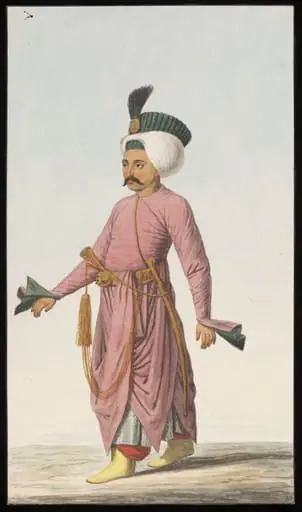 Çuhada aga, or footman
 Çavusbasi or Chief Usher