Artwork
Bayadère de Chemakha
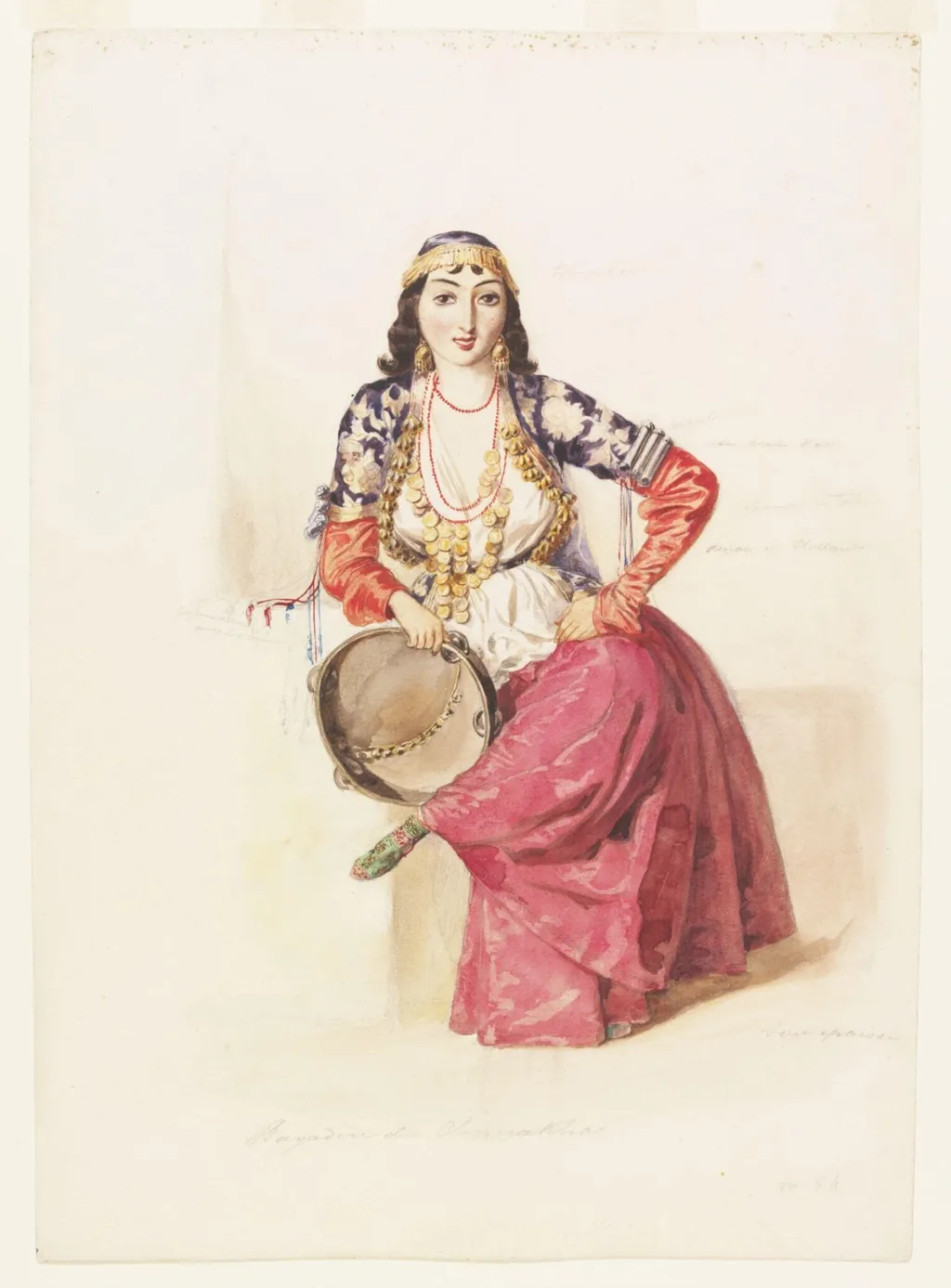
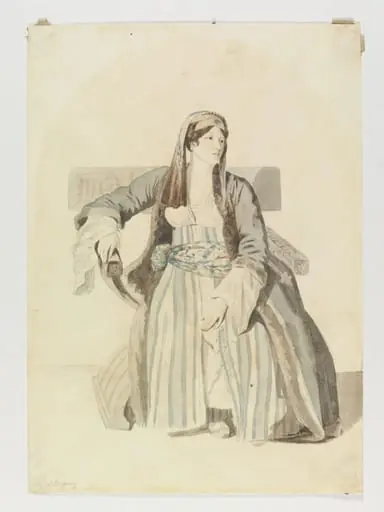
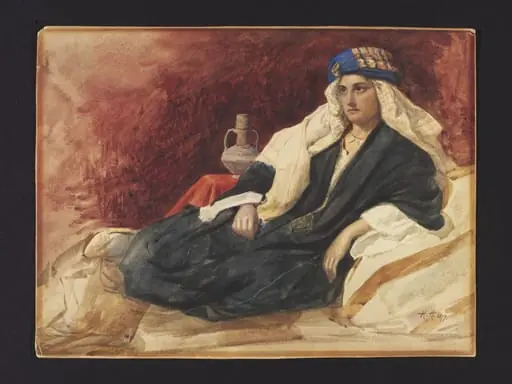
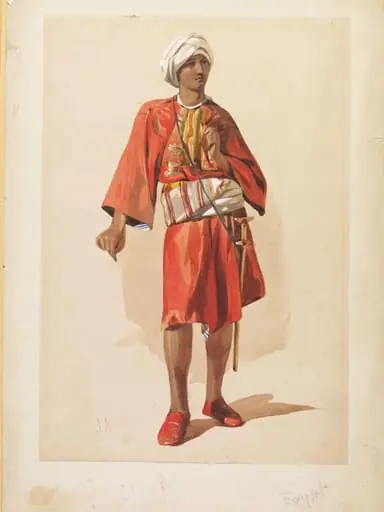
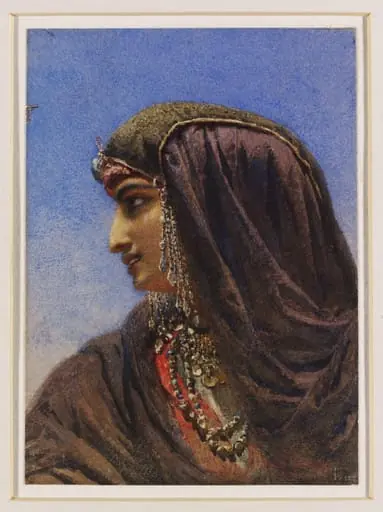
Bayadère de Chemakha is a watercolor work on paper by the Romanticist artist Grigoriy Grigorievich Gagarin. It dates from 1842 and is held in the collection of the Victoria and Albert Museum. Painted around 1842, this watercolour by Prince Gagarin captures a dancer from Shemakha, a town in what is now Azerbaijan.
About this work
Gagarin’s work helps us see a part of the world most artists rarely visited back then.
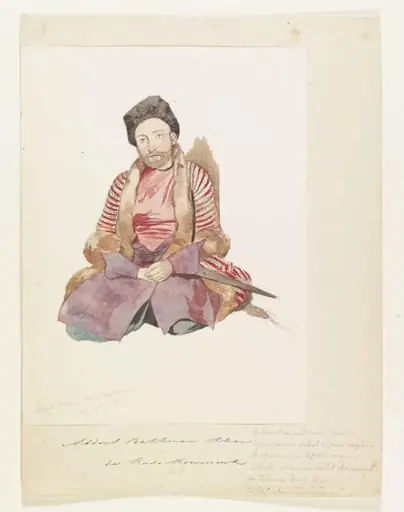
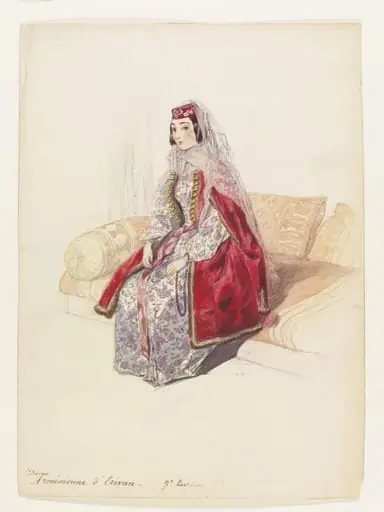
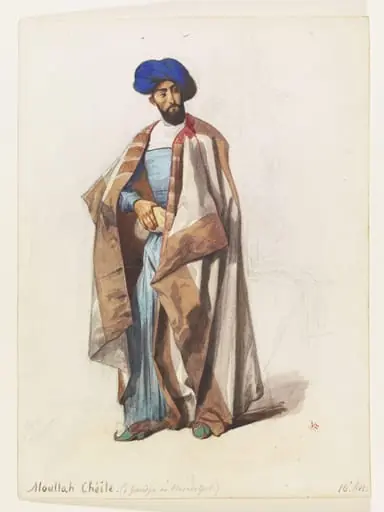
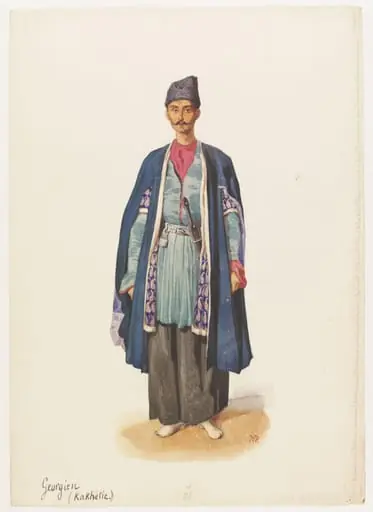
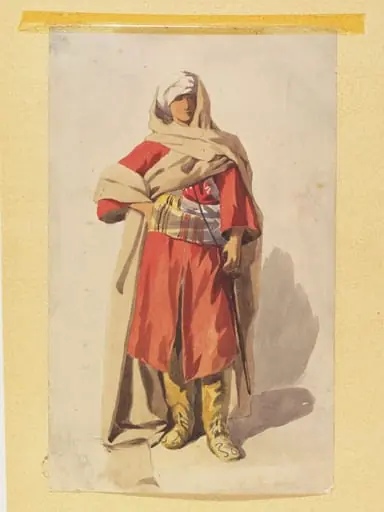
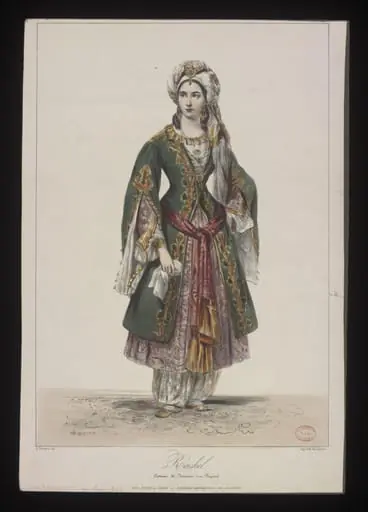
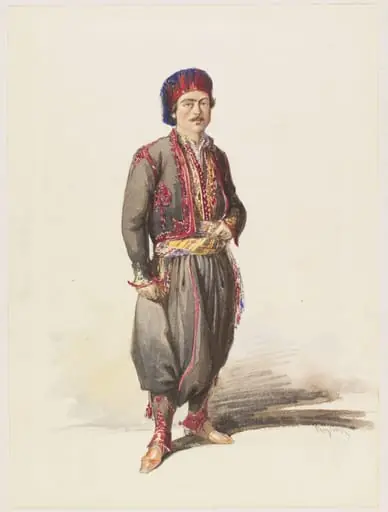
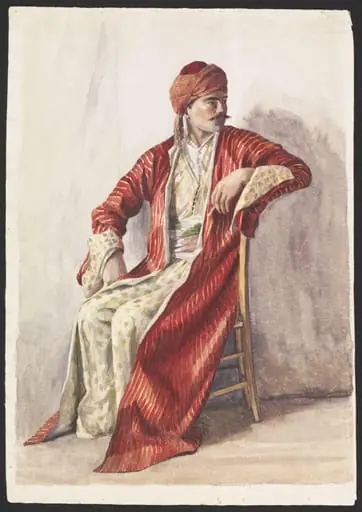
This is a watercolour by Prince Gagarin from around 1842. It shows people in traditional costumes from Azerbaijan and Georgia. The artist traveled there and made careful notes about what he saw.
Gagarin’s work helps us see a part of the world most artists rarely visited back then. His detailed drawings were meant to go in a book, but this one wasn’t used.
Next, look up the movement called Romanticism.
Overview
Painted around 1842, this watercolour by Prince Gagarin captures a dancer from Shemakha, a town in what is now Azerbaijan. Created during his travels in the Caucasus, the work reflects his ethnographic interest in regional dress and movement. Though part of a broader project to document the region, this piece was excluded from his published lithographic volumes, making it a rare, unfiltered record of his observations.
Subject & Meaning
The figure is identified as a bayadère, a term borrowed from South Asian contexts and popularized in European theatre, notably by the 1830 Parisian opera-ballet Le dieu et la bayadère. Gagarin applies it here to a local performer, blending exoticizing European conventions with firsthand observation. The drawing emphasizes grace and costume detail, aligning with 19th-century fascination with Eastern performance traditions, though grounded in actual cultural practice rather than pure fantasy.
Technique & Style
Executed in watercolour with precise ink annotations, the work combines artistic rendering with documentary precision. Gagarin notes fabric textures, dye sources, and ornamentation, treating the image as both aesthetic and ethnographic. The composition is intimate and focused, echoing the format of popular music-sheet covers of the era, yet avoids theatrical exaggeration, retaining a restrained, observational tone.
History & Provenance
Gagarin, son of the Russian ambassador to Rome, traveled extensively in the Caucasus during the 1840s as part of diplomatic missions. He compiled hundreds of drawings intended for publication in two French-language volumes, Le Caucase pittoresque and Scènes, paysages, moeurs et costumes du Caucase. This watercolour, though meticulously annotated, was not included in either, suggesting selective editorial choices or shifting priorities in his publishing project.
Context
The Caucasus, then under expanding Russian control, remained largely uncharted by Western artists. Gagarin’s work stands among the earliest visual records of Azerbaijani and Georgian dress and dance from this period. His approach reflects Romantic-era curiosity about distant cultures, yet his method—detailed, annotated, and non-idealized—distinguishes his output from more fantastical Orientalist depictions common in Parisian art.
Legacy
Though not widely circulated in his lifetime, Gagarin’s Caucasus drawings, including this one, provide rare visual evidence of pre-Soviet regional life. His annotations offer insight into material culture now altered or lost. While his published lithographs gained more attention, unpublished works like this reveal the depth of his fieldwork and the complexity of cross-cultural representation in 19th-century European art.
Artist & collection
Artist
This Russian prince-turned-diplomat sketched the Caucasus like a tourist with a sharp eye.