Artwork
Oedipus (Oedipe)
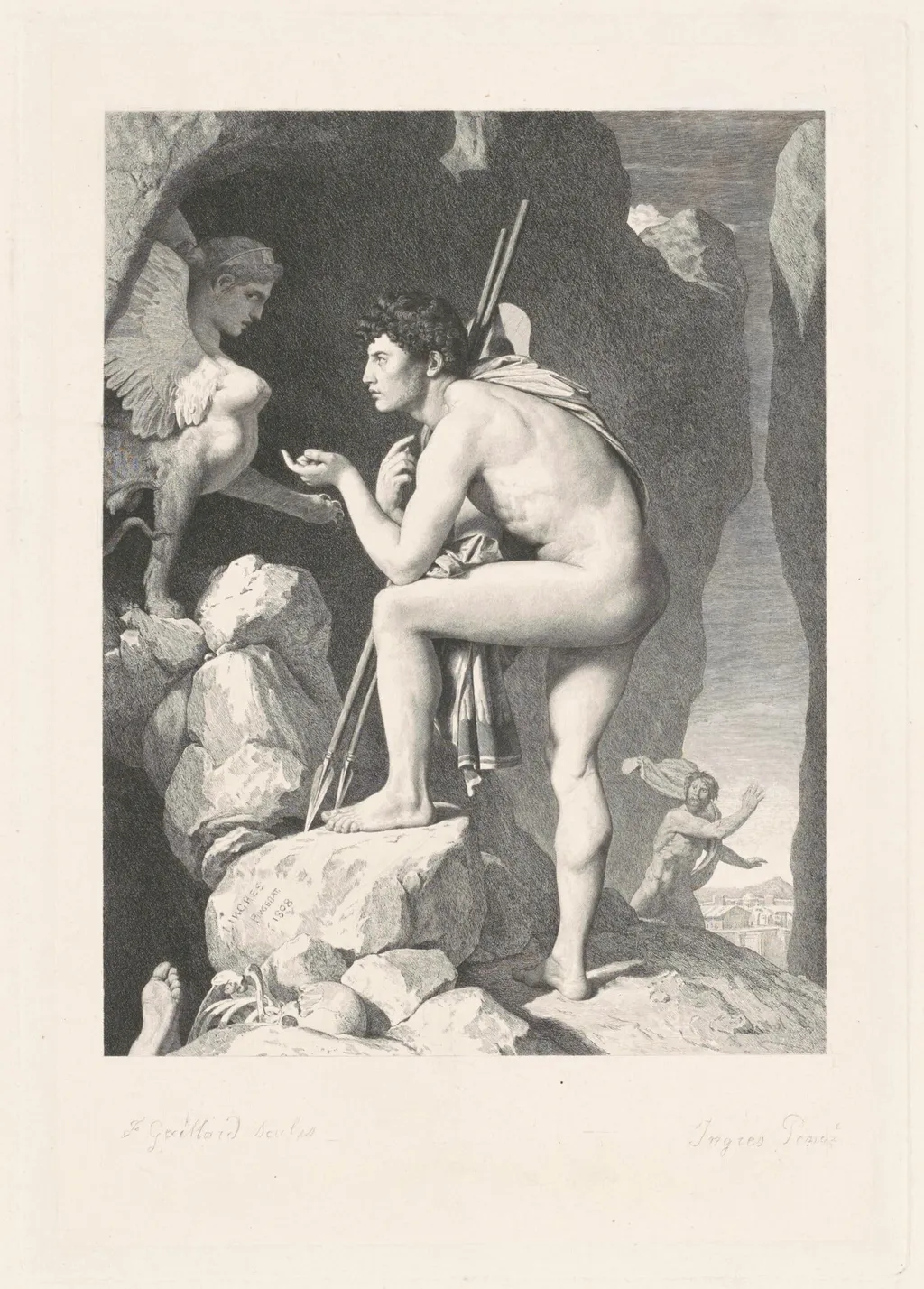
Oedipus (Oedipe) is an ink print by the Impressionist artist Ferdinand Gaillard. It dates from 1876 and is held in the collection of the National Gallery of Art.
About this work
Overview
Ferdinand Gaillard created this 1876 engraving on chine collé, a technique that bonds thin paper to a heavier support for finer detail.
Ferdinand Gaillard created this 1876 engraving on chine collé, a technique that bonds thin paper to a heavier support for finer detail. The work depicts a moment from the myth of Oedipus, rendered in monochrome with precise linear control. The composition centers on a solitary figure amid a rugged, shadowed landscape, emphasizing isolation and tension through contrast between human form and natural terrain.
Subject & Meaning
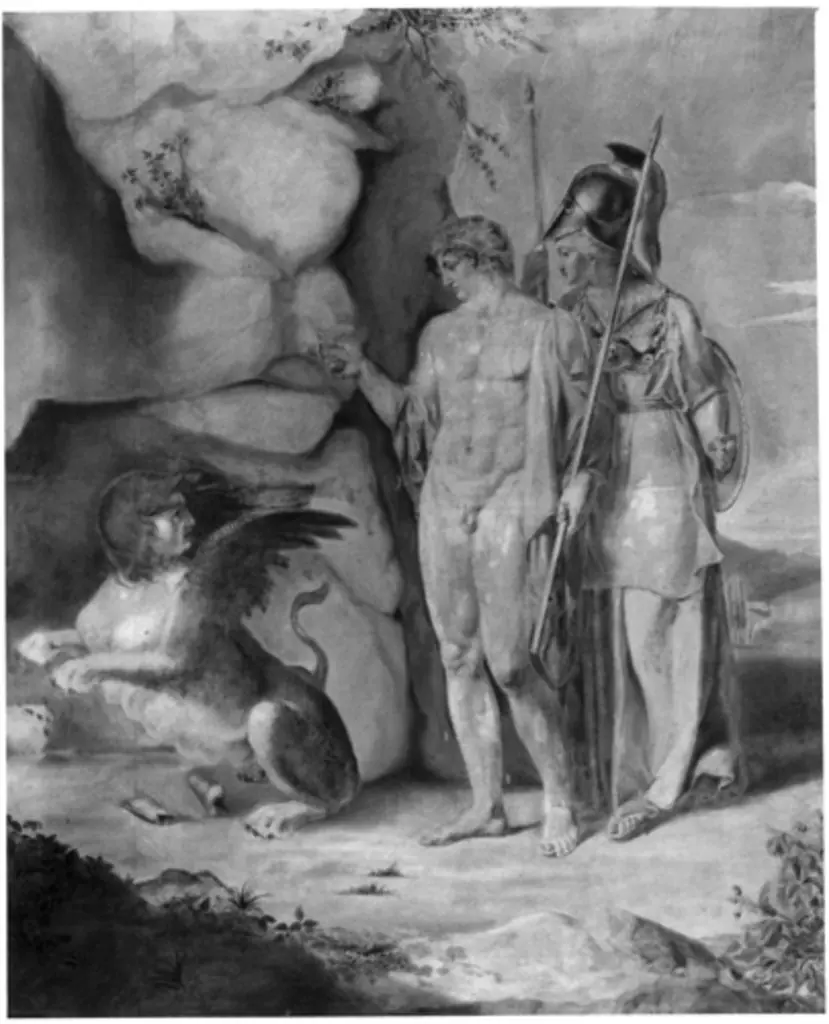
The figure is Oedipus, exiled and blind, seated on barren rocks after fulfilling his tragic fate. Behind him, a winged creature—likely the Sphinx or a symbolic spirit—looms over the cliff, observing or awaiting his next move. The scene captures a pause in his journey, not a moment of action, suggesting contemplation, guilt, or resignation. The absence of narrative clarity invites interpretation rather than literal storytelling.
Technique & Style
Gaillard employed engraving to carve fine lines into a metal plate, then printed the image onto delicate chine collé paper to preserve detail. The texture of the rocks and the sharpness of the spear are achieved through controlled hatching and cross-hatching. Shadows are built with dense, parallel strokes, while the figure’s bare torso remains relatively uncluttered, drawing focus to his posture and emotional stillness.
History & Provenance
Created in 1876, the print emerged during a period of renewed interest in classical themes among French artists. Gaillard, known for his illustrative work, produced this as part of a broader engagement with mythological subjects. No documented early ownership is recorded, but the work likely circulated among collectors of prints and literary-inspired art in late 19th-century France.
Context
In the decades following the Franco-Prussian War, French artists often turned to ancient myths to explore themes of fate, suffering, and isolation. Gaillard’s Oedipus reflects this trend, aligning with the Symbolist movement’s preference for psychological depth over historical accuracy. The engraving’s somber tone and minimalism distinguish it from more theatrical interpretations of the myth common in academic painting.
Legacy
Though not widely exhibited, Gaillard’s Oedipus remains a quiet example of how engraving could convey mythic gravity through restraint. Its emphasis on mood over spectacle influenced later printmakers interested in psychological realism. The work survives in institutional collections as a testament to the enduring appeal of classical narratives in late 19th-century graphic art.
Artist & collection