Artwork
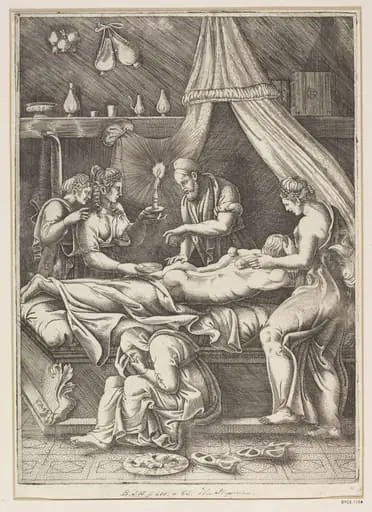
Death of Seneca
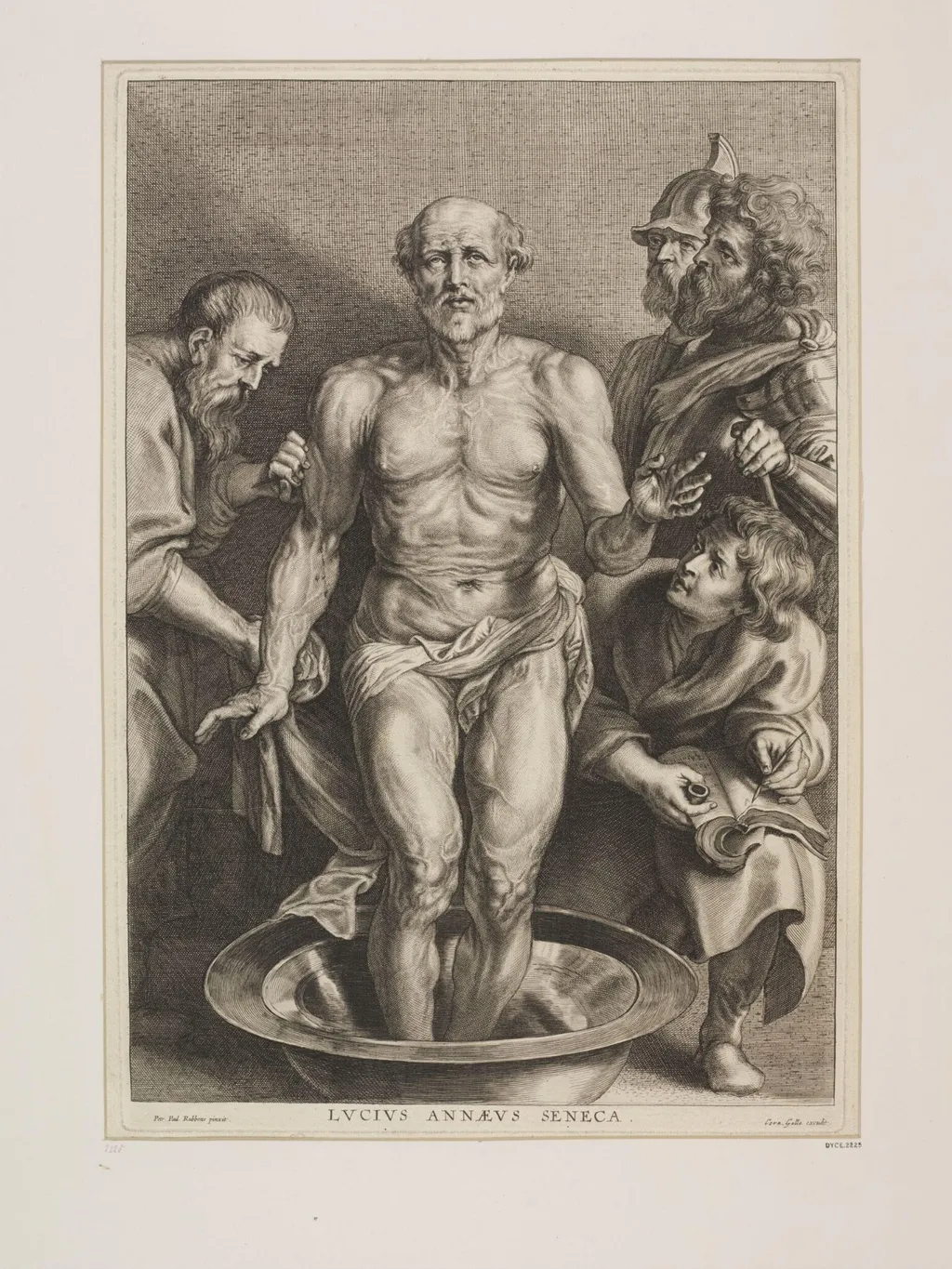
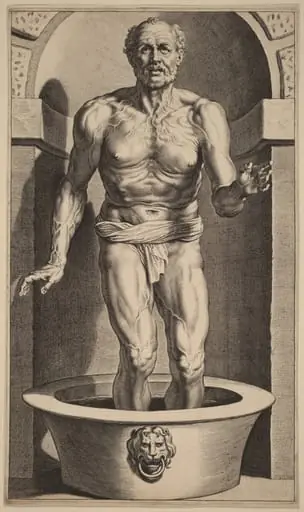
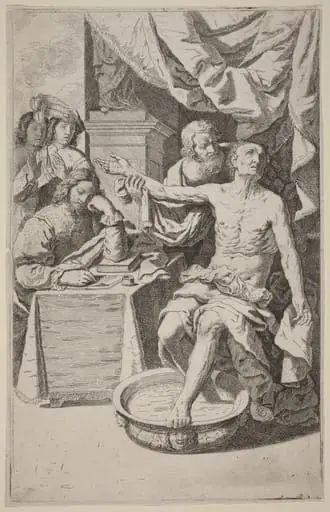
Death of Seneca is a print by Cornelius Galle. It dates from 1650 and is held in the collection of the Victoria and Albert Museum.
About this work
Overview
The scene is tightly framed, focusing on the philosopher’s deliberate act of self-end, surrounded by attendants in a dimly lit chamber.
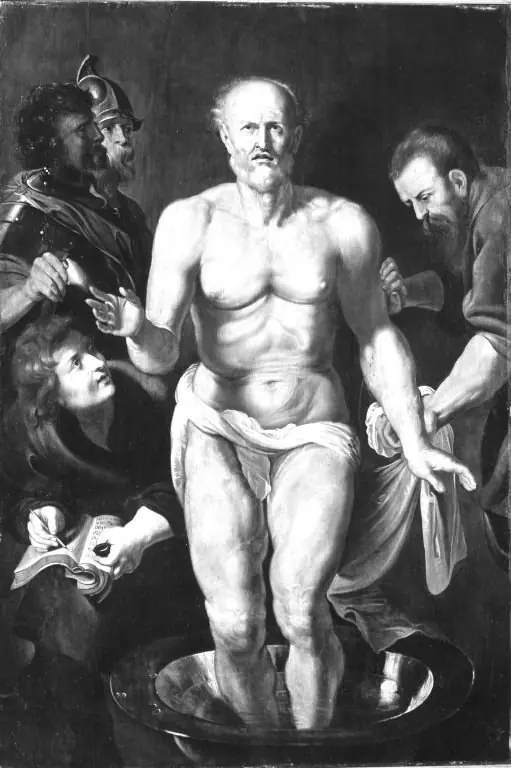
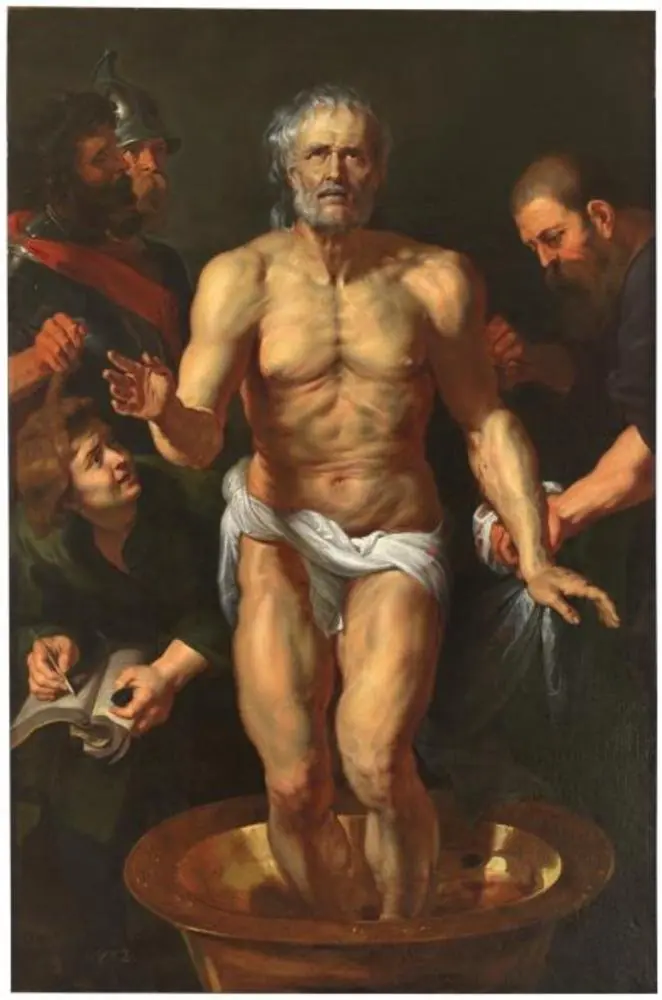
This engraving by Cornelius Galle I captures the final moments of Seneca’s life, rendered in ink on paper. Based on a composition by Peter Paul Rubens, it was originally conceived as the title page for a publication on philosophy. The scene is tightly framed, focusing on the philosopher’s deliberate act of self-end, surrounded by attendants in a dimly lit chamber. The medium’s precision amplifies the emotional gravity of the moment.
Subject & Meaning
The print illustrates Seneca’s forced suicide in 65 CE, ordered by Emperor Nero. Depicted in a bath, he bleeds slowly from incisions in his arms and legs, adhering to Roman custom. Figures around him—some anxious, others stoic—reflect the tension between duty and sorrow. The inclusion of a child and a helmeted guard suggests familial and military dimensions to his death, framing it as both personal sacrifice and political statement.
Technique & Style
Galle employed fine, controlled lines to render anatomy and fabric with clinical clarity. Deep chiaroscuro dominates the composition, with light carving through shadows to highlight Seneca’s tensed muscles and the faces of onlookers. The contrast intensifies the drama without melodrama, emphasizing restraint over spectacle. The texture of skin, stone, and fabric is rendered with meticulous attention, typical of Northern European engraving traditions.
History & Provenance
The print was produced as part of a series illustrating philosophical figures, commissioned for a 17th-century publication. Rubens provided the original design, drawing from classical sculpture and historical accounts. Galle, a prolific engraver in Antwerp, translated the composition into print, ensuring its dissemination among scholars and collectors. Its survival in multiple institutional collections attests to its early scholarly reception.
Context
In the early 1600s, Seneca’s stoic philosophy was revived among humanists as a model of moral fortitude. His death, often cited as an act of rational self-determination, resonated in an era of religious conflict and political repression. This print, though not overtly political, aligned with broader intellectual currents that valorized philosophical integrity over submission to tyranny.
Legacy
The engraving became a reference point for later depictions of Seneca, influencing both artistic and literary portrayals of stoic death. Its restrained intensity contrasted with more theatrical interpretations, offering a model of dignity in crisis. Though not widely known today, it remains a significant example of how classical narratives were reinterpreted through early modern print culture.
Artist & collection
Artist
Cornelius Galle made a career out of turning dramatic moments into chiseled, inked lines.