Artwork
Thermarum reliquiae
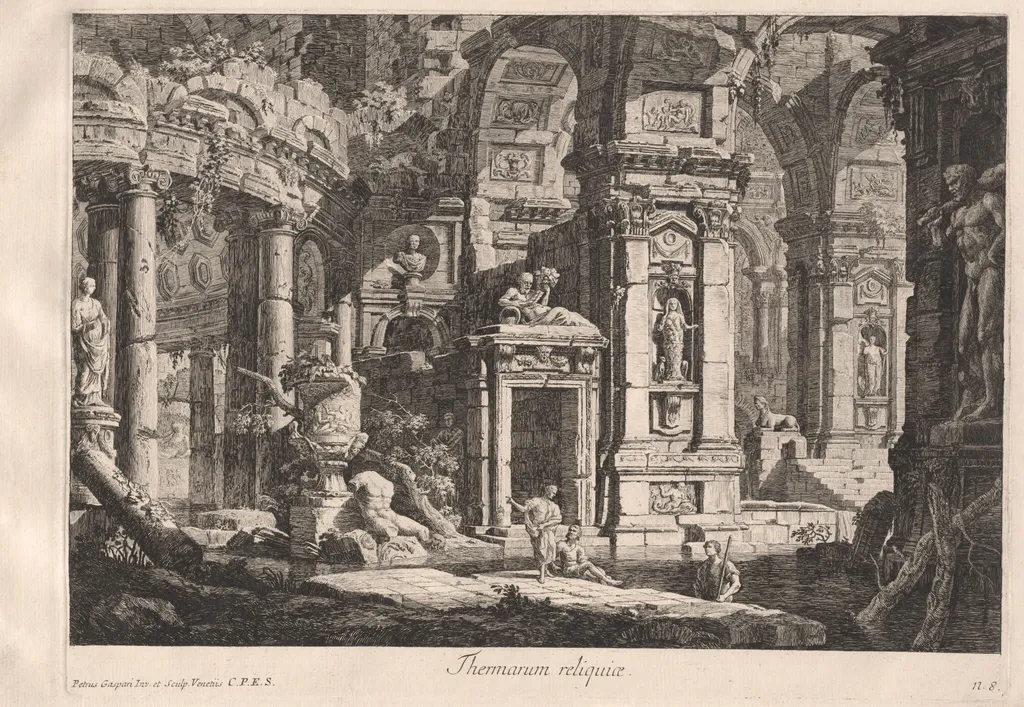
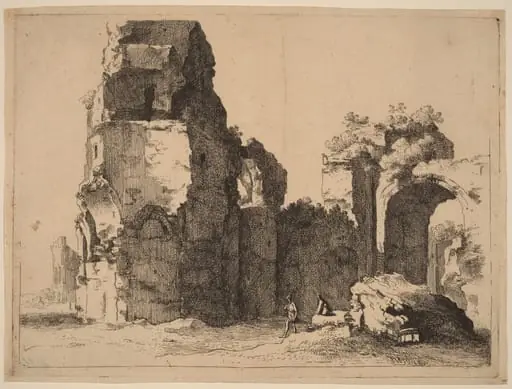
Thermarum reliquiae is an ink print by the Romanticist artist Pietro Gaspari. It dates from 1771 and is held in the collection of the National Gallery of Art.
About this work
This etching shows a crumbling Roman bathhouse with arched walls and shadowy spaces.
This etching shows a crumbling Roman bathhouse with arched walls and shadowy spaces. The artist carved fine lines to capture light and texture in the old stones. You can almost feel the weight of centuries in the worn surfaces.
Gaspari made this in 1771, when artists often copied ancient ruins for travelers. He used etching—a way to draw on metal plates with acid—to get sharp details. The print feels quiet but full of history.
Want to see more old prints? Look up Gaspari, Pietro.
Overview
Thermarum reliquiae is a print produced in 1771 by the Italian artist Pietro Gaspari. Executed on laid paper, the work combines etching and engraving to render a scene of a deteriorating Roman bath complex. The composition emphasizes the fragmented architecture, inviting contemplation of the passage of time and the remnants of antiquity.
Subject & Meaning
The image depicts the ruins of a Roman thermae, with collapsed arches and shadowed interiors that suggest both grandeur and decay. By focusing on the weathered stonework, Gaspari highlights the enduring materiality of the ancient structure while also evoking the silent history embedded in its crumbling walls.
Technique & Style
Gaspari employed a dual process: etching to draw fine, atmospheric lines and engraving to sharpen edges and enhance contrast. The use of laid paper, with its characteristic ribbed texture, adds subtle tonal variation. The interplay of delicate hatching and bold incisions creates a nuanced rendering of light across the stone surfaces.
Context
In the late eighteenth century, European artists frequently produced prints of classical ruins to satisfy the curiosity of travelers on the Grand Tour. Such images served both as souvenirs and as educational material, illustrating the architectural legacy of antiquity for an audience eager to engage with the past through visual means.
History & Provenance
The print bears Gaspari’s signature and the date 1771, confirming its creation during his active period in Venice. It has been catalogued among his series of architectural views, which were disseminated through print dealers catering to collectors and scholars interested in Roman antiquities.
Artist & collection


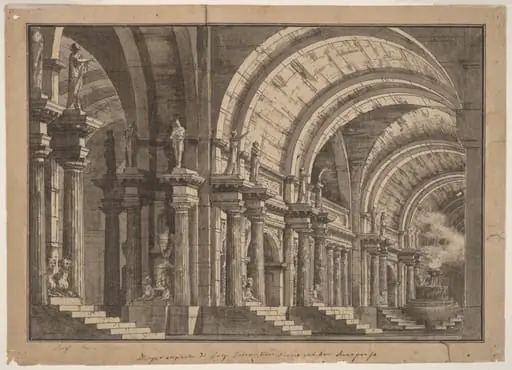 A Monumental Vaulted Hall with a Smoking Altar
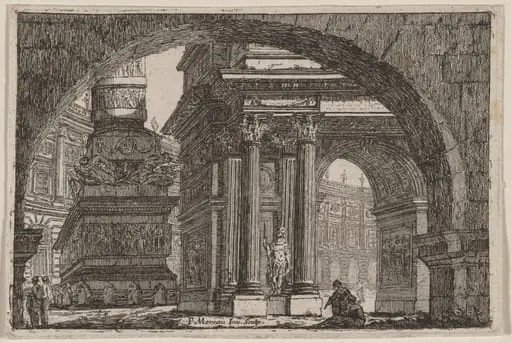 Ancient Forum Seen Beneath an Arch
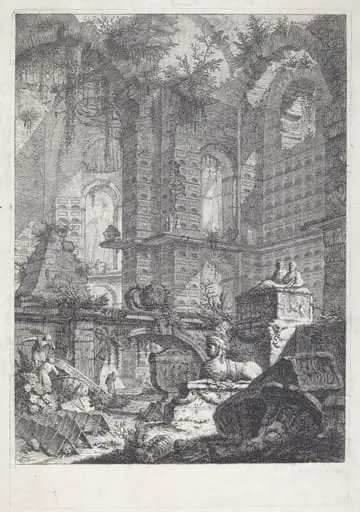 Camera sepolcrale
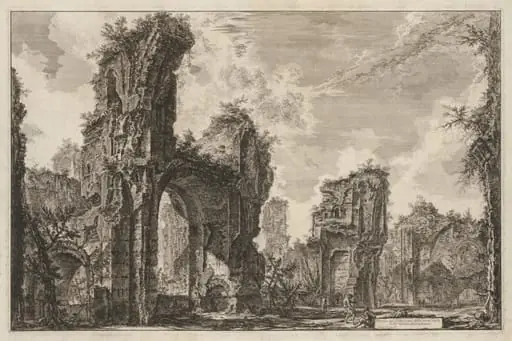 Views of Rome: Rovine del Sisto o sia della gran sala delle Terme Antoniniane
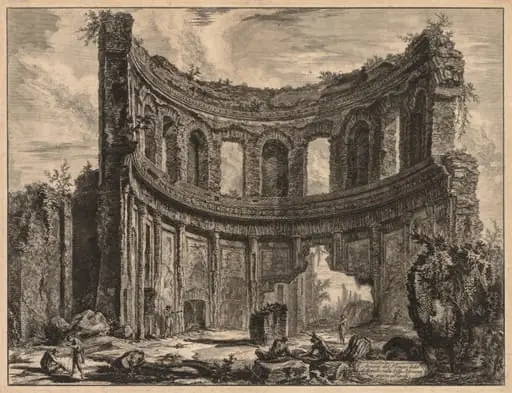 Views of Rome: Remains of the Temple of Apollo near Hadrian's Villa
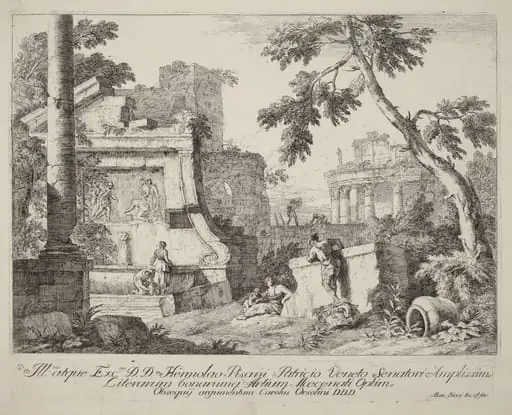 Landscape with Ruins
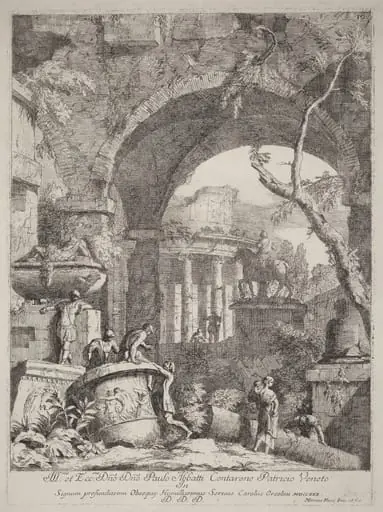 Capriccio: Ruins
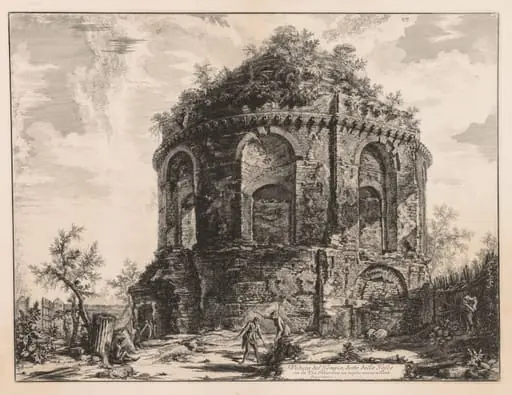 Views of Rome: The So-called Tempio della Tosse, near Tivoli
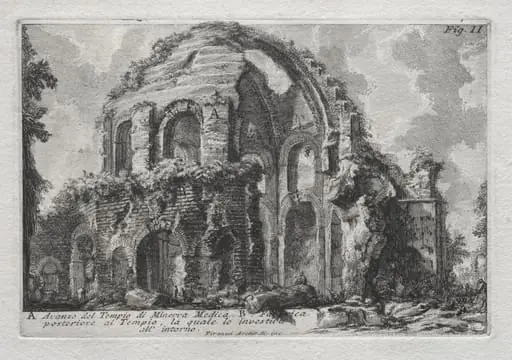 Avanzo del Tempio di Minerva Medica
 Ruins
Ruins