Artwork
Camera sepolcrale
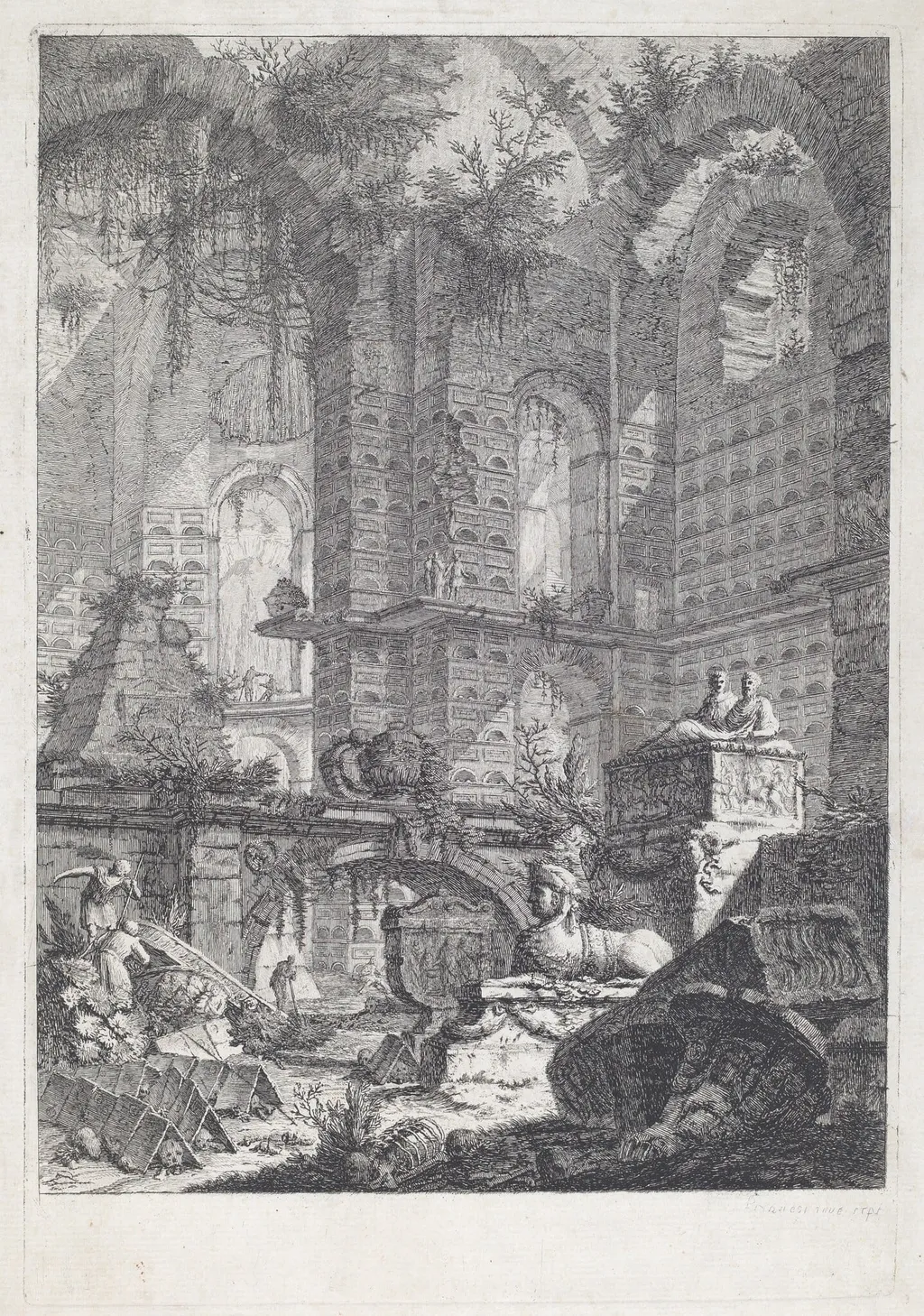
Camera sepolcrale is an ink print by the Baroque artist Giovanni Battista Piranesi. It dates from 1742 and is held in the collection of the National Gallery of Art.
About this work
Overview
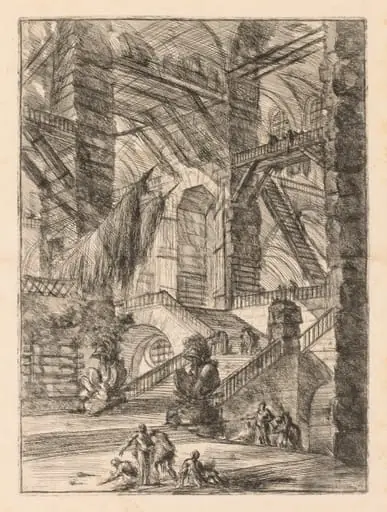
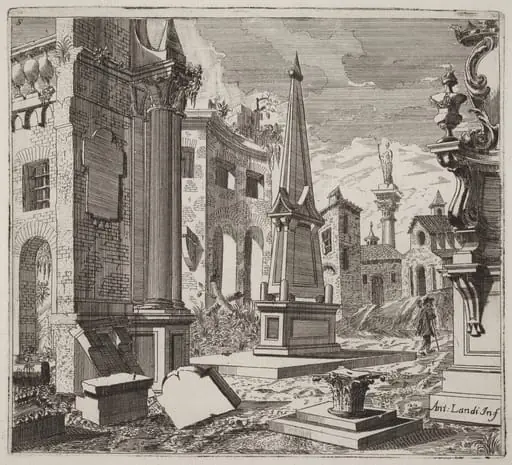
Camera sepolcrale is a black‑and‑white etching produced in 1742 by Giovanni Battista Piranesi, the Italian antiquarian whose work documented Roman antiquity and imagined architectural spaces. The print depicts a dilapidated courtyard dominated by crumbling walls, a massive broken staircase, and scattered figures in period dress, creating a scene that feels both historic and dreamlike.
Subject & Meaning
The composition presents a desolate, half‑collapsed interior where arches and decorative reliefs cling to deteriorating masonry. Small statues and lone trees emerge from the debris, while passersby climb the ruined steps or rest on ledges, suggesting a lingering human presence amid decay. The image evokes the passage of time and the fragile endurance of monumental architecture.
Technique & Style
Executed with the etching process, Piranesi incised fine lines into a copper plate, then used acid to bite the design, allowing for intricate detailing of stone texture and shadow. His mastery of chiaroscuro through cross‑hatching imparts a heavy, atmospheric quality, emphasizing depth and the oppressive weight of the ruin.
History & Provenance
Created during the later phase of Piranesi’s career, the work reflects his ongoing fascination with Roman ruins and his penchant for architectural fantasy. While the original plate’s ownership history is not extensively recorded, prints of Camera sepolcrale have circulated among collectors of 18th‑century prints and appear in several museum collections dedicated to Piranesi’s oeuvre.
Artist & collection

Artist
Giovanni Battista (or Giambattista) Piranesi (Italian pronunciation: ; also known as simply Piranesi; 4 October 1720 – 9 November 1778) was an Italian classical archaeologist, architect, and artist, famous for his…

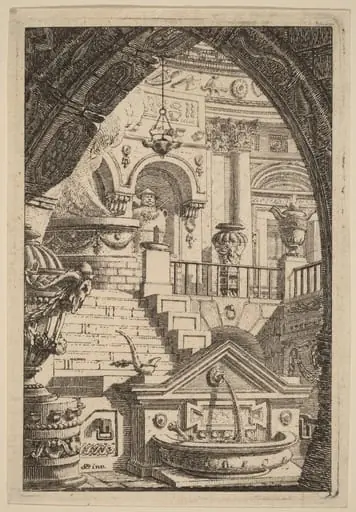 Fantasy of an Antique Temple
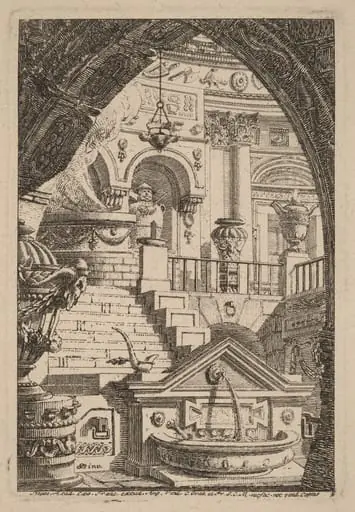 Fantasy of an Antique Temple
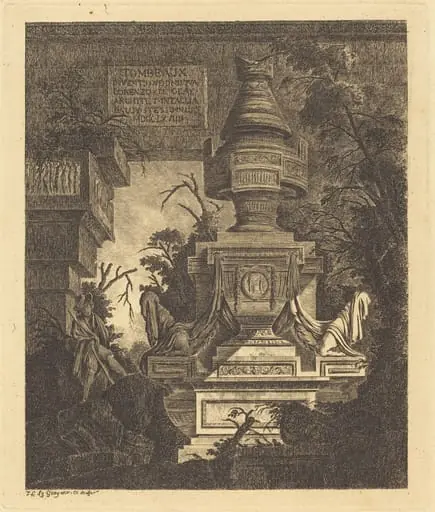 Frontispiece for "Views of Tombs"
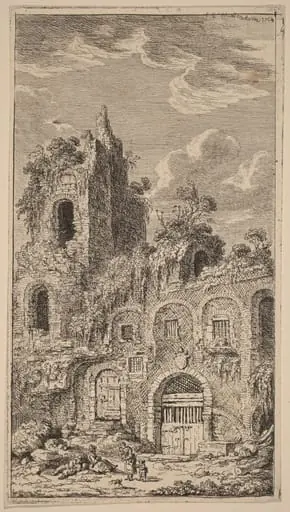 Fragment of the Old City Wall at San Giovanni Laterano
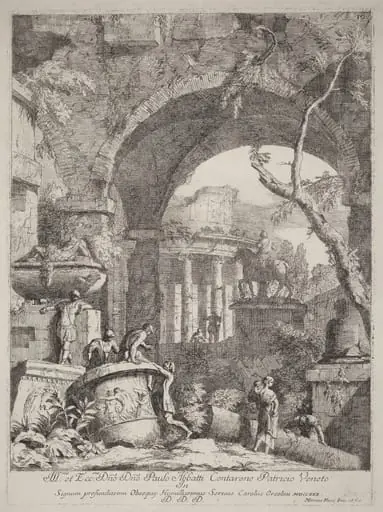 Capriccio: Ruins
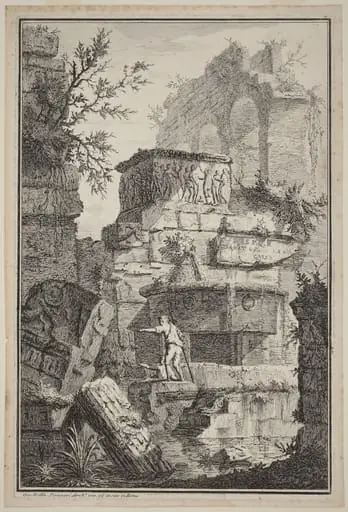 Rovine d' antichi Edifizj
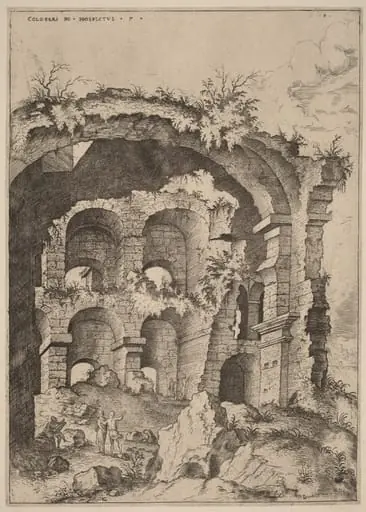 Seventh View of the Colosseum
 The Prisons: A Vast Interior with Trophies
 The Statue in Front of Ruins
 The Old Palace at Tivoli
 Fifth View of the Colosseum
 Fantastic Townscape with Ruins