Artwork
Christ at the Feast of Tabernacles
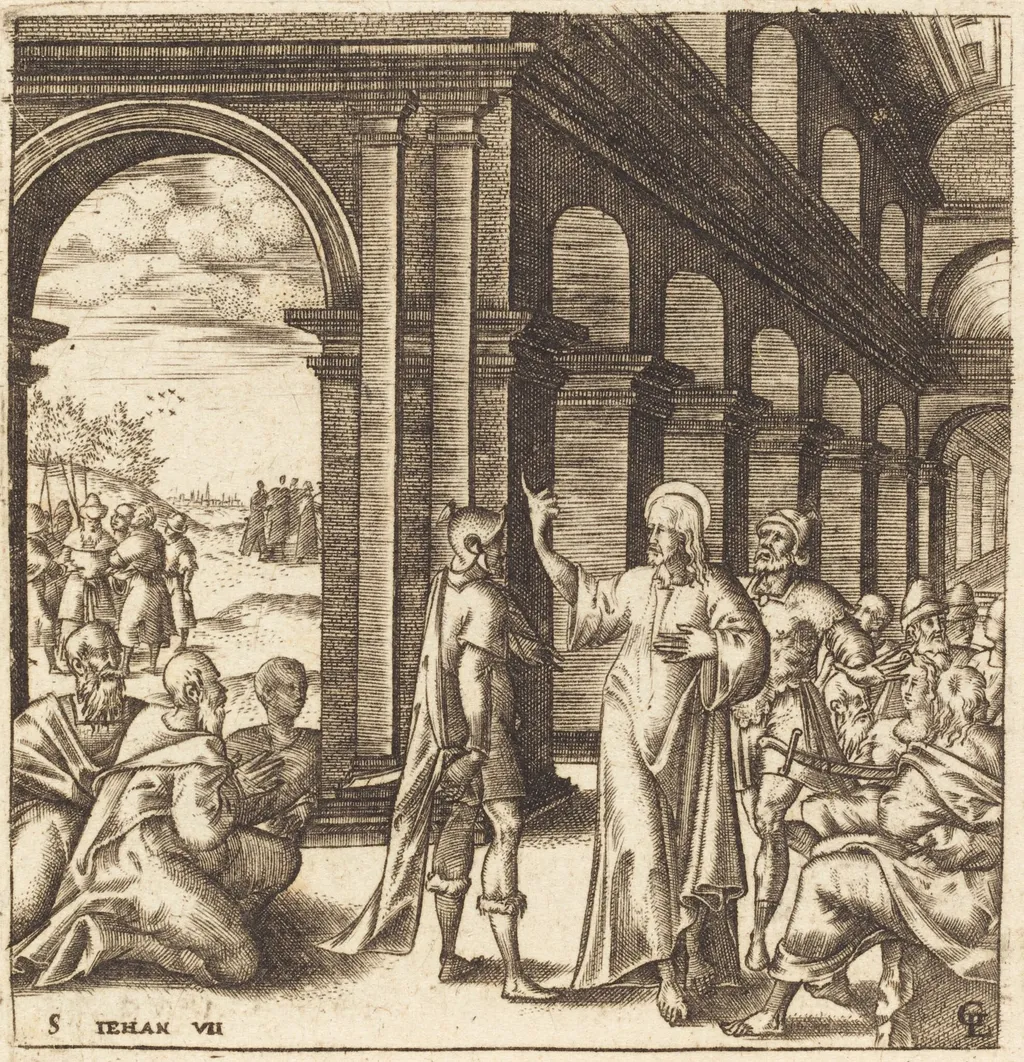
Christ at the Feast of Tabernacles is an ink print by the Renaissance artist Léonard Gaultier. It dates from 1578 and is held in the collection of the National Gallery of Art.
About this work
Overview
Léonard Gaultier, a French engraver born in Mainz around 1561 and active in Paris until 1641, produced this religious print around 1578.
Léonard Gaultier, a French engraver born in Mainz around 1561 and active in Paris until 1641, produced this religious print around 1578. Executed entirely with a burin, the work reflects his disciplined approach to line and form. Though influenced by contemporaries like the Wierix and Crispyn van de Passe, Gaultier often based his engravings on original compositions rather than reproducing others’ paintings.
Subject & Meaning
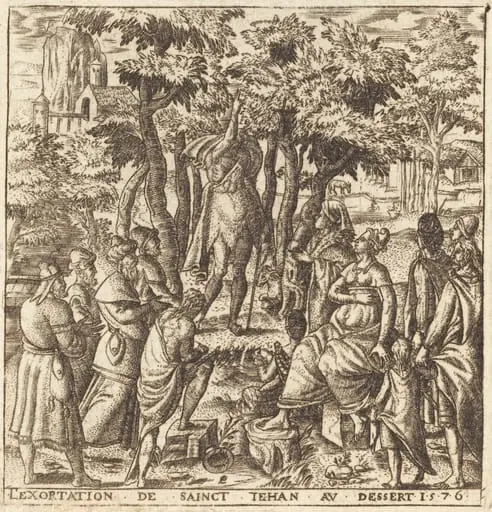
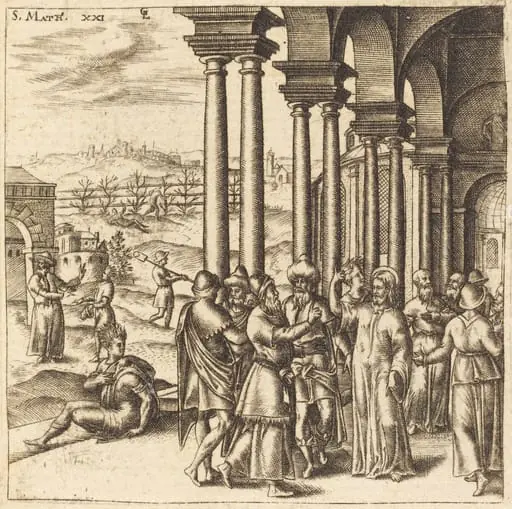
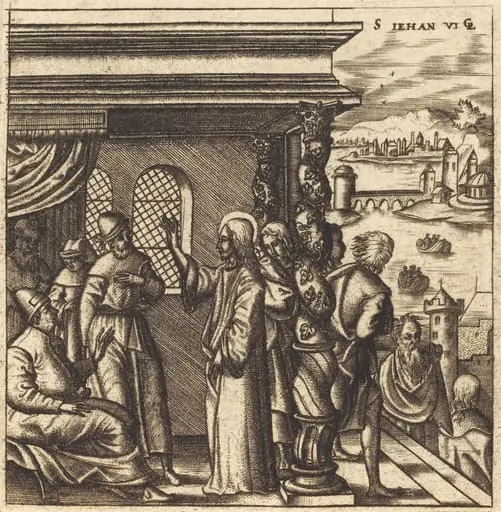
The scene depicts Christ during the Feast of Tabernacles, a Jewish pilgrimage festival. He stands centrally, haloed and with arm raised, drawing attention as a figure of authority. Surrounding figures respond in varied ways—some gaze upward in contemplation, others converse or turn away, suggesting differing levels of recognition or skepticism. A kneeling man in the foreground, hands clasped, embodies devotion, while a standing figure behind him gestures as if interpreting or pointing.
Technique & Style
Gaultier rendered the scene using fine, controlled engraving lines, with dense cross-hatching to model volume and texture. Architectural elements—arches, columns, and distant landscape—are rendered with precision, creating spatial depth despite the flatness of the medium. Figures are detailed in their drapery and posture, their expressions subtly conveyed through line rather than facial rendering, characteristic of Northern Mannerist printmaking.
History & Provenance
The print was made early in Gaultier’s career, likely during his formative years in Paris. No known original drawings survive, suggesting he worked directly from imagination or sketches lost to time. The engraving circulated among collectors and religious patrons in France and the Low Countries, valued for its devotional clarity and technical refinement rather than novelty.
Context
Produced during the late 16th century, the print reflects the Catholic Church’s emphasis on visual biblical narratives amid the Reformation. The Feast of Tabernacles, though less commonly depicted than other Gospel scenes, was used to underscore Christ’s fulfillment of Jewish tradition. Gaultier’s work aligns with a broader trend of prints serving both spiritual instruction and private devotion in a literate, urban audience.
Legacy
Gaultier’s engravings, including this one, contributed to the dissemination of religious imagery in early modern Europe. While not widely celebrated in his lifetime, his technical precision influenced later engravers in France. Few of his works survive in large numbers, and this print remains a quiet example of his consistent, understated contribution to the printmaking tradition.
Artist & collection
Artist
Léonard Gaultier, or, as he sometimes signed himself, Galter, a French engraver, was born at Mainz about 1561, and died in Paris in 1641.

 Christ Teaching the Multitude
 Ecce Homo
 Christ Teaching in the Synagogue
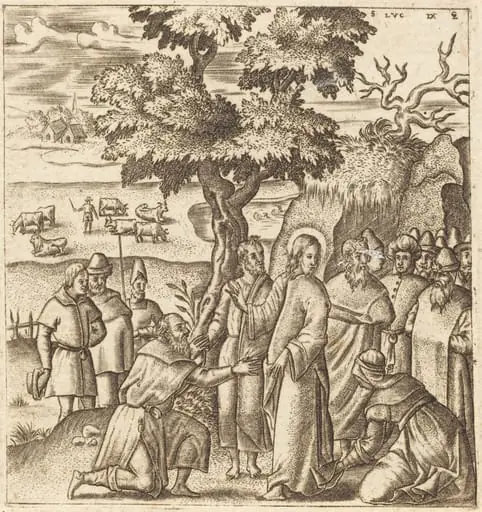 Christ Heals a Sick Woman
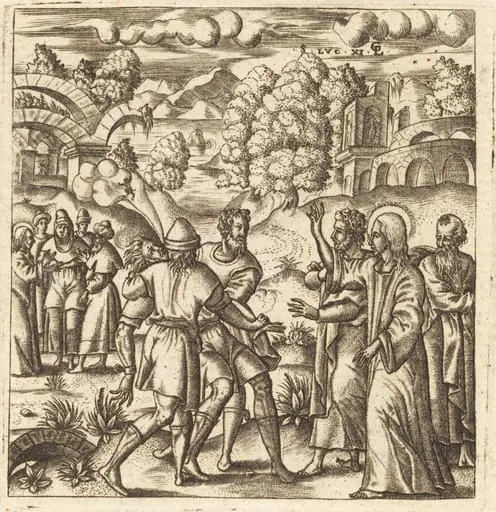 Christ Heals a Dumb Man
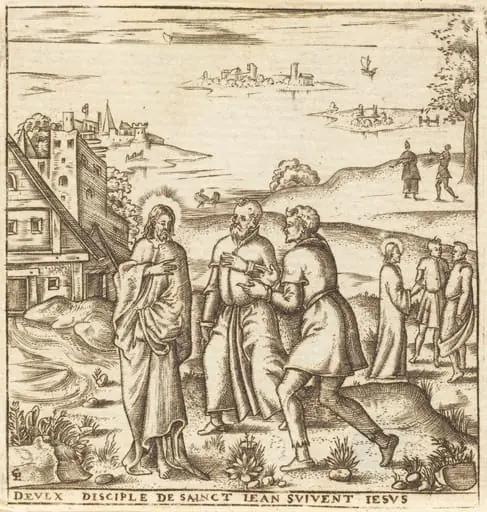 Christ Bids Two Disciples of John the Baptist to Follow Him
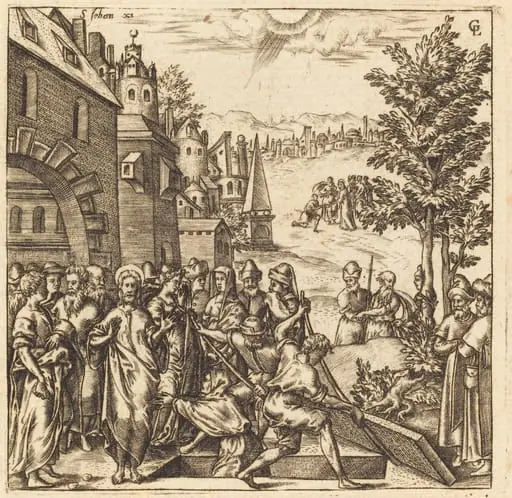 The Raising of Lazarus
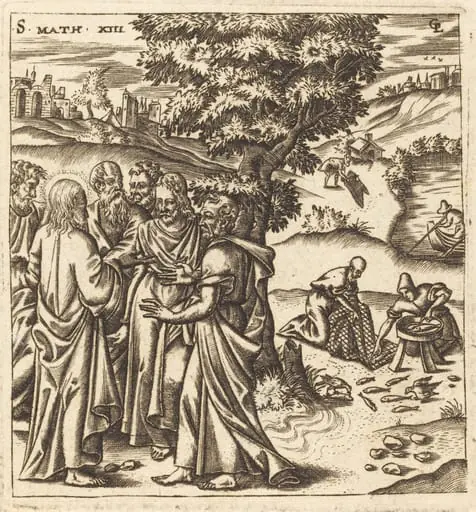 Christ Telling His Disciples of the Parable of the Dragnet
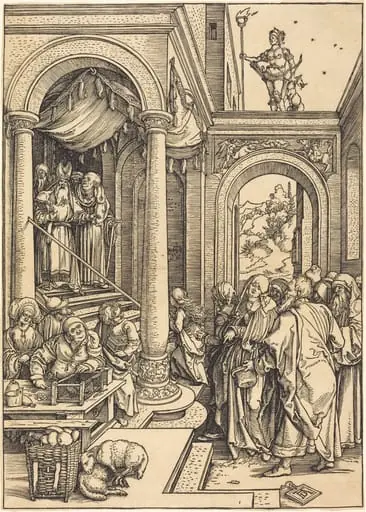 The Presentation of the Virgin in the Temple
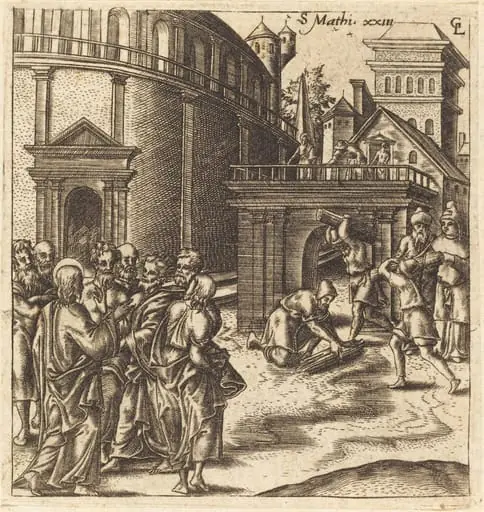 Christ Denounces the Scribes and Pharisees